
Cash Buyers vs Agents – What Kiwi Sellers Need to Know

Faced with urgent bills or sudden life changes, many New Zealand homeowners want a faster way to sell without the complications of traditional listings. When time matters, knowing the clear difference between cash buyers and agents can help you choose a path that meets your needs. This guide breaks down how each option works, what to expect with costs, and the legal obligations every seller must understand under New Zealand law.
Table of Contents
- Cash Buyers And Agents Defined Clearly
- How Cash Buyer Transactions Work
- Agent-Led Property Sales Process Explained
- Costs, Fees And Legal Obligations Compared
- Risks And Common Mistakes For Sellers
Key Takeaways
| Point | Details |
|---|---|
| Understanding Sales Approaches | Cash buyers and agents offer distinct pathways for property sales, each with unique advantages. Familiarise yourself with both to assess which suits your needs. |
| Consider Transaction Speed | Cash buyers typically expedite the sale process, while agent-led sales may take longer due to market conditions. Weigh the importance of time in your decision-making. |
| Evaluate Costs and Fees | Agent-led transactions involve higher costs, including commissions and marketing expenses, versus lower legal fees associated with cash buyer transactions. Assess your budget accordingly. |
| Mitigate Risks | Both sales methods present specific risks; ensure thorough preparation and legal compliance to avoid common pitfalls during the transaction. Vigilance is key to a successful sale. |
Cash Buyers and Agents Defined Clearly
In the New Zealand property market, understanding the distinct roles of cash buyers and real estate agents is crucial for sellers seeking efficient transaction strategies. These two approaches to property sales offer fundamentally different pathways, each with unique advantages and considerations.
Real estate agents are licensed professionals who facilitate property sales through a comprehensive service model. Their responsibilities typically include:
- Marketing the property extensively
- Conducting professional property valuations
- Negotiating with potential buyers
- Managing legal documentation
- Providing market insights and strategic advice
In contrast, cash buyers operate differently. These are typically investors or direct purchasers who can complete property transactions without relying on traditional financing mechanisms. Cash buyers in New Zealand offer several distinctive advantages:
- Faster settlement processes
- Fewer transaction contingencies
- Direct, streamlined negotiations
- Potential for unconditional purchase offers
- Reduced bureaucratic complexity
The primary difference lies in their transaction approach. Agents represent the seller’s interests through a structured, commission-based service, while cash buyers present direct purchasing opportunities with potentially quicker resolution times.
Here’s a concise comparison of cash buyer and agent-led sales approaches:
| Aspect | Cash Buyer Approach | Agent-Led Approach |
|---|---|---|
| Sale Speed | Typically very fast | Depends on market, often longer |
| Negotiation Format | Direct seller-buyer interaction | Agent intermediates all negotiations |
| Marketing Exposure | Minimal, direct interest only | Broad, professional marketing |
| Upfront Selling Costs | Lower, mostly legal fees | Higher, including commission/marketing |
| Likelihood of Sale | High if buyer committed | Varies with demand and promotion |
Pro tip: Always compare multiple offer types and understand each approach’s specific benefits before committing to a property sale strategy.
How Cash Buyer Transactions Work
Cash buyer transactions represent a streamlined approach to property sales in New Zealand, offering sellers a direct and often faster alternative to traditional real estate processes. Cash transactions involve unique regulatory requirements that distinguish them from standard property transfers.
The transaction process typically follows several key stages:
- Initial property assessment
- Direct offer presentation
- Legal and financial verification
- Unconditional purchase agreement
- Expedited settlement
Regulatory Compliance is crucial in cash transactions. These purchases must adhere to strict financial guidelines, including:
- Anti-money laundering checks
- Proof of funds documentation
- Transparent financial transaction records
- Compliance with New Zealand property transfer regulations
Cash buyer transactions in New Zealand differ from traditional sales by eliminating bank financing contingencies. This approach provides sellers with several significant advantages, including reduced paperwork, faster processing times, and minimal risk of sale falling through due to loan complications.
Unlike agent-managed sales, cash buyers typically conduct their own property evaluations, using market data and direct inspections to determine fair value. This direct approach can result in quicker decisions and more straightforward negotiations.

Pro tip: Always request comprehensive documentation and verify the cash buyer’s financial credentials before proceeding with a property transaction.
Agent-Led Property Sales Process Explained
In New Zealand’s property market, real estate agents play a critical role in facilitating property sales through a structured and comprehensive approach. Property sale methods vary significantly, offering sellers multiple strategic options for marketing their properties.
The typical agent-led sales process encompasses several key stages:
- Initial property valuation
- Marketing strategy development
- Professional photography and listing
- Conducting open home inspections
- Managing buyer communications
- Negotiating offers
- Facilitating legal documentation
Sales Methods agents typically employ include:
- Advertised price
- Deadline sale
- Auction
- Negotiation
- Tender process
Agents navigate complex legal obligations throughout the transaction, ensuring compliance with New Zealand’s property transfer regulations. Their responsibilities extend beyond simple marketing, encompassing detailed legal and financial management to protect both seller and potential buyer interests.
Unlike cash buyer transactions, agent-led sales involve multiple stakeholders and more intricate negotiation processes. Agents leverage their market knowledge, professional networks, and negotiation skills to maximise the property’s sale potential and secure the best possible outcome for their clients.
Pro tip: Always interview multiple agents, review their recent sale history, and understand their specific marketing strategy before selecting representation.
Costs, Fees and Legal Obligations Compared
Navigating the financial landscape of property sales requires a clear understanding of the costs and legal responsibilities associated with different transaction approaches. Property sale fees vary significantly depending on whether sellers choose agent-led or direct cash buyer routes.
Agent-Led Transaction Costs typically include:
- Real estate agent commission (usually 3-4% of sale price)
- Marketing and advertising expenses
- Professional photography costs
- Open home staging
- Legal documentation preparation
- Professional valuation fees
Cash Buyer Transaction Expenses generally encompass:
- Legal transfer fees
- Title search costs
- Settlement documentation
- Due diligence expenses
- Potential property inspection charges
Legal obligations for property transfers remain consistent regardless of transaction method. Both approaches must comply with New Zealand’s regulatory framework, ensuring transparent and legally sound property transfers.
While agent-led sales involve higher upfront costs, they provide comprehensive marketing and negotiation support. Cash buyers, in contrast, minimise intermediary expenses but assume more direct responsibility for transaction management and potential risk mitigation.
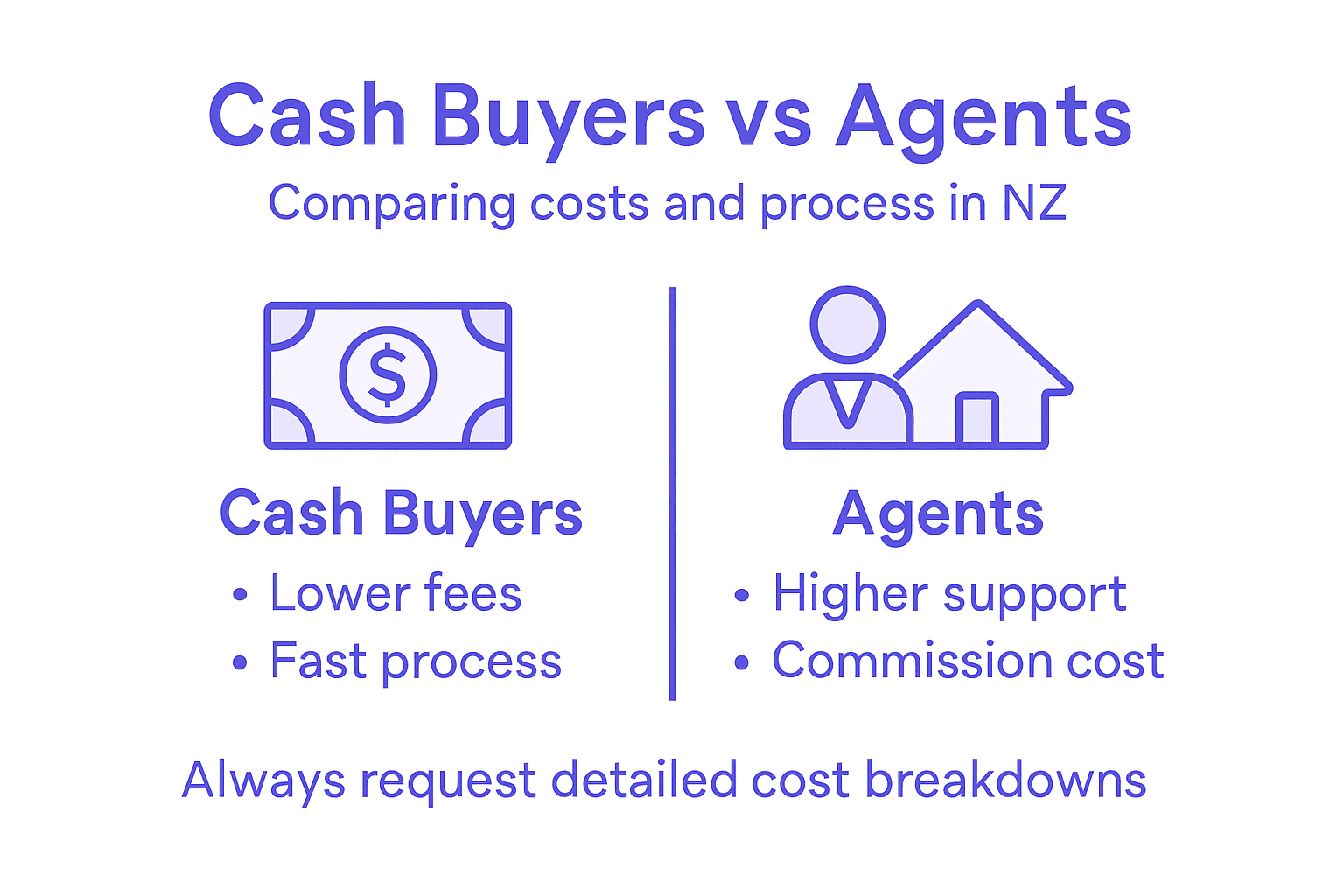
Pro tip: Request detailed cost breakdowns from both agents and cash buyers to understand the complete financial implications of your property sale.
Risks and Common Mistakes for Sellers
Selecting the right property sale strategy requires careful navigation of potential pitfalls that can significantly impact financial outcomes. Common seller mistakes can derail transactions and expose sellers to unnecessary financial and legal risks.
Critical Risks for Sellers include:
- Inadequate property preparation
- Overpricing or undervaluing the property
- Poor communication with buyers
- Insufficient legal documentation
- Misunderstanding contractual terms
- Failing to disclose material property information
Legal Compliance Challenges sellers must address:
- Comprehensive property disclosure requirements
- Accurate representation of property conditions
- Understanding contractual obligations
- Managing potential buyer disputes
- Navigating complex transfer regulations
Legal obligations for property sellers demand meticulous attention to detail. Sellers must proactively manage transaction risks by understanding their legal responsibilities and potential liability exposure.
Whether working with agents or cash buyers, sellers must remain vigilant about potential transaction risks. Each sales approach presents unique challenges that require careful strategy, transparent communication, and thorough documentation.
Compare risks faced by sellers in both transaction types:
| Type of Sale | Key Seller Risks | Common Mistake |
|---|---|---|
| Cash Buyer | Overlooking buyer’s financial proof | Relying on an informal agreement |
| Agent-Led | Accepting unfavourable conditions | Neglecting full property disclosure |
Pro tip: Consult a property law professional to review all sale documentation and understand your complete legal obligations before finalising any property transaction.
Choose the Fast and Stress-Free Path to Selling Your Property
The article highlights the challenges Kiwi sellers face when deciding between cash buyers and agents. Many sellers want a quick, uncomplicated sale without the fuss of traditional agents, marketing costs, or drawn-out negotiations. If you are seeking a fast settlement, want to avoid commission fees, and need a fair cash offer with minimal hassle, easySale.co.nz is designed just for you. Our streamlined process respects your time and unique situation, whether dealing with property damage, financial pressure, or urgent life changes.

Ready to bypass lengthy agent-led sales and experience the benefits of dealing directly with a trusted cash buyer? Submit your property details today, receive a no-obligation offer, and choose a settlement timeline that suits your circumstances. Visit easySale.co.nz now to take control of your property sale. Discover how easy it is to sell your home with confidence, clarity and speed.
Frequently Asked Questions
What is the main difference between cash buyers and real estate agents?
Cash buyers purchase properties directly without requiring financing, offering quicker and more streamlined transactions. In contrast, real estate agents facilitate property sales by marketing listings, negotiating deals, and handling legal documentation for a commission.
What are the benefits of selling to a cash buyer?
Selling to a cash buyer can lead to faster settlement processes, reduced paperwork, fewer contingencies, and direct negotiations. This often means a quicker resolution to the sale compared to traditional agent-led sales.
What costs should sellers expect when using a real estate agent?
Sellers using a real estate agent can expect to pay commission fees (typically 3-4% of the sale price), marketing and advertising expenses, legal documentation fees, and valuation costs, which can add up significantly compared to cash sales.
What common mistakes should sellers avoid when choosing between cash buyers and agents?
Sellers should avoid overpricing or undervaluing their properties, failing to prepare adequately, and neglecting to disclose important property details. It’s crucial to understand the terms of any agreement and remain compliant with legal obligations throughout the transaction.
Recommended
