
Cash Home Buying in NZ – Faster Sales, Less Stress

More than 35 percent of New Zealand properties are sold under time pressure, often triggered by urgent financial setbacks or sudden personal changes. If you are comparing australian cash buyers with local options, the process may seem complex and full of unknowns. Understanding how cash home buying works can help you avoid costly mistakes, secure a rapid sale, and protect your best interests during stressful times.
Table of Contents
- Cash Home Buying Defined And Debunked
- Types Of Cash Buyers And Property Categories
- Step-By-Step Cash Buying Process In Nz
- Legal Requirements And Seller Protection
- Financial Risks, Costs, And Tax Implications
- Comparing Cash Buying With Agent Sales
Key Takeaways
| Point | Details |
|---|---|
| Cash Transactions Are Efficient | Cash home buying eliminates lengthy mortgage processes, allowing for quicker settlements and reduced complexities in property transactions. |
| Diverse Buyer Profiles Exist | Cash buyers in New Zealand range from individual investors to corporate entities, each with specific investment goals tailored to property categories. |
| Thorough Due Diligence is Essential | Buyers must conduct comprehensive property evaluations and verify financial capabilities to mitigate potential risks in cash transactions. |
| Understand Legal Protections | Familiarity with legal requirements and protections for sellers ensures a transparent and fair property transaction process. |
Cash home buying defined and debunked
Cash home buying represents a streamlined property transaction approach where buyers purchase real estate using immediate funds without traditional mortgage financing. Understanding cash buyer dynamics reveals significant advantages for both sellers and buyers in New Zealand’s property market.
In practical terms, cash home buying eliminates complex lending procedures, reducing transaction times dramatically. Unlike traditional property sales involving bank approvals and extensive documentation, cash transactions can complete within weeks instead of months. This approach provides sellers with immediate liquidity and buyers with greater negotiation flexibility. Household income trends suggest increasing numbers of New Zealanders are exploring alternative property purchase methods.
Contrary to popular misconceptions, cash buyers do not automatically demand substantial discounts. Instead, they offer sellers predictable, low-stress transactions with minimal contingencies. Key benefits include:
- Faster settlement periods
- No mortgage approval waiting times
- Reduced transaction complexity
- Lower likelihood of sale falling through
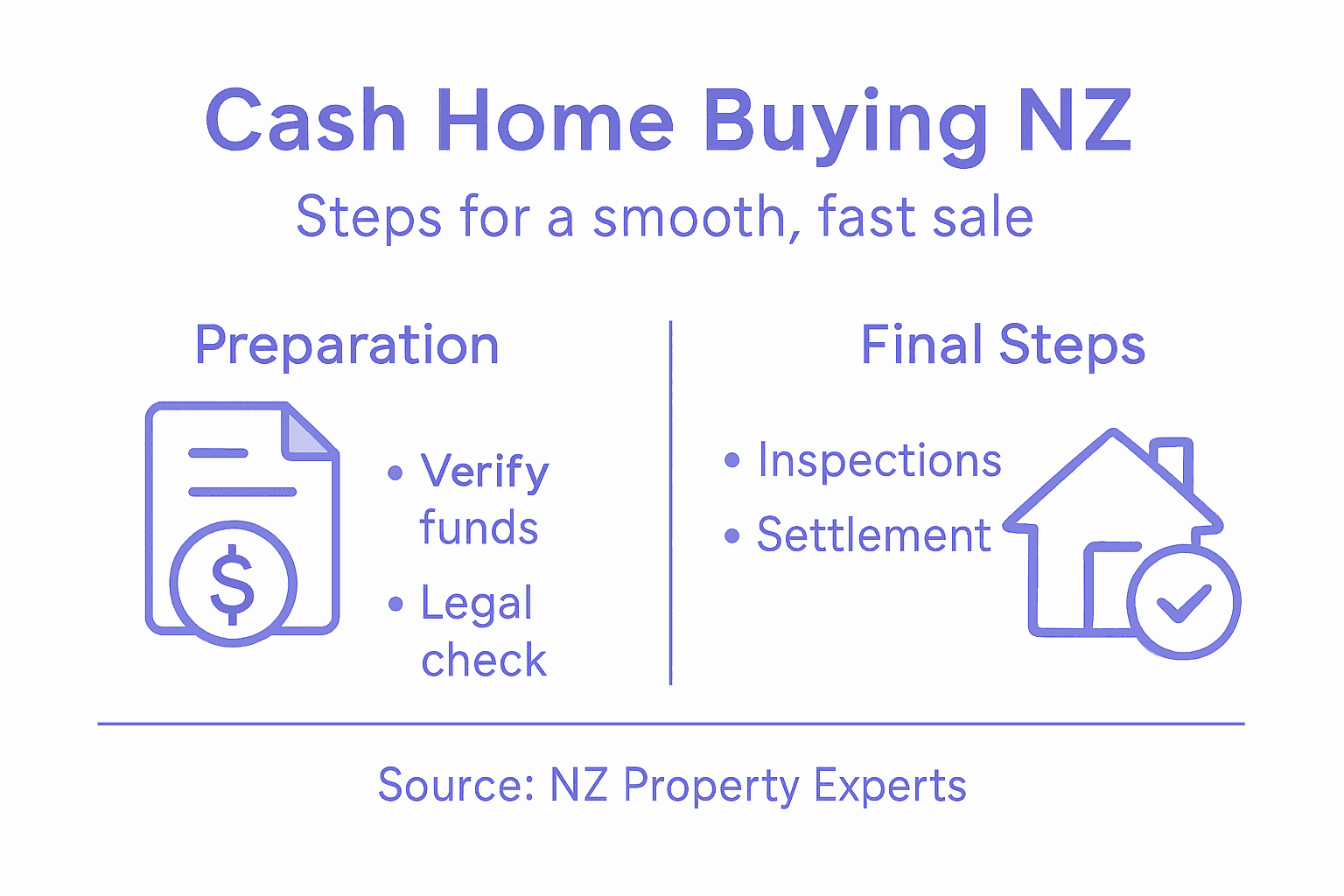
Key considerations for cash home buying include verifying funds, understanding legal requirements, and conducting thorough property assessments. Transparency and professional guidance remain critical throughout the process.
Pro tip: Always obtain independent legal advice and verify a cash buyer’s financial capacity before finalising any property transaction.
Types of cash buyers and property categories
Cash buyers in New Zealand represent a diverse group with unique property investment strategies. Diverse buyer profiles demonstrate the complexity of property transactions beyond traditional financing methods. These buyers range from individual investors to corporate entities, each targeting specific property categories with distinct objectives.
Typically, cash buyers can be categorised into several key groups:
- Individual Investors: Typically purchasing residential or small commercial properties
- Corporate Property Developers: Acquiring larger commercial or industrial sites
- Social Housing Entities: Purchasing properties for community housing programs
- High Net Worth Individuals: Investing in premium residential or mixed-use properties
Household income trends indicate that cash buyers often target different property categories based on their financial capacity. Residential properties remain the most common, but commercial and industrial properties present attractive investment opportunities for those with substantial liquid capital.
Property categories each present unique considerations for cash buyers. Residential properties typically involve straightforward transactions, while commercial properties require more complex due diligence. Industrial properties might demand specific zoning understanding, and mixed-use developments offer diversified investment potential. Understanding these nuances helps cash buyers make informed decisions aligned with their investment strategies.

Here’s a summary of key cash buyer types in New Zealand and their target property categories:
| Buyer Type | Typical Property Target | Investment Objective |
|---|---|---|
| Individual Investors | Residential, small commercial | Portfolio growth, rental income |
| Corporate Developers | Commercial, industrial sites | Large-scale development profits |
| Social Housing Entities | Community housing properties | Long-term community impact |
| High Net Worth Individuals | Premium, mixed-use properties | Asset diversification, prestige |
Pro tip: Conduct thorough property inspections and seek professional legal advice before finalising any cash property purchase to mitigate potential risks.
Step-by-step cash buying process in NZ
Cash property purchases in New Zealand require strategic planning and precise execution. Legal property transaction steps outline a comprehensive approach for successful cash buying, ensuring smooth ownership transfer and minimising potential complications.
The typical cash buying process involves several critical stages:
- Financial Preparation
- Confirm total available funds
- Determine purchase budget
- Organise proof of funds documentation
- Property Research
- Identify target property
- Conduct thorough property inspections
- Review property history and legal status
- Due Diligence
- Request Land Information Memorandum (LIM) report
- Check property title
- Verify zoning regulations
- Assess potential renovation requirements
Home ownership pathways highlight the importance of comprehensive research before finalising any property transaction. Cash buyers must understand market dynamics, property valuations, and potential future development opportunities in their chosen area.
The final stages involve preparing the Sale and Purchase Agreement, negotiating terms, and completing settlement. Professional legal advice remains crucial throughout the process to ensure all regulatory requirements are met and potential risks are mitigated. Successful cash buyers approach each transaction with meticulous attention to detail and a clear understanding of their investment objectives.
Pro tip: Always obtain an independent property valuation and comprehensive building inspection to uncover any hidden issues before completing your cash purchase.
Legal requirements and seller protection
Property transactions in New Zealand require comprehensive legal frameworks designed to protect both buyers and sellers. Legal property sale guidelines establish strict requirements that ensure transparency, fairness, and legal compliance throughout the sale process.
Key legal protections for sellers include:
- Mandatory disclosure of property conditions
- Clear contractual terms and conditions
- Regulated deposit handling procedures
- Protection against unfair negotiation practices
- Statutory rights for contract termination
Mortgagee sale regulations provide additional safeguards, particularly in scenarios involving financial distress. These regulations ensure sellers understand their rights and have clear pathways for resolving potential disputes or challenging sale conditions.
The Real Estate Agents Act 2008 plays a crucial role in establishing professional standards. It mandates that all licensed real estate professionals maintain high ethical standards, provide full disclosure of potential conflicts of interest, and operate with complete transparency. Sellers are protected through these regulatory mechanisms, which create accountability and reduce the risk of fraudulent or misleading transactions.
Specific legal requirements demand comprehensive documentation, including precise property descriptions, accurate financial representations, and thorough disclosure of any known defects. Professional legal advice remains essential to navigate these complex requirements and ensure complete protection throughout the property sale process.
Pro tip: Engage a qualified property lawyer to review all sale documents and ensure your legal interests are fully protected before signing any agreements.
Financial risks, costs, and tax implications
Cash property investments involve nuanced financial considerations that extend beyond the initial purchase price. Financial transaction guidelines highlight the critical importance of comprehensive financial planning and risk assessment in property transactions.
Key financial risks for cash buyers include:
- Market value fluctuations
- Potential unexpected property maintenance costs
- Limited liquidity after investment
- Opportunity cost of tying up significant capital
- Potential tax liability complexities
Taxation rules for property transactions require meticulous understanding to prevent unexpected financial burdens. Cash buyers must navigate progressive tax rates, potential capital gains implications, and specific reporting requirements that can significantly impact overall investment returns.
Additional financial considerations encompass transaction costs such as legal fees, property valuation expenses, settlement charges, and potential stamp duties. Professional financial advice becomes crucial in understanding the complete financial landscape, including potential tax implications for investment properties, rental income reporting, and compliance with Inland Revenue Department regulations.
Understanding the intricate balance between immediate cash purchase advantages and long-term financial implications requires sophisticated financial planning. Investors must carefully evaluate potential risks, projected returns, and tax obligations to make informed property investment decisions.
The following table outlines major financial risks and typical costs associated with cash property purchases:
| Financial Risk | Impact on Buyer | Typical Associated Cost |
|---|---|---|
| Market fluctuation | Value uncertainty | Variable property values |
| Limited liquidity | Reduced cash reserves | Opportunity cost |
| Maintenance surprises | Unplanned expenses | Emergency repair funds |
| Tax liabilities | Reporting complexities | Accountant, tax agent fees |
Pro tip: Consult a qualified tax accountant specialising in property investments to develop a comprehensive financial strategy before finalising your cash property purchase.
Comparing cash buying with agent sales
Property sale methods in New Zealand offer distinct approaches with unique advantages and challenges. Agent sale complexities contrast sharply with the streamlined nature of cash transactions, presenting sellers with multiple strategic options.
Key differences between cash and agent sales include:
- Speed of Transaction
- Cash buying: Weeks
- Agent sales: Months
- Marketing Approach
- Cash buying: Direct negotiation
- Agent sales: Broad market exposure
- Cost Structure
- Cash buying: Minimal transaction fees
- Agent sales: Significant commission charges
Mortgagee sale regulations underscore the importance of understanding each sale method’s legal and financial implications. Cash sales eliminate financing contingencies, providing faster closures and reduced administrative complexity, while agent-assisted sales offer more comprehensive market positioning and potential price optimisation.
Agent sales traditionally provide broader market reach through professional marketing strategies, professional negotiations, and extensive network connections. However, cash buying offers unprecedented flexibility, lower transaction costs, and quicker settlement periods. The optimal approach depends on individual seller circumstances, property characteristics, and specific financial objectives.
Pro tip: Evaluate your property’s unique market position and personal financial goals before selecting between cash or agent-assisted selling strategies.
Experience the Ease of Fast Cash Home Buying in New Zealand
Selling your property quickly without the stress of traditional sales can feel overwhelming, especially when facing time pressures or unexpected challenges. This article highlights how cash home buying removes lengthy mortgage approvals and complicated negotiations to give you a smooth, speedy sale with clear terms. If you want to bypass costly agent fees, lengthy waiting periods, and uncertainty about sale completion, a cash buyer could be your best solution.
At easySale.co.nz, we specialise in helping New Zealand homeowners achieve exactly this. We offer a fair cash price for your property no matter its condition and handle the process in three simple steps: submit your property details, receive a no-obligation offer, and settle on your timeline. With a national reach and a high acceptance rate, we provide a genuine alternative that respects your circumstances and reduces the usual stress associated with selling. Learn more about how our approach aligns with the streamlined methods described in Legal Property Sale Guidelines and property transaction steps.

Ready to experience a faster, less stressful sale? Visit easySale.co.nz today to get your free offer and reclaim control over your property sale. Don’t wait – turn your property into cash with confidence and clarity now.
Frequently Asked Questions
What are the advantages of cash home buying?
Cash home buying offers several advantages, including faster settlement periods, reduced transaction complexity, lower likelihood of the sale falling through, and greater negotiation flexibility. It eliminates the lengthy mortgage approval process, enabling quicker closings.
How does the cash buying process work in NZ?
The cash buying process involves several steps: financial preparation (confirming available funds), property research (identifying and inspecting properties), due diligence (checking legal requirements and property history), and finally preparing the Sale and Purchase Agreement followed by settlement.
What legal requirements should I be aware of when selling my property?
When selling a property, it’s essential to follow legal requirements such as mandatory property condition disclosures, clear contractual terms, and regulated deposit handling. Engaging a qualified property lawyer can help ensure compliance and protect your interests.
What financial risks are associated with cash property investments?
Key financial risks in cash property investments include market value fluctuations, unexpected maintenance costs, limited liquidity after investment, and potential tax liability complexities. It’s important to conduct thorough financial planning and risk assessment before making a purchase.
Recommended
