
Explain property transfer process: a New Zealand guide

TL;DR:The property transfer process in New Zealand is a legal procedure that moves ownership of a house from seller to buyer through electronic registration. It involves signing a contract, satisfying conditions, and completing settlement within a few weeks with legal assistance. Proper planning and early legal involvement can prevent delays and ensure a smooth transfer.
The property transfer process is the statutory procedure used to legally convey ownership of a residential property in New Zealand from the seller to the buyer. Known formally as property conveyance, it is governed by the Land Transfer Act 2017 and executed electronically through the Landonline system. The process runs from the signing of a Sale and Purchase Agreement through to settlement day, when title registration is finalised. Understanding each step protects you from costly delays and gives you confidence throughout the sale.
What are the essential steps in the New Zealand property transfer process?
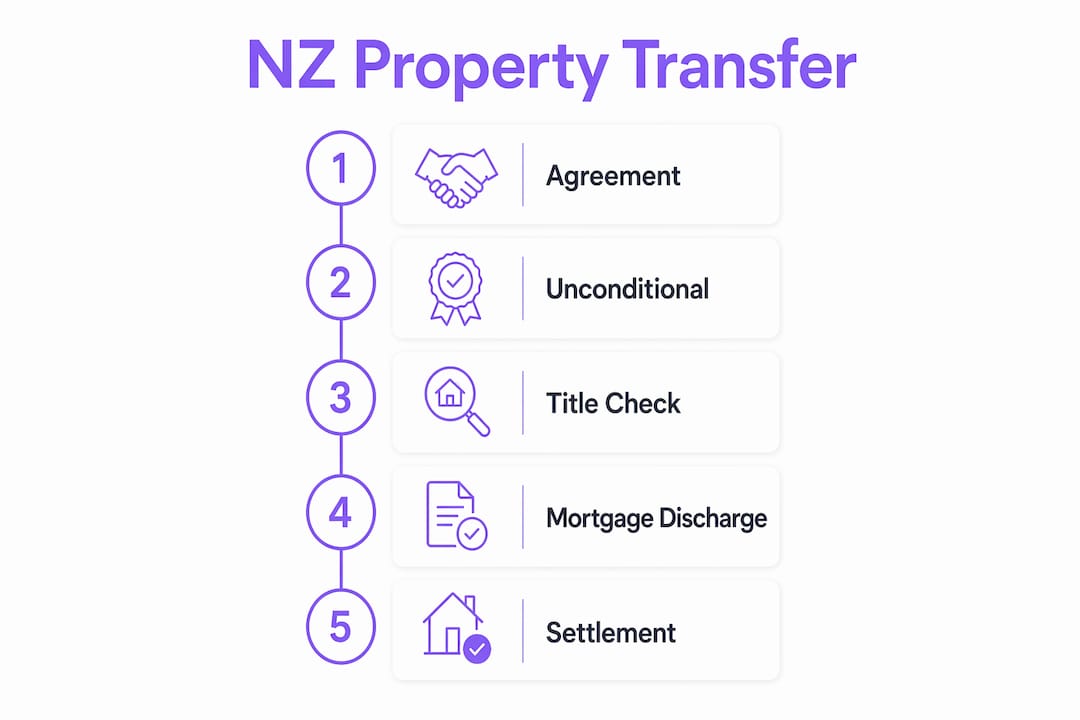
The property sale process follows a clear sequence. Each step builds on the last, and skipping or rushing any stage creates problems down the track.
- Sign the Sale and Purchase Agreement. This is the binding contract between you and the buyer. Most residential sales in New Zealand use the standard REINZ/ADLS form. The agreement sets the purchase price, settlement date, and any conditions the parties must satisfy before the sale proceeds.
- Satisfy contract conditions. Typical conditions include finance approval, a building inspection, a LIM (Land Information Memorandum) report, and sometimes a methamphetamine test. Due diligence periods for these conditions generally run 5–15 working days. Each condition has a deadline, and both parties must track these carefully.
- Go unconditional. Once all conditions are satisfied and confirmed in writing, the contract becomes unconditional. This is the point of no return. From here, both parties are legally committed, and settlement preparation begins in earnest.
- Prepare for settlement. Your lawyer orders a title search, confirms mortgage discharge arrangements with your bank, and prepares transfer documents. The buyer’s lawyer does the same on their side. This phase involves a lot of back-and-forth between legal teams, banks, and sometimes local councils.
- Complete settlement day. Settlement day is when funds move through lawyers’ trust accounts, your mortgage is discharged, and ownership is electronically registered via Landonline. Title registration typically completes within hours. Once confirmed, you hand over the keys.
The full timeline from going unconditional to settlement spans 1–8 weeks, depending on what the parties agreed in the contract. A four-week settlement is common for straightforward residential sales.
Pro Tip: Ask your lawyer to confirm the unconditional date in writing the same day it occurs. This removes any ambiguity about when settlement preparation obligations begin.

How do legal and administrative elements affect the property transfer?
Legal representation is not legally required in New Zealand, but the pre-settlement phase is complex enough that proceeding without a lawyer carries real risk. Title accuracy, mortgage registration, and electronic lodgement all require specialist knowledge. A conveyancing lawyer or solicitor manages these tasks on your behalf.
Key legal and administrative tasks include:
- Title search and verification. Your lawyer checks the Record of Title for encumbrances, easements, and any restrictions that could affect the transfer. This step catches problems before settlement, not after.
- Mortgage discharge. If you have a mortgage, your bank must formally release its security interest over the property. Your lawyer coordinates this with the bank, and timing is critical.
- Anti-Money Laundering (AML) compliance. Both buyer and seller must provide identity verification documents. AML checks are a legal requirement, and missing documentation can hold up settlement.
- Electronic lodgement via Landonline. Your lawyer lodges the transfer instrument electronically. Landonline finalises the title registration, usually within hours on settlement day. This is the moment ownership officially changes hands.
- Trust account coordination. Settlement funds move through lawyers’ trust accounts, not directly between buyer and seller. Your lawyer confirms receipt of funds before authorising key release.
Common causes of delays include incomplete mortgage discharge instructions, missing AML documents, and title issues discovered late. The fix for all three is the same: get your lawyer involved early and respond to their requests promptly.
Pro Tip: Engage a conveyancing lawyer as soon as you sign the Sale and Purchase Agreement, not just before settlement. Early involvement gives them time to identify title issues while you still have options.
What are common conditions and complications during a property transfer?
Contract conditions protect both parties, but they also create windows where the sale can fall over. Knowing what to expect helps you manage the process rather than react to it.
Typical contract conditions
Most residential contracts in New Zealand include conditions for finance approval, a building inspection, and a LIM report. Finance conditions give the buyer time to confirm their mortgage. Building inspections check the physical condition of the property. A LIM report from the local council confirms consents, zoning, and any known issues with the land.
Title restrictions and encumbrances
Restrictions on transfer appear in the Encumbrances section of the Record of Title. Common examples include developer covenants, which limit how the property can be used or altered, and Overseas Investment Act consents, which apply when the buyer is an overseas person. These restrictions require consent or special approval before the transfer can complete. Identifying them early prevents last-minute surprises.
You can order the full Instrument Document for a property for around $39.90 NZD. This document provides complete details on any title restrictions and is worth reviewing before you sign anything.
How complications affect the sale
| Complication | Potential impact | How to manage it |
|---|---|---|
| Finance condition not met | Buyer withdraws, sale falls over | Confirm buyer pre-approval before accepting offer |
| Building inspection issues | Buyer renegotiates price or withdraws | Obtain a pre-sale building report |
| Title restriction discovered late | Settlement delayed pending consent | Order title documents before listing |
| AML documents missing | Settlement held up by legal teams | Submit identity documents to lawyer immediately |
| Mortgage discharge delayed | Settlement cannot proceed | Instruct bank at least 48 hours before settlement |
Inserting specific conditions before signing is the most effective way to protect your position. A lawyer can advise which conditions suit your circumstances and how to word them clearly.
What should sellers do to prepare for a smooth settlement day?
Settlement day runs smoothly when sellers prepare well in advance. Leaving tasks to the last minute creates pressure on lawyers, banks, and the buyer’s team, and any one delay can push settlement to the following day.
- Provide signed instructions to your lawyer early. Your lawyer needs your authority to act on your behalf. Send signed instructions as soon as the contract goes unconditional. Do not wait until the week of settlement.
- Coordinate mortgage discharge at least 48 hours ahead. Sellers must provide mortgage discharge information to their lawyer and bank at least 48 hours before settlement. Banks need time to prepare discharge documents, and delays here are one of the most common causes of settlement day problems.
- Vacate the property on time. The contract specifies when the property must be vacant. Confirm this date with your lawyer and plan your move accordingly. Buyers have the right to a pre-settlement inspection, usually the day before or morning of settlement.
- Confirm the settlement sequence with your lawyer. On settlement day, funds arrive in your lawyer’s trust account first. Your lawyer then confirms receipt, discharges the mortgage, and releases the keys. Understanding this sequence means you know exactly when to hand over keys and when to expect your proceeds.
- Check your bank account details are correct. Your lawyer will transfer your net proceeds to your nominated account after settlement. A simple error in your account number causes significant delays. Double-check these details well before settlement day.
For a detailed breakdown of how to settle quickly, preparation and clear communication with your legal team are the two factors that matter most.
Key takeaways
The property transfer process in New Zealand requires a signed Sale and Purchase Agreement, satisfied contract conditions, and electronic title registration via Landonline to complete legally.
| Point | Details |
|---|---|
| Legal framework | The Land Transfer Act 2017 governs all residential property transfers in New Zealand. |
| Settlement timeline | From going unconditional to settlement typically spans 1–8 weeks. |
| Lawyer involvement | Engage a conveyancing lawyer at contract signing, not just before settlement day. |
| Mortgage discharge | Provide discharge instructions to your bank at least 48 hours before settlement. |
| Title restrictions | Order the Instrument Document early to identify encumbrances before they delay your sale. |
What I have learned from watching sellers navigate property transfers
After spending years working alongside homeowners through property sales, the pattern I see most often is this: sellers underestimate how much happens between going unconditional and settlement day. They assume the hard work is done once the buyer says yes. It is not.
The sellers who have the smoothest settlements are the ones who treat the pre-settlement phase as seriously as the negotiation phase. They respond to their lawyer’s requests within hours, not days. They call their bank the same week the contract goes unconditional. They confirm their moving date before they book the truck.
The sellers who run into trouble are usually not doing anything wrong. They are just waiting. Waiting for their lawyer to chase them. Waiting to see if the buyer’s finance comes through. Waiting until the week before settlement to sort out their mortgage discharge. That waiting costs them time, money, and stress.
My honest advice: the moment your contract goes unconditional, treat settlement day as a project with a hard deadline. Write down every task, assign it a date, and follow up. Your lawyer is managing multiple settlements at once. The sellers who stay on top of their own process get the best outcomes.
— Aaron
Selling your property without the complexity
If the steps involved in a traditional property transfer feel like more than you want to manage right now, Easysale offers a direct alternative.

Easysale buys residential properties across New Zealand directly for cash, with no real estate agents, no commission fees, and no drawn-out conditions process. You submit your property details, receive a fair cash offer within 24 hours, and settle on your timeline. Easysale buys properties in any condition, which means you skip the building inspections, LIM negotiations, and title complications that slow down traditional sales. For homeowners who need a fast, clear outcome, it is a practical option worth knowing about. Visit Easysale to get your no-obligation offer today.
FAQ
What is the property transfer process in New Zealand?
The property transfer process is the legal procedure by which ownership of a residential property passes from seller to buyer. It runs from the signing of a Sale and Purchase Agreement through to electronic title registration via Landonline on settlement day.
How long does a property transfer take in New Zealand?
The period from going unconditional to settlement typically spans 1–8 weeks, depending on the terms agreed in the contract. A four-week settlement is the most common arrangement for straightforward residential sales.
Do I need a lawyer to transfer property in New Zealand?
A lawyer is not legally required, but the pre-settlement phase involves title checks, mortgage discharge coordination, AML compliance, and electronic lodgement through Landonline. Legal expertise at this stage significantly reduces the risk of delays or errors.
What documents are needed for a property transfer?
Key documents include the signed Sale and Purchase Agreement, identity verification for AML compliance, mortgage discharge authority, and the transfer instrument lodged electronically via Landonline. Your lawyer prepares most of these on your behalf.
What can delay a property transfer in New Zealand?
Common causes of delay include late mortgage discharge instructions, missing AML documents, title restrictions requiring consent, and unresolved contract conditions. Providing your lawyer with signed instructions and bank details early is the most effective way to avoid these issues.
Recommended
