
Quick Sale Process Explained: Step-by-Step NZ Guide

Facing urgent changes or unexpected financial strain can make the idea of selling your home in New Zealand feel overwhelming. When time is short, every step matters, from preparing your property details to agreeing on a fair settlement timeline. This guide highlights the importance of honest and transparent information, helping you skip real estate agents and move quickly toward a successful, smooth sale.
Table of Contents
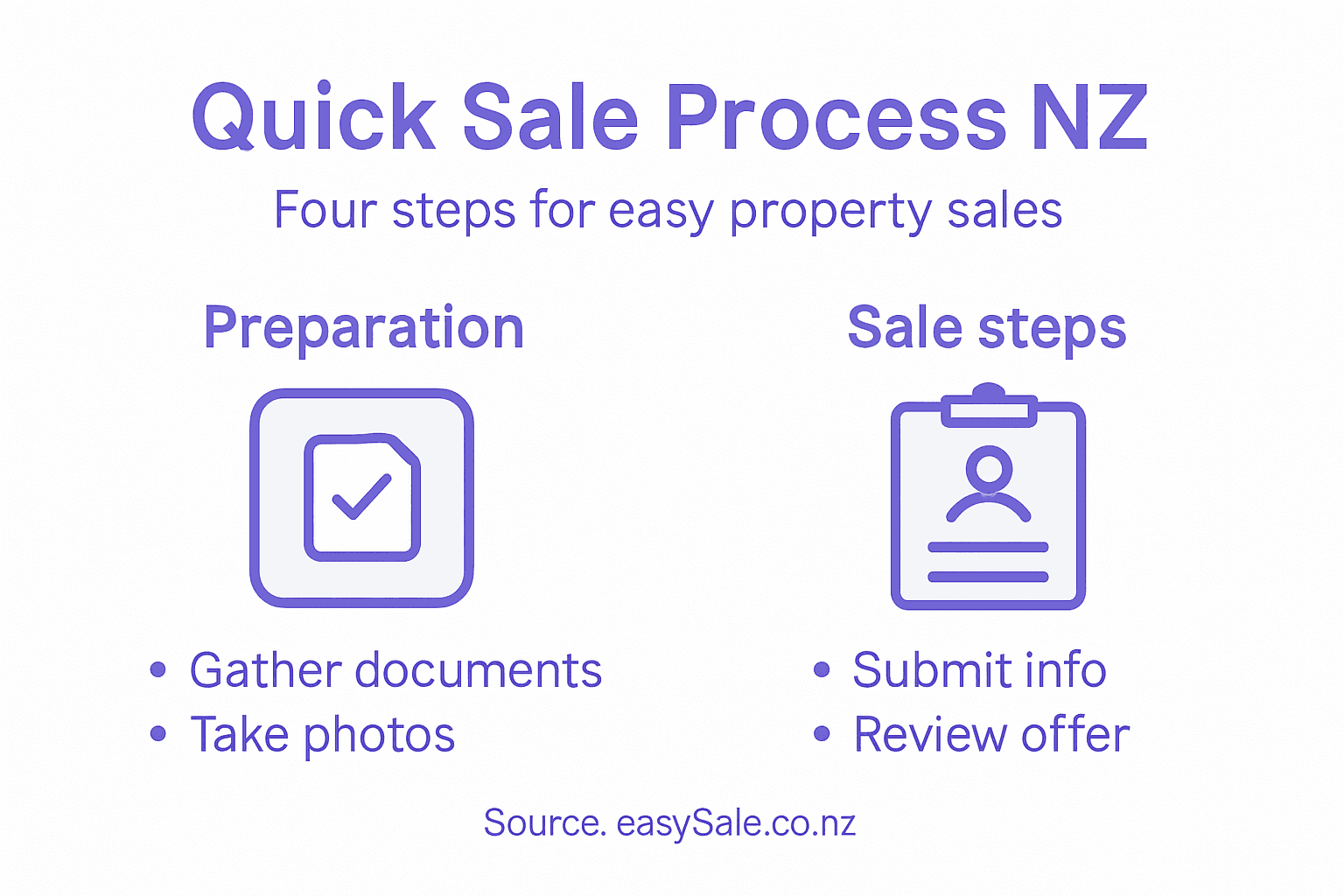
- Step 1: Prepare Your Property Details For Submission
- Step 2: Submit Your Property Information Online
- Step 3: Review And Consider The Cash Offer Provided
- Step 4: Settle On Your Preferred Timeline With Confidence
Quick Summary
| Key Point | Explanation |
|---|---|
| 1. Prepare comprehensive property details | Collect essential information about your property to facilitate an accurate assessment by potential buyers, which speeds up the selling process. |
| 2. Submit accurate online property listings | Ensure your online submission is detailed and accurate as it serves as the first impression for potential buyers and affects their trust. |
| 3. Thoroughly evaluate cash offers | Assess cash offers carefully, focusing on total price and financial verification to ensure a smooth and successful transaction. |
| 4. Clearly communicate settlement flexibility | Negotiate a settlement timeline that aligns with your moving plans while being open to reasonable compromises to ease the process. |
Step 1: Prepare your property details for submission
Submitting your property details is the crucial first step in achieving a quick sale in New Zealand. This stage determines how accurately potential buyers can assess your property and helps streamline the entire selling process.
To prepare comprehensive property details, you’ll need to compile key information that provides a clear picture of your home. Comprehensive property preparation guidance suggests gathering the following essential details:
- Property address and legal description
- Total land area and dwelling size
- Number of bedrooms and bathrooms
- Property age and construction type
- Recent renovation or maintenance history
- Unique features or recent upgrades
- Current property condition
While collecting these details, be honest and transparent about your property’s condition. Potential buyers appreciate accurate information, which helps build trust and can expedite the sale process. Consider having recent building inspection reports or maintenance records ready to provide additional credibility.

Preparing digital photos that showcase your property’s best attributes is also crucial. Ensure these images are clear, well-lit, and highlight key spaces like living areas, kitchen, and outdoor spaces.
Pro tip: Keep all property documentation organised in a digital folder for quick and easy reference during the selling process.
Here’s how professional property preparation compares to a basic approach:
| Preparation Aspect | Basic Approach | Professional Approach |
|---|---|---|
| Property Documentation | Scattered paperwork | Organised digital folder |
| Image Quality | Basic photos, low resolution | High-res, well-lit images |
| Detail Accuracy | General estimates | Verified, up-to-date info |
| Inspection Reports | None or outdated | Recent, credible reports |
| Buyer Trust | Lower | Higher, builds credibility |
Step 2: Submit your property information online
Submitting your property information online is a pivotal moment in your quick sale journey, transforming your property from a private asset to a market-ready opportunity. This digital submission serves as your property’s first impression for potential buyers and investors.
Professional online property listing standards require comprehensive and accurate information to ensure transparency and legal compliance. When submitting your property details, focus on providing the following key elements:
- High-resolution digital photographs
- Accurate property measurements
- Detailed description of property features
- Recent property valuation documents
- Maintenance and renovation history
- Precise location and zoning information
- Any relevant legal documentation
Accuracy is critical when presenting your property online. Potential buyers will scrutinise every detail, so ensure all information is current, honest, and professionally presented. Double-check measurements, verify property descriptions, and use clear, well-lit images that showcase your property’s best attributes.
Comprehensive and transparent property information builds trust and accelerates the sale process.
Each detail you submit increases the likelihood of attracting serious buyers who are ready to make a quick decision. Take time to review your submission carefully, ensuring every piece of information reflects your property’s true value and potential.
Pro tip: Create a digital folder with all property documents and photographs to streamline your online submission process and keep everything organised.
Step 3: Review and consider the cash offer provided
Reviewing a cash offer represents a critical moment in your property sale journey, where careful consideration can mean the difference between a successful transaction and a missed opportunity. Your goal is to assess the offer comprehensively and make an informed decision that aligns with your financial and personal objectives.
Property offer evaluation guidelines recommend examining several key aspects of the cash offer:
- Total offered purchase price
- Payment terms and conditions
- Settlement timeline
- Any contingencies or special conditions
- Buyer’s financial verification
- Proposed completion date
- Potential additional costs or fees
Financial verification is crucial when evaluating a cash offer. Unlike traditional sales, cash offers require thorough scrutiny to ensure the buyer has genuine funding capabilities. Request documented proof of funds and consider consulting a legal professional to validate the offer’s legitimacy.
A comprehensive review protects your interests and ensures a smooth, transparent property sale process.
Beyond the financial elements, assess how the offer matches your personal selling objectives. Consider factors like your desired moving timeline, current market conditions, and your immediate financial needs. Not all cash offers are equal, so prioritise those that provide the most comprehensive alignment with your goals.
Pro tip: Maintain a negotiation journal to track offer details, helping you make objective comparisons and informed decisions throughout the sale process.
Below is a quick reference showing how reviewing cash offers differs from considering traditional offers:
| Comparison Element | Cash Offer | Traditional Offer |
|---|---|---|
| Sale Completion Speed | Usually much faster | Slower due to financing steps |
| Financial Verification | Proof of funds essential | Loan approval documentation |
| Contingencies | Typically fewer | More common, complex |
| Certainty of Settlement | More reliable once accepted | May fall through at late stage |
Step 4: Settle on your preferred timeline with confidence
Reaching a settlement timeline that meets your specific needs is crucial in ensuring a smooth and stress-free property sale. Your objective is to negotiate and finalise a timeline that provides flexibility and aligns with your personal moving plans and financial requirements.
Residential property settlement guidelines recommend considering several key factors when establishing your preferred settlement timeline:
- Your current living arrangements
- Required notice for vacating your property
- Potential moving costs
- Financial transfer requirements
- Any dependent obligations or commitments
- Buyer’s proposed settlement date
- Potential relocation challenges
Flexibility is key when negotiating settlement dates. While you’ll have personal preferences, being open to reasonable compromise can help facilitate a smoother transaction. Communicate clearly with the buyer about your constraints and potential move-out challenges.
A well-planned settlement timeline reduces stress and prevents last-minute complications during your property sale.
Consider working with a legal professional who can help draft settlement terms that protect your interests while maintaining a collaborative approach. They can assist in establishing clear expectations and managing potential contingencies that might impact your preferred timeline.
Pro tip: Create a detailed moving checklist with specific date targets to help manage your settlement timeline and reduce potential last-minute stress.
Simplify Your Quick Property Sale with easySale.co.nz
Selling your property quickly and confidently in New Zealand demands clarity, trust, and speed—key challenges highlighted in the guide to the quick sale process. From preparing comprehensive property details to reviewing cash offers and setting a settlement timeline, these steps can feel overwhelming, especially when time and certainty matter most. The emotional stress of managing inspections, legal documentation and negotiations only adds to the challenge.
That is where easySale.co.nz becomes your ideal partner. Our streamlined, transparent platform aligns perfectly with the article’s step-by-step process by offering a fair, no-obligation cash offer after you submit your property details online. Whether your property needs repairs, or you require a swift sale without agent fees or commissions, we buy homes in any condition nationwide. With a high acceptance rate and flexible settlement options, easySale ensures you remain in control of your timeline and receive fast financial certainty.

Ready to bypass complicated traditional sales and experience a genuinely easy sale? Visit easySale.co.nz now to submit your property details and receive your fast cash offer. Take the stress out of selling and move forward with confidence today.
Frequently Asked Questions
What initial information do I need to gather for a quick sale?
To begin the quick sale process, collect key details about your property, including the address, total land area, number of bedrooms and bathrooms, and any recent renovations. Organise these details in a digital folder for easy access during the selling process.
How do I submit my property information online correctly?
Submitting your property information online requires accurate and comprehensive information, including high-resolution images and detailed descriptions of features. Ensure that all details are correct and verify the information before submission to attract serious buyers.
What should I consider when reviewing a cash offer?
When reviewing a cash offer, examine the total purchase price, payment terms, and the buyer’s financial verification. Request documented proof of funds and compare the offer against your personal selling objectives to ensure it aligns with your needs.
How do I set a preferred settlement timeline?
To set a preferred settlement timeline, consider your current living arrangements and any moving costs you might incur. Clearly communicate your constraints with the buyer, and be open to compromise to facilitate a smoother transaction.
What steps can I take to prepare my property for sale?
Prepare your property for sale by gathering essential documentation, taking clear photos, and being honest about its condition. Ensure all information reflects your property’s true value, helping to build trust with potential buyers.
Why is accuracy important in the property selling process?
Accuracy is crucial as it builds trust with potential buyers and ensures transparency in the selling process. Take time to double-check all property details before submitting your information to avoid potential complications later on.
Recommended
