
Role of Trust in Real Estate – Protecting NZ Sellers

Sudden financial setbacks can make property ownership more stressful than secure, especially for homeowners in New Zealand dealing with urgent changes or rising debts. Trusts have become a cornerstone for managing and protecting real estate, offering enhanced asset protection while shaping how property can be controlled or sold. Whether you are unfamiliar with family trusts or wondering if trustees can act quickly, it pays to understand how these legal structures affect your options when a fast sale is a priority.
Table of Contents
- Defining Trusts in New Zealand Real Estate
- Key Types of Trusts for Property Ownership
- How Trusts Operate in Real Estate Deals
- Legal Duties and Obligations of Trustees
- Risks, Limits, and Common Pitfalls Explained
- Trust Versus Other Ownership Structures
Key Takeaways
| Point | Details |
|---|---|
| Understanding Trust Structures | Property trusts in New Zealand provide strategic advantages for asset management and protection, involving trustees, beneficiaries, and a trust deed. |
| Types of Property Trusts | Key trust types include family, discretionary, unit, testamentary, and charitable trusts, each with unique benefits and legal implications. |
| Trustee Responsibilities | Trustees carry significant legal duties, including care, loyalty, and transparency, requiring ongoing consultation with legal professionals. |
| Risks in Trust Management | Common risks involve conflicts of interest, inadequate documentation, and tax compliance failures that necessitate careful oversight and management. |
Defining Trusts in New Zealand Real Estate
A property trust represents a strategic legal arrangement where property ownership is divided between trustees and beneficiaries, creating a complex framework for real estate management in New Zealand. Unlike direct property ownership, trusts provide unique protections and governance mechanisms that can significantly impact how real estate assets are controlled and transferred.
Trusts in New Zealand real estate typically involve three primary components:
- Trustees: Legal owners who manage the property
- Beneficiaries: Individuals who receive financial benefits from the property
- Trust Deed: Legal document outlining trust operations and rules
The legal structure of property trusts enables property owners to manage assets with enhanced flexibility, particularly when navigating complex property sales. These arrangements can protect assets from potential creditors, manage inheritance complications, and provide tax planning opportunities for property owners.
New Zealand law recognises several trust types that impact real estate transactions, including:
- Family trusts
- Testamentary trusts
- Discretionary trusts
- Unit trusts
- Charitable trusts
Each trust type offers distinct advantages depending on the property owner’s specific financial and personal circumstances. Trustees have significant legal responsibilities, including maintaining accurate records, acting in beneficiaries’ best interests, and ensuring transparent property management.
Pro tip: Always consult a qualified legal professional before establishing a property trust to understand the specific implications for your unique situation.
Key Types of Trusts for Property Ownership
In New Zealand’s real estate landscape, property trusts offer diverse structures designed to address unique financial and legal requirements. Understanding these trust types is crucial for property owners seeking strategic asset management and protection strategies. Understanding property selling terminology can help navigate these complex legal arrangements more effectively.
The primary trust categories relevant to New Zealand property ownership include:
- Family Trusts: Designed to protect family assets and manage intergenerational wealth transfer
- Discretionary Trusts: Provide trustees flexibility in distributing income and assets
- Unit Trusts: Offer fixed entitlements to beneficiaries based on their unit holdings
- Testamentary Trusts: Established through wills to manage inheritances
- Charitable Trusts: Support philanthropic property ownership and community development
Each trust type carries distinct legal implications and potential tax consequences. Family trusts, for instance, can shield assets from potential creditors and provide significant estate planning advantages. Discretionary trusts grant trustees considerable decision-making power regarding asset distribution, making them particularly attractive for complex family financial structures.
To clarify each trust’s unique purpose and benefits, see the comparison below:
| Trust Type | Main Purpose | Typical Use in Property | Key Benefit |
|---|---|---|---|
| Family Trust | Protect family assets | Residential or family property | Shields from creditors |
| Discretionary Trust | Flexible distribution | Complex family or investment property | Adaptable asset allocation |
| Unit Trust | Fixed interests | Commercial, investment properties | Predictable distributions |
| Testamentary Trust | Manage inheritance | Properties bequeathed in wills | Structured estate planning |
| Charitable Trust | Support philanthropy | Community or charitable property | Tax-efficient gifting |
Unit trusts differ from other trust models by allocating specific proportional interests to beneficiaries. This structure allows for more transparent and predictable asset management, especially in commercial or investment property contexts. Trustees must carefully consider the specific objectives and potential long-term implications of their chosen trust structure.
Pro tip: Consult a qualified legal professional to determine the most appropriate trust structure for your specific property ownership goals and personal circumstances.
How Trusts Operate in Real Estate Deals
Real estate transactions involving trusts require a sophisticated understanding of legal and financial mechanisms. Trust operations in property deals represent complex arrangements that provide significant strategic advantages for asset management and transfer. Legal considerations for property sales play a critical role in determining how these transactions are structured and executed.
Trust operations in real estate typically involve several key procedural steps:
- Asset Valuation: Determining the current market value of the property
- Trustee Authorization: Obtaining formal approval from all trustees
- Beneficiary Consent: Ensuring agreement from trust beneficiaries
- Documentation Preparation: Drafting comprehensive legal transfer documents
- Tax Compliance: Addressing potential tax implications of the transaction
The mechanics of trust-based property transactions differ significantly from standard real estate sales. Trustees must navigate complex legal responsibilities, including fiduciary duties to protect beneficiaries’ interests. This means carefully evaluating each potential transaction’s long-term financial implications and ensuring complete transparency throughout the process.

Trust structures introduce additional layers of complexity to property deals. For example, discretionary trusts provide trustees with considerable flexibility in decision-making, allowing them to adapt transaction strategies based on changing financial circumstances. Unit trusts offer more structured approaches, with predefined entitlements that can simplify property transfer negotiations.
Pro tip: Always engage a legal professional specialising in trust property transactions to ensure comprehensive understanding of the specific legal and financial nuances.
Legal Duties and Obligations of Trustees
Trustees in New Zealand bear significant legal responsibilities that extend far beyond simple property management. These fiduciary obligations create a robust legal framework designed to protect beneficiaries’ interests and ensure transparent, ethical asset administration. Legal considerations for property sales underscore the critical nature of these professional duties.
The core legal duties of trustees encompass several fundamental principles:
- Duty of Care: Making informed, prudent decisions about trust assets
- Duty of Loyalty: Prioritising beneficiaries’ interests above personal gains
- Duty of Impartiality: Treating all beneficiaries equitably
- Duty of Confidentiality: Protecting sensitive trust-related information
- Duty of Transparency: Maintaining comprehensive and accurate financial records
Trustees must navigate complex legal terrain, constantly balancing their decision-making responsibilities with strict ethical standards. This includes managing potential conflicts of interest, ensuring investment strategies align with trust objectives, and maintaining meticulous documentation of all transactions and decisions.
The legal consequences of breaching these duties can be substantial. Trustees may be personally liable for financial losses resulting from negligence, intentional misconduct, or failure to meet prescribed legal standards. New Zealand’s trust law provides robust mechanisms for beneficiaries to seek legal recourse if trustees fail to fulfill their fundamental obligations, emphasising the critical importance of professional and ethical trust management.
Pro tip: Regularly consult with a legal professional specialising in trust law to ensure ongoing compliance with your fiduciary responsibilities.
Risks, Limits, and Common Pitfalls Explained
Property trusts in New Zealand present complex legal landscapes with significant potential risks that demand careful navigation. Understanding these potential challenges is crucial for trustees and beneficiaries seeking to protect their financial interests. Legal considerations for property sales highlight the intricate nature of trust-related transactions.
Common risks and potential pitfalls in property trusts include:
- Conflict of Interest: Trustees making decisions benefiting themselves
- Inadequate Documentation: Poor record-keeping leading to legal disputes
- Tax Compliance Failures: Incorrect reporting or misunderstanding tax obligations
- Asset Mismanagement: Poor investment or property maintenance strategies
- Beneficiary Disputes: Disagreements about trust administration and asset distribution
Trustees face substantial financial and legal exposure when managing property assets. Potential consequences range from personal financial liability to potential legal proceedings that can dramatically impact the trust’s integrity. The complexity increases with different trust structures, each carrying unique risk profiles that require specialised understanding and strategic management.
Some risks are particularly nuanced in New Zealand’s legal framework. For instance, discretionary trusts offer flexibility but can create unexpected complications if trustees fail to exercise their powers appropriately. Unit trusts introduce additional complexity through their structured entitlement mechanisms, which demand precise administrative protocols to maintain legal compliance.
Pro tip: Engage a qualified legal professional to conduct periodic trust audits and ensure ongoing compliance with New Zealand’s evolving trust regulations.
Trust Versus Other Ownership Structures
Comparing property ownership structures in New Zealand reveals significant strategic differences that can profoundly impact asset management and financial protection. Legal considerations for property sales demonstrate the nuanced approaches property owners can leverage when selecting their optimal ownership framework.
Key ownership structures compared include:
- Individual Ownership: Direct personal property control
- Trust Ownership: Managed through appointed trustees
- Joint Ownership: Shared property rights between multiple parties
- Company Ownership: Property held under corporate entities
- Partnership Ownership: Collaborative property management
Trusts distinguish themselves through unique legal characteristics that offer substantially more flexibility and protection compared to direct ownership models. Unlike individual ownership, trusts create a legal separation between asset control and beneficial interest, enabling more sophisticated asset protection strategies. This structural difference allows trustees to manage properties with greater strategic complexity, potentially shielding assets from personal financial risks.
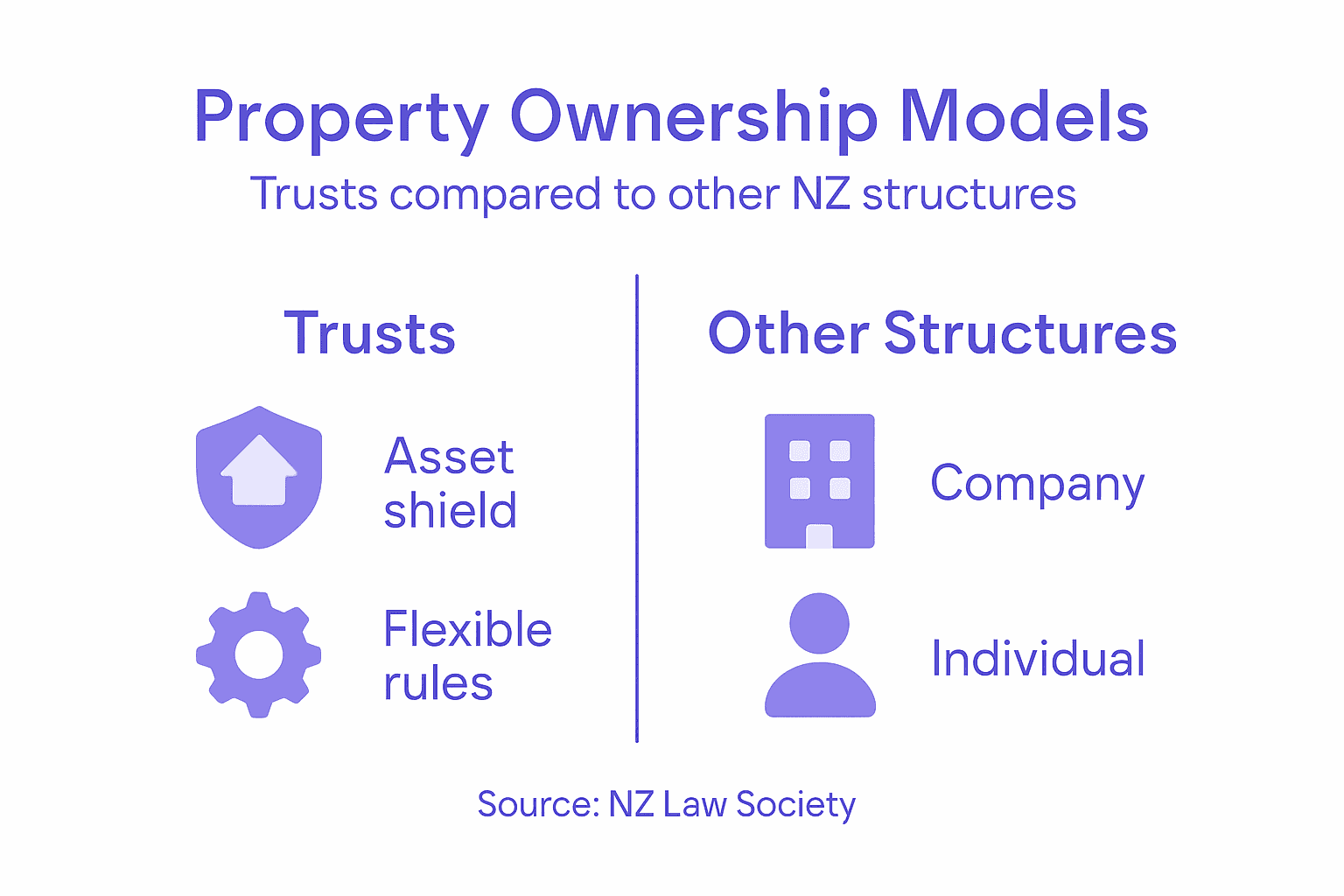
Each ownership structure carries distinct legal and financial implications. Company ownership provides corporate liability protections, while trusts offer more personalised asset management approaches. Joint ownership introduces shared decision-making complexities, potentially limiting individual control. Trustees maintain greater autonomy and can implement more nuanced asset management strategies, making trusts particularly attractive for complex family wealth preservation scenarios.
To highlight how trusts differ from other ownership structures in New Zealand, view this summary:
| Ownership Structure | Control Mechanism | Main Legal Advantage | Common Limitation |
|---|---|---|---|
| Individual | Direct, personal | Simple transfer and management | Limited asset protection |
| Trust | Trustees act for beneficiaries | Enhanced asset protection | Complex compliance requirements |
| Joint | Shared between parties | Broad access, shared cost | Potential for dispute |
| Company | Corporate directors | Liability separated from individuals | Extra regulatory burden |
| Partnership | Collective decision-making | Flexible business arrangements | Personal liability risks |
Pro tip: Consult a qualified legal professional to comprehensively evaluate which ownership structure best aligns with your specific financial goals and personal circumstances.
Simplify Your Property Sale While Protecting Your Interests
Navigating property trusts and their complex legal duties can feel overwhelming, especially when you need to sell quickly without sacrificing control or transparency. The article highlights key challenges such as trustee responsibilities, beneficiary rights, and sophisticated trust structures that can complicate traditional real estate sales. If you are a New Zealand homeowner seeking clarity and swift action amid these complexities, easySale.co.nz offers a straightforward, stress-free solution tailored for sellers facing financial pressures, property damage, or urgent life changes.

With easySale.co.nz, you can avoid the pitfalls of complex trust dealings by receiving a fast, fair cash offer with no agents or commission fees. Our simple three-step process respects your unique circumstances and lets you settle on your preferred timeline. Learn more about how we support sellers by visiting easySale.co.nz. For details on navigating property sales with legal considerations, explore Legal considerations for property sales and deepen your understanding of Understanding property selling terminology. Take control of your sale today and move forward with confidence.
Frequently Asked Questions
What is a property trust in real estate?
A property trust is a legal arrangement where property ownership is divided between trustees, who manage the property, and beneficiaries, who receive financial benefits from it. This structure provides unique protections and governance for real estate in New Zealand.
What are the main types of trusts relevant to property ownership?
The main types of trusts include family trusts, discretionary trusts, unit trusts, testamentary trusts, and charitable trusts. Each type serves different purposes regarding asset protection and management.
How do trusts protect real estate assets for sellers?
Trusts offer asset protection from creditors, manage inheritance issues, and facilitate tax planning. They create a legal separation between ownership control and beneficial interest, enhancing security for property owners.
What are the key obligations of trustees in managing a property trust?
Trustees have legal responsibilities that include duty of care, duty of loyalty, duty of impartiality, duty of confidentiality, and duty of transparency. These obligations ensure they act in the best interests of the beneficiaries and maintain ethical management of trust assets.
Recommended
