
How to Sell Un-Consented Property Fast in NZ

Selling a property with un-consented work in New Zealand can feel daunting, especially when you learn that about 10 percent of homes have unpermitted modifications. This issue is more common than many realise, but misunderstanding the process can pose real risks for both sellers and buyers. Knowing how to navigate the required steps can make all the difference, from assessing compliance to preparing vital documents and ensuring clear disclosure throughout the sale.
Table of Contents
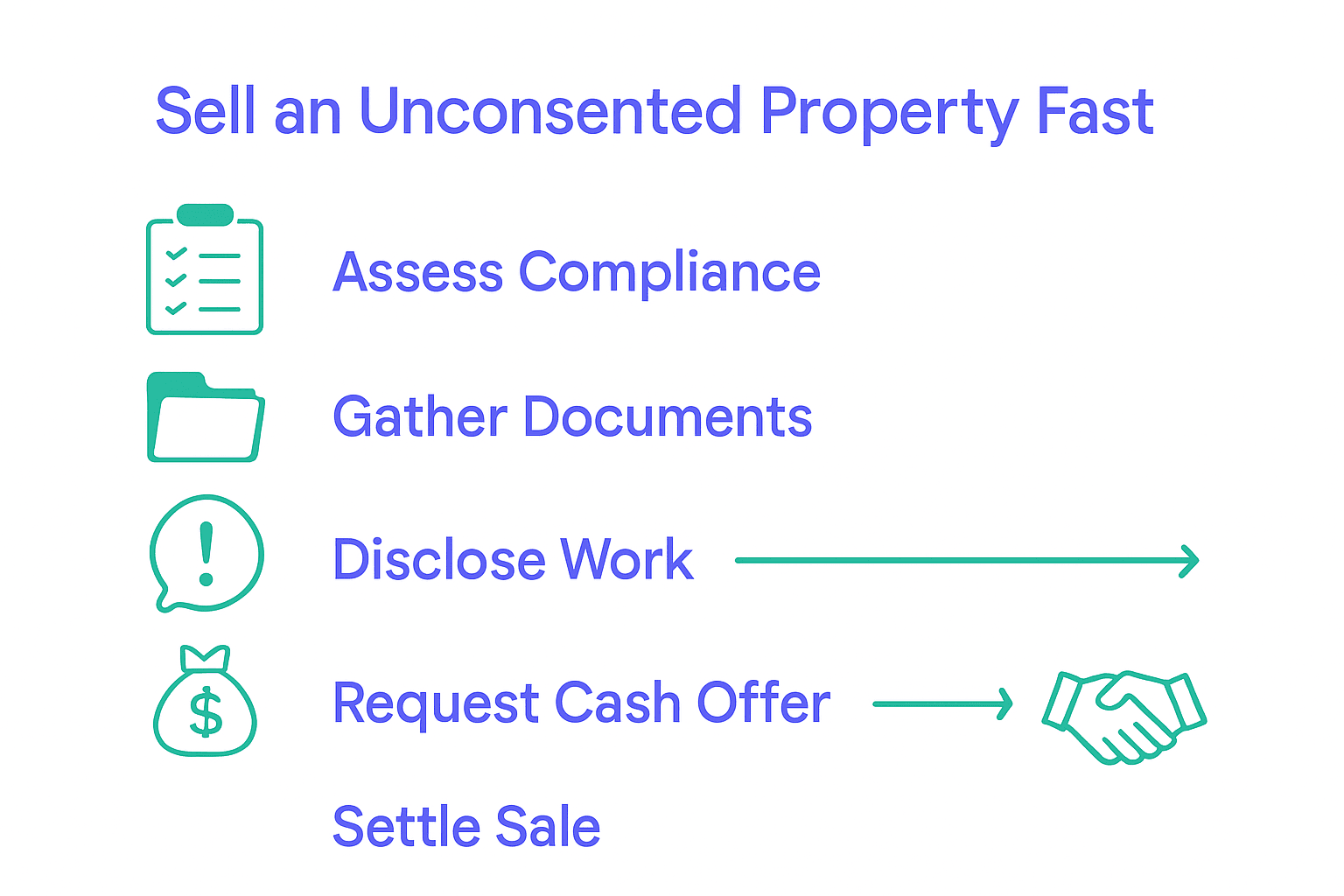
- Step 1: Assess Your Un-Consented Property Status
- Step 2: Compile Essential Property Documentation
- Step 3: Disclose Un-Consented Work to Buyers
- Step 4: Request a No-Obligation Cash Offer
- Step 5: Confirm Sale and Settle Efficiently
Quick Summary
| Key Point | Explanation |
|---|---|
| 1. Assess legal status first | Understand your property’s compliance with local regulations before listing it for sale. |
| 2. Compile all property documents | Gather essential documentation, including building plans and previous consents, to demonstrate transparency. |
| 3. Disclose all un-consented work | Legally inform buyers about any modifications done without consent to prevent legal issues. |
| 4. Request a cash offer | Engage cash buyers who understand un-consented properties to expedite the selling process. |
| 5. Finalize sale with clarity | Ensure a detailed inspection and clear communication about compliance to smooth the settlement process. |
Step 1: Assess Your Un-Consented Property Status
When selling an un-consented property in New Zealand, your first critical step is understanding exactly where your property stands legally. This involves carefully examining any unpermitted building work and determining its compliance status with local regulations.
According to Auckland Council, a Certificate of Acceptance (CoA) can provide limited assurance for building work completed without prior consent. This means you need to investigate whether your property’s modifications meet current building code standards. Start by gathering all available documentation about past renovations or structural changes. Look for original building plans, receipts from contractors, or any records of previous work done on the property.
Your primary goal is determining whether the un-consented work can be retrospectively approved. Some key factors to consider include:
- The age of the modifications (work done since 1 July 1992 might qualify for a CoA)
- Structural safety and compliance with current building codes
- Potential requirements for professional assessment or additional documentation
Warning: If the council cannot demonstrate code compliance, they may require you to remove unauthorized building work or face potential legal complications when selling. This makes a thorough initial assessment absolutely crucial for a smooth property transaction.
The next step will involve getting a professional inspection to definitively understand your property’s un-consented status and potential pathways for resolution.
Step 2: Compile Essential Property Documentation
Gathering comprehensive documentation is crucial when preparing to sell an un-consented property. Your goal is to create a clear paper trail that provides transparency about the property’s history and potential modifications.
Estate Listings highlights the importance of a Land Information Memorandum (LIM) report as a critical document that provides comprehensive details about your property. This report will include key information such as building consents, special land features, and zoning specifics. Collect the following essential documents:
- Original property title
- Building plans and architectural drawings
- Receipts from past renovations or construction work
- Any existing building consent documentation
- Contractor invoices and work records
- Previous property inspection reports
According to Building.govt.nz, even if some building work was exempt from requiring consent, it must still comply with relevant legislation like the Resource Management Act 1991. This means notifying the council about any work can help create a more transparent record.
Warning: Incomplete or missing documentation can significantly complicate your property sale and potentially reduce its market value. Take time to be thorough and organized in your document collection.

Once you have compiled all relevant documentation, you’ll be ready to move forward with understanding your property’s compliance status and preparing for a professional assessment.
Step 3: Disclose Un-Consented Work to Buyers
Disclosing un-consented work is a critical step in selling your property transparently and legally. Your goal is to provide potential buyers with a complete and honest picture of the property’s current status and any potential challenges.
OClaw emphasizes that vendors in New Zealand are legally required to disclose any known issues with the property including unconsented work. This means you must be upfront about any modifications or structural changes that were completed without proper building consent. Prepare a detailed disclosure statement that outlines:
- Specific areas of un-consented work
- Approximate date of modifications
- Reasons why consent was not originally obtained
- Potential implications for future compliance
- Any steps you have taken to address the un-consented status
When discussing un-consented work with potential buyers, be direct and transparent. Offer all documentation you have collected and be prepared to explain the potential risks and challenges. Consider having a professional assessment ready to demonstrate that while the work lacks formal consent, it may still meet current building code standards.
Warning: Failing to fully disclose un-consented work can lead to legal complications and potentially derail your property sale. Honesty and transparency are your best strategies.
After complete disclosure, potential buyers can make informed decisions about whether they are comfortable proceeding with the purchase and understand the property’s unique circumstances.
Step 4: Request a No-Obligation Cash Offer
Requestinga no-obligation cash offer represents your pathway to selling an un-consented property quickly and efficiently. This step transforms your property challenges into a potential smooth transaction without extensive repairs or lengthy negotiations.
OneRoof highlights that properties with unconsented work often receive lower offers due to perceived risks. Understanding this, cash buyers who specialize in such properties can provide a realistic valuation that considers the current state of your home. When requesting your cash offer, prepare to provide:
- Comprehensive property documentation
- Details of un-consented work
- Current property condition information
- Any known structural or compliance issues
To maximize your offer potential, Warren and Phillip Tibbotts recommend obtaining a Certificate of Acceptance beforehand. This demonstrates your proactive approach to addressing potential buyer concerns and can help streamline the sales process.
Warning: Be transparent about all known property issues to ensure you receive an accurate and fair cash offer. Attempting to hide or misrepresent property details can derail potential sales.
After receiving your no-obligation cash offer, you can carefully evaluate the proposal and decide whether it meets your selling objectives without any pressure to proceed.
Step 5: Confirm Sale and Settle Efficiently
Confirming and settling an un-consented property sale requires careful navigation and strategic communication. Your goal is to finalize the transaction smoothly while maintaining transparency about the property’s unique status.
Settled emphasizes the critical importance of conducting thorough inspections and obtaining comprehensive reports before finalizing any property sale. In the context of an un-consented property, this becomes even more crucial. You will need to:
- Prepare a detailed disclosure document
- Obtain a professional building inspection report
- Clarify all potential compliance requirements
- Discuss potential remediation costs transparently
House Me Legal recommends engaging a specialized building inspector who can provide an objective assessment of unconsented works. This professional evaluation can help both you and the buyer understand the exact nature of any modifications and potential pathways for bringing the property into full compliance.
Warning: Unexpected complications can arise during settlement. Be prepared to negotiate and potentially adjust the sale price based on the building inspection findings.
Once all documentation is reviewed and both parties are satisfied, you can proceed to the final settlement stage with confidence and clarity about the property’s status.
Sell Your Un-Consented Property Quickly with Confidence
Selling a property with un-consented building work can feel overwhelming and stressful. The challenges of compiling documentation, disclosing issues, and navigating legal requirements often stand in the way of a smooth sale. If you are aiming to bypass lengthy inspections, costly repairs, and complicated settlements, you need a straightforward solution that respects your unique situation and helps you move forward without uncertainty.

At easySale.co.nz, we specialise in buying homes in any condition including those with un-consented work. Forget hassle-filled listings or real estate fees. Our simple process lets you submit your property details, receive a no-obligation cash offer, and settle on your preferred timeline. Many Kiwis in similar situations have used us to unlock value quickly and avoid costly delays. Ready to turn your un-consented property into a fast, fair sale? Discover how we can help you today at easySale.co.nz and take control of your property journey with ease.
Frequently Asked Questions
How can I assess my un-consented property status before selling?
To assess your un-consented property status, start by examining any unpermitted building work and its compliance with local regulations. Gather documentation such as past building plans and contractor invoices to understand what modifications were made and if they can be approved retrospectively.
What essential documents should I compile to sell my un-consented property?
Collect important documents such as the original property title, building plans, receipts from renovations, and any existing consent documentation. Organizing these papers will provide transparency and can help ensure a smoother sale process.
How do I disclose un-consented work to potential buyers?
Disclose un-consented work by preparing a detailed statement that clearly outlines specific areas of unconsented work, its approximate dates, and any implications for compliance. This upfront communication builds trust and helps buyers make informed decisions.
How can I request a cash offer for my un-consented property?
To request a cash offer, prepare a comprehensive summary of your property’s condition, detailing any un-consented work and any documentation you have. Reach out to buyers who specialize in properties with compliance challenges; this can streamline your sales process and may yield a faster offer.
What steps should I take to confirm the sale and settle my un-consented property?
Confirming and settling the sale involves preparing a detailed disclosure document, obtaining a professional inspection report, and clarifying compliance requirements with the buyer. Be transparent about any potential remediation costs to facilitate a smooth settlement.
What challenges might I face when selling an un-consented property?
Challenges include potential legal complications and lower offers due to perceived risks from buyers. Be prepared for negotiations and consider obtaining a Certificate of Acceptance to demonstrate a proactive approach toward compliance and help mitigate concerns.
Recommended
