
Selling a house with a mortgage: steps for Kiwi homeowners

TL;DR:Selling a house with a mortgage involves discharging the lender’s claim at settlement using sale proceeds.Early engagement with your lender, accurate cost planning, and precise legal coordination are essential to protect your equity and avoid delays.
Selling a house with a mortgage is defined as the process of transferring property ownership while using the sale proceeds to formally discharge your outstanding home loan. Most Kiwi homeowners carry a mortgage when they sell, so this is a well-worn path rather than an unusual situation. The key is understanding that paying off your loan and legally discharging your mortgage are two separate steps. You need both to complete a clean sale. Getting the selling house with mortgage steps right from the start protects your equity and prevents costly delays at settlement.
What documents and preliminary steps do you need before listing?

Preparation is the single biggest factor in a smooth sale. Gathering key documents at least one month before listing gives your lawyer and lender enough time to process everything without rushing. Delays at this stage flow directly into settlement delays, which cost money.
Collect these before you do anything else:
- Current mortgage statement: Shows your outstanding balance and loan type (fixed or floating).
- Record of Title: Confirms legal ownership and any registered encumbrances, including your mortgage.
- Building consents and LIM report: Required by buyers and their lawyers during due diligence.
- Rates and body corporate records: Relevant if you own a unit title property.
- Loan agreement: Spells out your break fee conditions and any early repayment charges.
Once you have these, contact your lender directly. Ask for your current payout figure, your loan type, and whether any break fees apply. Consulting your bank early gives you a clear picture of your equity position, which is simply your property’s current market value minus your outstanding loan balance. An independent property valuation at this stage is worth the cost. It stops you from pricing too low and risking negative equity, or too high and sitting on the market.
Pro Tip: Ask your lender for a written payout figure valid for 30 days. This gives you a firm number to work with while you prepare to list.
How do you plan and execute the sale while managing your mortgage payoff?
Once you know your equity position, you can move into the active selling phase. The steps below follow the standard process for selling a mortgaged property in New Zealand.
- Confirm your discharge process with your lender. Ask specifically how they handle mortgage discharge at settlement and what paperwork they require from your lawyer.
- Choose your sales method. You can sell through a licensed real estate agent, sell privately, or sell directly to a cash buyer. Each method has different cost and timeline implications. A private sale guide can help you weigh up the options if you want to avoid agent commissions.
- Engage a lawyer or conveyancer. Your lawyer prepares the Contract of Sale, liaises with the buyer’s lawyer, and issues mortgage discharge instructions to your bank on settlement day.
- Budget for legal and bank fees. Legal and conveyancing fees typically run $1,500–$2,500, and your bank will charge a discharge fee of $250–$500 on top of that.
- Time your sale to reduce break costs. If you are on a fixed-rate loan, selling at or near the end of your fixed term avoids or minimises break fees. Talk to your lender about the exact cost before you commit to a settlement date.
- Review and sign the Contract of Sale. Your lawyer will flag any conditions, such as a finance clause or building inspection, that could affect your timeline.
Pro Tip: If you are on a fixed-rate mortgage, ask your lender to calculate the break fee for two or three different settlement dates. A difference of even a few weeks can save you thousands.
What happens on settlement day to pay off your mortgage?
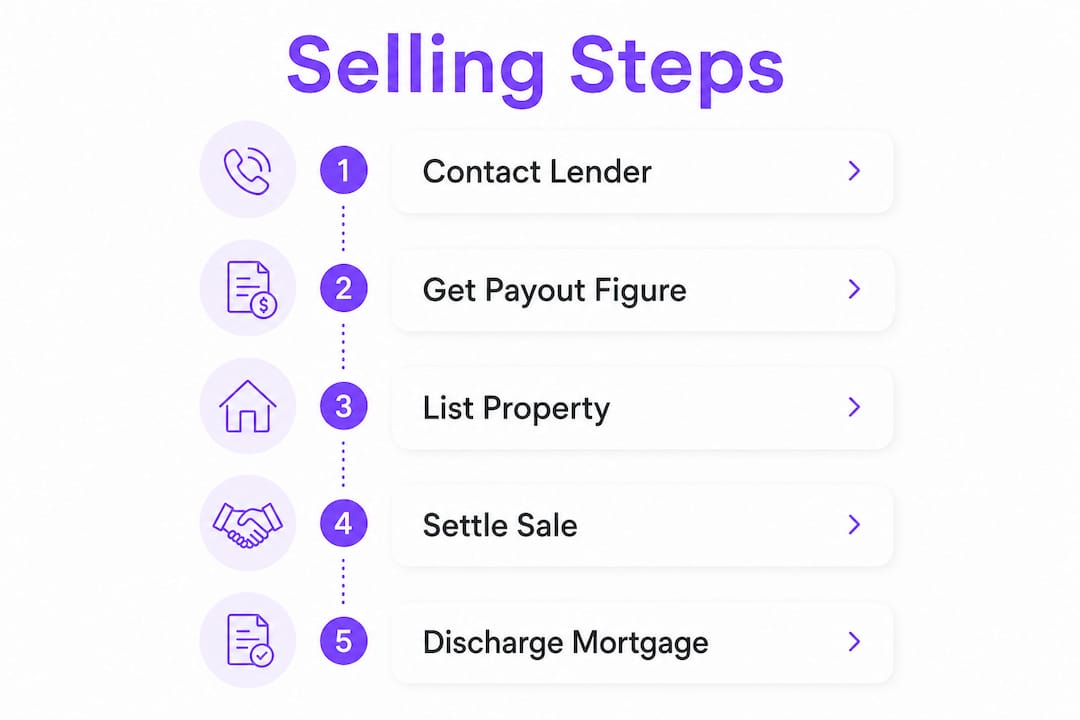
Settlement day is when ownership legally transfers and your mortgage gets discharged. Coordinated lawyer communication on this day is non-negotiable. Any gap in the fund flow can delay the title transfer and hold up your payout.
Here is what happens in sequence:
- Your lawyer receives the full purchase price from the buyer’s lawyer via electronic bank transfer.
- Your lawyer pays your lender the outstanding mortgage balance, formally discharging the loan.
- The lender releases the mortgage from the title, and your lawyer registers the title transfer through the Land Information New Zealand (LINZ) digital system.
- Your lawyer deducts their fees and any other agreed costs, then transfers the remaining balance to your nominated account.
- You vacate the property by the agreed possession time and hand over keys, garage remotes, and alarm codes.
Submit signed authority documents to your lawyer at least 48 hours before settlement. This is the instruction that authorises your lawyer to act on your behalf and pay out the mortgage. Missing this deadline is one of the most common causes of settlement day delays.
Pro Tip: Confirm with your lawyer the day before settlement that all signed documents are received and the payout figure from your lender is current. A five-minute call can prevent a very stressful afternoon.
How do you manage selling when you are buying another property at the same time?
Buying and selling simultaneously is common, but it adds a layer of financial and legal complexity. You have three main options, each with different risk profiles.
| Option | How it works | Key risk |
|---|---|---|
| Sell first, then buy | Complete your sale before committing to a purchase | Temporary accommodation needed between transactions |
| Buy first with bridging finance | Borrow against both properties until your sale settles | Higher short-term debt and interest costs |
| Port your mortgage | Transfer your existing loan to the new property | Subject to lender approval and property eligibility |
Bridging finance requires your bank to stress-test your ability to service the “peak debt,” which is the combined total of both mortgages at the same time. Lenders apply a test rate of roughly 7.5%–8.5% to check you can handle that load. This means your income needs to comfortably cover both loans at elevated rates, not just your current repayments.
Simultaneous settlement requires your lawyer to coordinate fund flow across both transactions on the same day. Sale proceeds clear your old mortgage first, and the remaining equity then funds your new purchase. This works, but it leaves no room for error. Get lender approval for your preferred approach well before you sign any purchase agreement.
What costs and pitfalls should you watch for when selling with a mortgage?
The costs of selling a mortgaged property go well beyond the agent’s commission. Many sellers are caught off guard by fees they did not budget for.
- Break fees on fixed-rate loans: Breaking a fixed-term mortgage early can trigger costs ranging from negligible to several thousand dollars, depending on how much of your term remains and where current interest rates sit relative to your rate.
- Bank discharge fee: Expect $250–$500 to formally discharge your mortgage from the title.
- Legal and conveyancing fees: Budget $1,500–$2,500 for your lawyer’s work across the full sale process.
- Negative equity risk: If your sale price falls below your mortgage balance, you remain personally liable for the shortfall. An accurate independent valuation before listing is the best protection against this outcome.
- Delayed signed instructions: Failing to return signed authority documents to your lawyer on time can freeze the entire settlement process and delay your payout by days.
Total selling costs in New Zealand, including agent fees, legal costs, and mortgage-related charges, can reach $34,000–$52,000 on an average-priced property. Knowing this figure before you list helps you set a realistic net proceeds target. A cash home buyers guide can also help you assess your property’s market value against your outstanding loan balance before committing to a sale price.
Key takeaways
Selling a mortgaged property in New Zealand requires early lender engagement, accurate cost budgeting, and precise legal coordination to protect your equity and settle without delays.
| Point | Details |
|---|---|
| Start with your lender | Contact your bank early to get your payout figure, equity position, and break fee estimate. |
| Budget for all costs | Legal fees, discharge fees, and break costs can total thousands beyond agent commissions. |
| Submit documents on time | Signed authority documents must reach your lawyer at least 48 hours before settlement. |
| Know your negative equity risk | Get an independent valuation before listing to confirm your sale price covers your mortgage balance. |
| Plan bridging finance carefully | Banks stress-test peak debt at 7.5%–8.5%, so confirm your income can support both loans. |
What I have learned from watching sellers get this wrong
The sellers who struggle most are not the ones with complicated mortgages. They are the ones who leave the lender conversation too late. I have seen homeowners sign a sale and purchase agreement without knowing their break fee, then face a bill of several thousand dollars they had not budgeted for. That is a painful and entirely avoidable surprise.
The other pattern I keep seeing is sellers underestimating how much their lawyer needs to do before settlement day. Your conveyancer is not just signing papers. They are coordinating fund flows, issuing discharge instructions to the bank, and registering the title transfer through LINZ. Give them time and give them your signed documents early.
If you are buying and selling at the same time, do not assume bridging finance is straightforward. Banks assess your peak debt serviceability at stress-test rates, and not everyone qualifies. Knowing this before you make an unconditional offer on a new property is critical. The sellers who handle this process well share one habit: they talk to their lender and their lawyer before they list, not after they have accepted an offer.
— Aaron
Selling your mortgaged property with less stress
Managing a mortgage while selling your home is a lot to coordinate. Easysale works directly with Kiwi homeowners to make that process simpler, whether you are downsizing, retiring, or just need a faster path to settlement.

Easysale buys properties in any condition, with no agent commissions and no drawn-out negotiation. You receive a fair cash offer, and you choose the settlement date that works around your mortgage and your plans. For homeowners looking at a retirement or downsizing sale, Easysale offers a direct, low-hassle route that removes the uncertainty from the process. If you want to understand your options before committing to a traditional sale, Easysale is worth a conversation.
FAQ
Can you sell a house if you still have a mortgage?
Yes. Most Kiwi homeowners sell with an active mortgage. The sale proceeds pay out the loan at settlement, and your lawyer registers the formal mortgage discharge with LINZ.
What is a mortgage discharge and why does it matter?
A mortgage discharge is the legal removal of your lender’s claim from your property title. Paying off your loan balance alone does not discharge the mortgage. Your lawyer must formally register the discharge through LINZ before the title can transfer to the buyer.
How much does it cost to discharge a mortgage when selling?
Bank discharge fees typically run $250–$500. Add legal and conveyancing fees of $1,500–$2,500, and break fees if you are on a fixed-rate loan, and your mortgage-related selling costs can reach several thousand dollars.
What happens if my property sells for less than my mortgage balance?
You remain personally liable for the shortfall. This is called negative equity. An independent property valuation before listing helps you set a realistic price and avoid this outcome.
How early should I contact my lender before selling?
Contact your lender as soon as you start thinking about selling. Getting your payout figure, equity position, and break fee estimate early gives you the information you need to price your property and plan your timeline accurately.
Recommended
