
Master the Simple Property Sale Process: Quick & Stress-Free
Selling a property sounds straightforward, right? It is one of the biggest financial moves most Kiwis make and the details can get overwhelming fast. But more than 50 percent of sellers miss out on extra profit simply because they skip key steps at the very start. Most reckon it is all about putting up a listing and waiting. The real edge comes from focusing on preparation before anyone even sees your property.
Table of Contents
- Step 1: Assess Your Current Situation
- Step 2: Determine Your Property’s Value
- Step 3: Prepare The Property For Sale
- Step 4: List Your Property Effectively
- Step 5: Negotiate Offers And Close The Sale
Quick Summary
| Key Point | Explanation |
|---|---|
| 1. Assess your financial situation first | Understand your mortgage and equity to prepare accurately for your sale decisions. |
| 2. Get multiple property valuations | Use professional valuers and comparative market analysis to establish an accurate market value for your property. |
| 3. Invest in property preparation | Make minor repairs, deep clean, and enhance kerb appeal to attract potential buyers effectively. |
| 4. Use professional photography | High-quality images improve online visibility and engagement, making your listing more appealing to buyers. |
| 5. Evaluate offers comprehensively | Consider terms beyond price, including settlement timelines and conditions, to secure the best deal. |
Step 1: Assess Your Current Situation
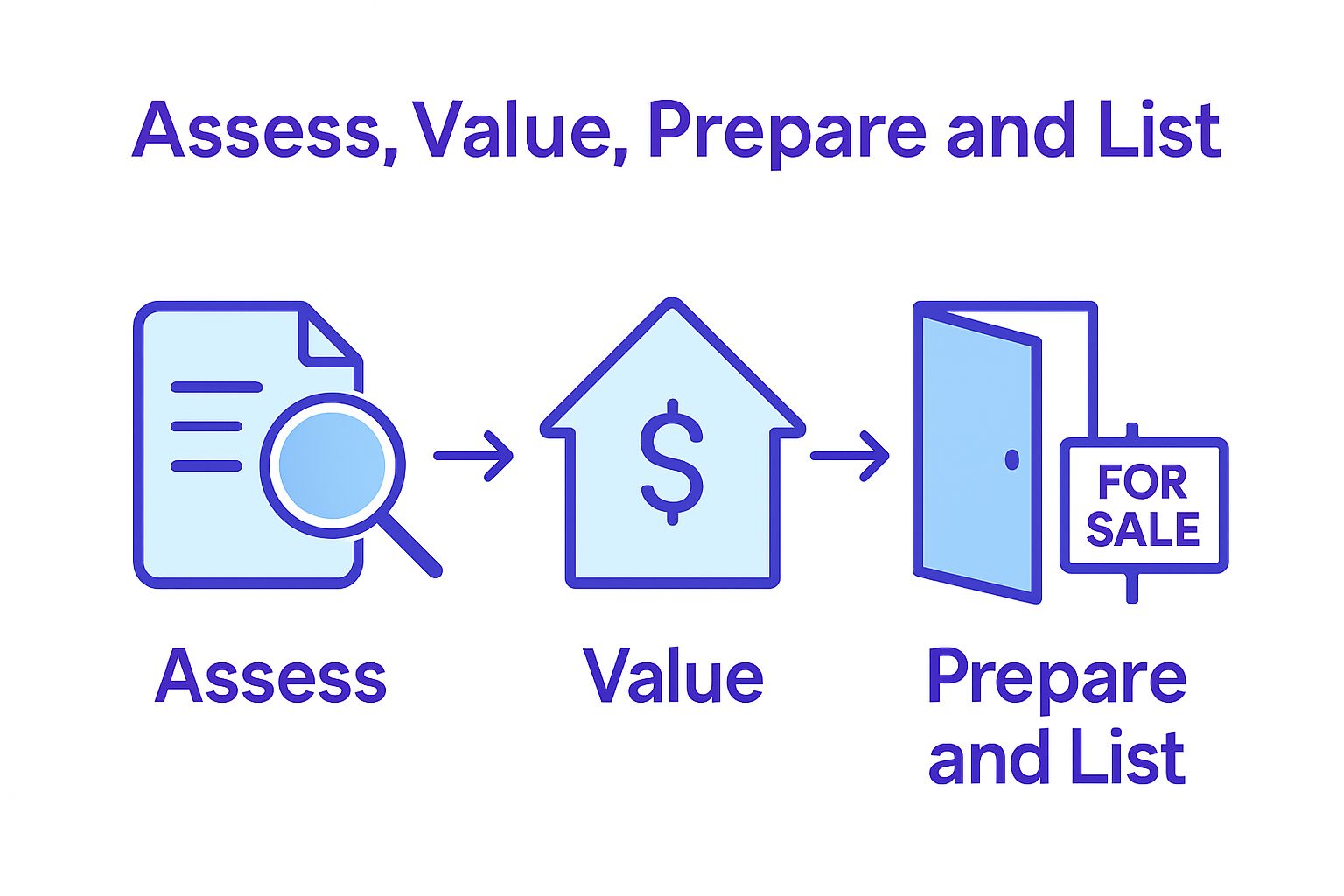
Starting a simple property sale process begins with a comprehensive assessment of your current property and personal circumstances. This critical first step involves understanding your financial position, property condition, and overall readiness to sell. By conducting a thorough evaluation, you’ll set a strong foundation for a smooth and successful property transaction.
Understanding Your Financial Landscape
Begin by examining your current financial situation with complete transparency. Review your outstanding mortgage balance and potential equity you might have in the property. Calculate your potential net proceeds by subtracting any mortgage balances, potential repair costs, and transaction expenses from the estimated market value of your property.
Carefully consider your reasons for selling. Are you facing financial pressure? Relocating? Downsizing? Each motivation will influence your approach to the property sale.
If you’re experiencing financial strain, you might need a faster selling process that prioritises speed over maximum market value.
Conversely, if time is not critical, you could invest in minor improvements to potentially increase your property’s attractiveness to buyers.
Key financial considerations should include:
- Current mortgage balance
- Outstanding property taxes
- Potential repair or renovation costs
- Estimated market value
- Your desired sale timeline
By meticulously documenting these factors, you’ll create a clear roadmap for your property sale journey. Understanding your financial position empowers you to make informed decisions and set realistic expectations about the selling process. This preparatory work reduces potential stress and increases the likelihood of a successful, straightforward property transaction.
Step 2: Determine Your Property’s Value
Determining your property’s accurate market value is a pivotal step in the simple property sale process. This crucial stage helps you set realistic expectations, understand your potential financial outcome, and position your property competitively in the market.
A precise valuation ensures you neither undersell nor overprice your property, maximising your chances of a successful transaction.
Professional and Comparative Valuation Methods
To establish a reliable property value, you’ll want to employ multiple assessment strategies. Professional valuers offer the most comprehensive approach, providing an expert analysis that considers numerous factors beyond basic market comparisons. A professional valuation takes into account specific property characteristics such as location, condition, recent improvements, and current market trends.
Begin by obtaining at least one professional valuation to cross-reference and validate the estimated value. Online property valuation tools can serve as an initial benchmark, but they should not be your sole reference point. These digital platforms often provide a broad range estimate that might not capture your property’s unique features or recent local market shifts.
Compare your property with similar recently sold properties in your neighbourhood. Look for homes with comparable size, age, condition, and location. Pay attention to sale prices within the last three to six months, as these provide the most current market insight. Real estate websites and local property records can be valuable resources for gathering this comparative data.
Key factors influencing your property’s value include:
- Property size and land area
- Number of bedrooms and bathrooms
- Overall structural condition
- Recent renovations or improvements
- Neighbourhood amenities and location
- Current local market conditions
Consider the potential impact of any unique property features or challenges. A renovated kitchen, energy-efficient upgrades, or a desirable school zone can positively influence value. Conversely, significant structural issues, outdated systems, or less attractive location attributes might necessitate a more conservative pricing approach. By conducting a thorough and objective assessment, you’ll develop a realistic understanding of your property’s market position and potential sale price.
The table below compares key property valuation methods, so you can understand the strengths and considerations of each when determining your property's value.
| Valuation Method | Key Features | Considerations |
|---|---|---|
| Professional Valuation | In-depth, expert assessment | May incur a fee; highly accurate |
| Online Property Valuation Tools | Fast, convenient, initial guide | Less precise; broad estimate only |
| Comparative Market Analysis | Uses recent sales data | Requires up-to-date, relevant local sales cases |
| Real Estate Agent Appraisal | Practical, market-based view | Varies by agent expertise and market knowledge. Watch out for agents who overpromise |
Step 3: Prepare the Property for Sale
Preparing your property for sale is a critical step that can significantly impact your selling potential and final sale price. This stage involves strategic improvements, thorough cleaning, and presentation refinements that make your property attractive to potential buyers. The goal is to create a welcoming environment that allows buyers to envision themselves living in the space.
Comprehensive Property Presentation
Start with a comprehensive property assessment, identifying areas that require repair or improvement. Minor repairs can dramatically increase your property’s appeal. Focus on addressing visible issues like chipped paint, loose fixtures, or minor structural concerns. According to HouseLogic, strategic home staging can help potential buyers emotionally connect with the space and potentially accelerate the sale process.
Deep cleaning is fundamental to presenting a well-maintained property. This goes beyond standard tidying and involves a thorough top-to-bottom cleaning approach. Professionally steam clean carpets, wash windows, declutter all spaces, and ensure every room feels spacious and inviting. Remove personal items and photographs to help potential buyers imagine themselves in the property. Create a neutral, welcoming atmosphere that appeals to a broad range of tastes.
Key preparation tasks include:
- Repair minor structural damages
- Deep clean all interior and exterior spaces
- Declutter and depersonalise living areas
- Enhance kerb appeal with basic landscaping
- Neutralise strong odours
- Ensure all fixtures and appliances are functional
If you’re dealing with a property that requires more extensive repairs, learn more about our damaged property sale options. Consider professional photography to showcase your property’s best features. High-quality images can significantly improve online listing attractiveness and potential buyer interest.

By investing time and modest resources into preparation, you increase the likelihood of a faster, more profitable property sale.
Below is a checklist table to help you systematically prepare your property for sale, ensuring you cover all crucial tasks for maximum buyer appeal and a smoother sales process.
| Preparation Task | Purpose | Completion Status |
|---|---|---|
| Repair minor structural damages | Enhance buyer confidence | |
| Deep clean interior and exterior | Present a well-maintained space | |
| Declutter and depersonalise areas | Create a neutral environment | |
| Enhance kerb appeal | Boost first impressions | |
| Neutralise strong odours | Appeal to more buyers | |
| Check all fixtures and appliances | Ensure functionality is evident | |
| Consider professional photography | Showcase property in its best light |
Step 4: List Your Property Effectively
Listing your property effectively is a critical step that can dramatically influence your sale speed and potential returns. This stage transforms your property from a private asset into an attractive market opportunity, requiring strategic presentation and targeted marketing approaches. The right listing strategy can mean the difference between a property sitting stagnant and attracting motivated buyers.
Strategic Online and Offline Marketing
Professional photography is non-negotiable in today’s digital property market. High-quality images that showcase your property’s best features will capture potential buyers’ attention instantly. Invest in a professional photographer who understands property staging and can highlight your home’s unique characteristics. Compelling visual content can significantly increase online engagement and buyer interest.
Craft a compelling property description that goes beyond basic details. Your listing should tell a story, emphasising not just the physical attributes but the lifestyle potential. Highlight unique features, recent upgrades, neighbourhood advantages, and potential for future development. Use clear, concise language that speaks directly to your target buyer demographic. Transparency is key - accurately represent your property while presenting it in the most appealing light possible.
Key listing considerations include:
- Select multiple online property platforms
- Use high-resolution, professionally taken photographs
- Write a narrative-driven property description
- Include precise property measurements
- Highlight recent improvements or unique features
- Specify realistic pricing based on market valuation
Consider your listing’s digital reach by exploring our comprehensive property sale services. Distribute your listing across multiple platforms to maximise visibility. Some buyers prefer traditional real estate websites, while others might discover your property through social media channels or specialised property apps. By creating a multi-channel marketing approach, you increase the chances of finding the right buyer quickly and efficiently.
Step 5: Negotiate Offers and Close the Sale
Negotiating offers and closing the sale represents the culmination of your property selling journey. This critical stage requires strategic thinking, emotional discipline, and careful legal consideration. Your goal is to secure the most favourable terms while ensuring a smooth, legally compliant transaction that meets your financial and timeline objectives.
Strategic Offer Evaluation and Negotiation
Not all offers are created equal, and understanding how to evaluate them goes beyond simply comparing dollar amounts. Consider each offer holistically, examining factors like settlement timeframes, deposit amounts, potential contingencies, and the buyer’s financial preparedness. A lower offer with fewer complications might ultimately be more attractive than a higher offer laden with complex conditions.
Careful documentation is paramount during negotiations. Maintain a clear record of all communications, counteroffers, and agreed terms. Written communication provides legal protection and creates a transparent trail of negotiations. Be prepared to respond promptly and professionally to buyer inquiries, demonstrating your commitment to a fair and efficient sale process. Legal professionals help navigate complex negotiation scenarios and ensure all legal requirements are met.
Key negotiation considerations include:
- Understand your minimum acceptable price
- Be clear about non-negotiable sale conditions
- Remain emotionally detached during discussions
- Consider the buyer’s perspective and motivations
- Be prepared to compromise strategically
- Have a backup plan if negotiations stall
Once you’ve accepted an offer, focus on the settlement process. This involves preparing necessary legal documentation, coordinating property transfers, and ensuring all financial settlements are completed accurately. Engaging a professional conveyancer can streamline this process, reducing potential complications and providing expert guidance through the final stages of your property sale.
Make Your Property Sale Effortless with easySale.co.nz
Are you overwhelmed by the complicated steps and stressful negotiations that come with selling your house? The article above highlights just how challenging traditional property sales can be, especially if you are navigating financial pressure, property damage or urgent life changes. If you want a simple, fast and stress-free sale without the added worry of hidden costs or lengthy processes, you deserve a solution that puts you in control.
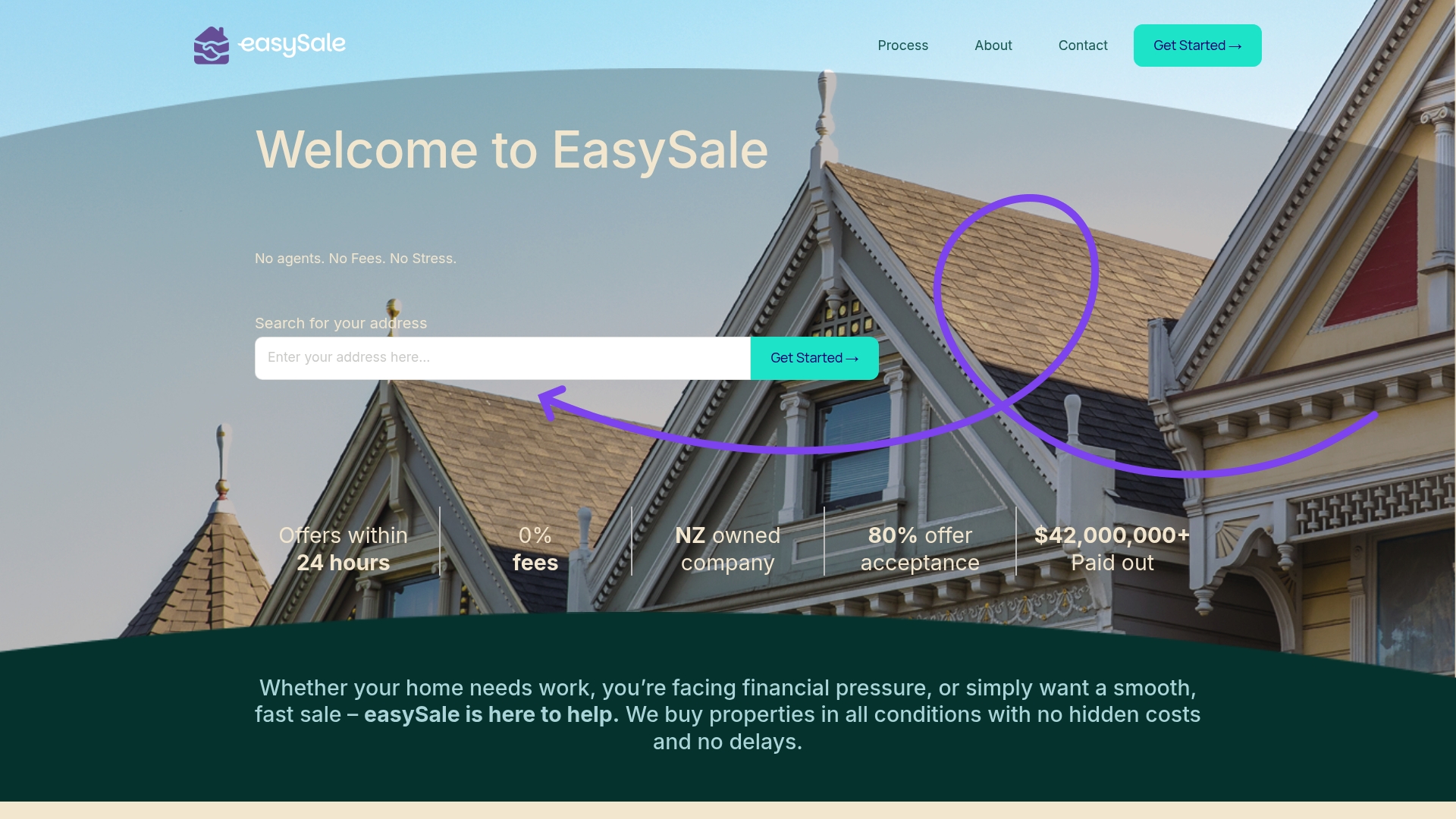
With easySale.co.nz, you skip the uncertainty. We offer fast cash sales, no agent commissions, and we buy properties in any condition. Submit your details and you could receive a no-obligation cash offer that matches your needs and timeline. Discover how our direct buying process can help you move forward faster by visiting our simple home selling page today. Your next step to a hassle-free sale starts now.
Frequently Asked Questions
How can I assess my current financial situation before selling my property?
Assess your current financial situation by reviewing your outstanding mortgage balance, any liens, and potential equity. Document these factors to understand your financial obligations and calculate your potential net proceeds.
What steps should I take to determine my property’s accurate market value?
Begin by obtaining at least one professional valuation of your property to ensure a reliable estimate. You should also compare your property with similar homes sold in the last three to six months to gauge its market position accurately.
How can I effectively prepare my property for sale?
To prepare your property, focus on minor repairs, deep cleaning, and decluttering to enhance its appeal. Consider staging the home and improving kerb appeal to attract more buyers, which can significantly increase your chances of a successful sale.
What are the best practices for listing my property effectively?
List your property with high-quality, professional photographs and a compelling description that highlights its unique features. Distributing your listing across multiple online platforms can increase visibility and attract more potential buyers.
How do I evaluate and negotiate offers on my property?
Evaluate offers by considering not just the price, but also settlement timeframes and buyer conditions. Keep detailed documentation of all negotiations to create a clear trail and respond promptly to maintain professionalism throughout the process.
What should I expect during the closing process of the property sale?
During the closing process, prepare necessary legal documentation and coordinate the transfer of the property. Engaging a professional can streamline this process, ensuring all financial settlements are completed accurately and efficiently.
Recommended
