
A stress-free property transaction guide for Kiwi sellers and buyers

Front-load your due diligence, get a property lawyer or conveyancer involved before you sign anything, and agree on a realistic timeline from day one. That’s the whole strategy for a genuinely stress-free property transaction guide, boiled down.
Two things you can do this afternoon: gather your title, LIM and consent records if you’re selling, and phone or email a property lawyer to get advice moving. Settled and the Real Estate Authority both back early preparation, and if speed matters more than maximum price, a direct buyer like Easysale is worth a look.
- Get your title, LIM and council consent records first
- Line up a lawyer before you sign an agency agreement or make an offer
- Set a timeline you can live with, not one an agent sets for you
Pro Tip: Front-loading due diligence, doing the checks before you list rather than during the conditional period, is the single biggest lever for a calmer sale. It moves the pressure to a point where you still have options.
Key Takeaways
Removing stress from a property transaction comes down to front-loading due diligence, engaging a lawyer early, and matching your sale method to your actual timeline and risk tolerance.
| Point | Details |
|---|---|
| Gather documents first | Request title, LIM and council file records before listing, not after an offer arrives. |
| Engage a lawyer early | A property lawyer or conveyancer should review agreements before you sign anything. |
| Match method to property | Choose auction, deadline sale or negotiation based on buyer interest and your timeline. |
| Track settlement deadlines | Use a shared calendar for conditional dates and confirm finance status mid-period. |
| Easysale as a fast option | A three-step cash offer process suits sellers needing speed or facing repair costs. |
Table of Contents
- What are the stages of a property transaction in New Zealand?
- What should sellers check before listing a property?
- Which method of sale reduces stress the most?
- What happens on settlement day?
- How can you avoid the most common settlement stress points?
- How can easySale help sellers who want a faster, calmer sale?
- Why the standard advice on stress-free selling misses the point
- A faster route through the same transaction
- Frequently asked questions about stress-free property transactions
- Sources
What are the stages of a property transaction in New Zealand?
Every property sale in New Zealand moves through roughly six stages, and knowing where you are in that sequence stops a lot of unnecessary panic.
- Planning. You decide to sell or start house hunting, get a rough valuation or budget sorted, and pick a lawyer.
- Prepare and check. Sellers gather title, LIM and consent documents; buyers arrange finance pre-approval and a support team.
- Marketing and offer. The property goes to market under your chosen sale method, and offers start coming in.
- Conditional period. Buyers organise building inspections, finance confirmation and sometimes LIM review, usually over one to three weeks.
- Settlement. Funds and title change hands, generally four to six weeks after the sale goes unconditional.
- Post-settlement. Keys are handed over, final utility readings happen, and any agreed repairs or adjustments are actioned.
Delays cluster around two points: slow finance approval during the conditional period, and missing documentation that surfaces late. Trade Me’s step-by-step guide notes that timelines shift depending on sale method. Auctions compress the offer stage into one day; deadline sales bunch offers together; negotiated sales can drag on for weeks.
What should sellers check before listing a property?
The conditional period feels like a race against the clock because most sellers leave their paperwork until a buyer is already asking questions. Gathering everything before you list removes that pressure entirely, and it’s the single most useful habit in this whole guide.
Start with your title, available through your lawyer or Land Information New Zealand, which confirms ownership and any covenants or easements. Request a LIM report from your local council. It flags consents, rates, and any recorded hazards. Pull your council file too, since it shows the full consent history for renovations, decks, sleepouts and pools.
Check for unconsented work and expired code compliance certificates. Missing paperwork on a renovated bathroom or an added garage is one of the most common causes of last-minute settlement renegotiations, and it’s far easier to fix or disclose before a buyer’s lawyer finds it during due diligence.
- Photograph and list every chattel included in the sale
- Confirm boundary pegs match the title plan, especially on older sections
- Get a registered valuation or agent appraisal if you’re unsure of price
- Build a single transaction folder (digital or paper) and share it with your lawyer and agent
Government guidance is explicit that sellers must disclose known issues such as weather-tightness problems, boundary disputes or unconsented work. Failing to disclose can unravel a sale after it’s gone unconditional, which is a far worse outcome than an awkward conversation upfront.
Pro Tip: Set up your transaction folder before you contact an agent. Handing over a complete document set on day one makes the whole campaign move faster and signals to buyers that there’s nothing to hide.
For a broader rundown of preparation steps, Easysale’s guide on essential tips for stress-free property selling covers the same ground in more depth.
Which method of sale reduces stress the most?
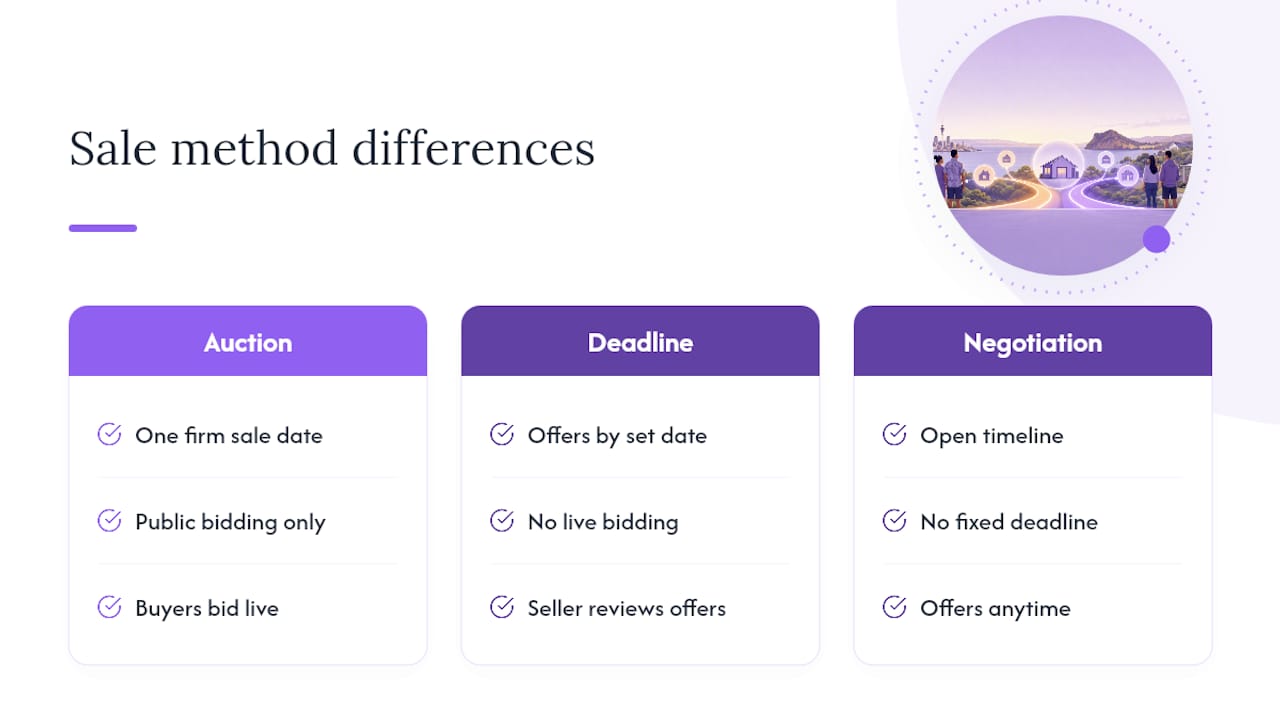
New Zealand sellers generally choose between auction, deadline sale (tender) and price by negotiation, and each one changes both the timeline and the buyer psychology you’re dealing with. Settled’s selling guidance frames the choice around what suits the specific property rather than a one-size-fits-all default.
- Auction sets a firm date and creates competitive pressure, which suits properties with strong buyer interest but adds a public, high-stakes moment many sellers find nerve-wracking.
- Deadline sale or tender gathers offers by a set date without the live-bidding theatre, giving you more time to weigh terms alongside price.
- Negotiation keeps things flexible and low-key but can stretch out for weeks with no guaranteed end date.
Choosing an agent matters as much as choosing a method. Before signing an agency agreement, check the commission structure, who pays for marketing, whether the agreement is exclusive or general, and the cancellation terms if the relationship doesn’t work out. The REA’s agency agreement guide confirms these agreements are legally binding but negotiable, and must be provided to you in writing with a signed copy returned.
Selling privately without an agent is legal and saves on commission, but it puts every disclosure and negotiation obligation squarely on you. Whichever path you pick, talk to a lawyer before you sign anything, not after.
What happens on settlement day?
Settlement day is where most of the anxiety in a property transaction concentrates, largely because so much has to align within a narrow window. Knowing the sequence in advance takes most of the sting out of it.
- 48 to 72 hours before settlement, do a final inspection to confirm the property matches what was agreed, chattels are present, and no new damage has occurred.
- The statement of adjustments gets prepared by the seller’s lawyer, covering rates, water charges and any other pro rata costs split between buyer and seller.
- On settlement morning, the buyer’s lawyer confirms funds are ready and the seller’s lawyer confirms the title is clear to transfer.
- Funds transfer and title lodgement happen electronically through the lawyers, and once confirmed, keys are released, usually early afternoon.
- If settlement is delayed, the standard sale and purchase agreement allows for penalty interest on late funds; your lawyer will advise on next steps and, in serious cases, on cancellation rights.
A property lawyer or conveyancer manages this whole sequence on your behalf, which is exactly why getting one on board early matters more than most people expect.
How can you avoid the most common settlement stress points?
Most settlement stress comes from a handful of repeat offenders, and each one has a straightforward fix if you catch it early.
- Missing paperwork or unconsented work: request your LIM and council file the moment you decide to sell, not once an offer lands.
- Chattels and keys confusion: list every included item and its condition in writing before you sign, so nothing gets disputed at handover.
- Agency agreement traps: watch for double-commission clauses that can apply if you switch agents or sell privately after an exclusive listing expires.
- Buyers’ finance and conditions: ask for realistic condition deadlines and confirm finance approval status in writing partway through the conditional period, rather than waiting for the due date to arrive.
Consumer NZ’s guidance recommends budgeting for every cost upfront, building a support team of lawyer, inspector and lender, and checking hazard exposure for the area, four habits that apply equally to sellers watching a deal from the other side.
Pro Tip: Keep every condition deadline in a shared calendar with your lawyer. Chasing dates in your head is where most last-minute panic comes from.

How can easySale help sellers who want a faster, calmer sale?
Easysale’s process runs in three steps: submit your property details, receive a no-obligation cash offer, and settle on a timeline that suits you. There’s no agent commission, no open homes, and no requirement to fix anything before selling.
This fits sellers facing a tight deadline, a property with unconsented work or damage that’s expensive to remedy, or anyone who simply wants to skip the marketing campaign altogether. Easysale works alongside independent legal advisers and partner buyers, so the compliance checks that would normally sit with a real estate transaction still happen, just with far less on the seller’s plate.
- Fast, no-obligation cash offer within days
- No repairs, no staging, no agent fees
- Settlement date set by you, not by market conditions
A seller juggling a deceased estate, an expired code compliance certificate and three siblings who all want a quick, clean resolution doesn’t need a six-week marketing campaign. They need certainty.
For sellers dealing with a property in poor condition specifically, Easysale’s damaged house buying service covers as-is, where-is purchases without requiring any repair work first.
Why the standard advice on stress-free selling misses the point
Most guides tell you to “stay calm” and “communicate well” with your agent and lawyer, which is true but useless as advice. The actual difference between a calm sale and a stressful one isn’t attitude, it’s sequencing. Sellers who gather their LIM, title and consent records before they list are working from a position of choice. Sellers who wait until a buyer’s lawyer raises a query are working from a position of damage control.
Where conventional advice really falls short is agency agreements. Most sellers treat the agreement as a formality to sign quickly so the campaign can start. That’s backwards. The commission structure, cancellation terms and marketing cost split are exactly where disputes and double-commission traps hide later, and they’re negotiable every single time, not just in theory.
If you take one thing from this guide, prioritise the document gathering over everything else. It costs a weekend, and it’s the only step that genuinely removes uncertainty rather than just managing it once it appears.
A faster route through the same transaction
Easysale exists for the Kiwi sellers this guide is really written for: people who’ve done the checklist, sat with the timeline, and decided the traditional six-stage process still isn’t worth the wait or the cost. Where an agent-led sale involves marketing spend, commission, open homes and a conditional period that can still fall through, Easysale removes each of those variables. You get a cash offer without listing, without repairs, and without paying anyone a percentage of your sale price.

It suits sellers facing a tight deadline, an inherited property with paperwork gaps, a tenanted home, or simply anyone who’s weighed up the stress of a traditional campaign against a fixed, fast alternative. If that sounds like your situation, get a no-obligation cash offer and see what a settlement date on your terms actually looks like.
Frequently asked questions about stress-free property transactions
What is the fastest way to reduce stress when selling a property in New Zealand? Front-load your due diligence. Gather your title, LIM and council file before listing, and get a property lawyer involved before you sign an agency agreement.
How long does a typical property settlement take in New Zealand? Settlement generally happens four to six weeks after a sale goes unconditional, though this varies by sale method and how quickly finance conditions are satisfied.
Do I need a lawyer to sell a property privately in New Zealand? It’s not legally required, but the Law Society strongly recommends it, since disclosure and contract obligations still apply whether or not an agent is involved.
What is a LIM report and why does it matter before listing? A Land Information Memorandum, issued by your local council, shows consents, rates and recorded hazards. It helps you spot and resolve issues before a buyer’s lawyer finds them.
What’s the difference between auction, deadline sale and negotiation? Auction sets one firm sale date with public bidding, deadline sale collects offers by a set date without live bidding, and negotiation runs on an open timeline with no fixed deadline.
Can a sale still fall through after it becomes unconditional? Rarely, but it can happen if the seller failed to disclose a known issue, such as unconsented work, which can lead to legal action or the buyer seeking cancellation.
What should I check in an agency agreement before signing? Commission rate, who covers marketing costs, whether the listing is exclusive or general, and the cancellation terms, particularly any clause covering double commission.
What happens if settlement is delayed on the day? The standard sale and purchase agreement typically allows for penalty interest on late funds. Your lawyer will advise on next steps and any cancellation rights.
Is Easysale a good option if my property has unconsented work? Yes. Easysale purchases properties in any condition, including those with compliance gaps, without requiring repairs or consent remediation before sale.
How does Easysale’s process differ from a traditional agent sale? It skips marketing, open homes and commission. You submit details, receive a cash offer, and settle on a timeline you choose.
What documents should I prepare before contacting a lawyer? Title, LIM, council file, any consent records, and a list of chattels included in the sale. Having these ready speeds up the first consultation significantly.
Are there costs involved in getting an initial property appraisal? Many agents offer a free market appraisal, while a formal registered valuation carries a fee. Either gives you a useful starting point for pricing decisions.
What is a statement of adjustments? A document prepared by the seller’s lawyer that itemises pro rata costs, such as rates and water charges, split fairly between buyer and seller at settlement.
Can I switch real estate agents partway through a sale? Yes, but check your agency agreement’s exclusivity period and cancellation clause first, since switching too early can trigger double-commission liability.
Does easySale charge commission or fees to sellers? No. Easysale’s cash offer process does not involve agent commission or the marketing costs typically associated with a traditional listing.
This article is general information, not a substitute for advice from a qualified financial advisor. Consult a qualified financial professional about your own circumstances before acting on anything here.
Sources
- Settled — selling guidance (Real Estate Authority)
- REA guidance for buyers and sellers
- Law Society — Buying and selling a property
Recommended
