
What Is As-Is-Where-Is Sale? Complete Overview

Did you know that over 70 percent of homes sold as-is end up closing much faster than traditional property sales? Many sellers look for quick solutions that save money and time, while buyers often hope for a bargain but face the risk of costly repairs. Understanding the rules and trade-offs behind as-is-where-is sales helps both parties make smarter decisions and avoid common pitfalls in today’s fast-moving real estate world.
Key Takeaways
| Point | Details |
|---|---|
| As-Is-Where-Is Sales | Buyers acquire properties in their current condition without seller warranties, making them responsible for all repairs. |
| Streamlined Transactions | This sales method typically enables faster transactions, particularly beneficial for distressed properties or sellers under time constraints. |
| Legal Obligations | Sellers must disclose known material defects despite selling ‘as-is’, ensuring transparency in the transaction. |
| Risk vs. Reward | Buyers may enjoy lower purchase prices but must account for potential unexpected repair costs, while sellers can expedite sales without upfront renovations. |
Table of Contents
- Defining As-Is-Where-Is Sale In Property
- How As-Is-Where-Is Sales Work In Practice
- Legal Principles And Seller Disclosure Obligations
- Risks And Benefits For Buyers And Sellers
- Comparing As-Is-Where-Is To Traditional Sales
Defining As-Is-Where-Is Sale in Property
An as-is-where-is sale represents a property transaction where the buyer accepts the property exactly in its current condition, with all existing faults and limitations. According to settled.co.nz , this clause signifies that a buyer agrees to purchase an item without any warranties or guarantees from the seller regarding its quality or future performance.
In practical terms, an as-is-where-is sale means the seller makes no promises about the property’s condition. The buyer takes full responsibility for any visible or hidden defects, essentially purchasing the property in its present state without expecting the seller to make repairs or improvements. Our guide on selling properties quickly highlights how this approach can streamline transactions for both parties.
Key characteristics of an as-is-where-is sale include:
- No seller warranties or guarantees
- Buyer assumes all repair and renovation costs
- Property transferred in its exact current condition
- Typically faster transaction process
- Often used for distressed, damaged, or inherited properties
This sales method provides a straightforward solution for homeowners wanting to sell quickly without investing additional time or money into property improvements. For individuals facing urgent life changes or financial pressures, an as-is-where-is sale can offer a quick and uncomplicated path to property transfer.
How As-Is-Where-Is Sales Work in Practice
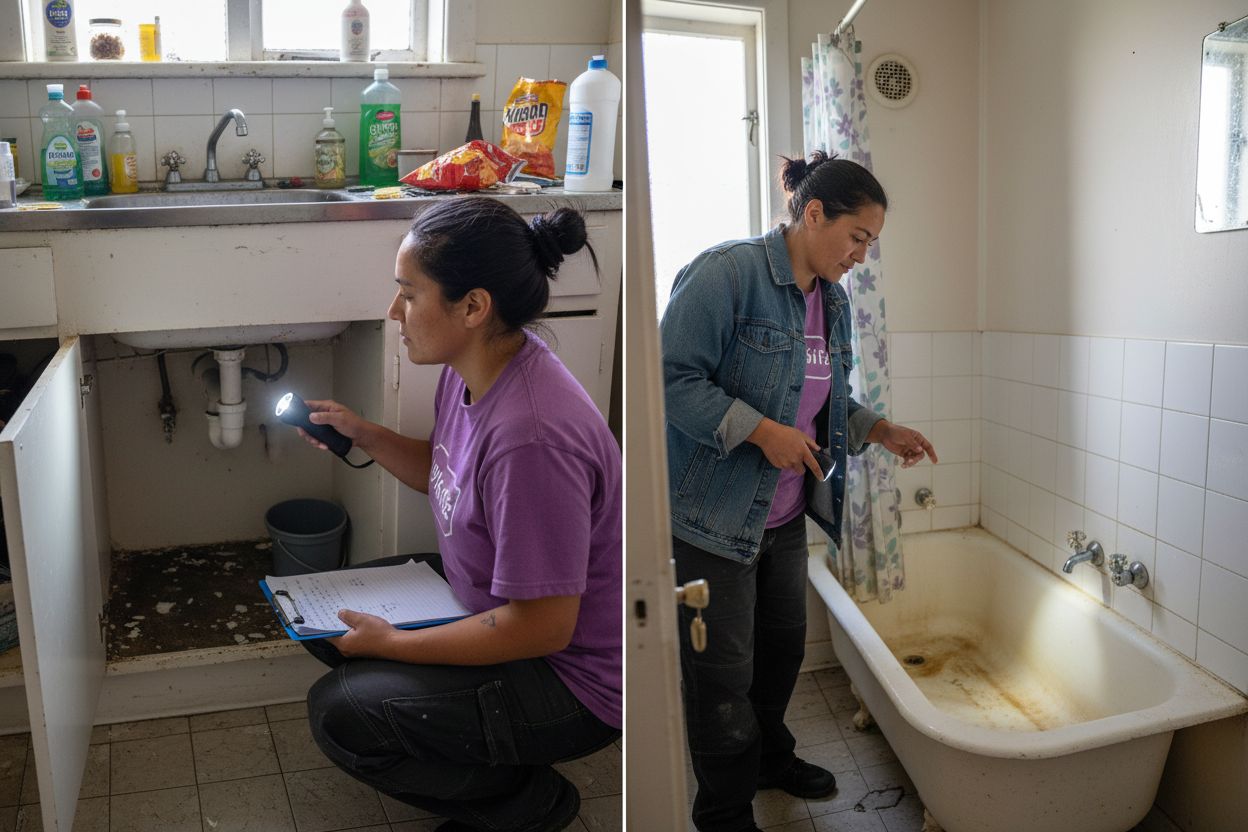
In an as-is-where-is sale, the property transaction process differs significantly from traditional real estate sales. According to Chase’s real estate insights, buyers are encouraged to conduct thorough inspections to understand potential issues before finalising the purchase, since the seller will not make any repairs or updates before selling.
The practical workflow typically involves several key steps. First, the property is listed in its current condition, with full disclosure of known issues. Our guide on understanding cash property sales highlights how this approach can benefit sellers wanting a quick transaction. Potential buyers then conduct their own comprehensive property assessment, knowing they’ll be responsible for all future repairs and renovations.
Critical steps in an as-is-where-is sale include:
- Property listed in current condition
- Comprehensive buyer property inspection
- Transparent disclosure of known property issues
- Buyer accepts full repair responsibility
- Negotiation based on property’s existing condition
- Faster sale process with reduced seller obligations
This sales method is particularly beneficial for properties that might be challenging to sell through traditional channels – such as inherited homes, properties with significant damage, or those requiring extensive renovations. For sellers facing time constraints or financial pressures, an as-is-where-is sale offers a streamlined path to property transfer without the need for costly pre-sale improvements.
Legal Principles and Seller Disclosure Obligations
As-is-where-is sales come with specific legal principles that protect both buyers and sellers. According to legal experts, while sellers can market a property ‘as is,’ they still maintain a critical legal obligation to disclose known material defects that could impact the property’s value or safety.
The legal framework surrounding these sales is nuanced. Legal research indicates that the ‘as is, where is’ clause does not provide sellers with complete immunity from accountability. Sellers cannot intentionally conceal significant property issues or misrepresent the property’s condition.
Key legal disclosure requirements include:
- Mandatory reporting of known structural defects
- Disclosure of past water damage or mold issues
- Revealing any history of pest infestations
- Reporting significant electrical or plumbing problems
- Highlighting potential environmental hazards
- Sharing any ongoing legal disputes related to the property
These disclosure obligations serve as a critical safeguard, ensuring transparency and preventing potential legal challenges.
For sellers, this means being honest and upfront about the property’s condition, while for buyers, it provides a baseline of protection against deliberately hidden defects that could lead to substantial unexpected repair costs.
Risks and Benefits for Buyers and Sellers
As-is-where-is sales present a unique set of advantages and challenges for both buyers and sellers. According to Chase’s mortgage insights, these transactions can offer a lower property price for buyers while allowing sellers to avoid costly repairs and expedite their sale process.
For buyers, the primary attraction is potentially purchasing a property at a reduced price, but this comes with significant risks. Our guide on the simple property sale process emphasises the importance of thorough property inspection. Buyers must be prepared to shoulder potentially substantial repair and renovation costs, which can quickly offset the initial price savings.
Key considerations for each party include:
For Buyers:
- Full responsibility for property repairs
- Need for comprehensive property inspection
- Higher risk of unexpected maintenance costs
- Opportunity to acquire properties in less competitive markets
For Sellers:
- Faster sale process
- Elimination of pre-sale repair expenses
- Reduced negotiation complexity
- Ability to sell properties in any condition
- Potentially lower final sale price compared to fully renovated properties
Ultimately, success in an as-is-where-is sale depends on transparent communication, realistic expectations, and careful due diligence from both parties. While these transactions can benefit motivated sellers and budget-conscious buyers, they require a clear understanding of the potential risks and rewards involved.
Comparing As-Is-Where-Is to Traditional Sales
As-is-where-is sales fundamentally differ from traditional property sales in several critical aspects. According to Chase’s real estate research, traditional sales typically involve sellers making repairs or offering credits for issues discovered during property inspections, whereas as-is sales transfer the property in its current state with no such obligations.
The negotiation dynamics represent another significant distinction. Our guide on simplified property transactions highlights how traditional sales often involve lengthy back-and-forth negotiations about property condition, repair costs, and potential credits. In contrast, as-is-where-is sales streamline this process by establishing clear expectations upfront that the buyer accepts the property’s existing condition.
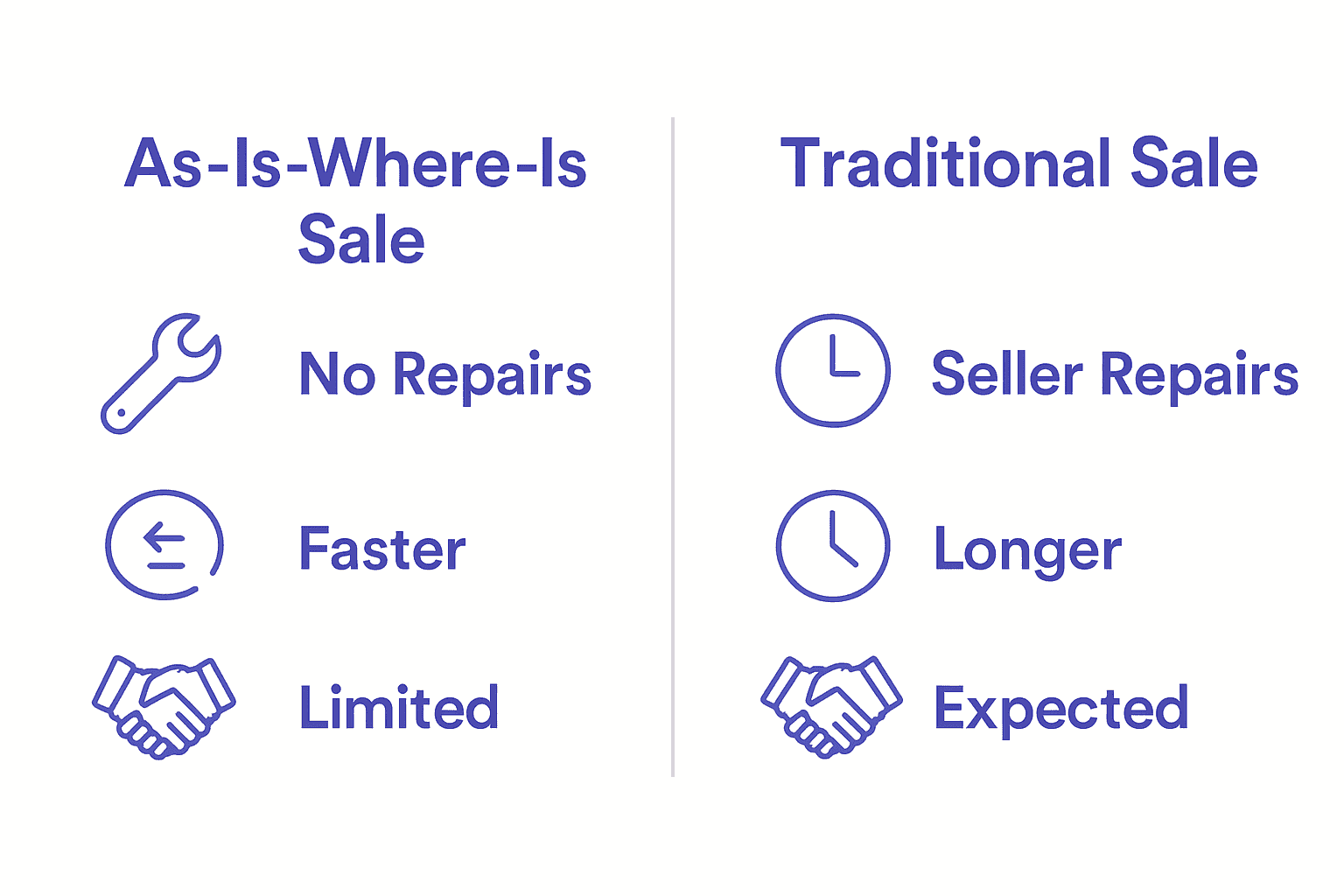
Here’s how as-is-where-is sales compare to traditional property sales:
| Feature | As-Is-Where-Is Sale | Traditional Sale |
|---|---|---|
| Seller Repairs | None required | May be requested |
| Buyer Responsibilities | Full repair cost | Often negotiated |
| Sale Timeline | Fast, streamlined | Longer, more steps |
| Documentation | Simplified | More detailed |
| Sale Price | Generally lower | Often higher |
| Negotiation | Minimal on repairs | Common for repairs & credits |
Key comparative differences include:
Traditional Sales:
- Extensive property inspections
- Potential repair negotiations
- Longer transaction timelines
- Seller may offer repair credits
- More complex closing processes
As-Is-Where-Is Sales:
- Minimal negotiation about property condition
- Faster transaction process
- Buyer assumes complete repair responsibility
- Lower initial purchase price
- Simplified sales documentation
Ultimately, the choice between these sale methods depends on individual circumstances. As-is-where-is sales offer a more direct path for motivated sellers and buyers willing to accept properties with potential issues, while traditional sales provide more comprehensive property evaluation and potential remediation opportunities.
Ready to Sell Your Property As-Is in New Zealand?
If reading about as-is-where-is sales opened your eyes to how stressful and uncertain traditional property transactions can be, you’re not alone. Many homeowners feel overwhelmed by urgent repairs, hidden costs and the slow pace of selling on the open market. You might be facing financial challenges, inherited a property you do not want, or need to relocate fast. The thought of selling as-is may seem appealing, but handling it yourself could still mean delays, negotiation hassles and legal worries.

EasySale.co.nz takes that pressure off your shoulders. Our streamlined process gives you a way to sell your property in any condition, without making repairs or paying commission. You simply share your details, receive a fair cash offer and select a settlement date that works best for you. Join thousands who have already avoided open homes, agent fees and weeks of waiting by choosing an as-is property sale made simple. Act now to secure a stress-free, fast transaction directly with a national cash buyer. Visit EasySale.co.nz to start your easy property sale today.
Frequently Asked Questions
What does an as-is-where-is sale mean in real estate?
An as-is-where-is sale means the buyer purchases the property in its current condition, with no warranties or guarantees from the seller regarding repairs or improvements.
What are the responsibilities of buyers in an as-is-where-is sale?
Buyers are fully responsible for any repairs, renovations, or maintenance costs associated with the property, including any visible defects.
What are the advantages of selling a property as-is-where-is?
Selling as-is-where-is allows sellers to expedite the sale process, avoid costly repairs, and market the property in its current condition, which is beneficial for those in time-sensitive situations.
How does an as-is-where-is sale differ from a traditional property sale?
In an as-is-where-is sale, the seller has no obligation to make repairs or offer credits, resulting in a faster transaction process, while traditional sales usually involve negotiations regarding the property’s condition and repairs.
Recommended
