
Lawyer Checked Cash Offers That Close Fast for New Zealand Sellers


In New Zealand, a cash offer usually means an unconditional offer: it can get you a faster, more certain sale, but it carries real trade-offs. Speed and certainty come at a cost, usually a lower price and less room to negotiate, and you take on legal exposure the moment you sign. Before you accept anything, get your lawyer or conveyancer to check the paperwork.
TL;DR:Genuine cash offers in New Zealand are unconditional, legally binding, and free of conditions like finance approval or property sale contingencies.The typical process shortens to signing and settlement, with most due diligence handled before signing, making timing crucial and deadlines tighter.A cash sale offers faster settlement, less uncertainty, and minimal repair or staging costs but usually results in a lower sale price than a marketed campaign.Legal obligations remain strict, requiring full disclosure of defects, proper trust account deposits, and careful review of contracts to avoid misrepresentation risks.Always verify buyer identity, avoid upfront fees, and consult a lawyer before signing, as scam tactics exploit the urgency and cash offer appeal.
EasysaleExplore a Simpler Cash SaleEasysale helps New Zealand homeowners receive a fast, fair cash offer without agents or commission fees, whatever their property’s condition.Visit Easysale
Table of Contents
- What does a cash offer actually mean in New Zealand?
- How does the process and timeline usually work?
- Weighing the pros and cons as a seller
- Legal must-dos before you accept a cash offer
- Tax implications you need to check first
- Spotting scams and red flags in cash offers
- When does a cash offer actually make sense?
- How EasySale works if you need a fast, fair sale
- FAQ
- Sources
What does a cash offer actually mean in New Zealand?
When buyers describe their offer as “cash,” they almost always mean it’s unconditional. Under New Zealand practice, an unconditional offer is legally binding the moment both parties sign: there’s no finance clause, no building report condition, nothing left to satisfy before the deal is locked in. A conditional offer, by contrast, still has strings attached even if the buyer calls it a cash deal.
Some buyers advertise themselves as cash purchasers while quietly building in finance approval or a sale-of-their-own-property clause. That’s not a true cash offer, no matter what the cover letter says. Before you get excited about a quick sale, check for these signs:
- The offer includes any finance, valuation or sale-of-another-property condition.
- The buyer hasn’t named their lawyer or provided proof of funds.
- The settlement date is vague or “subject to confirmation.”
If any of those apply, you’re not dealing with a genuine unconditional cash offer yet.
How does the process and timeline usually work?
Once you accept a genuine cash offer, the path to settlement is shorter and more predictable than a standard listed sale. It typically runs in this order:
- You receive the written offer and send it straight to your lawyer or conveyancer for review.
- Your lawyer checks the sale and purchase agreement, confirms the deposit terms, and arranges for the deposit to sit in a trust account.
- Both parties sign, the offer becomes unconditional, and you’re contractually locked in.
- Settlement day arrives: funds move, your lawyer discharges any mortgage, and the title transfers through Land Information New Zealand.
A standard conditional sale usually allows 10 to 15 working days for due diligence, covering building reports, LIM requests and finance approval. A cash sale strips most or all of that window out, which is exactly why speed appeals to sellers under pressure, and exactly why your lawyer’s review before signing matters more, not less. Your solicitor and the buyer’s solicitor each handle their side of the trust accounting and settlement statement, so confirm early who’s doing what.
Weighing the pros and cons as a seller
A cash offer suits some sellers far better than others, and the right call depends on what you value most: speed or maximum price.
What you gain:
- A faster settlement with far less uncertainty about the deal falling through.
- No repair costs or staging, since most cash buyers purchase as-is.
- The option of a private, low-fuss sale without open homes.
What you give up:
- A lower price than you might get through a fully marketed campaign.
- Limited time to get a second valuation or invite competing offers.
Before signing, run a quick fairness check: compare the offer against a recent market appraisal, have your lawyer review the contract, look closely at the deposit size, and confirm the settlement date actually suits your timeline rather than the buyer’s.
Pro Tip: Ask for the deposit percentage in writing before you negotiate anything else: a thin deposit can signal a buyer who isn’t fully committed.
Legal must-dos before you accept a cash offer
New Zealand sellers carry real legal obligations, and a fast sale doesn’t reduce them. The Real Estate Authority is clear that known defects, including leaky building issues, unconsented work or natural hazard damage, must be disclosed. Leaving something out doesn’t just risk the deal, it can expose you to a misrepresentation claim later.
A few steps protect you regardless of how quickly the sale moves:
- Have a lawyer or conveyancer prepare or review the sale and purchase agreement before you sign anything.
- Insist the deposit sits in a solicitor’s trust account, never with the buyer directly.
- Understand what “unconditional” obliges you to do: once signed, backing out isn’t simple, and the buyer’s main recourse if you don’t complete is a court claim.
- Check for any sunset clause or deposit-release condition buried in the contract.
Disclosure and documentation aren’t optional extras here. They’re what keeps a private sale legally sound from offer through to settlement.
Tax implications you need to check first
Selling fast doesn’t exempt you from New Zealand’s property tax rules; for more details see Main Residence Exemption CGT: An Australian Owner’s Guide. The bright-line test can apply depending on how long you’ve owned the property, and there’s a main-home exclusion that doesn’t apply automatically to every seller.
Whether any profit is taxable depends on your ownership period and your intent when you bought the property, so don’t assume you’re covered just because you’ve lived there. A few points worth checking with a professional:
- How long you’ve held the property relative to the current bright-line period.
- Whether the main-home exclusion genuinely applies to your situation.
- Whether a previous rental or investment use affects your position.
Ask your lawyer or accountant about bright-line exposure before you sign, not after settlement.
Spotting scams and red flags in cash offers

Most cash buyers are legitimate, but the urgency that makes cash offers appealing is also what scammers exploit. Consumer Protection warns that pressure to sign quickly and requests for upfront fees are common scam tactics, and recommends sellers always verify identity and insist on time for independent advice.
Watch for these warning signs and respond with these checks:
- Heavy pressure to sign within hours: slow down and call your lawyer first.
- Any request for an “administration” or “processing” fee before contract signing: treat this as a hard no.
- A buyer who won’t name their solicitor or provide proof of funds: ask your own lawyer to verify through the buyer’s legal representative.
Genuine cash buyers give you room to get legal advice and never ask for money before the contract is signed, according to Consumer Protection. If something feels off, report it rather than proceed.
When does a cash offer actually make sense?
A cash offer earns its place in situations where time matters more than squeezing out the last dollar of value: an urgent relocation for work, an estate that needs winding up, a separation that requires a clean financial break, or a property too damaged or tenanted to market conventionally.
Before you commit, ask yourself a few honest questions: how urgent is the timeline really, how much price flexibility can you live with, and have you actually had a lawyer look at the contract yet? If the answers point towards speed and certainty, a direct sale option like EasySale is worth considering as a publisher-owned route for sellers who want to sell as-is without a marketing campaign. Whichever path you choose, independent legal review stays non-negotiable.
— Aaron
How EasySale works if you need a fast, fair sale
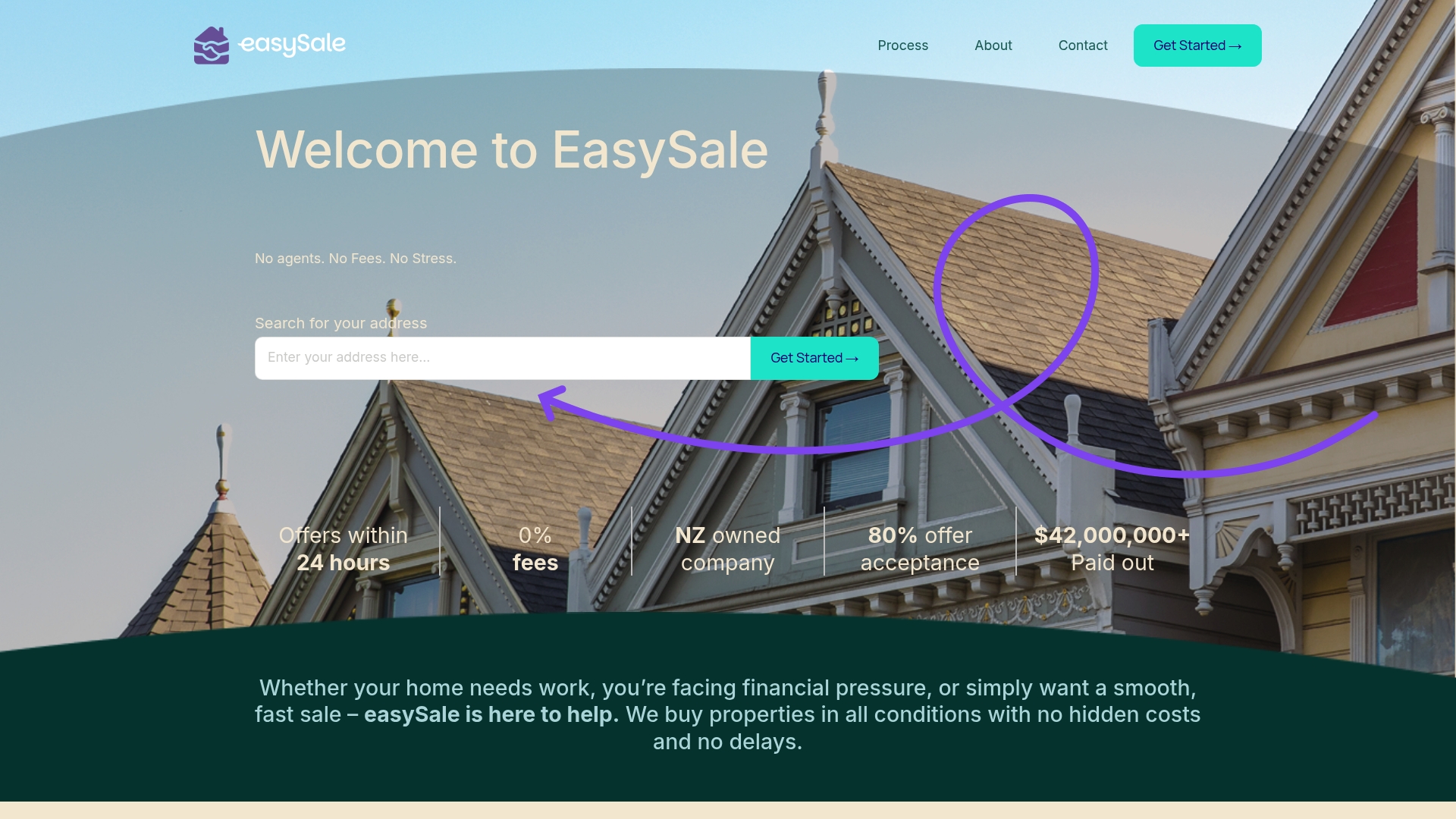
Our process is designed for situations like urgent moves, estates, separations, damaged homes, and properties that need a quick sale. The process runs in three steps:
- You submit your property details online.
- We assess the property and send back a no-obligation cash offer.
- If you accept, you choose the settlement date that suits you.
We consider properties in any condition, so there’s no repair list needed before an offer. Most sellers only need basic details such as the address, title information, and a sense of their ideal timeline. Whether your situation fits relocation, estate, divorce or separation, or a property that’s damaged or needs work, you can request a free cash offer and see what we’d pay before deciding anything.
As with any cash sale, we’d still encourage you to have your own lawyer review the agreement before you sign.
This article is general information, not a substitute for advice from a qualified financial advisor. Consult a qualified financial professional about your own circumstances before acting on anything here.
FAQ
What is the best cash offer company to sell your house to?
There’s no single best company for every seller: the right fit depends on your timeline, property condition and how much price flexibility you can accept. Compare the offer, the settlement flexibility and the buyer’s willingness to let your lawyer review everything before you decide.
Can I make a cash offer on a house in New Zealand?
Yes, buyers can make unconditional cash offers on New Zealand property, and sellers can accept them directly without going through a real estate agent. Any offer should still go through a lawyer or conveyancer before signing, as outlined by Settled.
Why are cash offers on homes better for sellers?
Cash offers typically settle faster and carry less risk of falling through, since there’s no finance condition to satisfy. The trade-off is usually a lower price and less time to shop around for competing offers.
How much cheaper can you get a house if you pay cash?
There’s no fixed discount for paying cash, since every cash offer reflects the buyer’s own assessment of the property and the urgency of the sale. Sellers should compare any cash offer against a recent market appraisal before accepting.
Sources
- Settled: Buying your first home - commonly asked questions about the transaction process
- Real Estate Authority: Sharing information - disclosures
- Inland Revenue (IRD): Bright-line test - exclusions
- Consumer Protection: ScamWatch – types of scams


