
Cash Offers in 24–48 Hours From NZ Estate Sale Pros With Lawyer Checks

Estate sale pros are professional cash buyers who purchase New Zealand homes directly, without an agent, often settling within days rather than months. The trade-off is straightforward: you get speed and certainty, but the cash price usually sits below what a marketed sale might achieve. If that trade suits your situation, get a written offer, instruct a lawyer before signing anything, and confirm the buyer’s funds are real before you commit.
TL;DR:Cash buyers typically offer a lower price than market value but guarantee quick settlement, often within 7 to 21 days, which is ideal for urgent timelines.Legal checks like confirming proof of funds and reviewing existing agency agreements are critical to avoid delays or disputes in a fast sale.If carrying costs and stress from a prolonged campaign outweigh the discount on a cash offer, accepting the cash sale becomes the smarter choice.The decision hinges on your urgency, property condition, and whether your legal and verification processes are prepared for a swift transaction.easySale provides a no-obligation cash offer, allowing sellers to compare it with other options without ongoing agent fees or marketing delays.
EasysaleSee What Your Property Could Sell ForEasysale helps New Zealand homeowners request a no-obligation cash offer, with a straightforward process and a timeline that suits them.Request a cash offer
Table of Contents
- What does an estate sale pro actually do?
- Is a cash sale the right choice for your situation?
- How does a cash sale actually run, step by step?
- What legal checks do you need before signing anything?
- When I’d choose a cash buyer, and three red flags to avoid
- How easySale can help you get a cash offer without the guesswork
- Where to check the details yourself
- Sources
- FAQ
What does an estate sale pro actually do?
An estate sale pro buys your house directly. No open homes, no agent commission, no waiting for a buyer’s finance to come through. You deal with one party who assesses your property, makes an offer, and settles on a timeframe you agree to.
This differs from a traditional agent sale, where someone else markets the property, negotiates on your behalf, and charges a commission once it sells. It also differs from selling privately yourself, where you take on the marketing, the negotiating, and the legal groundwork without professional backup. Settled that selling privately saves commission but shifts all the marketing, negotiation, and legal responsibility onto you. A cash buyer removes most of that burden, at the cost of top dollar.
Certain situations make a cash buyer the more sensible option:
- You’re behind on mortgage repayments and want to avoid the risk of a mortgagee sale.
- You’ve inherited a property you don’t want to manage, renovate, or list.
- Work or family circumstances mean you need to relocate within weeks, not months.
- The house has damage, unconsented work, or a tenant in place that would complicate a standard sale.
That gap narrows or widens depending on the property’s condition, location, and how motivated the buyer is to close quickly.
Is a cash sale the right choice for your situation?
Run through this before you commit to anything:
- How urgent is your timeline? If you need funds within two to four weeks, a marketed sale with a 90 day settlement rarely fits.
- What are your carrying costs? Add up weeks of mortgage repayments, council rates, insurance, and any maintenance the house needs while it sits on the market.
- Can you afford the repairs a buyer would demand? Unconsented work, damp, or ageing wiring often triggers renegotiation or buyer withdrawal in a standard sale.
- What’s the emotional toll of a long campaign? Repeated open homes and offers falling through cost more than money for a seller already under pressure.
Model the numbers honestly. If your mortgage and rates are costing several hundred dollars a week and a marketed sale realistically takes several weeks longer than a cash sale, the carrying costs alone can add up significantly before you even factor in stress, repairs, or a deal collapsing at finance stage. Compare that figure against the likely discount on a cash offer, and the decision often becomes clearer than it first appears.
Pro Tip: Don’t just compare the headline cash offer to your council valuation. Compare it to what you’d genuinely pocket after agent commission, marketing costs, holding costs, and the risk of a sale falling through.
If you have months to wait and want to chase the highest possible price, a marketed sale or selling privately still makes sense. Cash buyers exist for people who don’t have that runway.
How does a cash sale actually run, step by step?
The process is more structured than most sellers expect, and knowing the stages in advance removes a lot of the anxiety.
First contact. Have your mortgage balance, title details, a rough condition summary, and your reason for selling ready. This lets a buyer give you an accurate initial read rather than a vague ballpark.
Assessment and written offer. A legitimate buyer inspects or reviews the property, then puts a written offer together. According to easySale’s guide to cash offers, offers commonly arrive within 24 to 48 hours of assessment. A complete offer should spell out the price, any conditions, the proposed settlement date, and what’s included in the sale.
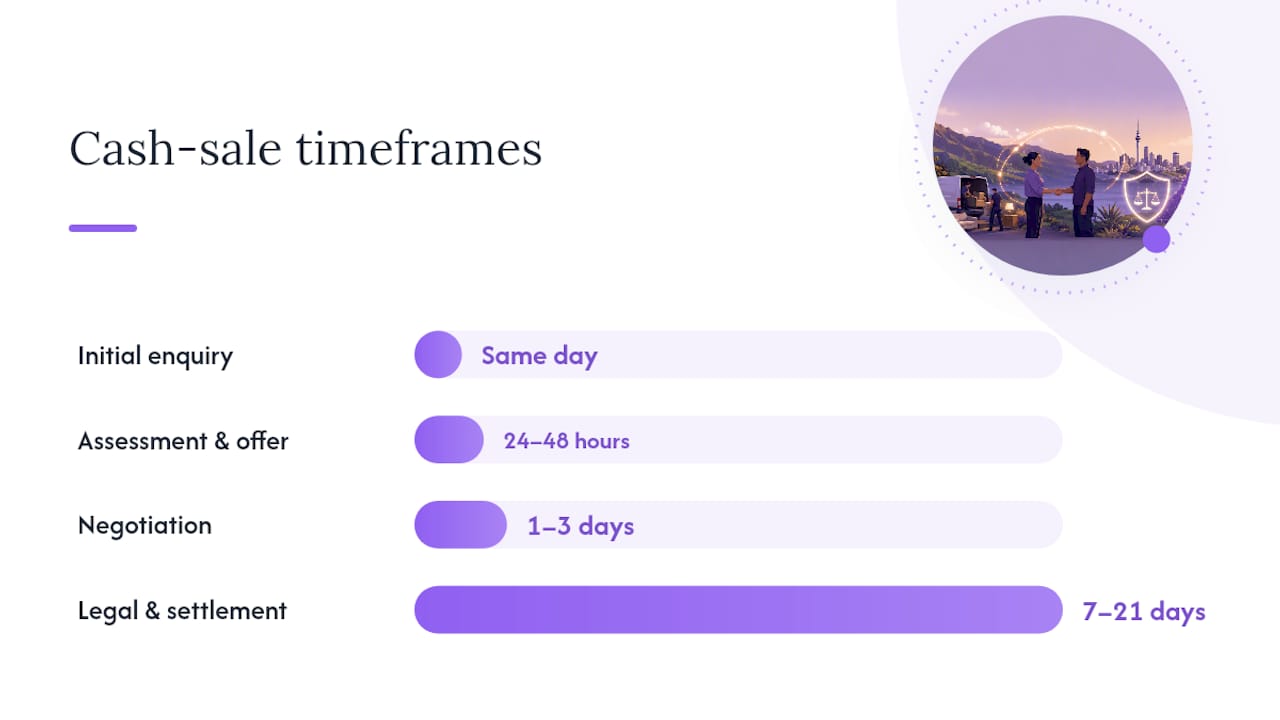
Negotiation and acceptance. Before you accept anything, ask for proof of funds and get a lawyer involved. Never sign a sale and purchase agreement without independent legal review, no matter how much pressure you feel to move fast.
Legal steps and settlement. Your lawyer prepares or checks the agreement, holds the deposit in trust, and manages disclosure obligations. Settlement on a straightforward cash deal can happen in as little as seven days, though most sit somewhere between 7 and 21 days depending on complexity.
| Stage | What happens | Typical timeframe |
|---|---|---|
| Initial enquiry | Share property and mortgage details | Same day |
| Assessment and offer | Buyer reviews property, sends written offer | 24 to 48 hours |
| Negotiation | Proof of funds requested, lawyer engaged | 1 to 3 days |
| Legal and settlement | Lawyer finalises contract, deposit held in trust | 7 to 21 days |
What legal checks do you need before signing anything?
There’s no legal requirement to use a licensed real estate agent to sell property in New Zealand. You do, however, need a lawyer or conveyancer to prepare the sale and purchase agreement and to hold any deposit in trust. Confirm their role and fees before things move any further.
A few checks matter more than others when you’re moving quickly:
- Disclosure obligations. Government guidance is clear that you must disclose known defects or issues. Skipping this risks a breach of contract claim after settlement, which is the last thing a distressed seller needs.
- Identity and anti-money laundering checks. Your lawyer manages AML/CFT verification on both sides of the transaction, so build a day or two into your timeline for this.
- Buyer verification. Ask for written proof of funds, whether that’s a bank statement or confirmation from an investor account, before you take an offer seriously.
- Existing agency agreements. If you previously listed with an agent, REA guidance warns that agent may still be entitled to commission if they introduced the eventual buyer, even after the listing ends. Get that agreement reviewed before you sign anything else.
Prioritising legal review and buyer verification over a full marketing push is the right call when time is genuinely short. Those two checks are where most quick sales actually stall.
When I’d choose a cash buyer, and three red flags to avoid
My rule is simple: if the cost of waiting (mortgage stress, mortgagee sale risk, repairs you can’t fund) outweighs the price gap on a cash offer, take the cash offer. If you’ve got breathing room and a property that shows well, chase the market instead.
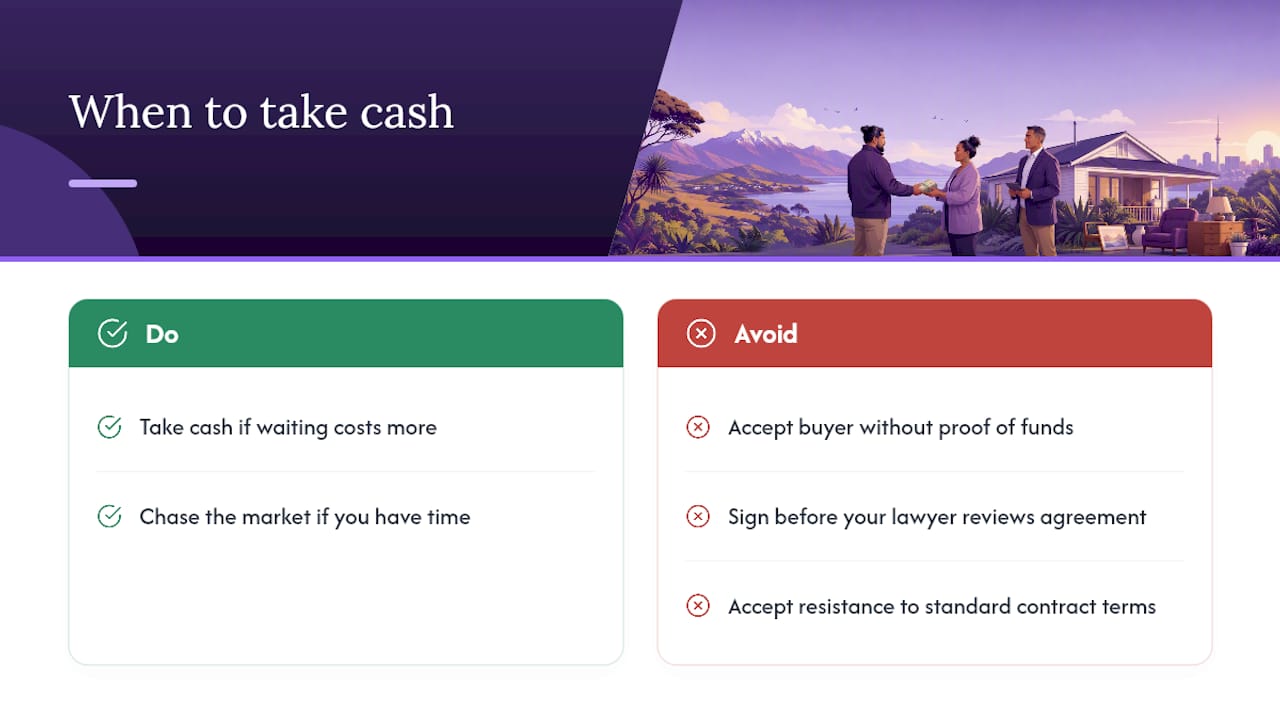
Three things should stop you in your tracks. A buyer who won’t provide proof of funds is not a buyer worth dealing with. A buyer who pressures you to sign before your lawyer has reviewed the agreement is putting their timeline ahead of your protection. And a buyer who resists standard contract terms, like a solicitor held deposit or normal disclosure clauses, is telling you something important about how the rest of the deal will go.
The most common mistake I see is sellers anchoring to their council valuation or a neighbour’s sale price, then feeling shortchanged by a cash offer that was never designed to match it. Cash offers price in speed and certainty, not the top of the market.
— Aaron
How easySale can help you get a cash offer without the guesswork
There’s a real difference between chasing a marketed sale for months and getting a straight answer in days. Easysale is the alternative to listing with an agent when repairs, timelines, or personal circumstances make a traditional campaign impractical, and it works without commission fees eating into whatever you walk away with.
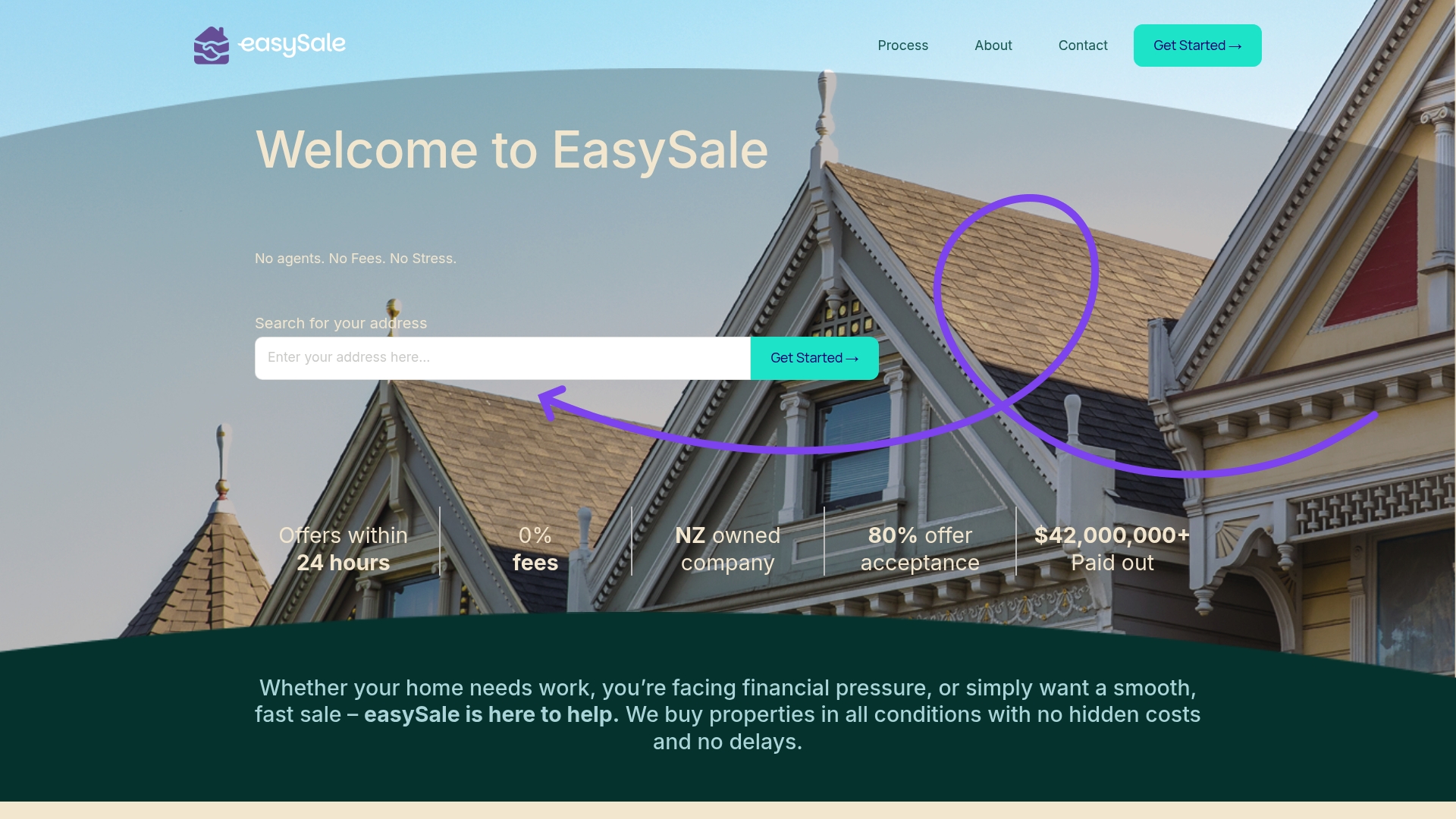
The process runs in three steps: you submit your property details, you receive a no obligation cash offer, and you settle on a timeframe that suits you rather than a buyer’s finance approval. Before you submit, have your ID, mortgage details, and a plain summary of the property’s condition ready, including anything unconsented or tenanted. Once an offer lands, treat it the same way you’d treat any other: request written proof of funds and get independent legal advice before you sign a thing. If your situation matches what’s covered above, request a no obligation cash offer from Easysale and see what a straightforward, agent free sale actually looks like for your property.
Where to check the details yourself
For obligations when selling without an agent, Settled’s private sale guidance covers disclosure and legal requirements in plain language. The Real Estate Authority’s consumer guides explain agency agreements in more depth, and easySale’s blog has further reading on avoiding commission costs if you’re still weighing your options.
Sources
FAQ
Do I need a real estate agent to sell my house in NZ?
No. There is no legal requirement to use a licensed agent to sell residential property in New Zealand, though you do need a lawyer or conveyancer to handle the legal settlement.
How fast can a cash sale actually settle?
Written offers commonly arrive within 24 to 48 hours of assessment, and settlement can complete in as little as 7 days, though most sit between 7 and 21 days depending on complexity.
What if I already signed an agency agreement?
Get it reviewed by a lawyer before proceeding. An agent may still claim commission if they introduced the eventual buyer, even after the agreement has ended.
Is easySale a good option if I’m not sure yet?
Easysale’s process gives you a no obligation cash offer with no commission attached, so you can compare it against other options before deciding anything.
Recommended
