
24 to 48 Hour Cash Offers for NZ Sellers Without an Agent

Yes, you can sell your home directly to a cash buyer in New Zealand without a real estate agent, and thousands of Kiwi homeowners do exactly this every year. It’s the fastest, lowest-hassle route to settlement when speed and certainty matter more than squeezing out top dollar. You’ll skip agent commission and staging, but expect the offer to sit below what a drawn-out open-market campaign might eventually fetch.
TL;DR:A cash home sale in New Zealand often results in a lower price than a traditional listing due to repair risks and speed premiums.Legal requirements include engaging a lawyer or conveyancer, holding the deposit in trust, and full disclosure of known property issues.The sale process typically takes 7 to 14 days, with proper legal steps and clear communication about settlement terms crucial to avoiding delays.Buyers should provide proof of funds, confirm unconditional offers, and clarify deposit handling and inclusions to negotiate effectively.Preparing identity documents, property records, and key access details in advance can streamline settlement and prevent last-minute delays.
EasysaleGet a Fast, Straightforward Cash OfferEasysale buys New Zealand properties in any condition, without agents or commission fees, and works around your preferred settlement timeline.Request a cash offer
Table of Contents
- What does selling to a cash buyer without an agent actually mean?
- What legal steps can’t you skip when selling privately?
- How does a direct cash sale actually work, step by step?
- How do you evaluate and negotiate a cash offer?
- What does speed actually cost you?
- What should you have ready before settlement?
- Why does easySale back this approach for Kiwi sellers?
- Ready to get a no-obligation cash offer?
- Sources
What does selling to a cash buyer without an agent actually mean?
A direct cash buyer is a person, company, or property investor who buys your home outright, using their own funds rather than relying on a mortgage approval. There’s no listing, no open homes, and no waiting on a chain of buyers who might fall through at the last minute.
This route tends to suit specific situations more than others:
- You need to sell fast due to job relocation, separation, or financial pressure.
- You’ve inherited a property and want a clean, quick exit rather than months of upkeep.
- The house has damage, unconsented work, or a difficult tenant, and repairs feel like too much hassle.
- You simply want privacy and don’t want your street watching an agent’s signboard go up.
Compared with an agent-led campaign, you remove the mortgage-contingency guessing game entirely. A cash buyer either has the funds ready or doesn’t, and you find out within days rather than weeks.
What legal steps can’t you skip when selling privately?
There’s no legal requirement to use a licensed real estate agent to sell residential property in New Zealand. What you cannot skip is a lawyer or conveyancer, who prepares or checks the Sale and Purchase Agreement and manages settlement and title transfer, according to Settled.
Your lawyer does more than paperwork. They hold the buyer’s deposit in a trust account until the sale becomes unconditional, and they run anti-money-laundering (AML/CFT) identity checks on both parties before funds move anywhere near settlement.
Trust account fact: Once a Sale and Purchase Agreement is signed, the deposit sits in your lawyer or conveyancer’s trust account rather than with the buyer or seller directly. Neither party can touch it until the sale turns unconditional, which protects you if the buyer gets cold feet.
Disclosure is the other non-negotiable. You’re legally required to disclose known defects or issues with the property, and failing to do so can expose you to legal action well after settlement day. Key legal must-dos include:
- Engage a lawyer or conveyancer before you sign anything.
- Confirm they’ll hold the deposit in trust, not release it early.
- Disclose leaks, consent issues, boundary disputes, or anything else a buyer would reasonably want to know.
- Complete AML/CFT identity verification promptly to avoid settlement delays.
How does a direct cash sale actually work, step by step?
The process is shorter than most sellers expect, but each stage still needs proper attention.
- Make contact and share the basics. Provide the property title, LIM or building consent status, and tenancy details if the property is rented out.
- Get assessed and receive an offer. A specialist direct buyer can often turn around an offer within 24 to 48 hours of receiving your details.
- Negotiate the terms. Decide whether you’re accepting a conditional or unconditional offer, and get everything in writing through a proper Sale and Purchase Agreement, never a handshake.
- Move to the legal stage. Instruct your lawyer, complete identity verification, and confirm the deposit has landed in trust before anything else proceeds.
- Settle. Funds transfer, title updates, and you hand over the keys. Fast settlements often land within 7 to 14 days, though title complications or slow bank processing can push that out.
Pro Tip: Ask your lawyer for a written settlement timeline the day you sign the agreement. Sellers who leave settlement dates vague are the ones most likely to hit last-minute delays.
Government guidance on selling your house confirms settlement day is when the buyer pays the balance and receives the keys, whether you’ve used an agent or not.
How do you evaluate and negotiate a cash offer?
Not every cash offer is equal, and a fast answer isn’t automatically a good one. Before you accept anything, work through a short list of checks.
- Ask for proof of funds. A genuine cash buyer can show they have the money ready, not just a verbal promise.
- Clarify whether the offer is conditional or unconditional, and understand exactly what conditions remain.
- Confirm the settlement date and what’s included or excluded from the sale, right down to fixtures and chattels.
- Ask who holds the deposit. It should be a lawyer or conveyancer’s trust account, never the buyer directly.
Pro Tip: Treat the first offer as a starting point, not a final number. Experienced private sellers often negotiate settlement timing or small terms even when the price itself doesn’t move much.
Watch for pressure tactics, refusal to put terms in writing, an unclear purchaser entity, or a deposit that seems unusually light. Any of these should slow you down, not speed you up.
What does speed actually cost you?
Kiwi real estate agent commissions typically run around 2 to 4% of the sale price, plus marketing and staging costs that can add up fast on a property you’re trying to offload quickly. Selling direct avoids all of that, but the trade-off runs the other way: cash offers usually sit below open-market value because the buyer is pricing in repair risk, resale uncertainty, and the premium they’re paying for speed.
Run the numbers before deciding. On a $650,000 home, a 3% agent commission alone is $19,500, before marketing spend.
- Agent route: potentially higher price, slower timeline, commission and marketing costs, financing risk.
- Direct cash sale: price may be lower, fast certainty, no commission, no repairs required.
The right call depends on how much a guaranteed date is worth to you.
What should you have ready before settlement?
A little preparation now saves delays later. Have these ready for your lawyer and buyer:
- Identity documents (passport or driver’s licence) and title paperwork for AML/CFT checks.
- Any known defects, your LIM report, building consent records, and tenancy agreements if applicable.
- Keys, appliance manuals, current meter readings, and tenant contact details.
- An agreed settlement date and clarity on who covers which closing costs.
Why does easySale back this approach for Kiwi sellers?
easySale’s process follows three steps: submit your property details, receive a no-obligation offer, then settle on your own timeline. That structure exists because sellers under pressure don’t need more decisions, they need fewer.
The 24 to 48 hour offer window and any-condition buying stance work well for sellers facing damage, tenancy headaches, or a tight deadline. They suit you less if your priority is maximum price and you’ve got months to spare for a traditional listing. Always get independent legal advice before signing regardless of which path you choose.
— Aaron
Ready to get a no-obligation cash offer?
If everything above sounds like more certainty than a drawn-out listing campaign, Easysale is worth a look. Rather than competing for buyer attention through open homes and staged listings, you deal with one direct buyer, skip the agent commission entirely, and get an answer in days, not months.
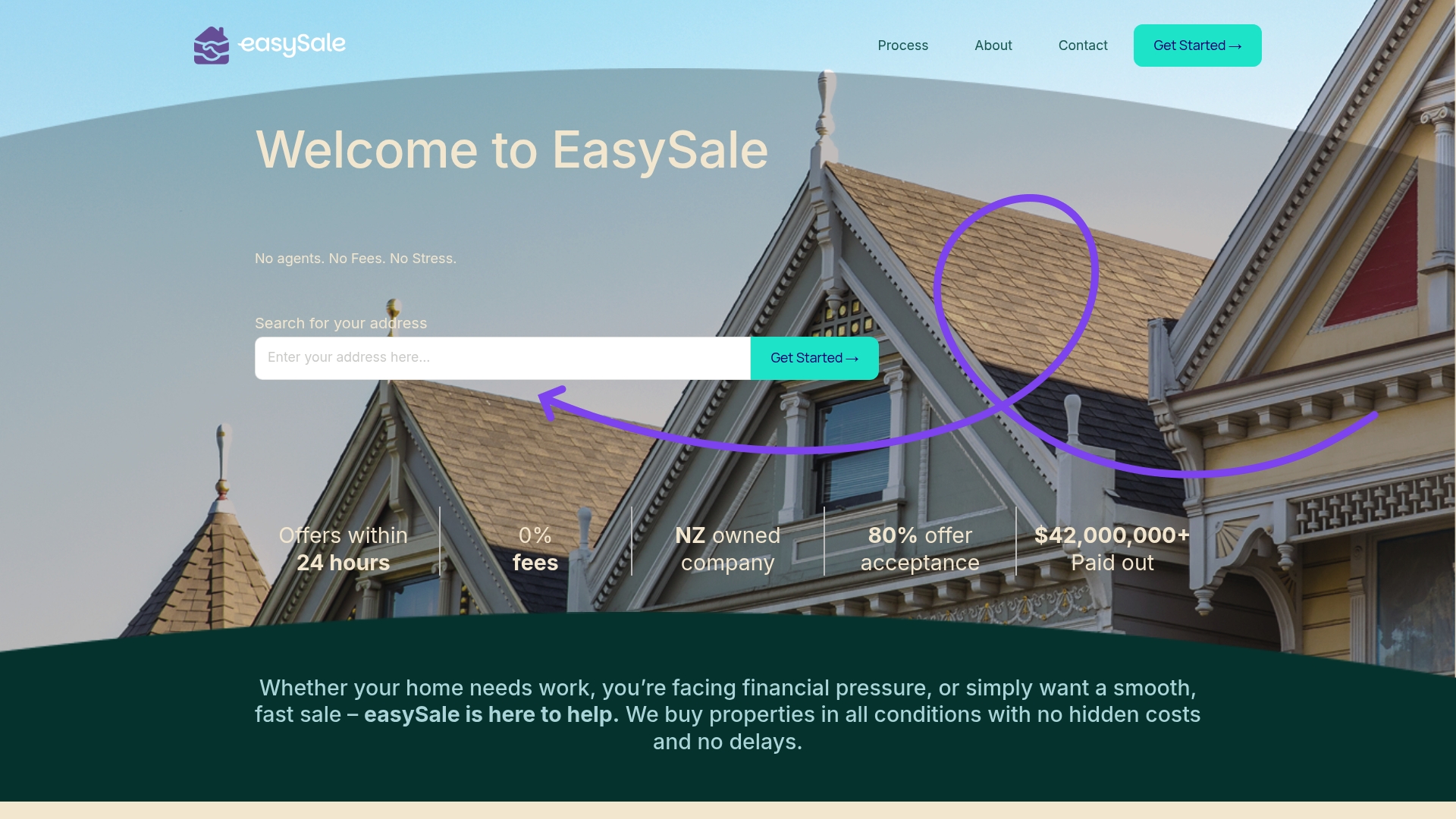
A direct buyer service can purchase properties in various conditions without requiring repairs or real estate agent involvement. You submit your details, receive a cash offer, and choose your settlement date. Before signing anything, run the terms past your own lawyer to make sure the timeline and conditions suit your situation. If a fast, private sale sounds right for you, get a no-obligation cash offer and see what your property is worth on your terms.
This article is general information, not a substitute for advice from a qualified financial advisor. Consult a qualified financial professional about your own circumstances before acting on anything here.
Sources
Recommended
