
$29,000 of Fees on a $750,000 NZ Sale, and How to Keep More

On a $750,000 sale, that might mean roughly $23,000 in commission plus GST, $1,800 in legal fees and $1,200 in marketing, leaving net proceeds closer to $720,000 before any mortgage payout. The detail below breaks down every one of those costs so you can build your own numbers.
TL;DR:Selling costs can total around 3% to 5% of the sale price, including agent fees, legal fees, marketing, and mortgage discharge fees, significantly reducing net proceeds.Agent commissions range from 2.5% to 4% of the sale price plus GST, with tiered, flat, and fixed-fee structures, all of which are negotiable.Legal fees generally fall between $1,000 and $2,500 for straightforward sales, but costs increase with property complexity such as cross-leases or trusts.Marketing expenses can range from $500 to over $2,500, with staging and minor repairs impacting sale presentation and potential returns.Selling to a cash buyer or using a private sale can cut costs by eliminating agent fees and marketing expenses, but may require more effort from the seller.
EasysaleExplore A Simpler Way To SelleasySale helps New Zealand homeowners sell quickly with a fair cash offer, without real estate agents or commission fees.See how easySale works
Table of Contents
- What are the total fees involved in selling a house?
- How do real estate agent fees and commission work?
- What do conveyancing and legal fees cover?
- What should you spend on marketing and presentation?
- What mortgage and settlement charges should you expect?
- Does capital gains tax or the bright-line test apply?
- How can you reduce the fees involved in selling a house?
- What are typical moving and handover costs?
- When do selling fees actually get charged?
- What other costs can affect your net proceeds?
- Author perspective: balancing savings, time and risk
- Another option: how easySale works and when it may suit you
- Authoritative tools and pages to check your own numbers
- Sources
- FAQ
What are the total fees involved in selling a house?
Most Kiwi sellers underestimate the cumulative bite of selling costs until they see them itemised together. The fees involved in selling a house fall into five broad buckets, and not every seller pays all five.
- Agent commission — usually 2.5% to 4% of the sale price plus GST, and the single largest cost for most sellers.
- Legal or conveyancing fees — typically between $1,000 and $2,500 for a straightforward freehold sale.
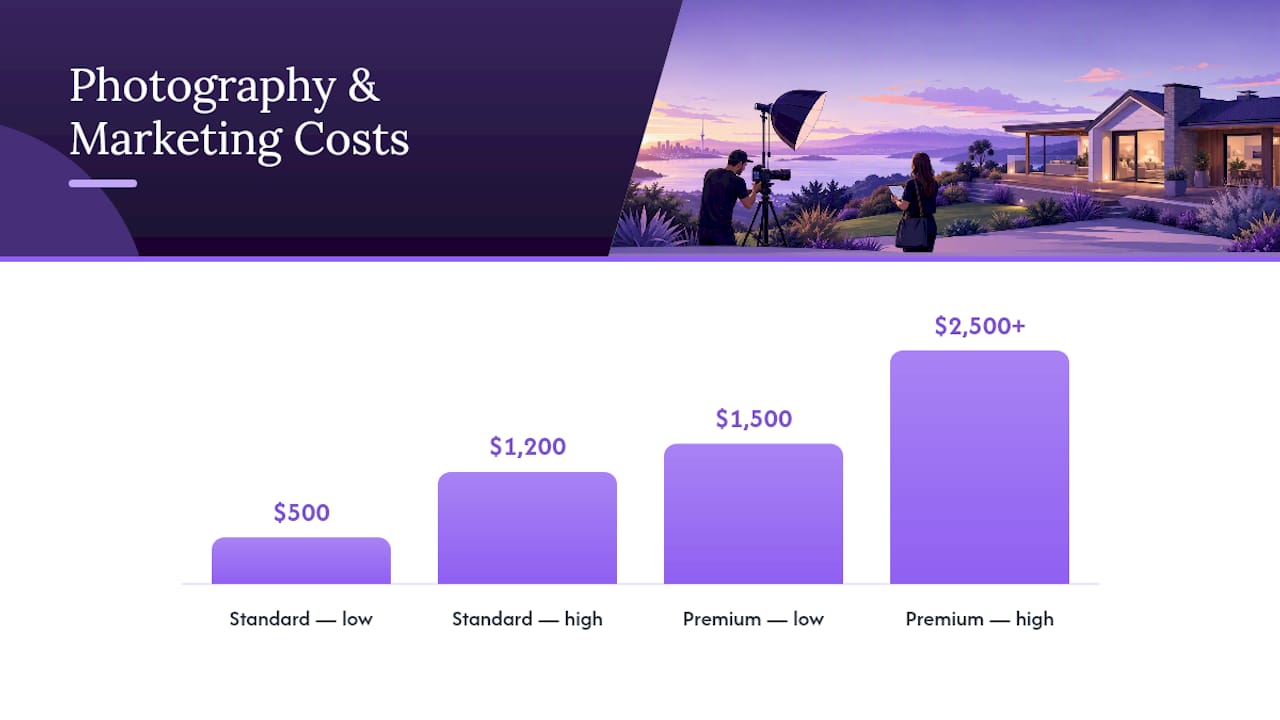
- Marketing costs — photography, online listing fees and signage, often $500 to $2,500 depending on the campaign.
- Mortgage discharge fees — a fixed lender charge, plus a possible break fee if you’re on a fixed rate.
- Optional extras — staging, minor repairs, a pre-sale building report if you choose to commission one.
Here’s a worked example on a $750,000 sale price, using a commission rate of 3% plus GST:
Sample calculations like this one show that commission combined with legal, marketing and staging costs can strip tens of thousands off net proceeds on a typical mid-to-high value property. Your actual numbers will shift depending on region (Auckland and Wellington marketing packages tend to run higher), property type, and whether you’re paying off a mortgage or selling mortgage-free.
How do real estate agent fees and commission work?
Agent commission usually follows one of three models, and knowing the difference before you sign anything puts you in a much stronger negotiating position.
- Tiered percentage commission — a higher rate on the first tranche of the sale price (say 4% up to $500,000) and a lower rate above that threshold. This is the most common structure and rewards agents for higher sale prices.
- Flat percentage commission — a single rate applied to the entire sale price, simpler to calculate but sometimes more expensive on higher-value homes.
- Fixed-fee agents — a flat dollar amount regardless of sale price, which can suit sellers with higher-value homes but often comes with a reduced service scope.
Commission is commonly around 2.5% to 4% of the sale price, and GST at 15% applies on top of that figure in New Zealand. Always ask an agent to confirm whether their quoted rate already includes GST. A “3%” fee that turns out to be “3% plus GST” is a 15% jump on the number you were mentally budgeting for. Our breakdown of agent commission structures walks through how the GST treatment and tiered thresholds interact.
Beyond commission, agencies often charge separate administration and marketing disbursements, sometimes around $500 on top of the headline rate, plus auctioneer fees if you go to auction. Agencies are required to give you written detail of how commission is calculated and an estimate of what it will cost at the appraised price, so ask for that in writing before you sign.
Commission rates aren’t fixed by law and genuinely are negotiable. A few levers worth pulling:
- Ask what payment trigger applies (unconditional sale versus settlement) and negotiate it if it seems aggressive.
- Compare tiered rates against flat rates for your specific expected sale price, not just the headline percentage.
- Ask about reduced-service or limited-service options if you’re comfortable doing some of the legwork yourself.
- Get the agency agreement in writing and check it itemises commission, GST, admin fees and marketing disbursements separately.
Pro Tip: Ask two or three agents for a sample settlement statement based on a hypothetical sale price. Comparing net proceeds side by side, after GST, admin and marketing are stripped out, tells you far more than comparing headline commission percentages.
What do conveyancing and legal fees cover?
A conveyancer or property lawyer handles the title search, drafts and reviews the sale and purchase agreement, manages settlement funds, and liaises with the buyer’s lawyer and your bank on mortgage discharge. This work protects you from costly mistakes at the pointiest end of the transaction, and it’s not an area where cutting corners tends to pay off.
There’s no single standard fee. Typical legal fees for a straightforward freehold sale sit between $1,000 and $2,500, according to New Zealand Law Society guidance, and costs climb from there depending on complexity.
- Unit titles and cross-lease properties usually cost more because they involve extra title checks and body corporate or lease documentation.
- Trust-owned properties add another layer of paperwork and typically push fees toward the top of the range or beyond.
- A remediation history (weathertightness issues, unconsented work) can mean extra disbursements and lawyer hours.
Quotes vary because conveyancing cost is driven by transaction complexity, not sale price. A $2 million clean-title freehold sale can cost less to convey than a $600,000 cross-lease unit with a messy title history. Ask your lawyer for a written engagement letter that scopes the work and caps extras, so a “quick straightforward sale” quote doesn’t quietly balloon once complications surface.
What should you spend on marketing and presentation?
Photography and a standard online listing typically cost $500 to $1,200, while a premium marketing package with drone photography, floor plans, print advertising and a dedicated landing page can run $1,500 to $2,500 or more. Signage is often bundled into these packages but check before assuming it is.
Staging costs vary widely depending on how much of the home needs furnishing. Partial staging of key rooms (lounge, main bedroom) might cost a few hundred dollars, while full-home staging for an empty property can run into the thousands. Staging tends to have the biggest impact on vacant homes and properties in the mid-to-upper price bracket, where buyers respond strongly to a lived-in, aspirational feel.
On repairs, the sensible approach is selective, not exhaustive:
- Fix anything that would raise a red flag at a building inspection: leaks, obvious damp, faulty wiring.
- Tidy the obvious cosmetic issues: chipped paint, cracked tiles, an overgrown garden.
- Think twice about major renovations. Guidance from property preparation specialists suggests large-scale renovations often fail to recoup their cost at sale, while smaller, selective repairs and styling tend to be more cost-effective.
What mortgage and settlement charges should you expect?
If you still owe money on the property, your lender will charge a mortgage discharge or settlement fee, generally a modest fixed amount, but every bank sets its own figure. This covers the administrative work of removing their interest from the title.
If you’re on a fixed interest rate and selling before the term ends, you may also face a break fee. These vary significantly by lender and by how far current rates have moved since you fixed, so it’s worth checking your loan contract or calling your bank early, well before you list, rather than discovering the number at settlement.
- Contact your lender as soon as you decide to sell to confirm discharge fees and any break fee.
- Ask what authorisation forms they need and how long processing takes.
- Build in a buffer for timing: discharge fees and break fees vary by lender and loan terms, and a late request can delay settlement.
Does capital gains tax or the bright-line test apply?
Whether tax applies to your sale depends on your ownership history and your intentions when you bought the property, not simply how long you’ve owned it. The bright-line test can bring residential property sales within a set ownership window into the tax net, and the rules around exemptions and timeframes are detailed enough that guessing is risky.
Official calculators exist precisely because these rules are easy to get wrong. The ATO’s capital gains tax tool is one example of how tax authorities structure this kind of guidance, though New Zealand sellers should work through Inland Revenue’s own bright-line materials and keep records of purchase price, dates and any capital improvements.
If your situation involves a rental history, a relationship property split, or an inherited home, talk to an accountant before you list. The cost of that conversation is trivial next to the cost of an unexpected tax bill.
How can you reduce the fees involved in selling a house?
Every dollar you shave off selling costs is a dollar that stays in your net proceeds, and there are genuine, practical ways to do that beyond just haggling on commission.
- Run a private sale. Skip the agent entirely and market the property yourself through online listings, signage and word of mouth. You’ll still pay legal fees and any marketing you choose to run, but you avoid commission and GST on commission altogether. Our guide to avoiding real estate fees when selling walks through the practical steps.
- Use a fixed-fee or limited-service agent. You get professional marketing and negotiation support at a capped cost, but you’ll usually do more of the open-home and buyer-liaison work yourself.
- Sell to a cash buyer. This suits sellers who value speed and certainty over maximising sale price, particularly for damaged properties, deceased estates, or situations where a fast, private settlement matters more than squeezing out the last few percent.
Pro Tip: Private sale routes typically cost a fraction of standard commission, but they shift the workload, viewings, negotiation, paperwork chasing, onto you. Weigh the dollar saving against the hours and stress before committing.
What are typical moving and handover costs?
Moving costs sit outside the standard “selling fees” conversation but they hit your bank account at exactly the same time, so budget for them together. A local move with a small truck and two movers might cost a few hundred dollars, while a full-service interstate or long-distance move with packing included can run into several thousand.

Other handover costs worth planning for include cleaning (a professional end-of-tenancy style clean if the home needs it), any agreed chattels you’re taking with you that need replacing for the new owners, and final utility disconnections. If you’re buying and selling simultaneously, factor in possible short-term storage costs if your settlement dates don’t line up neatly, and temporary accommodation if there’s a gap between handing over one home and moving into the next.
Council rates and water charges are typically adjusted at settlement, meaning you pay your share up to the settlement date and the buyer takes over from there. Your lawyer handles this adjustment as part of the settlement statement, so it shouldn’t come as a surprise if your legal fees are itemised clearly upfront.
When do selling fees actually get charged?
Understanding the timeline helps you see which costs hit early and which ones only bite at the very end. Most fees don’t all land on the same day, they’re spread across the weeks between listing and settlement.
- Before listing: photography, staging consultation and any pre-sale repairs are usually paid upfront, out of pocket, before a buyer has even seen the property.
- During the campaign: ongoing marketing costs (online listing renewals, print advertising) accrue over the marketing period, typically two to six weeks.
- At the point of sale: agent commission is typically triggered by an unconditional sale agreement, though the actual invoice is usually paid at settlement.
- At settlement: legal fees, mortgage discharge fees, any break fee, and the commission payment are all finalised and deducted as part of the settlement process, with your lawyer handling the disbursement of net proceeds to you.
Knowing this sequence matters for cash flow. If you’re relying on sale proceeds to fund your next purchase, the gap between paying for photography and marketing (weeks before settlement) and actually receiving your net proceeds (on settlement day) can be a genuine squeeze, particularly if your campaign runs longer than expected.
What other costs can affect your net proceeds?
A few extra costs don’t appear on every seller’s ledger but catch enough people out that they’re worth flagging. A pre-sale building or pest inspection, commissioned voluntarily to head off surprises during a buyer’s due diligence, typically costs a few hundred dollars but can save you from a price renegotiation later if it surfaces an issue you can fix cheaply yourself first.
A styling or staging consultation, separate from actual staging costs, is sometimes offered as a standalone service to advise on decluttering, minor cosmetic fixes and furniture placement before photography. Some agents include this in their marketing package; others charge for it separately, so ask before assuming it’s covered.
Repairs that surface during a buyer’s due diligence period, after a building inspection flags an issue, can also affect your net proceeds if you agree to a price reduction or to fix the item before settlement rather than losing the sale. Budgeting a contingency of a few thousand dollars for this kind of late-stage negotiation is sensible on any home over a few decades old, especially one that hasn’t had recent renovation work.
Finally, don’t forget the small stuff: LIM report costs if you commission a fresh one, meth testing if a buyer requests it, and any smoke alarm or insulation compliance work needed to meet the Residential Tenancies Act standards if the property has been tenanted.
Author perspective: balancing savings, time and risk
Saving commission through a private sale or reduced-service agent makes sense when you have time, a straightforward property, and the stomach for negotiation. It rarely makes sense when you’re stressed, on a deadline, or dealing with a property that needs work you can’t fund upfront.
Selling to a cash buyer is the pragmatic choice when certainty matters more than squeezing out the last few percent, particularly with estates, damaged homes or urgent relocations. Whichever path you choose, get written quotes and independent legal advice before you sign anything.
— Aaron
Another option: how easySale works and when it may suit you
An alternative to a traditional agent-led sale for Kiwi homeowners is a service offering a fixed, fee-free outcome rather than a percentage-based commission bill and an open-ended marketing campaign. Such services may promote no agent commission, no GST on commission, no marketing spend, and no repair bills by buying properties in any condition, as-is.
The process is simple: you submit your property details, receive a no-obligation cash offer, and settle on a timeline that suits you rather than one dictated by a buyer’s finance approval or a drawn-out marketing campaign. This route tends to suit sellers dealing with a damaged or unconsented property, an inherited estate that needs a quick, private resolution, a relocation on a tight schedule, or simply a situation where the stress of open homes and agent negotiations outweighs the benefit of chasing top dollar. If any of that sounds like your situation, check the Direct Private Sale FAQ to see how the offer process works, or look at the fast sale option if settling within a week is the priority.
Authoritative tools and pages to check your own numbers
For your own figures, use the Law Society’s conveyancing cost guidance and Settled’s agency agreement guidance to verify legal points before you sign anything.
This article is general information, not a substitute for advice from a qualified financial advisor. Consult a qualified financial professional about your own circumstances before acting on anything here.
Sources
- Settled
- What does conveyancing cost? | New Zealand Law Society
- Cost-of-selling-a-house calculator | Calculate
- Real estate commission NZ | Trade Me Property article
FAQ
What fees are there when you sell a house?
The main fees are agent commission plus GST, legal or conveyancing fees, marketing costs, and a mortgage discharge fee if you have a home loan.
What fees do you pay as a seller?
As the seller, you generally pay agent commission (commonly 2.5% to 4% plus GST), your own legal fees, marketing costs, and any mortgage discharge or break fee. The buyer typically covers their own legal costs and any building inspection they choose to commission.
What are typical legal fees for selling a house?
Straightforward freehold sales typically cost between $1,000 and $2,500 in legal fees, according to New Zealand Law Society guidance. Costs rise for unit titles, cross-leases, or trust-owned properties due to the extra title and documentation work involved.
What are the typical fees involved in selling a house?
The fees involved in selling a house usually add up to 3% to 5% of the sale price once commission, GST, legal fees, marketing and mortgage discharge are included. A $750,000 sale might land around $29,000 in total costs, leaving roughly $721,000 in net proceeds before any outstanding mortgage balance is paid out.
Is selling to a cash buyer cheaper than using an agent?
Selling to a cash buyer avoids agent commission, GST on commission, and marketing costs entirely, since there’s no campaign to run. Easysale’s Direct Private Sale process is built around this: a cash offer, no commission, and settlement on your timeline, which suits sellers prioritising speed and certainty over maximising sale price.
Recommended
