
Commission Fees in Home Sales – Impact on Kiwi Sellers

Paying steep agent commission can swallow up tens of thousands from your home sale, especially when the standard New Zealand rate hovers around 5 percent of the final price. For many facing sudden hardships, losing that much is simply not an option. Unlike the australian market, New Zealand homeowners are increasingly demanding better alternatives. Discover what really drives agent fees and how commission-free options can put more money back in your pocket without all the stress.
Table of Contents
- Understanding Commission Fees In Home Sales
- Common Types Of Real Estate Commissions
- How Agent Fees Are Calculated In Nz
- Legal Rules And Disclosure Requirements
- Financial Impact Of Paying Agent Commissions
- Alternatives To Traditional Agent Fees
Key Takeaways
| Point | Details |
|---|---|
| Commission Fee Range | Real estate agent commissions in New Zealand typically range from 4% to 6% of the property’s sale price, impacting the seller’s net proceeds significantly. |
| Flexible Commission Structures | Sellers can negotiate commission rates and explore various fee arrangements, including tiered, flat-rate, or hybrid models, to optimise their sale. |
| Financial Considerations | Agent fees are a substantial cost; however, experienced agents can often secure higher sale prices that offset these fees. |
| Explore Alternatives | Consider innovative sales methods like digital platforms or fixed-fee arrangements to potentially reduce or eliminate traditional commission costs. |
Understanding Commission Fees in Home Sales
Selling a home in New Zealand involves navigating the complex landscape of real estate agent commissions, which can significantly impact your final sale proceeds. These fees are typically calculated as a percentage of the property’s sale price, ranging between 4% and 6%, with the standard commission rate hovering around 5%. Understanding these fees is crucial for Kiwi homeowners looking to maximise their property sale value.
Commission structures in the New Zealand property market are not uniform and can vary substantially depending on multiple factors. Real estate agents may offer different fee arrangements such as flat rates, sliding scales, or tiered commissions based on their experience, the property’s value, and current market conditions. Some agents might negotiate their rates, especially in competitive markets or for high-value properties. This flexibility means sellers have room to discuss and potentially reduce the standard commission percentage.
The total commission cost can represent a significant expense for property sellers. For a home selling at the median New Zealand price of $800,000, a 5% commission would equate to $40,000 - a substantial amount that directly impacts your net proceeds. Many sellers are now exploring alternative sales methods that minimise or eliminate these hefty agent fees, such as direct property sales or using platforms that offer commission-free transactions.
Pro tip: Before agreeing to any commission structure, request a detailed breakdown of services included and compare quotes from multiple real estate agents to ensure you’re getting the best value for your money.
Common Types of Real Estate Commissions
New Zealand real estate commissions are complex and multifaceted, with agents offering several distinct fee structures designed to meet different seller needs. Real estate commission models in the country typically range from percentage-based to fixed-rate arrangements, each with unique advantages and potential drawbacks for property sellers seeking to optimise their sale strategy.
The most prevalent commission types in the New Zealand property market include percentage-based commissions, which calculate fees as a proportion of the final sale price. These rates commonly fluctuate between 2% and 4%, depending on factors like property location, agent experience, and market complexity. Some agencies also offer tiered commission structures where different percentage rates apply at various sale price thresholds, allowing for more flexible pricing models that can benefit both agents and sellers.

Alternative commission approaches include flat-rate fees and hybrid models that combine fixed costs with percentage-based components. Flat-rate commissions provide sellers with predictable expenses regardless of the property’s sale price, which can be particularly attractive for high-value properties. Hybrid models offer a balanced approach, potentially reducing overall commission costs while maintaining incentives for agents to secure the best possible sale price. These diverse commission structures reflect the dynamic nature of New Zealand’s real estate market and provide sellers with multiple options to suit their specific financial circumstances.
Here’s a summary of common real estate commission structures in New Zealand:
| Commission Type | How It Works | Typical Cost Range | Best For |
|---|---|---|---|
| Percentage-based | Percentage of sale price set by agent | 2% – 6% of sale price | Most property sales |
| Tiered scale | Different rates by price bracket | 3.5% – 5.5% total | High-value properties |
| Flat fee | Fixed charge, not price-dependent | $5,000 – $12,000 | Expensive properties |
| Hybrid | Base fee plus small percentage | Varies by agent | Flexible arrangements |
Pro tip: Always request a comprehensive breakdown of commission structures and negotiate terms that align with your specific property sale objectives and financial goals.
How Agent Fees Are Calculated in NZ
Understanding the intricacies of real estate agent fee calculations in New Zealand requires careful examination of the complex pricing models used by local agencies. Agent fees are predominantly calculated using tiered percentage-based structures that vary depending on the property’s final sale price, creating a nuanced approach to commission determination that can significantly impact sellers’ financial outcomes.
Typically, New Zealand real estate commissions incorporate multiple components beyond a simple percentage calculation. Most agencies employ a sliding scale where different percentage rates apply to different portions of the sale price, often starting at around 4% for the first portion and decreasing for subsequent price brackets. Additional costs such as marketing expenses, administration fees, and goods and services tax (GST) are frequently added to the base commission, making the total fee structure more complex than a straightforward percentage calculation.
The precise calculation of agent fees involves several critical factors, including property value, local market conditions, and the specific agency’s pricing strategy. Some agencies offer more competitive rates for higher-value properties, while others maintain a more uniform commission structure. Sellers can expect total commission costs to range between 3.5% and 5.5% of the sale price, with variations based on factors such as the property’s location, current market demand, and the agent’s reputation and track record of successful sales.
Pro tip: Request a comprehensive written breakdown of all commission components and potential additional fees before signing any agency agreement to avoid unexpected financial surprises.
Legal Rules and Disclosure Requirements
In New Zealand, real estate transactions are governed by stringent legal frameworks designed to protect both buyers and sellers. The Real Estate Agents Act and associated professional conduct rules establish comprehensive disclosure requirements that agents must follow, ensuring transparency and ethical practice throughout property sales.
Agents are legally obligated to provide clear and comprehensive information about multiple aspects of a property transaction. This includes full disclosure of commission structures, potential conflicts of interest, material property defects, and any circumstances that could materially impact the sale. The regulations mandate that real estate professionals must act with absolute honesty, presenting all relevant information in a straightforward manner that enables clients to make fully informed decisions about their property transactions.
The legal framework surrounding real estate transactions in New Zealand imposes significant responsibilities on agents, with potential professional and financial consequences for non-compliance. Agents must maintain meticulous records, provide written documentation of all agreements, and ensure that all communication with clients is transparent and accurate. Failure to adhere to these disclosure requirements can result in disciplinary action from the Real Estate Authority, including potential suspension or cancellation of professional licences, financial penalties, and mandatory professional retraining.
Pro tip: Always request written documentation of all commission structures and agency agreements, and carefully review the detailed disclosure statements provided by your real estate agent.
Financial Impact of Paying Agent Commissions
Navigating the financial implications of real estate agent commissions requires careful consideration of both immediate costs and potential long-term benefits. Real estate agent fees in New Zealand typically range between 2% and 4% of the property’s sale price, representing a substantial expense that can significantly reduce a seller’s net proceeds. For a property valued at $750,000, this could mean $22,500 to $30,000 paid directly from the sale proceeds, a considerable sum that demands thorough evaluation.
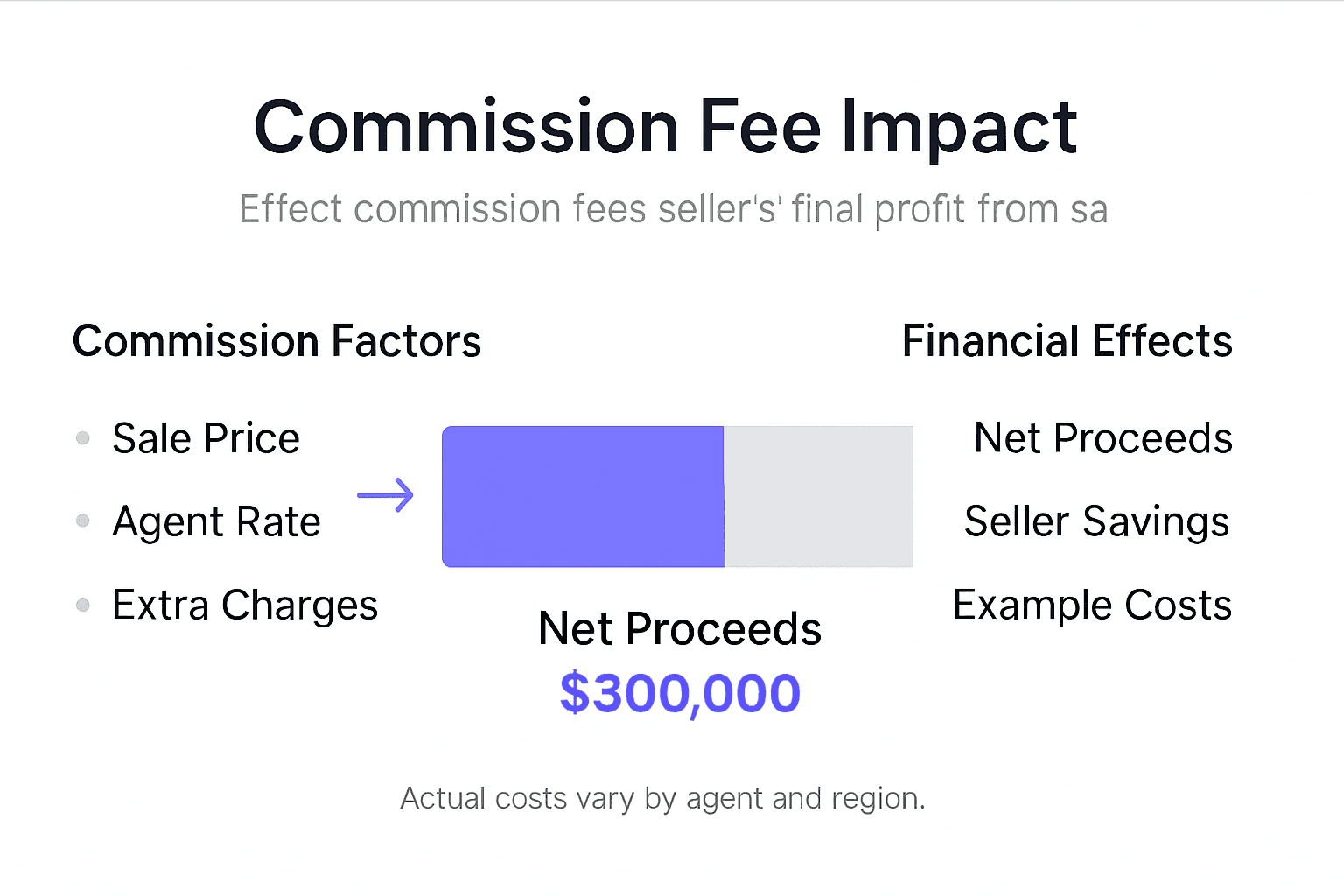
While commission fees might seem like a straightforward expense, their financial impact is more nuanced. Professional agents often leverage market expertise, negotiation skills, and extensive networks to potentially secure a higher sale price that could offset their commission. Research suggests that experienced agents might achieve sale prices 5% to 10% higher than private sellers could manage independently, effectively mitigating or even exceeding the cost of their services. The value proposition extends beyond mere price, encompassing marketing strategies, buyer screening, and transaction management that streamline the selling process.
The financial burden of agent commissions varies depending on multiple factors, including property value, local market conditions, and the specific services provided. Additional costs such as marketing expenses, professional photography, advertising, and administrative fees can further inflate the total expenditure. Sellers must carefully assess these expenses against potential benefits, considering their own time, expertise, and capacity to manage a complex property transaction. Some agents offer flexible fee structures or tiered commission rates that can provide more economical options for sellers seeking professional representation.
Pro tip: Request a comprehensive breakdown of all potential fees and compare multiple agent proposals to understand the true financial implications of their services.
Alternatives to Traditional Agent Fees
New Zealand property sellers are increasingly exploring innovative alternatives to traditional real estate agent commission structures, seeking more cost-effective and flexible approaches to selling their homes. Several emerging models offer sellers opportunities to reduce or eliminate substantial commission fees, ranging from digital platforms to self-managed sale strategies that can significantly lower transaction costs.
These alternative fee models include fixed-rate services, hybrid commission structures, and fully independent sales channels. Fixed-fee arrangements provide sellers with predictable costs, typically charging a set amount regardless of the property’s final sale price. Some digital platforms enable sellers to list properties directly, reducing marketing expenses and allowing more control over the sales process. Hybrid models combine elements of traditional percentage-based commissions with fixed fees, offering a more balanced approach that can potentially reduce overall transaction expenses while maintaining professional support.
The rise of online property sales platforms and direct-to-buyer marketplaces has transformed traditional real estate transactions. These innovative services often provide essential marketing tools, legal documentation support, and buyer matching capabilities at a fraction of the cost of full-service agent commissions. Sellers can now access professional-grade marketing resources, property valuation tools, and transaction support without paying the standard 4% to 5% commission rates, making property sales more accessible and financially efficient for New Zealand homeowners.
Compare the financial implications of agent commissions versus alternative sales options:
| Approach | Upfront Cost | Potential Savings | Level of Support |
|---|---|---|---|
| Traditional agent | Commission after sale | Lower DIY savings | Full professional service |
| Flat-fee agency | Fixed upfront fee | Can save thousands | Limited marketing support |
| DIY private sale | Advertising fees | Most cost savings | Seller manages entire process |
| Online platform | Subscription or fixed fee | Moderate to high | Digital tools, some help |
Pro tip: Thoroughly research and compare alternative selling models, considering not just cost savings but also the level of support and marketing exposure each option provides.
Avoid Commission Fees and Sell Your Home Faster with easySale.co.nz
Navigating the complex and costly commission fees in New Zealand’s property market can feel overwhelming and stressful. This article highlights how traditional real estate agent commissions ranging between 4% and 6% can sharply reduce the amount you receive from your home sale, especially when additional hidden fees add up. If you want to bypass tiered percentages, flat fees, and complicated legal disclosures while avoiding the financial burden that comes with agent commissions, there is a simpler solution.
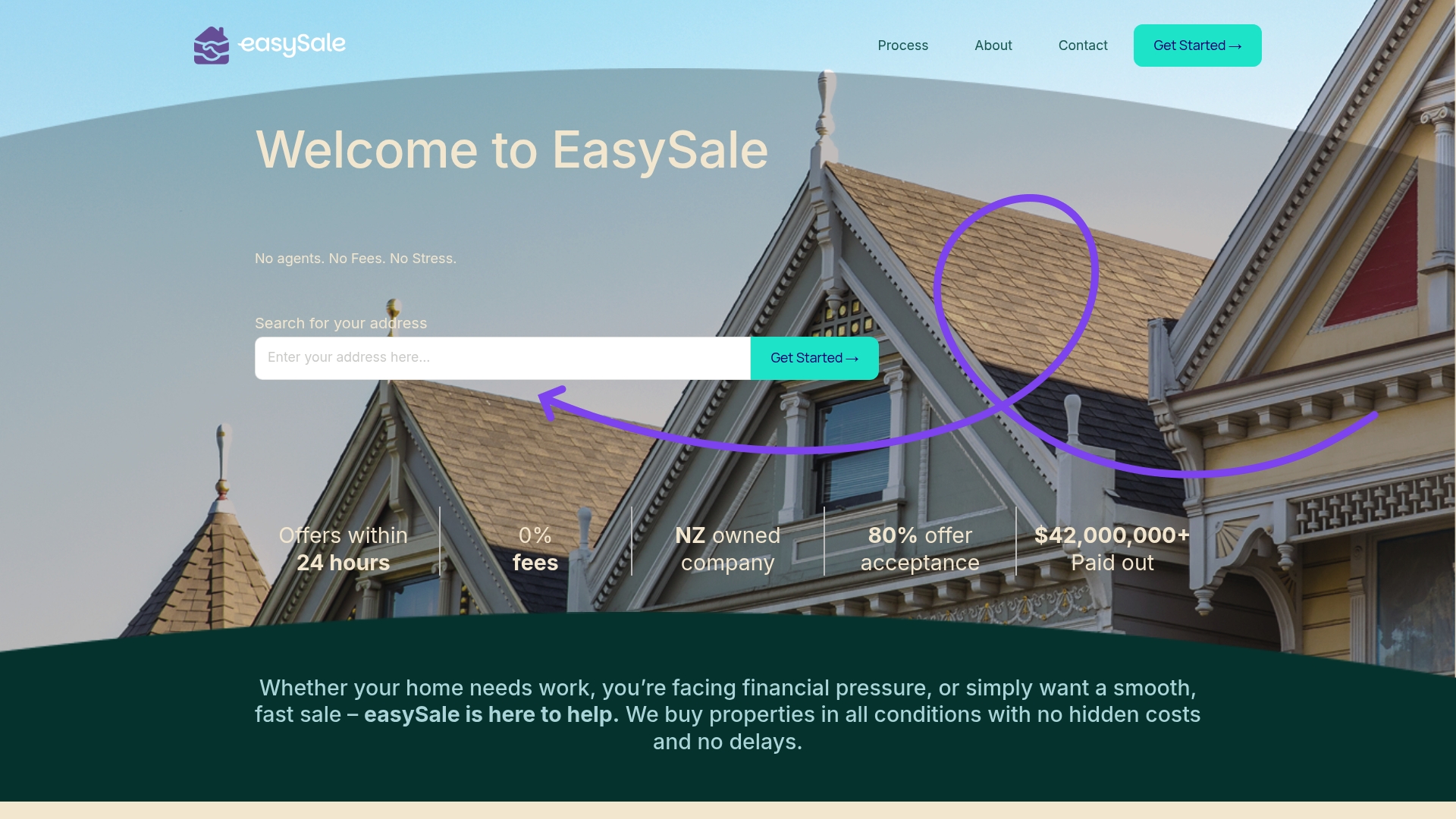
At easySale.co.nz, we understand that Kiwi homeowners often need a quick, fair sale without the hassle or expense of real estate agents. Our platform offers a straightforward three-step process designed to help you sell your property quickly and without paying any commission fees. Whether your home needs repairs, you are facing financial difficulties, or life changes demand a fast sale, we provide fast cash offers that give you full control of the timeline. Discover a transparent, hassle-free way to sell your home by visiting easySale.co.nz today and get started with no obligation.
Take control of your property sale and avoid unexpected agent fees by exploring our efficient alternative to traditional real estate commissions. Learn more and receive your cash offer now at https://easysale.co.nz.
Frequently Asked Questions
What are the standard commission fees for selling a home?
Commission fees for selling a home typically range between 4% and 6% of the property’s sale price, with the standard rate hovering around 5%.
How can I negotiate real estate agent commissions?
You can negotiate commissions by discussing your specific property details, market conditions, and potentially exploring alternative fee structures, such as flat rates or tiered commissions, with your agent.
What are the different types of commission structures available for real estate agents?
Common commission structures include percentage-based commissions, tiered scales, flat fees, and hybrid models that combine fixed charges with percentage costs, allowing for a variety of options tailored to sellers’ needs.
What should I consider before agreeing to a real estate agent’s commission?
Before agreeing to a commission structure, request a detailed breakdown of services included, compare quotes from multiple agents, and evaluate the potential financial impact on your net proceeds.
Recommended
