
How to Sell As-Is Property NZ Easily for Cash

Storm damage, unexpected repairs, or urgent financial needs can turn any property sale in New Zealand into a challenge. When your home is uninhabitable or requires significant work, finding a fast solution matters most. A straightforward as-is approach lets you bypass agent commissions and put cash in your hand quickly. This guide highlights clear steps for assessing your property, gathering documents, and securing a fast sale, so you can focus on what comes next.
Table of Contents
- Step 1: Assess Your Property’s As-Is Condition
- Step 2: Compile Essential Documents For A Quick Sale
- Step 3: Request A Fast Cash Offer Online
- Step 4: Evaluate Your Offer And Clarify Terms
- Step 5: Finalise Settlement On Your Timeline
Quick Summary
| Key Point | Explanation |
|---|---|
| 1. Assess Property Condition | Conduct a thorough inspection to understand its market value and identify issues impacting the sale. |
| 2. Compile Essential Documents | Gather important legal and property documents to ensure transparency and streamline the sales process. |
| 3. Request Fast Cash Offer | Prepare complete property information to facilitate receiving a quick and competitive cash offer. |
| 4. Evaluate Cash Offer Terms | Carefully review all aspects of the cash offer, including conditions and timelines, to protect your interests. |
| 5. Manage Settlement Timeline | Work with legal professionals to align settlement dates with your needs and avoid financial complications. |
Step 1: Assess your property’s as-is condition
Assessing your property’s current condition is the critical first step in preparing for an as-is sale. This process helps you understand your property’s true market value and identify potential challenges that might impact your sale price.
Start by conducting a comprehensive visual inspection of your entire property. Look beyond surface appearances and evaluate key structural elements like foundations, roof integrity, electrical systems, and plumbing. Homefit’s online assessment tool can provide an objective evaluation of your home’s overall condition, particularly regarding insulation, ventilation, and energy efficiency.
Your assessment should cover several critical areas:
- Structural integrity of walls, floors, and foundations
- Condition of roofing and exterior cladding
- State of internal systems (electrical, plumbing, heating)
- Signs of water damage or moisture issues
- Quality of insulation and ventilation
- General wear and tear
Consider engaging a professional property valuer who can provide an unbiased assessment of your property’s current market value. These experts understand how specific conditions impact property pricing and can offer insights into potential sale challenges.
Documenting your findings is crucial. Take clear photographs, make detailed notes about any damage or required repairs, and compile a comprehensive report. This transparency helps potential buyers understand exactly what they’re purchasing and can help streamline the as-is sale process.
Pro tip: Be brutally honest in your assessment to avoid future complications and build trust with potential buyers.
Here’s a summary of professional services that can streamline an as-is property sale:
| Service Type | Purpose | Typical Benefits |
|---|---|---|
| Property Valuer | Assess current market value | Accurate pricing advice |
| Legal Advisor | Review contracts and compliance | Minimised legal risks |
| Conveyancer | Handle property transfer process | Efficient title change |
| Tax Consultant | Advise on settlement tax implications | Reduced financial surprises |
Step 2: Compile essential documents for a quick sale
Preparing the right documentation is crucial when selling your property as-is. A comprehensive document package can significantly streamline the sales process and build buyer confidence. Your goal is to create a transparent and efficient record that demonstrates the property’s current status.
Start by gathering all critical property documents. The most important document is your current Record of Title, which confirms legal ownership and outlines any registered rights or restrictions. This official document provides potential buyers with crucial legal information about the property.
Your essential document checklist should include:
- Current Record of Title
- Property sale and purchase agreement
- Building consent records
- Renovation or repair documentation
- Rates and utility bill records
- Insurance policy details
- Code of compliance certificates
- Electrical and plumbing compliance certificates
Organise these documents systematically in both digital and physical formats. Create clearly labelled folders with high-resolution scans and keep original hard copies secure. Buyers appreciate transparency, and a well-prepared document package can help expedite the sales process.
Comprehensive documentation demonstrates professionalism and can significantly reduce potential buyer hesitation during an as-is property sale.
Consider consulting a professional property selling guide to ensure you haven’t missed any critical paperwork specific to New Zealand property sales.
Pro tip: Digitise all documents and create backup copies to prevent potential loss or damage during the selling process.
Below is a reference table providing common digital organisation methods for property sale documents:
| Digital Storage Method | Security Level | Accessibility |
|---|---|---|
| Cloud drive (e.g. Google) | High, password protected | Access from any device |
| Encrypted USB drive | Moderate, physical access | Only on local device |
| Property sale platforms | Built-in legal safeguards | Direct buyer access |
| Dedicated scanning app | Secure, mobile-only | Instant document share |
Step 3: Request a fast cash offer online
Requesting a fast cash offer is your gateway to a swift and straightforward property sale. This step transforms your property from a potential liability into a liquid asset with minimal complexity and maximum efficiency.
Begin by preparing your property information for online submission. Property sale negotiation guidelines suggest being transparent about your property’s condition. Gather all essential details including property size, location, current condition, and any recent improvements or ongoing maintenance requirements.
Your online offer request should typically include:
- Property address and legal description
- Current market condition assessment
- Detailed property photographs
- Approximate square meterage
- Existing structural information
- Renovation or repair history
- Reason for selling
Understand that reputable cash buying services will require comprehensive information to generate an accurate offer. Ensure all documentation is accurate and complete to expedite the process. Real estate transaction guidelines recommend maintaining full disclosure to prevent potential legal complications.
A well-prepared online offer request can significantly reduce processing time and increase the likelihood of receiving a competitive cash offer.
Most online platforms offer a simple three-step submission process: provide property details, upload supporting documents, and await a preliminary assessment. The entire process can often be completed within 24-48 hours, offering unprecedented speed compared to traditional selling methods.
Pro tip: Double-check all submitted information for accuracy to prevent potential delays in your cash offer processing.
Step 4: Evaluate your offer and clarify terms
Carefully evaluating your cash offer is a critical step in ensuring you receive fair value for your property. This stage requires a strategic approach to understanding the nuanced details of the proposed transaction.

Property negotiation guidelines recommend thoroughly examining all aspects of the offer beyond just the monetary value. Scrutinise the proposed terms, settlement timeline, and any potential contingencies that might impact the sale.
Key elements to evaluate in your cash offer include:
- Total cash offer amount
- Settlement and completion dates
- Deposit requirements
- Conditions of sale
- Potential fee structures
- Inspection contingencies
- Legal transfer conditions
Seek clarity on every aspect of the offer. Legal property transaction guidelines emphasise the importance of understanding each contractual detail before proceeding.
A comprehensive review of offer terms protects your interests and prevents potential misunderstandings during the property sale process.
Consider engaging a legal professional to review the offer documents. They can help identify any hidden clauses or potential risks that might not be immediately apparent to you as a seller.
Pro tip: Create a detailed comparison spreadsheet to objectively assess multiple cash offers and their respective terms.
Step 5: Finalise settlement on your timeline
Finalising settlement is your opportunity to control the pace of your property sale and ensure a smooth, stress-free transaction. This critical stage transforms your property sale from a potential negotiation into a concrete financial outcome.
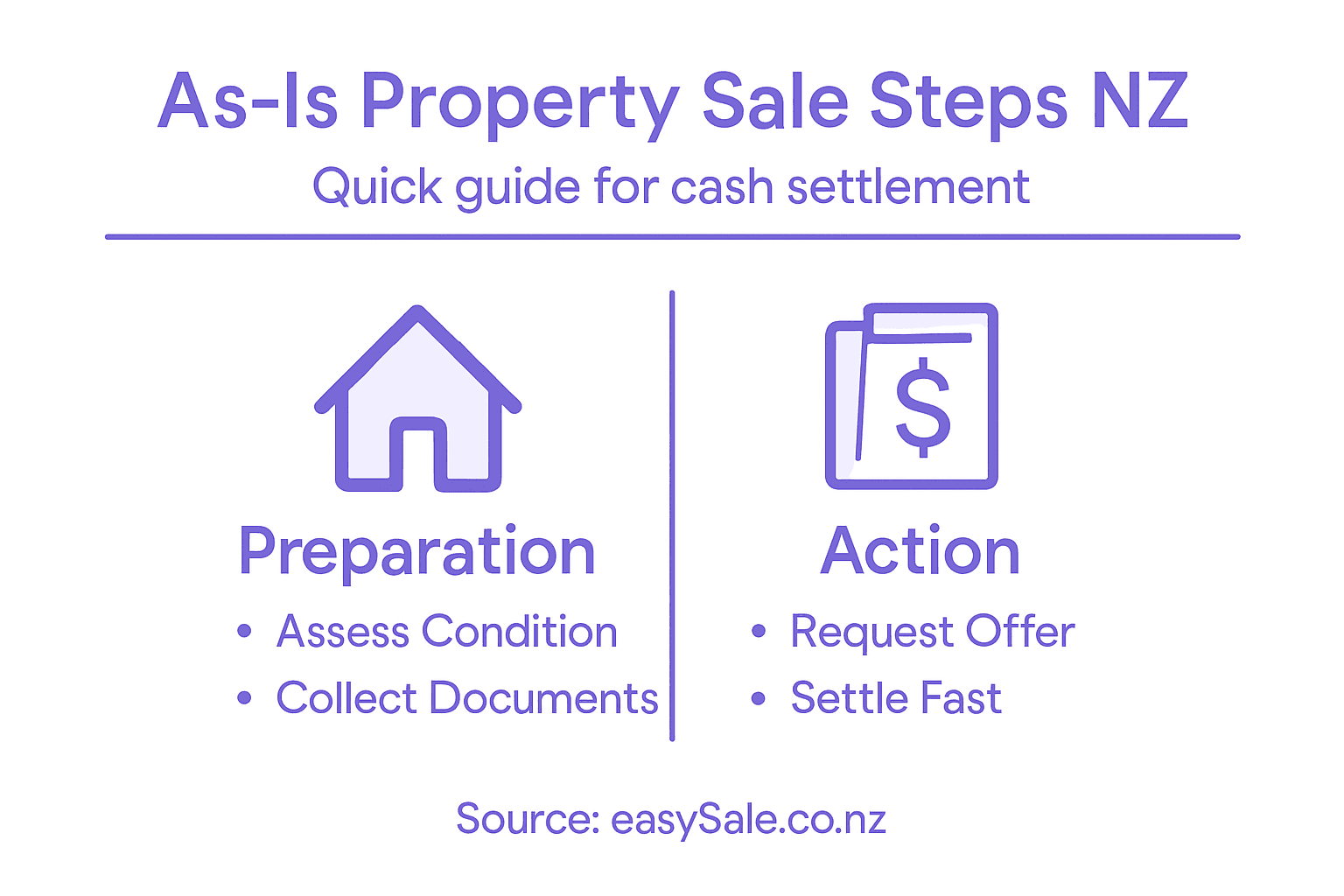
Property settlement guidelines recommend working closely with legal professionals to schedule a settlement date that aligns perfectly with your personal requirements. Understanding the legal and financial implications of your chosen timeline is paramount.
Key considerations for finalising settlement include:
- Preferred settlement date
- Notice periods for current property occupancy
- Potential tax implications
- Legal transfer requirements
- Funds transfer mechanisms
- Conveyancing documentation
- Final property condition verification
Taxation settlement dates play a crucial role in determining your financial obligations. The settlement date can significantly impact your tax position, especially regarding potential capital gains.
Proactively managing your settlement timeline allows you to control the pace of your property sale and minimise potential financial complications.
Ensure all parties are aligned on the settlement date, including your legal representative, the buyer, and any relevant financial institutions. Clear communication prevents last-minute complications and ensures a smooth property transfer.
Pro tip: Schedule a final property walk-through immediately before settlement to confirm the property’s condition matches the agreed terms.
Simplify Your As-Is Property Sale with easySale.co.nz
Selling a property as-is in New Zealand can feel overwhelming when faced with complex assessments, endless document preparation, and uncertain cash offers. The article highlights common pain points such as needing a fast cash offer without delays, understanding settlement timelines, and managing your property’s true condition honestly. If you are seeking a transparent and efficient way to sell properties in any condition, easySale.co.nz is designed exactly for you. Our proven three-step process lets you skip agent fees, avoid drawn-out negotiations, and get a fair cash offer fast.
Take control of your sale today by submitting your property details online. With easySale.co.nz, you get a no-obligation offer quickly, settlement on your timeline, and peace of mind knowing professionals handle the complexities for you. Don’t let property stress stall your life change. See how straightforward selling an as-is property can be at easySale.co.nz. Explore all the benefits of our service and start your smooth sale now at https://easysale.co.nz.
Frequently Asked Questions
What does it mean to sell a property as-is?
Selling a property as-is means that you are selling the property in its current condition without making any repairs or improvements. To do this, assess your property’s condition honestly to set realistic expectations for potential buyers.
How do I determine my property’s current market value before selling as-is?
To determine your property’s current market value, conduct a comprehensive inspection, focusing on key structural elements. Consider engaging a qualified valuer who can provide an unbiased assessment based on your property’s condition and local market trends.
What essential documents do I need to prepare for a quick as-is property sale?
You will need critical documents like the current Record of Title, building consent records, and any compliance certificates. Organise these documents systematically in both digital and physical formats to facilitate a smoother sales process.
How can I request a fast cash offer for my as-is property?
To request a fast cash offer, provide detailed information about your property, including its condition and recent improvements. Prepare all necessary documentation to ensure a transparent and accurate offer submission, which can typically happen within 24-48 hours.
What should I evaluate when considering cash offers for my as-is property?
When reviewing cash offers, consider the total cash amount, settlement dates, and any conditions tied to the sale. Create a comparison spreadsheet to objectively assess multiple offers and their terms.
How do I finalise the settlement for my as-is property sale?
To finalise the settlement, establish a preferred settlement date that aligns with your needs and communicate this with all involved parties. Ensure all legal documentation is in order, and conduct a final property walk-through to confirm the property’s condition meets the agreed terms.
Recommended
