
Sell Your House Fast in New Zealand: Offers in Days, No Legal Delays

The fastest realistic way to sell a house is to accept a vetted cash offer or run a time-bound sale such as an auction or deadline sale, though speed usually comes with a trade-off on price. Settled suggests deciding early how quickly you want to sell, and REINZ data shows national days to sell sitting around 47 to 51 days. Your first move: set a minimum acceptable price and gather your title and consent documents, or contact EasySale for a cash offer.
TL;DR:Vetted cash buyers can settle within days to two weeks, making them ideal for urgent needs or damaged properties.Auction and deadline sales typically take three to four weeks from marketing to decision, suitable for well-maintained homes in demand.Pricing close to recent comparable sales attracts more initial serious interest, reducing total days on market, especially in regions with faster turnover.Proper presentation, quick decluttering, and natural-light photography can significantly speed up buyer enquiries without costly renovations.Disclosing known defects early and having legal documents ready prevents delays and potential sale cancellations at later stages.
EasysaleSell Your Property With Less HassleeasySale helps New Zealand homeowners receive a fast, fair cash offer without agents or commission fees, whatever the property’s condition.Explore easySale
Table of Contents
- Quick shortlist: fastest ways to sell your house
- Price strategy that accelerates sale
- Prepare and present: fast, high-ROI tasks to attract offers
- Sale methods and realistic timelines (auction, tender, private sale, cash buyer)
- Legal, disclosure and settlement essentials that avoid delays
- Decision checklist: which fast-sale route suits you?
- EasySale’s perspective: when a direct cash sale is the right fast option
- How to get a quick cash offer from EasySale
- FAQ
- Sources
Quick shortlist: fastest ways to sell your house
If you need a decision today, work down this list until one fits your situation.
- Vetted cash buyer or direct sale: fastest route, often settling within days to a couple of weeks, best for damaged homes, estates, or urgent financial need. Consider contacting a property buying service and have your title documents ready.
- Auction, tender or deadline sale: compresses the decision window into a set date, suits properties in good condition with solid local demand. Book an agent experienced in time-bound campaigns and set your reserve.
- Highly priced advertised sale with a short campaign: pricing at or just under market value draws faster offers than an ambitious asking price. Get a market appraisal before you list.
- Private sale with an urgent timeline: keeps commission costs down but takes more of your own time to manage. Line up a lawyer or conveyancer before advertising.
Each option suits a different seller: relocation and retirement often favour auction or deadline sale, while damage, separation or estate situations usually point toward a direct cash buyer.
Price strategy that accelerates sale
Price is the single biggest lever you control. A property priced close to its realistic market value attracts more enquiries in the first fortnight, which is when most serious interest happens. A price that’s too ambitious sits quietly while buyers wait for a reduction, and that wait adds weeks you don’t have.
- Get a comparative market analysis or appraisals from two or three agents before you set a figure.
- Treat your “lowest acceptable price” as a private number, not a public one, so you keep room to negotiate.
- Consider a valuer’s report if your property type is unusual or hard to compare.
Fastest-selling homes in 2026 are typically priced close to recent comparable sales, with national days to sell sitting around 47 to 51 days. That figure moves a lot by region, so lean on your local numbers rather than the national average when you’re deciding how aggressive to price. Discounting early can be worth it if your carrying costs (mortgage, rates, maintenance) outweigh the gap between your asking price and a quick-sale price, but set a floor first so you don’t give away more than you need to.
Prepare and present: fast, high-ROI tasks to attract offers
You don’t need a full renovation to sell fast. You need the property to look cared for and to photograph well, and most of that work takes a weekend, not a month.
- Spend 30 to 60 minutes on kerb appeal: mow lawns, clear paths, tidy the letterbox and front door.
- Declutter and deep clean over a day, focusing on kitchens, bathrooms and entryways first.
- Touch up scuffed paint and fix small, obvious faults like a loose handle or a dripping tap.
- Shoot photos in natural daylight, with rooms decluttered and lights on, showing every main room and the outdoor space.
- Avoid photographing cluttered benches, unmade beds, or dark, unlit corners, since these slow down genuine enquiries.
If the property is in solid condition, light staging (fresh linen, a few plants, rearranged furniture) can lift interest without much cost. If the property has real issues like damage or deferred maintenance, selling “as-is” with upfront transparency is usually the faster path, since trying to hide problems only invites questions later. If renovations are tempting, a partner guide to value-adding upgrades is worth a read before you spend anything.
Pro Tip: Take your listing photos before you declutter the garage or shed, since buyers rarely need to see storage spaces in full detail.

Sale methods and realistic timelines (auction, tender, private sale, cash buyer)
Each method moves at a different speed, and the right one depends on how much certainty you need.
- Auction, tender or deadline sale: typically runs three to four weeks of marketing before a set decision date, which compresses buyer decision-making but doesn’t guarantee a sale on the day.
- Negotiated private sale: timeline is open-ended and depends on buyer interest, finance approval and any chain of sales on their side.
- Cash or direct buyer: often the fastest reliable option, with offers made within days and settlement flexible to your own timeline rather than a buyer’s mortgage approval.
Settlement speed also depends on the buyer’s situation. A buyer relying on finance approval, a sale-and-purchase chain, or bridging finance adds weeks of uncertainty that a cash buyer removes. If you’re weighing a cash offer, verify the buyer’s funding is already in place, ask for references or proof of past settlements, and confirm there are no finance or due diligence conditions attached to the offer.
Legal, disclosure and settlement essentials that avoid delays
Skipping disclosure steps is one of the most common ways a fast sale turns into a stalled one.
- If you’re selling a Unit Title property, you’re required to provide a pre-contract and pre-settlement disclosure statement, and getting these wrong can let a buyer cancel the contract.
- You must disclose anything you know that could affect a buyer’s decision. Settled’s guidance on seller disclosure notes that failing to do so can lead to legal action and increases the risk of the sale falling through.
- Agents also carry obligations under the Real Estate Agents Act not to conceal known defects, so flag issues early rather than letting them surface during due diligence.
- Instruct a lawyer or conveyancer as soon as you decide to sell, and gather your title, consents and compliance certificates before you list.
Clear disclosure early in the process is one of the most reliable ways to avoid a sale falling through at a late stage, which matters most when you’re working to a tight timeline.
Decision checklist: which fast-sale route suits you?
Answer these questions honestly before you commit to a method.
- How soon do you need to move? Under two weeks points toward a cash buyer; six to eight weeks leaves room for auction or deadline sale.
- What’s your minimum acceptable net? If you can’t flex much on price, a priced advertised campaign with a short window suits you better than a reserve-driven auction.
- What condition is the property in? Damage, unconsented work, or deferred maintenance usually favour a direct, as-is cash sale.
- Do you need privacy? Separation, estate or financial difficulty situations often suit a discreet private or direct sale over a public campaign.
- Do you need to buy before you sell? If so, flexible settlement terms matter more than top dollar.
Once you’ve picked a route, your next 7 to 14 days look the same regardless: instruct a lawyer, pull together your title and consent documents, get at least one market appraisal, and contact your chosen buyer or agent to confirm next steps.
EasySale’s perspective: when a direct cash sale is the right fast option
A direct cash sale makes the most sense when speed and certainty matter more than chasing the top possible price. Some direct property buying services operate through a process where you submit your property details, receive a no-obligation cash offer, and settle on a timeline that suits you, whether that’s days or months away. It’s built for sellers facing financial pressure, property damage, separation, or an estate that needs resolving quickly. The honest trade-off is that a direct sale usually nets less than a drawn-out market campaign, but it removes agent fees, repairs and the uncertainty of buyer finance.
— Aaron
How to get a quick cash offer from EasySale
Selling the traditional way means agent commissions, repairs and weeks of uncertainty about whether a buyer’s finance will actually come through. Some property buying services offer cash offers with no agent fees, no commission and no repairs required, regardless of property condition.
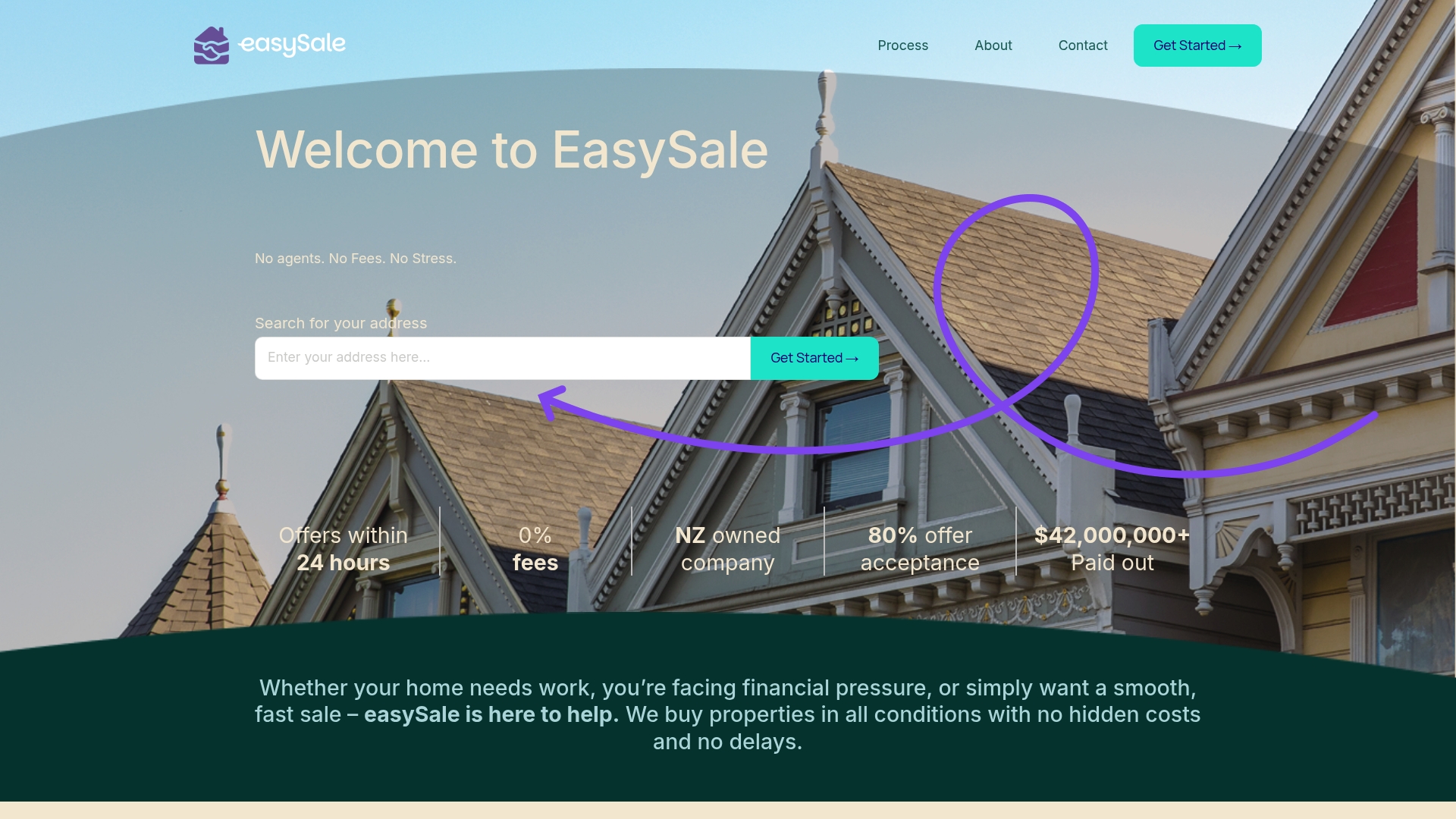
- Submit your property details through EasySale’s Sell Fast - Within 7 days page.
- Receive a no-obligation cash offer, typically within a short turnaround.
- Choose your own settlement date, from a matter of days to several months out.
If your situation involves damage, an inherited property, or a separation, EasySale’s dedicated pages for sell as-is, estate sales and divorce or separation cover those circumstances directly. It’s worth comparing any cash offer against a market appraisal first, so you know exactly what trade-off you’re making for speed.
This article is general information, not a substitute for advice from a qualified financial advisor. Consult a qualified financial professional about your own circumstances before acting on anything here.
FAQ
What’s the quickest way to sell a home?
The quickest route is usually a vetted cash buyer, since there’s no finance condition or buyer chain to wait on. Time-bound methods like auction or deadline sale are the next fastest, typically compressing decisions into a three to four week window.
What devalues a house the most?
Visible deferred maintenance, clutter and poor presentation in photos tend to put buyers off fastest, since they signal hidden costs. Undisclosed defects are worse long-term, because failing to disclose known issues can cause a sale to collapse after it’s already underway.
What sells a house the fastest?
A competitively priced property in good, honestly presented condition sells fastest, backed by solid photos and a clear disclosure of any known issues. Pairing the right price with a time-bound sale method or a vetted cash offer shortens the timeline further.
What is the hardest time to sell a house?
Selling is generally slower when regional demand is soft or when a property needs significant work that puts off finance-dependent buyers. REINZ market updates show days to sell can stretch out in slower periods, which is when price and sale method matter most.
Sources
- Planning to sell | Settled
- National prices steady amid slower activity and regional variation | REINZ
Recommended
