
NZ Homeowners: Three Steps to a Fast Open Listing Cash Sale with Lawyer Review

An open listing, in the sense that matters for Kiwi homeowners chasing speed, means selling straight to a cash buyer or investor without a real estate agent or a listing agreement. It suits sellers who want certainty over top dollar and hate the idea of open homes stretching into months. The next step is simple: get a written offer, then put a property lawyer on the file before you sign anything.
TL;DR:Direct cash sales typically arrive with offers within 24 to 72 hours and can settle in as little as one week or up to eight weeks.Skipping agent commissions can save sellers between 2% and 5% of the sale price, often bringing net proceeds close to those of traditional sales after costs.Sellers should have their legal paperwork ready and involve a property lawyer early to review contracts and protect against potential legal and disclosure issues.Comparing offers requires assessing net proceeds after deducting legal fees, rates, and repairs, not just the offer price, to determine actual earnings.Multi-agent open listings may generate more potential buyers but often result in lower motivation and slower sales, whereas direct cash sales offer speed and certainty with a smaller buyer pool.
EasysaleSell Your Property With Less HassleEasysale helps New Zealand homeowners sell quickly, including properties in any condition, without real estate agents or commission fees.Explore Easysale
Table of Contents
- What a direct cash ‘open listing’ looks like in New Zealand
- Direct cash sale versus listing with an agent: weighing it up
- Step-by-step: how to sell directly to a cash buyer
- Legal must-dos and disclosure obligations you can’t skip
- How to compare cash offers and work out your net proceeds
- What an open listing actually means, and how it differs from other listing types
- The upside and downside of going the open listing route
- How the process plays out day to day
- The real risks sellers run into with open listings
- Best practice if you’re weighing up an open listing
- Why most agents are lukewarm on open listings
- How a three-step process gets you a cash offer fast
- A final word on making this decision with confidence
- Sources
What a direct cash ‘open listing’ looks like in New Zealand
Selling directly to a cash buyer skips the whole apparatus of a traditional listing. There’s no photographer, no signboard, no six weeks of Sunday open homes. You submit your property details, a buyer assesses it, and you get a written offer back.
Most cash buyers move fast because that’s the entire point of the model.
- Offers typically arrive within 24 to 72 hours of submitting your details.
- Settlement can be as quick as one week or stretched to eight weeks if that suits you better.
- Properties are usually bought as-is, which covers storm damage, unconsented additions, tired kitchens, or a house still full of a relative’s belongings after a death in the family.
- It suits urgent situations: probate sales, mortgagee pressure, a sudden move for work, or a property nobody in the family wants to manage from a distance.
Net proceeds often land closer to a traditional sale than people expect once you factor in what you’re not paying for. No commission, no staging costs, no months of mortgage repayments while the place sits on the market waiting for the right buyer to turn up.
Direct cash sale versus listing with an agent: weighing it up
The commission gap is the number most sellers fixate on first, and fairly so. New Zealand agents typically charge between 2% and 5% of the sale price, plus marketing costs on top. On a $650,000 home, that’s anywhere from $13,000 to $32,500 gone before you’ve paid a lawyer or moved a box.
Typically, a commission plus marketing on a median-priced home can add up to several tens of thousands of dollars. A direct cash sale removes that line item entirely, though the trade-off is usually a lower headline price.
Speed and certainty are the other side of the ledger. A cash offer doesn’t fall over because a buyer’s finance application stalls or a building report scares them off. That reliability is worth real money to someone who can’t afford a sale to collapse two weeks before settlement.
- Advantages of direct sale: no commission, faster timeline, fewer conditions, less chance of the deal falling through.
- Disadvantages of direct sale: you’re selling to one buyer instead of testing the open market, which can mean a lower price than a bidding war might produce; you also carry more of the workload yourself.
Direct sale tends to make the most sense when speed, privacy, or certainty matter more than squeezing out the last few percent of value.
Step-by-step: how to sell directly to a cash buyer
- Gather your paperwork first. Pull together your LIM report, Record of Title, a chattels list, and any council consents or code compliance certificates for renovations.
- Get a sense of value. Check recent sales on property portals or ask for a rough valuation so you know whether an offer is fair, even if you’re not going the full agent-appraisal route.
- Submit your property details to a direct buyer and wait for the written offer.
- Review the offer carefully. Negotiate settlement date, deposit size, and any conditions before you commit to anything in writing.
- Bring in a property lawyer early. They’ll draft or check the Sale and Purchase Agreement and hold the deposit in trust, which protects you if anything goes wrong later.
- Handle final checks. Confirm mortgage discharge arrangements, meter readings, and key handover ahead of settlement day.
Pro Tip: Never sign a Sale and Purchase Agreement before your lawyer has read it. It becomes a binding contract the moment both parties sign, so a five minute delay for legal review is cheap insurance against an expensive mistake.
This whole sequence usually takes days rather than months, but the legal steps aren’t optional shortcuts. They’re the part that keeps a fast sale from turning into a slow legal headache.
Legal must-dos and disclosure obligations you can’t skip
A private or direct sale doesn’t lower your legal obligations. Disclosure duties under the Fair Trading Act apply whether an agent is involved or not, and unit-title properties carry their own strict pre-contract disclosure rules.
A property lawyer isn’t a nice-to-have here. They prepare or review the Sale and Purchase Agreement, hold your deposit in a trust account, and make sure the contract terms actually protect you rather than the buyer.
A few watch-outs catch sellers off guard:
- If you’d previously signed an agency agreement, that agent might still be entitled to commission even on a sale you complete yourself.
- Deposits should always sit in a solicitor’s trust account, never paid directly to a buyer or their representative.
- Getting disclosure wrong, even by accident, can expose you to a claim under consumer law after settlement.
Before you talk to a lawyer or a prospective buyer, have your title, LIM, chattels list, any warranties for major work, and details of unconsented alterations ready to go. It saves a week of back and forth.
How to compare cash offers and work out your net proceeds
Comparing two offers on price alone misses half the picture. The number that actually matters is what lands in your account after every cost is accounted for.
- Start with the offer price.
- Add back what you save by skipping agent commission (typically 2% to 5%) and any repairs a traditional buyer would have demanded.
- Subtract legal fees and any outstanding rates or mortgage discharge costs.
- Compare that final figure against what a traditional listing might realistically net after commission, marketing, and the cost of getting the house market-ready.
Worked example: a $600,000 traditional sale at 4% commission costs around $24,000, plus another few thousand in marketing and pre-sale repairs. A direct cash offer of $560,000 with no commission and no repair bill can end up within a few thousand dollars of the same net result, minus the months of waiting.
When you’re weighing offers, check the deposit size and where it’s held, whether the offer carries conditions, who covers rates adjustments at settlement, and how flexible the settlement date really is. Those details often matter more than the headline number.
What an open listing actually means, and how it differs from other listing types
In standard real estate terminology, an open listing is a non-exclusive agreement that lets several agents market the same property at once, with commission going only to whichever agent brings the buyer. That’s the textbook definition, and it’s worth knowing because you’ll see it used that way elsewhere.
For the purposes of this guide, and for the fast, private route most motivated Kiwi sellers are actually after, an open listing means something more direct: selling straight to a cash buyer or investor, with no agent and no listing agreement at all.
The contrast with agent-based selling matters either way. An exclusive listing or sole agency agreement locks you into one agent for a fixed period, usually in exchange for stronger marketing commitment and a more coordinated sales campaign. A multi-agency open listing spreads the property across several agents, each competing for the sale.
A direct cash sale skips agents entirely. There’s no listing agreement of any kind, no commission clause to negotiate, and no marketing campaign to fund. You’re not choosing between exclusive and open representation. You’re removing the agent layer altogether and dealing directly with a buyer who’s ready to purchase now, on terms you negotiate yourself with a lawyer’s help.
The upside and downside of going the open listing route
Whichever version of an open listing applies to your situation, weighing the trade-offs honestly saves you grief later.
For sellers using a multi-agency approach, the appeal is obvious: more agents means more potential buyers seeing the property, which in theory speeds up a sale. The downside is that no single agent has strong financial incentive to push hard, since another agency might land the sale and take the commission instead.
For sellers going the direct cash route (the model this guide focuses on), the advantages stack up differently. You avoid commission entirely, you control the timeline, and you deal with one buyer rather than managing multiple agents and inspection schedules. The trade-off is a smaller buyer pool. You’re not testing the whole market, so there’s a reasonable chance you’ll land a lower price than a competitive campaign might produce.
Buyers, for their part, often find open listings (in the multi-agency sense) create pressure to move quickly, since they know other buyers might be viewing through a different agent entirely. With a direct cash sale, that competitive pressure disappears. The buyer knows they’re the only party at the table, which usually shows up in the price they offer.
The right choice depends on what you value more: maximum exposure and possibly a higher price, or speed, privacy, and a single point of contact.

How the process plays out day to day
A multi-agency open listing means several real estate offices market your home simultaneously, each running its own viewings, its own advertising, and its own buyer database. It can look chaotic from the outside: two different agents might contact you in the same week about separate potential buyers.
A direct cash sale runs on a much simpler rhythm. You deal with one buyer from start to finish. There’s no juggling multiple agents’ calendars, no coordinating conflicting viewing times, and no wondering which agency actually gets credit if two buyers turn up in the same fortnight through different channels.
Practically, that simplicity is a big part of the appeal for sellers who are already stretched thin, whether that’s from a house needing repairs, a relocation on a deadline, or an inherited property with paperwork nobody’s had time to sort. Fewer moving parts means less to manage while you’re already managing everything else.
The real risks sellers run into with open listings
The most common complaint about multi-agency open listings is motivation. Agents naturally prioritise properties where they’ve got exclusive rights to the commission, because that’s where their marketing spend has a guaranteed payoff. An open listing offers no such guarantee, so it often lands lower on an agent’s priority list.
That can mean fewer active viewings organised, less energy put into professional photography or online promotion, and a property that quietly languishes while sole agency listings around it get the attention.
There’s also a structural oddity: because commission only goes to whichever agent secures the buyer, agents sometimes hold back on collaborating with each other, even when that collaboration might help the seller. It creates a slightly adversarial dynamic where the seller’s best interests aren’t always the driving force.
For sellers considering the direct cash alternative instead, the risks look different. Private sellers often underestimate the time and emotional load of managing negotiations themselves, and without a lawyer engaged early, a rushed agreement can lock in unfavourable settlement terms or miss a disclosure requirement. Both paths carry risk. It’s just a different flavour depending on which one you choose.
Best practice if you’re weighing up an open listing
Clarity from the outset prevents most of the headaches associated with open listings, whichever version you’re dealing with.
If you’re going the multi-agency route, put clear terms in writing from day one: which agents are involved, how disputes over introducing a buyer get resolved, and a firm end date for the arrangement so it doesn’t drift indefinitely. Regular check-ins with each agency also help, since open listings tend to fade from an agent’s attention without active follow-up from the seller.
If you’re leaning toward the direct cash sale model instead, the best practice looks a little different. Get every offer in writing before you make a decision. Compare more than one offer if you can, so you know whether the number you’ve been given reflects genuine market interest. Involve a property lawyer as early as possible, not just before signing, so they can flag problems with the contract terms while there’s still room to negotiate. And be upfront with buyers about the property’s condition and history. Clear disclosure protects you legally and tends to keep negotiations moving rather than stalling over surprises found later.
Why most agents are lukewarm on open listings
Ask most real estate agents about open listings and you’ll get a fairly consistent answer: they’ll take the work, but they won’t prioritise it. The economics explain why. An agent investing time and marketing budget into a property has no guarantee they’ll be the one who secures the sale, so the arrangement carries genuine financial risk for them with none of the upside certainty an exclusive agreement provides.
That’s led plenty of agencies to quietly deprioritise open listings in practice, even while technically accepting them. Some will run a property through their standard channels but skip the paid advertising or professional styling they’d invest in for an exclusive client. Others simply take longer to schedule the first viewing.
None of that reflects badly on sellers who choose an open listing. It’s a rational response from agents operating in a system where their reward is tied directly to being first past the post. It’s also exactly why sellers who want speed and certainty, rather than a drawn-out multi-agency campaign, increasingly look at direct cash sale as the more predictable alternative. No agent motivation to manage, because there’s no agent in the equation at all.
How a three-step process gets you a cash offer fast
If everything above has you leaning toward the direct sale route rather than juggling agents or open listings, there are services that fill that gap. These services offer an alternative to agent-run campaigns for Kiwi homeowners who want one straightforward buyer, one written offer, and a settlement date that suits their life, not an auction calendar.
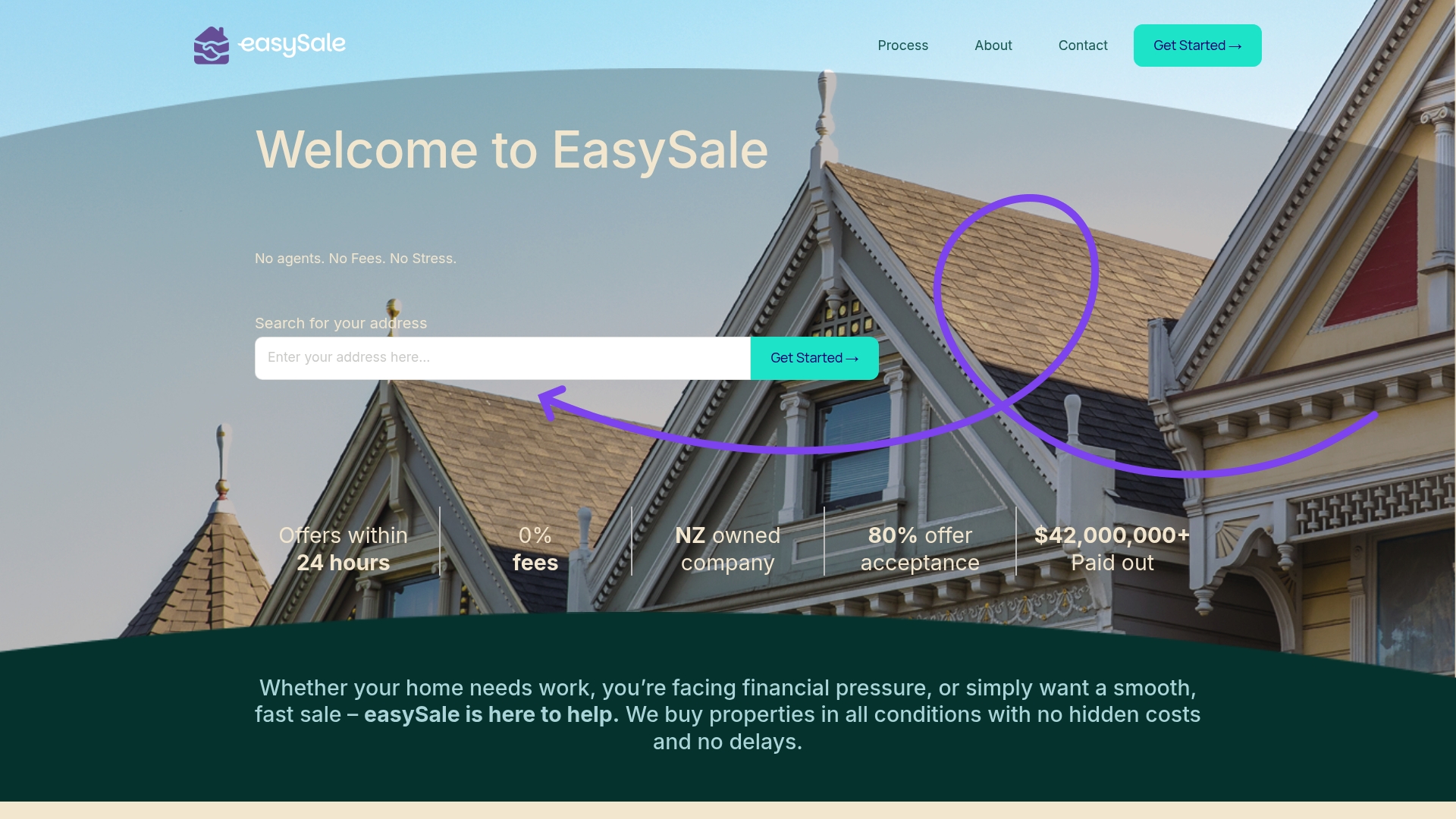
The process runs in three steps: you submit your property details, the buyer reviews them and comes back with a no-obligation written offer, and you settle on a timeline that works for you, whether that’s next week or in two months. Properties can be purchased in any condition, including damaged homes, tenanted properties, and inherited houses still tangled up in probate, so you’re not expected to spend a cent on repairs or staging before an offer lands. There’s no commission, no open homes, and the sale stays private the whole way through.
Customer testimonials on the Easysale site point to sellers who valued exactly this: certainty over a drawn-out campaign, and a national buyer network that means an offer isn’t dependent on local market conditions. If you’re ready to see what a written offer actually looks like, you can request a fair cash offer directly, or check the options for selling a damaged property as-is if that’s closer to your situation.

A final word on making this decision with confidence
Most sellers worry about the same two things when they consider a direct cash sale: whether they’re leaving money on the table, and whether skipping an agent means skipping legal protection too. Neither worry should stop you from exploring the option, but both deserve a straight answer.
On the money question, the only honest way to know is to compare a written cash offer against a realistic net-proceeds figure from a traditional sale, commission and repairs included. On the legal question, the answer is simpler: a property lawyer isn’t optional insurance, it’s the thing that makes a direct sale as safe as any other. Get offers in writing, calculate your real net proceeds, and put a lawyer on the file before you sign anything.
— Aaron
Sources
- Settled
- Sale and purchase agreement guide | REA (Settled/REA guide PDF)
- Trade Me property article on selling/psychology
Recommended
