
Probate Property Sale NZ: Fast Solutions for Heirs

Sudden changes like bereavement or urgent financial needs can leave New Zealand homeowners with inherited property feeling overwhelmed by paperwork and delays. Probate sales are not like regular property transactions—executors need a court-approved grant to legally sell the estate’s assets. This legal framework protects buyers and heirs, but can slow down the process when you need quick results. Discover how a probate property sale works and what steps will help you move forward confidently and avoid unnecessary setbacks.
Table of Contents
- What Is a Probate Property Sale?
- When Probate Is Required for Property
- The Probate Sale Process Explained
- Executor Duties and Legal Responsibilities
- Costs, Risks and Fast Sale Options
Key Takeaways
| Point | Details |
|---|---|
| Probate Property Sale Defined | This sale occurs when an executor obtains court permission to sell property from a deceased estate. |
| Key Steps in the Process | Executors must apply for probate, value the property, and prepare it for sale while distributing proceeds per the will’s instructions. |
| Importance of Legal Oversight | Strict legal protocols ensure property sales are transparent and protect the rights of beneficiaries, reducing potential disputes. |
| Financial Considerations | Understanding and managing costs, risks, and market conditions during the probate process is crucial to protecting estate value. |
What Is a Probate Property Sale?
A probate property sale occurs when the executor of a deceased person’s estate obtains legal permission to sell property through a formal court process. Obtaining probate confirms the will’s legal validity and grants the executor authority to manage and distribute estate assets, including residential properties.
In New Zealand, probate involves a specific legal procedure where the executor named in a will applies to the High Court to validate the document and receive official permission to administer the estate. This process ensures that property sales are conducted legally and transparently, protecting the rights of heirs and potential property buyers.
The probate property sale process typically involves several key steps:
- Locating the original will
- Applying for probate through the High Court
- Obtaining a formal grant of probate
- Valuing the deceased’s property
- Preparing the property for sale
- Distributing proceeds according to the will’s instructions
Probate provides legal protection for executors and heirs by formally confirming the will’s authenticity and the executor’s authority to manage estate assets.
Probate becomes particularly crucial when there are multiple heirs, complex family dynamics, or significant assets involved. The legal process secures confirmation of asset distribution and prevents unauthorized or contested sales that could create family disputes.
Pro tip: Always consult a legal professional specialising in estate management to navigate the probate property sale process smoothly and minimise potential complications.
Here’s how probate property sales compare with regular property sales in New Zealand:
| Aspect | Probate Property Sale | Regular Property Sale |
|---|---|---|
| Authority Needed | Court-issued grant of probate required | Owner or legal representative |
| Timeline | Often several months to complete | Typically shorter, faster process |
| Beneficiary Involvement | Multiple stakeholders and beneficiaries | Usually just seller and buyer |
| Risk of Dispute | Higher due to potential inheritance issues | Lower, disputes are less common |
| Legal Oversight | Strict oversight and court involvement | Standard contractual process |
When Probate Is Required for Property
Probate is a legal requirement that becomes necessary when managing property after someone’s death, particularly when the deceased was the sole property owner. Probate is crucial for estates exceeding specific monetary thresholds and involving significant assets like residential real estate.
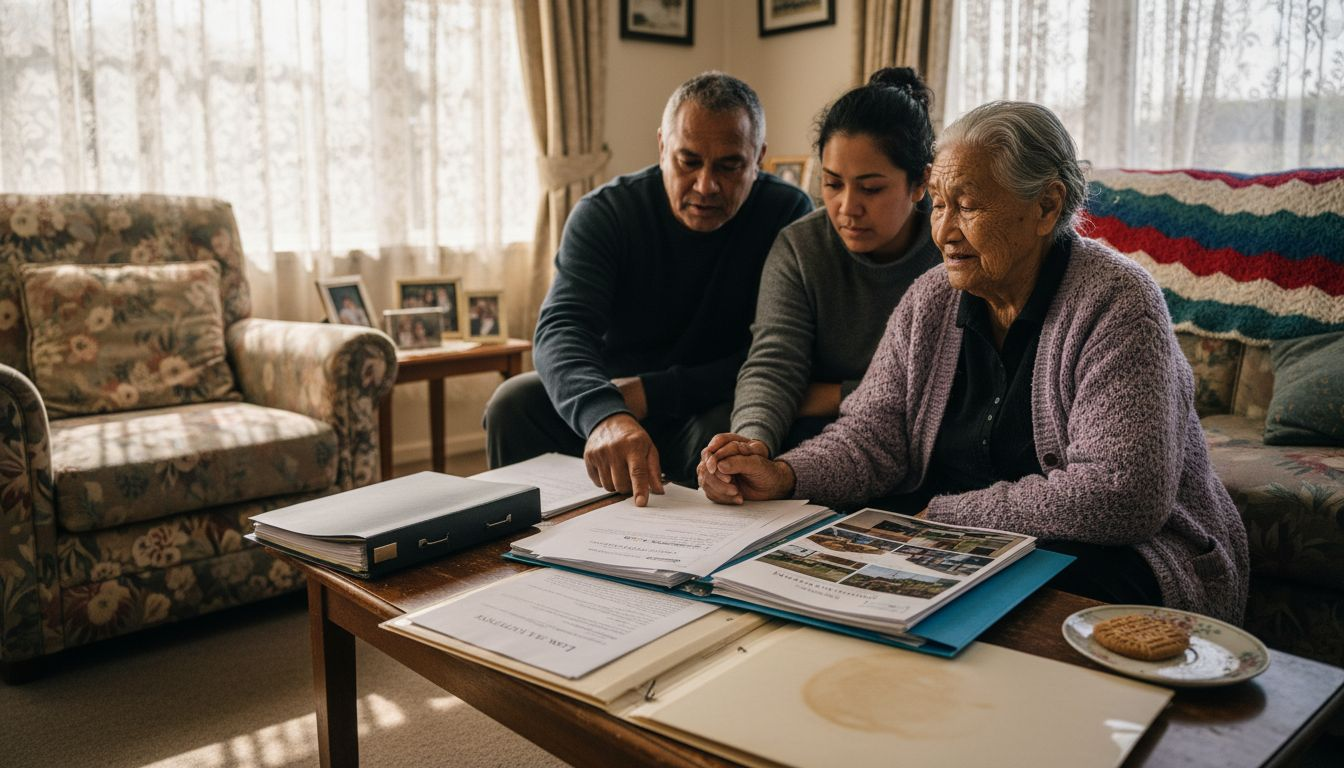
In New Zealand, probate becomes mandatory under several specific circumstances. When a deceased person is the exclusive property owner, their executor must obtain legal authorization to sell or transfer the property. This process ensures that the property can be legally distributed or sold according to the deceased’s wishes or the estate’s needs.
Key scenarios requiring probate for property include:
- Deceased was the sole property owner
- Estate value exceeds bank or institutional thresholds
- Complex ownership structures involving multiple heirs
- Property is not jointly owned with right of survivorship
- Significant financial assets are part of the estate
- Potential disputes among potential inheritors exist
Probate provides legal clarity and protection for executors, ensuring they have the official authority to manage and distribute estate assets.
Property transfer rules differ depending on ownership status, with some properties passing automatically to surviving joint owners. However, properties solely owned by the deceased always require formal probate or letters of administration before any sale or transfer can occur.
Pro tip: Consult a legal professional early in the process to understand the specific probate requirements for your particular property and estate situation.
The Probate Sale Process Explained
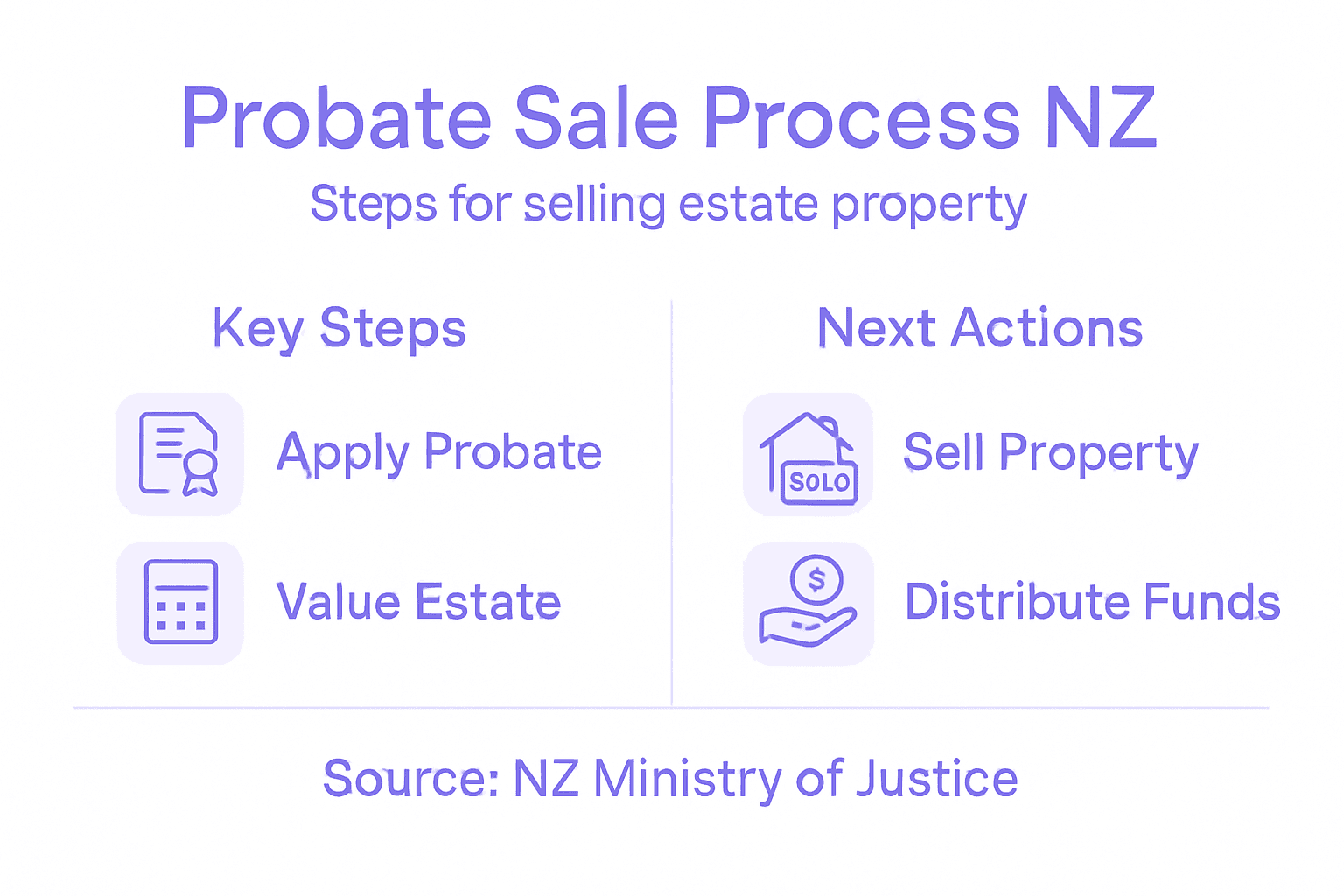
The probate sale process in New Zealand involves a structured legal pathway for executors to sell property after someone’s death. Executors must first apply for probate through the High Court by submitting a sworn affidavit and necessary documentation to obtain official authorization.
Once probate is granted, executors can proceed with several critical steps to manage and sell the deceased’s property. This process requires careful navigation of legal requirements, potentially involving multiple stakeholders including potential heirs, creditors, and financial institutions.
Key steps in the probate sale process include:
- Obtaining official probate from the High Court
- Identifying and valuing all estate assets
- Clearing any outstanding debts or tax obligations
- Preparing the property for sale
- Notifying potential heirs and interested parties
- Conducting the property sale according to legal guidelines
- Distributing sale proceeds as specified in the will
Executors must follow strict legal protocols to ensure the property sale is transparent, fair, and compliant with New Zealand law.
Conveyancing procedures require compliance with specific Property Law Section Guidelines, which outline the precise steps for property identification, sale, and title transfer. Executors must work closely with legal advisers to manage potential encumbrances and ensure smooth settlement of the property.
Pro tip: Engage a specialist property lawyer experienced in probate sales to help navigate the complex legal requirements and potential complications.
Executor Duties and Legal Responsibilities
Executors play a crucial role in managing and settling a deceased person’s estate, carrying significant legal responsibilities. Executors must gather and manage all deceased property with utmost diligence, transparency, and legal compliance.
Under New Zealand law, executors have a fiduciary duty to act in the best interests of beneficiaries throughout the estate administration process. This involves a comprehensive set of responsibilities that require careful attention to legal and financial details, ensuring that the deceased’s wishes are respected and all legal obligations are met.
Key legal responsibilities of an executor include:
- Applying for probate or letters of administration
- Identifying and securing all estate assets
- Valuing the deceased’s property and possessions
- Paying outstanding debts and tax liabilities
- Managing potential estate disputes
- Distributing assets according to the will
- Maintaining detailed financial records
- Communicating transparently with beneficiaries
An executor’s primary obligation is to administer the estate faithfully, legally, and with complete transparency to all interested parties.
Executors must comply with specific legal requirements under the Wills Act 2007, which outlines the precise standards of conduct and administration. This includes thorough documentation, timely communication, and acting with the highest level of professional integrity throughout the estate settlement process.
Pro tip: Consider engaging a professional legal advisor specialising in estate law to help navigate the complex responsibilities and potential legal challenges of estate administration.
Costs, Risks and Fast Sale Options
Probate property sales involve complex financial considerations that can significantly impact the estate’s value and the heirs’ inheritance. Selling a probate property requires understanding various costs and potential risks associated with the legal process of estate administration and property transfer.
The financial landscape of probate property sales in New Zealand encompasses multiple expenses and potential challenges that heirs must carefully navigate. These typically include legal fees, court costs, valuation expenses, and potential market fluctuations that could affect the property’s ultimate sale price.
Key costs and risks associated with probate property sales include:
- Legal fees for probate application
- Court filing and administration charges
- Property valuation expenses
- Potential executor remuneration
- Market value fluctuations
- Possible inheritance tax implications
- Potential disputes among beneficiaries
- Delays in property settlement process
Proactive management and strategic planning can significantly mitigate financial risks and streamline the probate property sale process.
Compliance with Law Society guidelines offers a structured approach to minimising risks during the property sale. Fast sale options might include pre-market valuations, electronic conveyancing, and upfront agreements with potential buyers to expedite the settlement process.
Below is a summary of typical costs and risks in a New Zealand probate property sale:
| Category | Example Cost or Risk | Impact on Estate |
|---|---|---|
| Legal Fees | Court application charges | Reduces payout to heirs |
| Sale Delays | Probate process timing | May reduce market value |
| Valuation Costs | Professional appraisals | Upfront expense for estate |
| Potential Disputes | Contest from heirs | Delays and extra expenses |
Pro tip: Consider obtaining multiple professional valuations and exploring different sale strategies to maximise the property’s market value and minimise potential financial complications.
Simplify Your Probate Property Sale with fast, trusted solutions
Navigating a probate property sale in New Zealand can be overwhelming. The process involves legal complexities like obtaining a grant of probate, managing multiple heirs, and dealing with potential delays that drain emotional and financial resources. If you are an executor or heir seeking a fast sale while respecting the legal duties and timelines detailed in this guide, there is a clear path to relief.

At easySale.co.nz, we understand the stress and urgency that probate property sales bring. Our service offers a simple, transparent process to sell your property quickly for cash without waiting months for traditional probate timelines to resolve. We buy properties as-is across New Zealand and take the complications off your hands so you can focus on what matters. If you want to avoid drawn-out legal hurdles and reduce risks and costs associated with probate sales, start today by submitting your details online. Receive a fair, no-obligation offer and settle on your preferred timeline with confidence.
Discover how easy it can be to manage your probate property sale with easySale.co.nz and take control of the process today.
Frequently Asked Questions
What is a probate property sale?
A probate property sale occurs when the executor of a deceased person’s estate obtains legal permission from the court to sell property as part of the estate management process.
When is probate required for property sales?
Probate is required when the deceased person was the sole owner of the property, the estate exceeds specific monetary thresholds, or there are multiple heirs involved in the estate.
What steps are involved in the probate property sale process?
The probate property sale process typically includes applying for probate, valuing estate assets, preparing the property for sale, notifying potential heirs, and distributing the sale proceeds according to the will.
What are the costs associated with a probate property sale?
Costs can include legal fees for probate applications, court filing fees, property valuation expenses, and potential delays that may affect the estate’s final payout.
Recommended
