
Why Sell Inherited Property Fast: Complete NZ Guide

Did you know that around $20 billion in assets is transferred through inheritance in New Zealand each year? Many families face unexpected legal and financial questions after a loved one passes away. Understanding how inherited property works can help you avoid confusion, make informed choices, and protect your interests throughout the process. With the right knowledge, you can turn a complex situation into an opportunity for clarity and financial confidence.
Table of Contents
- What Is Inherited Property In New Zealand?
- Common Reasons To Sell Quickly
- How The Probate Process Impacts Sale Speed
- Tax Obligations And Financial Risks
- Comparing Fast Sales Vs. Traditional Selling
Key Takeaways
| Point | Details |
|---|---|
| Inherited Property Definition | Inherited property in New Zealand includes assets such as houses and investments transferred to beneficiaries after death, subject to legal frameworks involving wills and trusts. |
| Selling Considerations | Beneficiaries may need to sell inherited properties quickly to alleviate financial burdens and resolve complex family dynamics, with fast sales providing quicker liquidity. |
| Impact of Probate | The probate process can delay property sales significantly, necessitating strategic planning to understand legal implications before proceeding with a sale. |
| Sales Method Choices | Homeowners must choose between fast sales for immediate financial relief or traditional selling methods that may yield a higher price at the cost of time and effort. |
What Is Inherited Property In New Zealand?
In New Zealand, inherited property represents assets transferred to beneficiaries after someone passes away. According to IRD, this typically includes houses, land, money, investments, and personal belongings that become part of a deceased person’s estate.
The inheritance process in New Zealand is primarily governed by legal frameworks involving wills, trusts, and family inheritance laws. As Teara explains, most estates are passed directly to immediate family members like children, spouses, or close relatives. This transfer can include residential properties, commercial real estate, or vacant land.
Key characteristics of inherited property in New Zealand include:
- Transferred through legal estate processes
- Generally tax-free when initially inherited
- Can involve complex legal documentation
- May require probate or estate administration
- Often requires careful financial and legal management
While inheriting property might seem straightforward, navigating the legal and financial implications can be challenging. Many beneficiaries find themselves unexpectedly managing a property they didn’t plan to own, which is why understanding your options becomes crucial. Selling an inherited property quickly can provide financial relief and reduce ongoing maintenance responsibilities.
For more detailed guidance, see our complete guide on selling inherited deceased estate houses which breaks down the entire process step by step.
Common Reasons To Sell Quickly
Inheriting a property can create unexpected challenges that prompt homeowners to seek quick sale solutions. New Zealand homeowners frequently sell inherited properties due to major life transitions such as job relocations, divorce, health challenges, or retirement planning.
Some specific scenarios that drive rapid property sales include financial pressures, maintenance burdens, and complex family dynamics. These situations often require swift, strategic decisions to prevent ongoing financial strain. Emotional and practical considerations can both play significant roles in determining whether to sell an inherited property quickly.
Key reasons for selling inherited property rapidly encompass:
- Avoiding ongoing property maintenance costs
- Eliminating unexpected financial responsibilities
- Resolving complex inheritance disputes
- Generating immediate financial liquidity
- Reducing tax and legal complications
Additionally, EasySale Blog highlights that selling quickly can help owners save on agent fees and maintain greater privacy during the transaction. This approach becomes particularly valuable when dealing with unique property situations like inherited or tenanted properties that might require extensive repairs or traditional marketing efforts.

If you’re navigating a complex inherited property scenario, check out our guide on selling unwanted property quickly for more strategic insights into streamlining your property sale process.
How The Probate Process Impacts Sale Speed
The probate process plays a critical role in determining how quickly an inherited property can be sold in New Zealand. According to Teara, probate involves a legal validation of the deceased person’s will and authorizing the executor to distribute the estate, which can significantly delay property transactions.
Navigating the probate process requires careful understanding and strategic planning. IRD notes that while inheriting property itself does not trigger immediate tax implications, the probate timeline can substantially impact potential sale conditions and property market value. Executors must complete several crucial steps before a property can be legally transferred or sold.
Key probate-related factors affecting sale speed include:
- Complexity of the deceased’s financial arrangements
- Number of beneficiaries involved
- Potential disputes among inheritance stakeholders
- Quality and clarity of the original will
- Court processing times for probate applications
Typically, the probate process in New Zealand can take anywhere from several weeks to several months, depending on the estate’s complexity. Beneficiaries often find themselves in a waiting period, unable to make definitive decisions about the inherited property.
This uncertainty can create significant financial and emotional stress, particularly when immediate sale might be necessary.
If you’re looking to streamline your inherited property sale, check out our guide on selling property quickly for practical strategies to navigate these challenging legal landscapes.
Tax Obligations And Financial Risks
Inheriting property in New Zealand comes with a complex set of financial considerations that can catch many beneficiaries off guard. According to IRD, while inheriting property itself does not typically trigger immediate tax implications, selling the inherited property can potentially create significant tax obligations.
The bright-line test plays a crucial role in determining potential tax liabilities for inherited properties. Tax Accountant explains that this rule generally provides an exemption for inherited property, but specific circumstances can complicate the tax situation.
Key financial risks and tax considerations for inherited property include:
- Potential capital gains tax upon selling
- Complexity of the bright-line test exemptions
- Unexpected maintenance and holding costs
- Potential dispute resolution expenses
- Impact of partial property ownership
Beneficiaries must carefully navigate these financial complexities to avoid unexpected tax burdens. The nuances of inherited property taxation can be intricate, with different rules applying depending on the specific circumstances of the inheritance and subsequent sale. Professional financial advice becomes crucial in understanding the potential tax implications and developing a strategic approach to managing the inherited asset.
To help you understand the intricacies of selling inherited property, our guide on selling property quickly provides comprehensive insights into managing these financial challenges effectively.
Comparing Fast Sales Vs. Traditional Selling
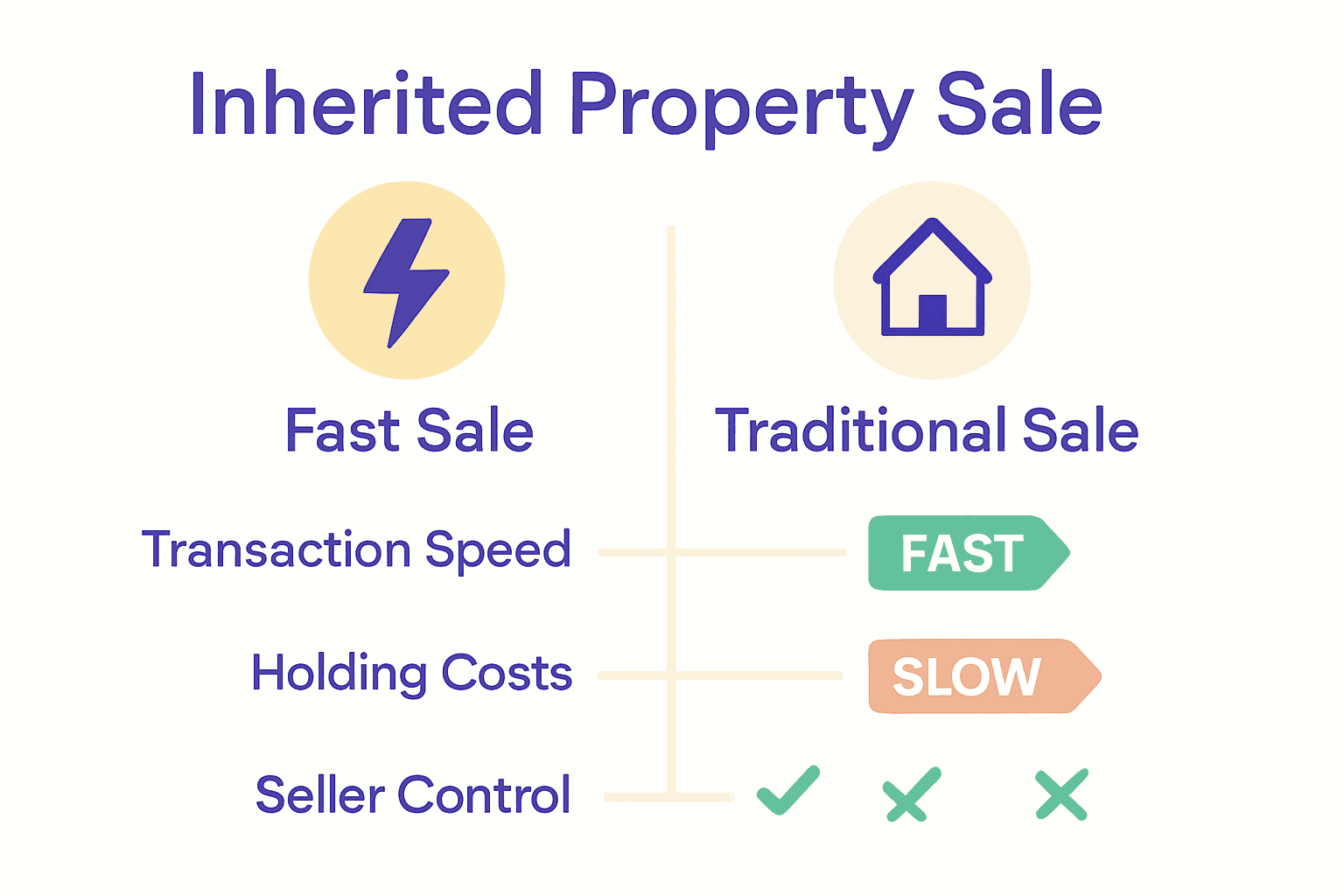
When inheriting property, homeowners face a critical decision between fast sales and traditional selling methods. According to Property Pioneers, fast property sales offer immediate advantages such as quick liquidity and reduced holding costs, but potentially come with trade-offs in final sale price.
Traditional selling approaches typically involve real estate agents, extensive marketing, and potentially longer negotiation periods. In contrast, EasySale Blog highlights that direct sales provide sellers greater control over negotiations and can eliminate costly agent commissions.
Key differences between fast and traditional selling methods include:
- Speed of transaction
- Total financial return
- Level of personal involvement
- Marketing and exposure
- Complexity of the sales process
- Potential for negotiation
Fast sales become particularly attractive for inherited properties where beneficiaries seek to minimize ongoing expenses, resolve complex family dynamics, or quickly convert the asset into liquid funds. While traditional methods might yield a marginally higher price, they often require significant time, emotional energy, and upfront investment in property preparation and marketing.
To explore strategies for efficiently managing your inherited property sale, review our guide on selling property quickly for comprehensive insights into navigating this challenging process.
Here’s a comparison of the main differences between fast property sales and traditional selling methods:
| Feature | Fast Sale | Traditional Sale |
|---|---|---|
| Transaction Speed | Days to weeks | Weeks to months |
| Sale Price Potential | Slightly lower price | Potentially higher price |
| Holding Costs | Minimised | Can be significant |
| Agent Involvement | Often no agent | Real estate agent involved |
| Marketing Required | Minimal | Extensive marketing |
| Seller Control | High | Moderate |
| Privacy | Greater privacy | Less private |
| Typical Use Case | Quick sale needed Inherited or distressed asset |
Ready to maximise value Can wait for buyer |
Need To Sell Your Inherited Property Fast In New Zealand?
Dealing with inherited property often brings unexpected stress and financial pressure. Whether it is the waiting time caused by probate, ongoing maintenance costs, or the need to move on quickly, you deserve a simple and fast way to sell without the usual complications. Avoid prolonged uncertainty, legal delays, and costly agent fees by choosing a straightforward solution designed for your situation.

At easySale.co.nz, we specialise in buying properties quickly in any condition. Our process helps you receive a fair cash offer through just three easy steps, eliminating the hassle described in guides like the Why Sell Inherited Property Fast: Complete NZ Guide. Don’t wait months for probate or waste money on repairs and commissions. Take control of your inherited asset today by visiting easySale.co.nz and discover how to turn your property into immediate cash on your preferred timeline.
Frequently Asked Questions
What is inherited property and how is it transferred?
Inherited property refers to assets transferred to beneficiaries after someone passes away, including houses, land, and personal belongings. It is typically transferred through legal estate processes, often governed by wills or family inheritance laws.
Why should I consider selling inherited property quickly?
Selling inherited property quickly can help avoid ongoing maintenance costs, eliminate unexpected financial responsibilities, resolve disputes among heirs, and generate immediate liquidity, which can provide financial relief during challenging times.
How does the probate process affect selling inherited property?
The probate process is crucial as it validates the deceased person’s will and authorizes the executor to distribute the estate. This process can delay the sale of inherited property, taking several weeks to months depending on the complexity of the estate and any potential disputes.
What are the tax implications of selling inherited property?
While inheriting property typically does not trigger immediate tax obligations, selling it may incur potential capital gains tax depending on the circumstances. Understanding the bright-line test and any exemptions is essential for managing these financial risks.
Recommended
