
Role of Property Investors in NZ Explained

Over 30 percent of properties in New Zealand are held by investors rather than homeowners, highlighting a trend that shapes the housing market for both Kiwis and australian buyers. Understanding who these property investors are matters because their decisions ripple through affordability, housing availability, and investment opportunities. This guide makes it clear how property investors operate, why they matter in New Zealand, and what sets them apart from traditional homeowners.
Table of Contents
- What Are Property Investors in NZ?
- Types of Property Investors and Strategies
- How Property Investors Facilitate Fast Sales
- Legal Obligations and Ethical Responsibilities
- Risks, Costs, and Common Pitfalls
Key Takeaways
| Point | Details |
|---|---|
| Diverse Investor Types | Property investors in New Zealand include Residential, Commercial, Development, and Portfolio investors, each employing specific strategies to optimise returns. |
| Innovative Strategies | Investment approaches such as fractional real estate investing and Buy and Hold significantly enhance accessibility and wealth generation opportunities. |
| Roles in the Market | Property investors facilitate rapid transactions and provide liquidity, crucial for homeowners needing urgent selling solutions. |
| Regulatory Compliance | Adherence to legal standards and ethical responsibilities is essential for ensuring tenant rights and maintaining industry integrity. |
What Are Property Investors in NZ?
Property investors in New Zealand represent a diverse group of individuals and organisations committed to purchasing, managing, and generating income through residential and commercial real estate investments. These strategic market participants play a crucial role in the national property ecosystem, providing liquidity, housing options, and economic dynamism.
At their core, property investors are professionals who purchase properties with the primary objective of generating financial returns. Unlike homeowners seeking a primary residence, these investors view real estate as a strategic asset class. Their investment strategies typically involve generating rental income through carefully selected properties, appreciating property values, and building long-term wealth.
The New Zealand Property Investors’ Federation (NZPIF) represents the collective interests of these investors, serving as an umbrella organization for 17 local Property Investors’ Associations nationwide. This federation plays a critical role in advocating for investor rights, promoting ethical practices, and influencing policy discussions that impact property market dynamics.
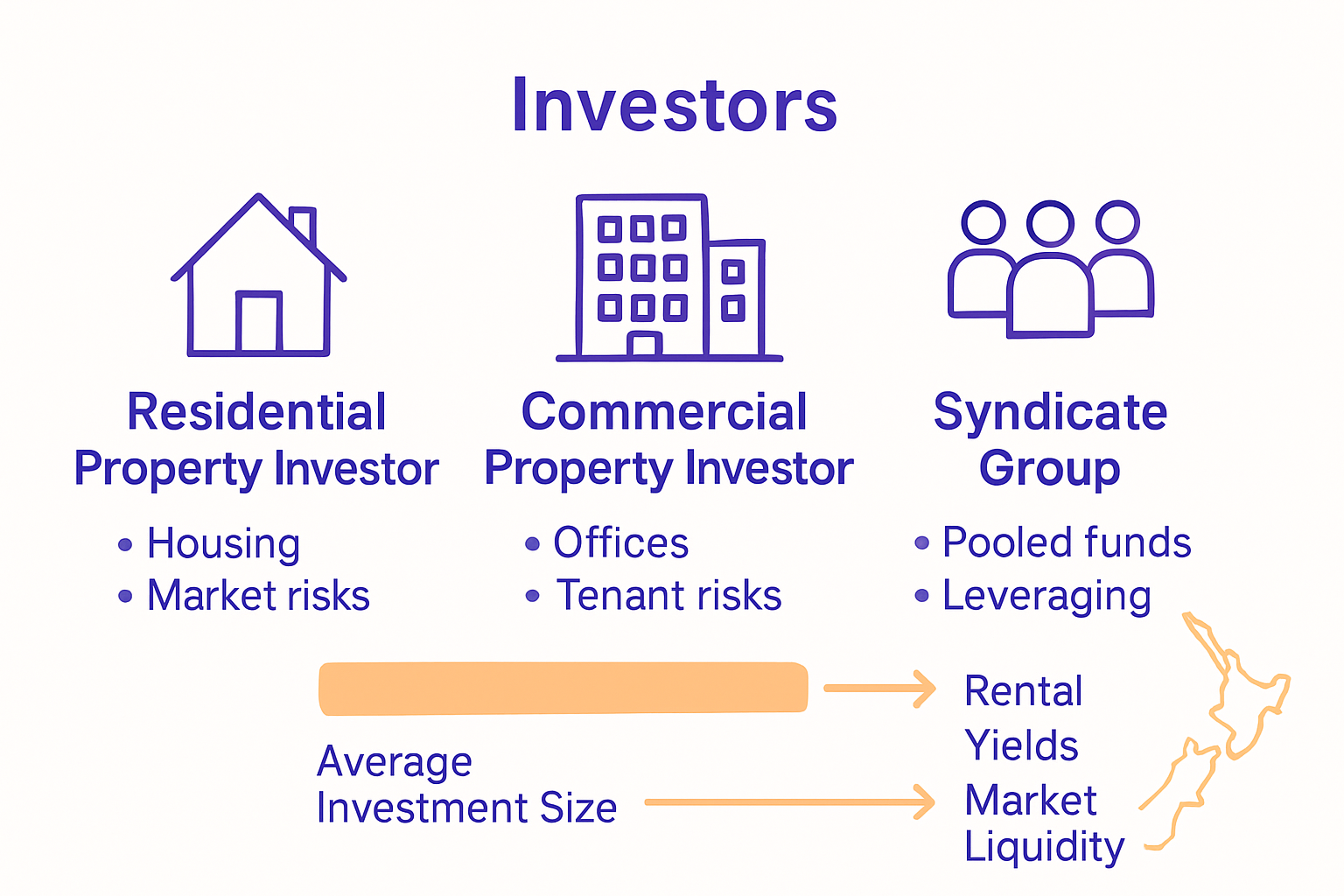
Property investors in New Zealand can be categorised into several distinct groups:
- Residential Investors: Focus on purchasing houses, apartments, and townhouses for rental income
- Commercial Property Investors: Target office spaces, retail locations, and industrial properties
- Development Investors: Purchase properties with potential for renovation or redevelopment
- Portfolio Investors: Maintain diverse property holdings across multiple investment categories
By providing housing alternatives, maintaining property standards, and contributing to market liquidity, property investors serve a fundamental economic function in New Zealand’s real estate landscape.
Types of Property Investors and Strategies
Property investors in New Zealand employ diverse strategies to generate wealth and create sustainable income streams through real estate investments. These strategies reflect the complex and dynamic nature of the property market, with investors adapting their approaches based on financial goals, risk tolerance, and market conditions.
One innovative approach gaining popularity is fractional real estate investing, which allows multiple investors to co-invest in properties. This strategy significantly lowers financial barriers, enabling investors with limited capital to participate in high-value property investments that would traditionally be out of reach.
The primary investment strategies employed by New Zealand property investors include:
- Buy and Hold: Purchasing properties and retaining them long-term to benefit from capital appreciation and rental income
- Value-Add Investment: Identifying properties with renovation potential to increase market value
- Residential Rental: Focusing on residential properties to generate consistent monthly rental returns
- Commercial Property Investment: Targeting commercial real estate for potentially higher yield rates
Investors recognise that real estate can be a lucrative asset class offering both capital appreciation and rental income. By strategically selecting properties and understanding market dynamics, these investors create robust investment portfolios that provide financial security and potential wealth generation. The most successful property investors continuously educate themselves, monitor market trends, and remain flexible in their investment approaches.
How Property Investors Facilitate Fast Sales
Property investors play a crucial role in expediting property transactions across New Zealand, offering innovative solutions that streamline the selling process for homeowners facing time-sensitive financial challenges. Their ability to move quickly and provide flexible purchasing options sets them apart from traditional real estate market participants.

Fractional real estate investing has emerged as a particularly dynamic approach to facilitating faster property sales. This model allows multiple investors to collaborate on property acquisitions, enabling quicker transactions and providing sellers with more immediate liquidity options that traditional sales channels might not offer.
The primary mechanisms through which property investors accelerate sales include:
- Cash Purchases: Eliminating lengthy mortgage approval processes
- Flexible Settlement Terms: Accommodating sellers’ unique timing requirements
- Direct Negotiations: Bypassing complex real estate agent intermediaries
- As-Is Property Purchases: Accepting properties in any condition without demanding extensive repairs
Diversified investment strategies enable investors to create more accessible pathways for property transactions. By reducing financial barriers and offering alternative purchasing models, property investors provide critical market flexibility, particularly for sellers experiencing urgent financial needs or those with properties that might challenge traditional sale processes. Their approach transforms potential selling obstacles into streamlined, efficient transaction opportunities.
Legal Obligations and Ethical Responsibilities
Property investors in New Zealand operate within a complex regulatory landscape that demands rigorous adherence to legal standards and ethical practices. These professionals must navigate intricate legislative frameworks designed to protect both investors and property owners, ensuring transparency and fairness in all transactions.
The New Zealand Property Investors’ Federation (NZPIF) plays a crucial role in maintaining industry standards, establishing a comprehensive Code of Ethics that guides members towards professional conduct. This ethical framework emphasises integrity, accountability, and responsible investment practices that extend beyond mere legal compliance.
Key legal and ethical responsibilities for property investors include:
- Tenant Rights Protection: Ensuring safe, habitable living conditions
- Transparent Financial Practices: Clear documentation and fair pricing
- Compliance with Residential Tenancies Act: Adhering to statutory regulations
- Proper Property Maintenance: Meeting health and safety standards
- Respectful Communication: Maintaining professional interactions with tenants and sellers
The organisation actively engages in political advocacy to ensure that residential rental properties remain governed by the Residential Tenancies Act of 1986. By representing collective investor interests, NZPIF helps shape policies that balance the needs of investors, tenants, and broader community interests, demonstrating a commitment to responsible and ethical property investment practices.
Risks, Costs, and Common Pitfalls
Property investment in New Zealand presents a complex landscape of potential rewards and significant challenges. Investors must navigate a nuanced terrain of financial risks, market volatility, and strategic decision-making that requires careful planning and sophisticated risk management approaches.
Diversification emerges as a critical strategy for mitigating investment risks, particularly in the dynamic New Zealand property market. By spreading investments across multiple properties and market segments, investors can effectively buffer themselves against potential economic fluctuations and localised market downturns.
Common risks and potential pitfalls for property investors include:
- Market Volatility: Unexpected economic shifts affecting property values
- Maintenance Costs: Unexpected repairs and property upkeep expenses
- Tenant Management: Potential income loss from vacancy or problematic tenancies
- Financing Challenges: Complex mortgage and lending requirements
- Regulatory Compliance: Navigating changing legal and tax landscapes
Fractional real estate investing offers an alternative approach that can help mitigate some traditional investment risks. This method allows investors to participate in property markets with reduced individual financial exposure, creating opportunities for those seeking more flexible and potentially less risky investment strategies. By sharing investment responsibilities and spreading financial commitments, investors can more effectively manage potential downside risks while maintaining exposure to property market opportunities.
Simplify Your Property Sale with Trusted Investors in New Zealand
Navigating the complex world of property investment and sales can be overwhelming, especially when time is critical or the property needs repairs. This article highlights how property investors help facilitate fast sales through cash purchases, flexible settlement terms, and accepting properties in any condition. If you are facing urgent financial challenges or life changes and want to avoid the typical delays and costs of traditional selling, there is a straightforward solution.
EasySale.co.nz specialises in buying residential properties quickly and fairly across New Zealand. Offering a transparent, no-obligation process, EasySale lets you receive a fast cash offer without involving real estate agents or paying commission fees. Whether your property needs renovation or you require a fast settlement, their flexible approach respects your circumstances and takes the stress out of selling.

Take control of your property sale today by visiting EasySale.co.nz for a simple three-step process: submit your property details, receive a fair offer, and choose your preferred settlement date. Don’t wait for market uncertainties or complicated sale processes to weigh you down. Act now and experience the ease of selling your property swiftly with trusted investors ready to help.
Frequently Asked Questions
What is the role of property investors in New Zealand?
Property investors in New Zealand purchase, manage, and generate income through residential and commercial real estate, providing liquidity and housing options in the market.
What are the different types of property investors?
Property investors can be categorised into several groups, including residential investors, commercial property investors, development investors, and portfolio investors, each with distinct strategies and focus areas.
How can property investors facilitate fast sales?
Property investors expedite sales by making cash purchases, offering flexible settlement terms, negotiating directly, and buying properties as-is, which helps sellers facing time-sensitive financial challenges.
What are the legal obligations of property investors?
Property investors must adhere to legal standards such as protecting tenant rights, complying with the Residential Tenancies Act, maintaining properties properly, and ensuring transparent financial practices.
Recommended
