
Property Sale Process in NZ Explained: Essential Steps

Over 25 percent of australian buyers express interest in New Zealand properties each year, making the property sale landscape especially competitive. If you are considering selling real estate in New Zealand, understanding the step-by-step process is vital for a smooth and secure transaction. This guide uncovers what sellers need to know about legal obligations, financial risks, and proven strategies to navigate the market with confidence.
Table of Contents
- Property Sale In New Zealand Defined
- Traditional Vs. Quick-Sale Property Methods
- Step-By-Step Property Sale Process Explained
- Legal And Financial Obligations For Sellers
- Risks, Costs And Common Pitfalls To Avoid
- Alternatives To Traditional Property Sales
Key Takeaways
| Point | Details |
|---|---|
| Property Sale Process | Selling property in New Zealand requires a structured approach, encompassing preparation, marketing, negotiation, and compliance with legal obligations. |
| Traditional vs. Quick-Sale Methods | Sellers can choose between traditional methods that may yield higher prices and quick-sale strategies focusing on speed and convenience. |
| Legal and Financial Responsibilities | Sellers must be aware of tax obligations and ensure compliance with legal standards for a successful transaction. |
| Alternative Selling Options | Innovative selling methods such as private sales and online platforms allow sellers greater control and potential cost savings in the property transaction process. |
Property Sale in New Zealand Defined
A property sale in New Zealand represents a structured legal and financial transaction involving the transfer of real estate ownership from one party to another. According to govt.nz, selling a property involves several critical considerations including understanding market conditions, preparing the property, and navigating legal requirements.
The sale process encompasses more than simply exchanging money for a property. It requires comprehensive documentation, compliance with local regulations, and careful financial planning. IRD highlights that property transactions come with specific tax obligations that sellers must understand and manage effectively. This includes potential income tax implications and maintaining precise financial records throughout the transaction.
Key components of a property sale in New Zealand typically include:
- Property valuation and market assessment
- Legal documentation preparation
- Negotiation of sale terms
- Financial settlement procedures
- Transfer of property ownership
Whether you’re selling a family home, investment property, or inherited real estate, understanding the nuanced process helps ensure a smooth, transparent transaction that protects both the seller’s and buyer’s interests. The sale process demands attention to detail, strategic planning, and often professional guidance to navigate successfully.
Traditional vs. Quick-Sale Property Methods
In New Zealand’s dynamic property market, sellers have two primary approaches to selling their property: traditional methods and quick-sale strategies. Settled.govt.nz highlights that these approaches vary significantly in their timeline, complexity, and potential outcomes, making it crucial for sellers to understand their unique circumstances and goals.
Traditional property sale methods typically involve more comprehensive processes. According to govt.nz, these include:
- Auction sales: Where properties are publicly sold to the highest bidder
- Tender sales: Involving sealed bids and confidential offer processes
- Private treaty sales: Negotiating directly with potential buyers
Quick-sale methods, by contrast, prioritise speed and convenience. These approaches are particularly suitable for sellers facing time constraints, financial pressures, or those with properties requiring significant repairs. Need to sell my house quickly: A step-by-step guide offers insights into streamlining the property sale process for urgent scenarios.
While traditional methods might yield higher prices through competitive bidding, quick-sale approaches provide certainty, reduced stress, and faster transactions. The optimal method depends on individual circumstances, market conditions, and the seller’s specific financial and personal requirements.
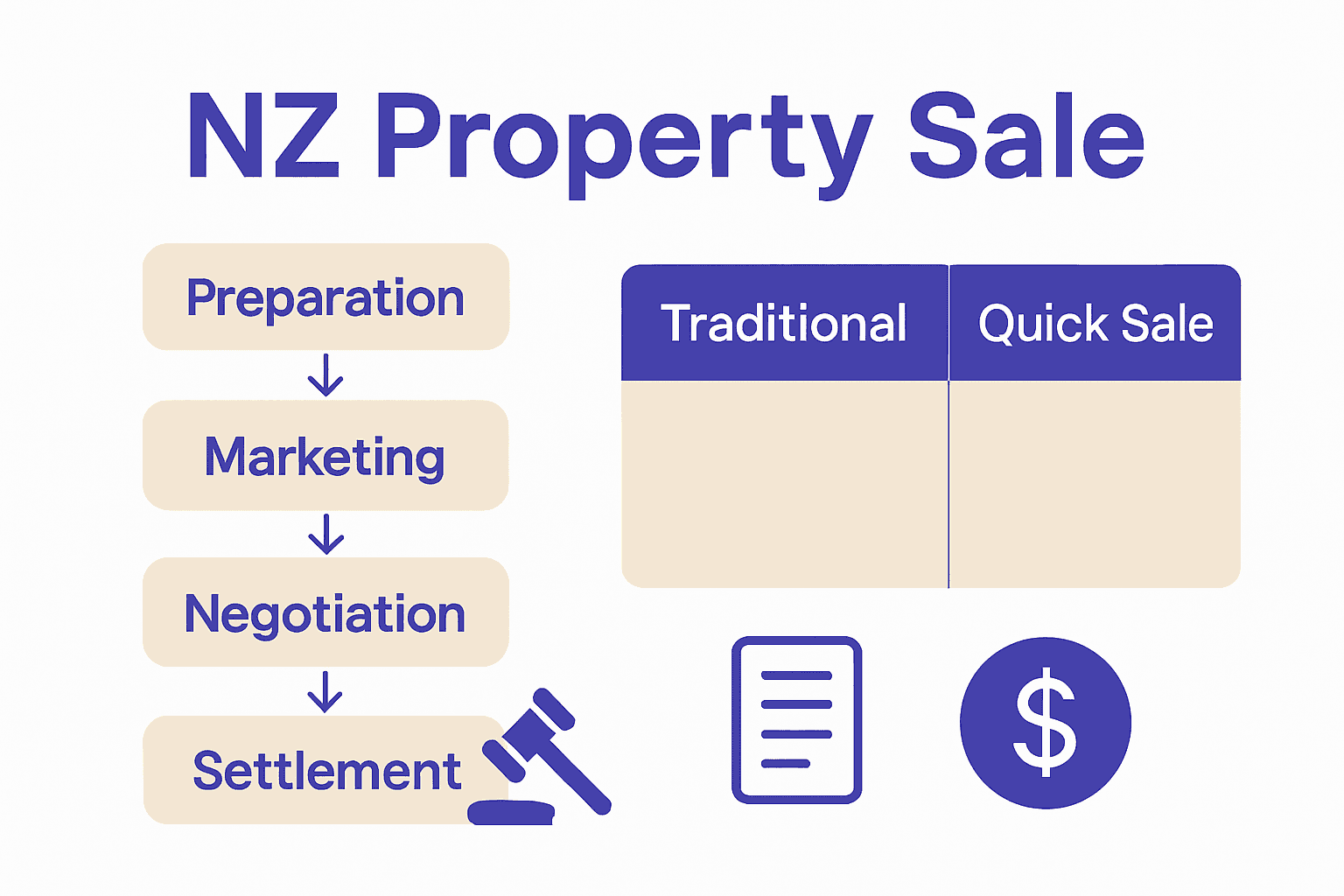
Step-By-Step Property Sale Process Explained
Selling a property in New Zealand requires a systematic approach that transforms a complex transaction into a manageable journey. Settled.govt.nz provides a comprehensive framework for navigating this process, emphasising the importance of strategic planning and informed decision-making.
The property sale process typically unfolds through several critical stages:
- Property Preparation
- Assess property condition
- Complete necessary repairs
- Determine market value
- Gather essential documentation

- Marketing and Presentation
- Professional photography
- Create compelling property listings
- Arrange open home inspections
- Develop targeted marketing strategy
- Negotiation and Offer Management
- Review incoming offers
- Evaluate financial and legal terms
- Negotiate sale conditions
- Select most suitable buyer proposal
According to govt.nz, each stage requires careful consideration and professional insight. Master the simple property sale process can help sellers understand the nuanced steps involved in achieving a successful property transaction.
Ultimately, successful property sales demand patience, preparation, and a strategic approach. Sellers who invest time in understanding each phase of the process are better positioned to navigate potential challenges, maximise their property’s value, and achieve a smooth, satisfactory transaction.
Legal and Financial Obligations for Sellers
Navigating the legal and financial landscape of property sales requires meticulous attention to detail and comprehensive understanding of regulatory requirements. IRD emphasises that sellers must be acutely aware of their tax obligations and maintain precise financial documentation throughout the transaction process.
Key legal responsibilities for property sellers include:
- Full disclosure of property conditions
- Accurate representation of property details
- Compliance with Sale and Purchase Agreement terms
- Transparent communication about known defects
- Providing necessary legal documentation
Financial obligations are equally critical. Sellers must be prepared to:
- Calculate potential capital gains tax
- Understand income tax implications
- Maintain comprehensive financial records
- Prepare accurate settlement statements
According to govt.nz, the legal framework surrounding property sales is designed to protect both buyers and sellers. Why sell without an agent provides additional insights into navigating these complex requirements independently.
Ultimately, successful property sales demand proactive management of legal and financial responsibilities. Sellers who invest time in understanding these obligations can mitigate potential risks, ensure smooth transactions, and protect their financial interests throughout the property sale process.
Risks, Costs and Common Pitfalls to Avoid
Property sales involve complex financial and legal challenges that can significantly impact a seller’s outcome. Settled.govt.nz emphasises the critical importance of understanding potential risks and proactively managing potential complications before they escalate.
Common financial risks sellers must navigate include:
- Unexpected property valuation discrepancies
- Hidden repair and marketing costs
- Potential capital gains tax implications
- Settlement and legal transaction expenses
- Potential market value fluctuations
Key legal pitfalls to be aware of:
- Incomplete property disclosure
- Inaccurate documentation
- Misrepresentation of property condition
- Failure to meet contractual obligations
- Disputes over property boundaries or conditions
According to govt.nz, effective risk management requires thorough preparation and transparent communication. Master the simple property sale process can provide additional strategies for mitigating these potential challenges.
Successful property sales demand a strategic approach that anticipates and addresses potential risks. By understanding these common pitfalls, sellers can protect their financial interests, minimise legal complications, and ensure a smoother, more predictable transaction process.
Alternatives to Traditional Property Sales
Property owners in New Zealand now have diverse options beyond the conventional real estate agent model, offering more flexibility and control over their sales process. Settled.govt.nz highlights the emergence of alternative selling strategies that empower property owners to take a more direct approach to real estate transactions.
Alternative Property Sale Methods include:
- Private Sales
- Direct seller-to-buyer negotiations
- Full control over marketing and pricing
- Potential cost savings on agent commissions
- Online Property Platforms
- Digital marketplaces for property listings
- Broader buyer reach
- Lower transaction costs
- Cash Property Buyers
- Rapid transaction processes
- Guaranteed sale outcomes
- Minimal property preparation requirements
According to govt.nz, these alternative methods provide sellers with increased flexibility in managing their property transactions. Why sell without an agent explores the nuanced strategies for navigating these innovative selling approaches.
Ultimately, successful alternative property sales demand thorough research, clear communication, and a strategic understanding of market dynamics. Sellers who carefully evaluate their options and understand the pros and cons of each method can achieve more personalised, efficient property transactions tailored to their specific needs.
Simplify Your Property Sale With Fast, Fair Solutions
Navigating the complex property sale process in New Zealand can feel overwhelming with legal obligations, financial risks and long timelines as highlighted in the article. If you are facing challenges like urgent sales, property damage or simply want to avoid the traditional time-consuming steps including auctions, tenders or private treaties then easySale.co.nz offers a clear solution that matches your needs. Our service focuses on removing common stressors by providing sellers with a straightforward way to receive a no-obligation, fast cash offer and settle on their terms.

Why wait through the lengthy negotiation and documentation when you can benefit from a quick and transparent property sale process that respects your unique situation? Discover how to bypass common pitfalls and costly commissions with easySale.co.nz today. Get started by submitting your property details online and see how simple selling your home can be by visiting easySale.co.nz. For a deeper understanding of streamlining your sale, check out Master the simple property sale process and learn Why sell without an agent for more useful insights. Take control of your property sale now and turn complexity into clarity.
Frequently Asked Questions
What are the essential steps involved in the property sale process?
The essential steps include preparing the property, marketing and presentation, negotiation and offer management, legal documentation, and financial settlement procedures.
What legal obligations do sellers have when selling a property?
Sellers must provide full disclosure of property conditions, ensure accurate representation of details, comply with the Sale and Purchase Agreement terms, and communicate about known defects.
How can sellers determine the right method for selling their property?
Sellers can assess their circumstances and goals, considering traditional methods like auctions and tender sales for potentially higher prices or quick-sale strategies for faster transactions.
What common risks should property sellers be aware of?
Sellers should be aware of financial risks like unexpected valuation discrepancies, hidden costs, and potential tax implications, as well as legal pitfalls such as incomplete disclosures and misrepresentations.
Recommended
- Master the Simple Property Sale Process: Quick & Stress-Free
- Sell House Privately NZ: Complete How-To Guide
- Sunlite
- House Removal Process Explained: Step-by-Step Guide for 2025 | Schott Removals
- How to Sell New Zealand Property from Overseas Easily
- How to Sell Property Fast in NZ: Easy Step-by-Step Guide
