
Sell House Checklist NZ: Achieve a Fast, Hassle-Free Sale
Unexpected financial pressures or sudden changes can leave homeowners across New Zealand searching for the fastest way to sell their properties without extra hurdles. In moments like these, skipping real estate agents and opting for a direct sale can ease stress and bring clarity. This guide shows how to achieve a quick, legally sound sale by focusing on accurate property assessment and complete ownership documentation, helping you secure your future with confidence.
Table of Contents
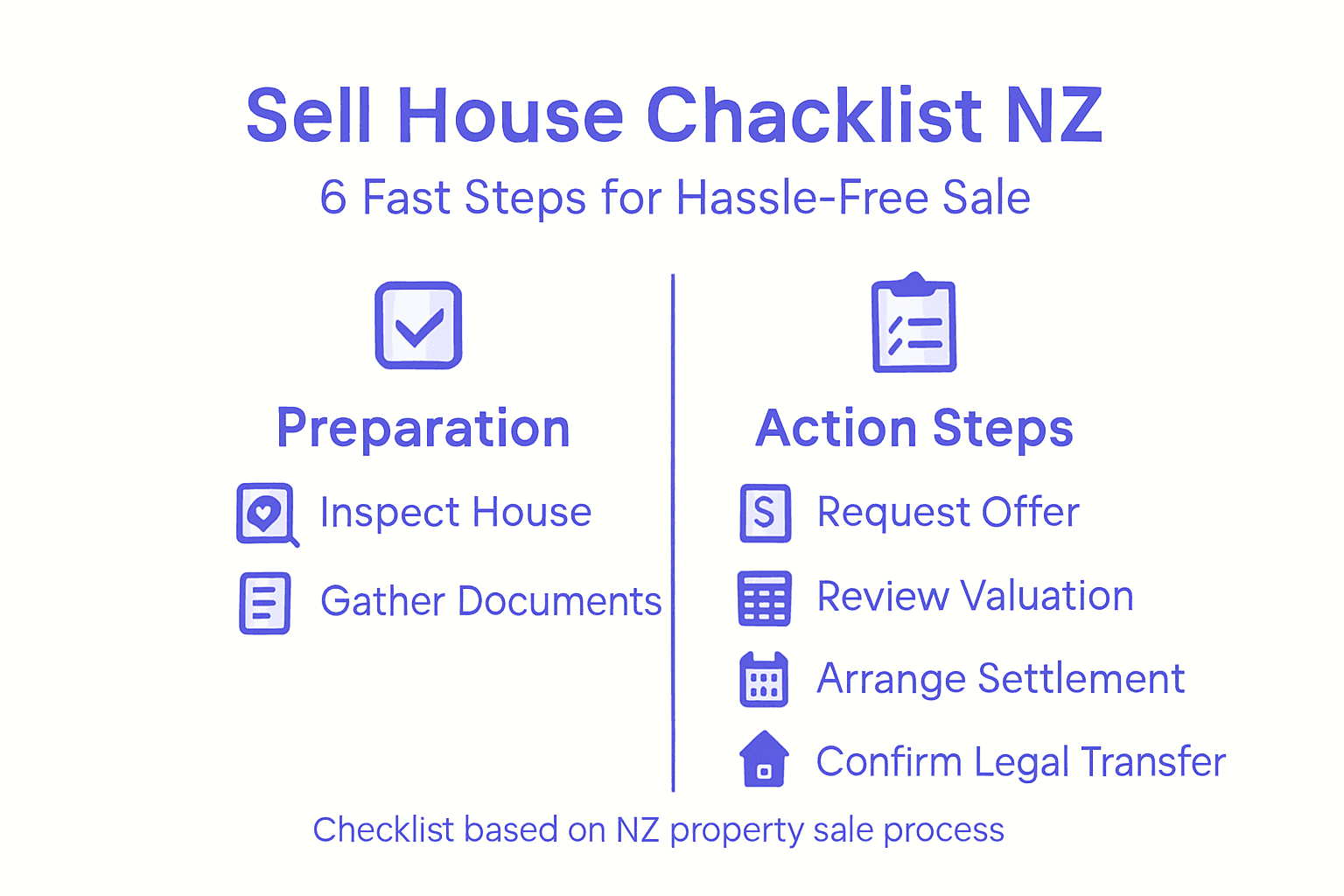
- Step 1: Assess Property Condition And Urgency
- Step 2: Gather Essential Ownership Documents
- Step 3: Submit Details For A Cash Offer
- Step 4: Review And Accept A Fair Valuation
- Step 5: Arrange Settlement On Your Timeline
- Step 6: Verify Completion Of Legal Transfer
Quick Summary
| Key Point | Explanation |
|---|---|
| 1. Conduct a Property Inspection | Thoroughly assess your property’s condition to identify issues that could affect sale price and strategy. |
| 2. Gather Ownership Documents Early | Collect essential legal documents to streamline the selling process and demonstrate your right to sell. |
| 3. Submit Accurate Property Details | Provide comprehensive property information to engage potential cash buyers and expedite offers. |
| 4. Carefully Evaluate Property Valuation | Review multiple valuations to ensure a fair market price and understand the reasoning behind the assessments. |
| 5. Plan Settlement According to Your Needs | Coordinate settlement timelines with buyers to suit your personal and financial circumstances for a smooth transition. |
Step 1: Assess Property Condition and Urgency
Before selling your house in New Zealand, you need a comprehensive evaluation of your property’s current state and the driving factors behind your sale. Understanding your property’s condition and urgency helps determine the most effective selling strategy and potential sale price.
Start by conducting a thorough property inspection to identify any maintenance issues or damage. Property inspections help document the current condition and provide clarity on potential repair requirements. Key areas to assess include:
- Structural integrity of walls, roof, and foundation
- Electrical and plumbing systems
- Signs of water damage or mould
- General wear and tear
- Landscaping and exterior condition
Simultaneously, evaluate the urgency of your sale. Are you facing financial pressures, relocating, or dealing with other time-sensitive circumstances? Risk assessments can help determine property safety and sale priorities, especially if your property is in an area prone to natural hazards.
Documenting your findings is crucial. Take clear photographs, make detailed notes, and consider getting a professional property assessment if significant issues are apparent. This documentation will help you set realistic expectations and potentially streamline the sales process.
Pro tip: Consider obtaining a pre-sale building inspection to identify and potentially address issues before listing, which can help you negotiate a better sale price and attract serious buyers.
Step 2: Gather Essential Ownership Documents
Preparing to sell your house in New Zealand requires collecting and organising all critical ownership documents. This step is fundamental to ensuring a smooth, legally compliant property sale that demonstrates your clear legal right to transfer ownership.
Land Transfer Act documents are crucial for registering property transactions, so you’ll need to compile a comprehensive set of paperwork. Essential documents include:
- Certificate of Title
- Original property purchase agreement
- Mortgage discharge documents
- Building consent records
- Property boundary and survey plans
- Recent rates notices
- Proof of identity documents
Professional guidance can significantly streamline this process. Engaging a lawyer early helps ensure all necessary documentation is collected and verified, reducing potential complications during the sale.
Organise these documents in a clear, chronological folder. Make both digital and physical copies, ensuring all papers are easily accessible. This preparation demonstrates professionalism and helps build trust with potential buyers.
Pro tip: Create a digital backup of all ownership documents and store them in a secure cloud service, ensuring you have instant access and protection against potential loss.
Step 3: Submit Details for a Cash Offer
Submitting property details is your gateway to a quick sale in New Zealand. This crucial step involves providing comprehensive information that enables potential buyers to evaluate your property and make a fair cash offer.
Claim submission requires accurate identification and ownership evidence, similar to property sales. You’ll need to prepare a detailed package that showcases your property’s potential. Essential details to compile include:
- Property address and legal description
- Current market value estimate
- Property size and land dimensions
- Number of bedrooms and bathrooms
- Recent renovation or maintenance history
- Reason for selling
- Preferred settlement timeline
- Contact information
Digital submission streamlines the process. Providing comprehensive documentation supports offer processing and increases your chances of a quick sale. Ensure all information is accurate, recent, and presented clearly to attract serious cash buyers.
Most cash buying services offer online submission forms or direct email contacts. Be prepared to answer follow-up questions and provide additional documentation promptly to maintain momentum in your sale process.
Pro tip: Gather all property documents beforehand and have digital copies ready, which allows you to submit details quickly and professionally when an opportunity arises.
Step 4: Review and Accept a Fair Valuation
Evaluating a property valuation is a critical moment in your house sale journey. This step determines the financial outcome of your sale and requires careful consideration of professional assessment and market conditions.
Valuation standards are governed by professional regulatory frameworks to ensure accuracy and fairness. Understanding how valuers determine your property’s worth involves examining several key factors:
- Recent local property sales
- Current market conditions
- Property size and features
- Structural condition
- Location and neighbourhood characteristics
- Unique property attributes
The valuation process involves comparing your property against similar recent sales in your area. Professional valuers use comprehensive assessment methods to provide an objective market value that reflects current real estate trends.
The Valuation Quality Framework guides transparent property assessments, ensuring you receive a fair and accurate evaluation. If the initial valuation seems low, request a detailed breakdown of how the figure was calculated and consider obtaining multiple professional assessments.
Negotiation is key. Don’t automatically accept the first valuation - compare multiple assessments and understand the reasoning behind each. Look for consistency and be prepared to provide additional information that might positively influence your property’s perceived value.
Pro tip: Request a written valuation report and carefully review each component, asking specific questions about how market conditions and unique property features contribute to the final assessment.
Step 5: Arrange Settlement on Your Timeline
Settling on your preferred timeline is crucial for a stress-free property sale. This step allows you to coordinate the transfer of property ownership according to your personal and financial circumstances.
Settlement planning requires careful coordination of transition processes to ensure a smooth property transfer. Key considerations for arranging your settlement include:
- Preferred settlement date
- Financial readiness
- Moving logistics
- Legal documentation requirements
- Potential relocation needs
- Cash flow considerations
Negotiating settlement terms is a collaborative process. New Zealand Law Society guidelines support flexible settlement arrangements, enabling you to work with buyers to find a mutually agreeable completion date.
Communicate clearly with all parties involved - your legal representative, the buyer, and any financial institutions. Provide advance notice of your preferred settlement date and be prepared to demonstrate flexibility if needed.
Here’s a summary of the main roles involved in a New Zealand property sale and their responsibilities:
| Role | Primary Responsibility | Impact on Sale |
|---|---|---|
| Seller | Provides accurate documentation and property details | Ensures legal and efficient sale process |
| Buyer | Assesses property and makes offers | Drives negotiation and timeline |
| Lawyer | Verifies ownership and oversees transfer documents | Guarantees statutory compliance and protection |
| Property Valuer | Assesses current market value | Informs price setting and negotiation |
| Real Estate Agent | Markets the property to buyers | Expands reach and buyer interest |
Pro tip: Create a detailed moving timeline that includes buffer periods for unexpected delays, ensuring you have a realistic and stress-free transition between properties.
The following table outlines common challenges and how to address them when selling a property:
| Challenge | Potential Impact | Mitigation Strategy |
|---|---|---|
| Missing documents | Delays or failed settlement | Create backups, involve a lawyer early |
| Low initial valuation | Lower sale price | Obtain multiple valuations; negotiate |
| Urgent relocation | Stress and rushed decision-making | Arrange flexible settlement terms |
| Unresolved repairs | Buyer hesitation, price reduction | Conduct pre-sale inspection, fix issues |
| Market fluctuations | Sale timing uncertainty | Monitor trends, adjust expectations |
Step 6: Verify Completion of Legal Transfer
Verifying the legal transfer of your property is the final critical step that confirms your successful sale and protects your legal interests. This process ensures all documentation is correctly processed and ownership is officially transferred.
Approved forms must be submitted to Land Information New Zealand to complete the property transfer legally. Key verification steps include:
- Confirming all signed transfer documents
- Checking mortgage discharge paperwork
- Verifying payment of all settlement funds
- Ensuring title transfer registration
- Obtaining settlement confirmation statement
- Checking final property ownership records
Legal professionals play a crucial role in this process. Property law experts help ensure statutory compliance and protect both buyer and seller’s interests during the final transfer stages.
Request a formal confirmation document from your legal representative that explicitly states the property transfer is complete. This document serves as your official proof of sale and protects your legal interests.
Pro tip: Request and retain multiple copies of the final settlement documents, storing digital and physical versions in secure locations for future reference and potential legal requirements.
Simplify Your Sale and Avoid Common Pitfalls with easySale.co.nz
Selling your house in New Zealand can feel overwhelming when faced with challenges like missing documents, urgent relocation, or low property valuations. This article highlights critical steps such as conducting thorough inspections, organising ownership documents, and securing a fair valuation. But the stress of repairs, legal processes, and trying to find buyers quickly can leave you feeling stuck.
That is where easySale.co.nz can transform your selling experience. You can skip real estate agents and commissions, receive a fair cash offer even if your property needs work, and set the settlement date to fit your unique situation. With a simple three-step process—submit your property details, get a no-obligation offer, and choose your preferred timeline—easySale.co.nz makes achieving a fast, hassle-free sale straightforward. This solution empowers you to take control and move forward without uncertainty.

Ready to say goodbye to delays and complications? Visit easySale.co.nz now to discover how quickly you can secure a fair cash offer and settle smoothly on your terms. Your fast, stress-free property sale starts here.
Frequently Asked Questions
What should I do first when I want to sell my house in New Zealand?
Before selling your house, conduct a thorough property inspection to assess its condition. Identify any maintenance issues or repairs needed, then document your findings to help set realistic expectations and streamline the sales process.
How can I ensure I have all the necessary documents ready for the sale?
Gather essential ownership documents, such as the Certificate of Title and mortgage discharge papers. Organise these documents in a clear, chronological folder, making both digital and physical copies for easy access during the sale.
What information do I need to submit for a cash offer?
Prepare a detailed package with essential property information, including the legal description, current market value, and recent renovation history. Ensure all details are accurate and presented clearly to make a strong impression on potential cash buyers.
How can I negotiate a fair property valuation?
To negotiate effectively, obtain multiple professional property valuations and compare their findings. Understanding each valuation’s reasoning allows you to advocate for a more accurate market value based on local sales and property features.
What steps can I take to arrange the settlement process smoothly?
Communicate your preferred settlement date and logistics with all parties involved. Be proactive in discussing any concerns with your legal representative and the buyer to ensure a mutually agreeable completion date.
How do I verify the legal transfer of my property?
Confirm that all signed transfer documents and mortgage discharge paperwork have been completed accurately. Request a formal settlement confirmation document from your legal representative to officially verify that the property transfer is complete.
Recommended
