
Why Choose Property Investors for Fast Sales NZ


Sudden changes in life or mounting financial stress can push homeowners across New Zealand to seek quick, reliable options for selling their properties. The difference between a personal home and an investment property comes down to intention at purchase, shaping everything from legal responsibilities to potential profits. This guide strips out the guesswork, spotlighting what defines a property investor, the strategies they use, and how their approach can make your property sale fast and commission-free.
Table of Contents
- What Defines A Property Investor In New Zealand
- Types Of Property Investors In NZ
- Investment Returns And Market Factors
- Key Difference: Investor Vs. Owner
- Types Of Property Investors And Their Approaches
- How The Property Investor Sale Process Works
- Comparing Property Investors To Real Estate Agents
- Risks, Protections, And Seller Rights Explained
Key Takeaways
| Point | Details |
|---|---|
| Definition of Property Investor | A property investor in New Zealand primarily aims to generate financial returns through rental income and capital appreciation, distinguishing them from homeowners. |
| Investor Types | Different investor types, such as buy-and-hold or flippers, adopt varied strategies that align with their financial goals and risk appetites. |
| Investment Process | Selling to property investors is typically faster and more direct than with real estate agents, with minimal marketing and no commission fees. |
| Legal Considerations | Sellers must disclose known property issues and understand their rights and obligations under New Zealand property laws to ensure a smooth transaction. |
What Defines a Property Investor in New Zealand
A property investor in New Zealand is someone who purchases property with the primary intention of generating financial returns, rather than living in it as a primary residence. The key distinction lies in intent at the time of purchase.
Unlike homeowners who buy for personal use, property investors focus on long-term wealth building through two main avenues: capital appreciation (property value increases) and rental income. Your investment intention fundamentally separates investor properties from personal homes.
Core Characteristics of Property Investors
Property investors typically exhibit these defining traits:
- Strategic approach – They analyse markets, calculate returns, and make calculated decisions based on data rather than emotional attachment.
- Financial planning – They understand concepts like rental yields and capital gains as core investment metrics.
- Risk tolerance – They accept property market volatility and economic fluctuations as part of their investment strategy.
- Diversification mindset – Many hold multiple properties across different locations or property types.
- Professional toolkit – They use valuation calculators and market analysis tools to assess potential returns and manage properties efficiently.
Property investors distinguish themselves from homeowners by their intentional focus on financial returns and calculated risk management from day one.
Types of Property Investors in NZ
Not all property investors operate the same way. You’ll find several distinct categories:
- Buy-and-hold investors – Purchase properties to rent out for steady income over many years.
- Flippers – Buy undervalued properties, renovate them, and sell quickly for profit.
- Portfolio builders – Accumulate multiple properties to create diversified income streams.
- Commercial investors – Focus on office buildings, retail spaces, or mixed-use developments.
Investment Returns and Market Factors
Property investment requires understanding what drives returns. Property investment in New Zealand involves careful analysis of investment returns including rental yields and capital gains.
Economic forces significantly impact investor success:
- Interest rates – Higher rates reduce borrowing affordability and investor demand.
- Supply and demand – Limited housing stock in sought-after areas typically boosts property values.
- Local economic conditions – Employment opportunities and population growth drive regional demand.
- Government policies – Tax changes, rental regulations, and foreign investment rules reshape the investment landscape.
Investors in cities like Auckland, Wellington, and Christchurch must understand these local dynamics to succeed. Your strategy should reflect your chosen market’s unique characteristics.
Key Difference: Investor vs. Owner
Here’s the practical distinction: you might own property in both categories simultaneously. Your family home is not an investment property, even if it appreciates. An investment property is one you deliberately purchased to generate returns.
This distinction matters legally and financially, affecting tax obligations, lending requirements, and regulatory compliance.
Pro tip: Clarify your investment intentions early. If you plan to eventually rent out your property or resell for profit, document this intent from purchase—it affects your tax treatment and helps with financial planning.
Types of Property Investors and Their Approaches
Property investors don’t all follow the same playbook. Different investor types pursue distinct strategies based on their financial goals, risk appetite, and time commitment. Understanding these categories helps you recognise what motivates the investors you’re dealing with.
Main Investor Archetypes
Several core investor types dominate the New Zealand property landscape:
- Buy-and-hold investors – Hold properties long-term for capital appreciation and steady rental income. They’re patient and focused on wealth accumulation over decades.
- Positive cash flow investors – Prioritise immediate rental income that exceeds expenses. They want money in the bank each month, not just future gains.
- Value-add investors – Purchase properties below market value, renovate or improve them, then sell or rent at higher returns.
- House hackers – Live in part of a property whilst renting other sections to offset their own housing costs.
- New build investors – Focus on freshly constructed properties to benefit from tax incentives and modern features requiring less maintenance.
Each investor type aligns with different financial goals and risk tolerances, creating a diverse landscape where strategies must match personal circumstances.
Strategy Diversity Across Markets
New Zealand property investors adopt varied strategies including long-term capital growth, positive cash flow from rental income, and renovation approaches. These aren’t random choices—they reflect careful planning around market conditions and personal situations.
Investors balance risk and returns by considering:
- Investment timeline – How quickly they need returns affects strategy selection.
- Capital availability – Starting capital determines whether they buy one property or diversify immediately.
- Market conditions – Rising interest rates shift preferences toward cash flow; declining rates favour capital growth plays.
- Tax positioning – Rental deductions, depreciation benefits, and capital gains tax all influence strategy.
- Personal capacity – Managing renovations differs vastly from passive buy-and-hold.
Property Type Selection
Investors diversify across residential, commercial, and industrial properties based on their approach. Residential typically suits beginners, whilst commercial requires more expertise.
Your relationship with property investors—whether you’re selling to them or competing against them—depends partly on which category they occupy. A buy-and-hold investor plans to own your street for 20 years. A renovator flips properties every 18 months.
These distinctions matter when negotiating. Understanding an investor’s strategy reveals their actual timeline, willingness to compromise, and genuine purchase intent.
Pro tip: Identify which investor type is approaching your property. Buy-and-hold investors need favourable terms but move quickly; renovators want discounts but face tight timelines. Matching their strategy to your goals determines whether you should sell to them or pursue other buyers.
Here’s a summary of the main property investor types and what makes them unique in New Zealand:
| Investor Type | Main Focus | Typical Strategy |
|---|---|---|
| Buy-and-hold | Long-term gains | Rent for steady income |
| Flipper | Quick profit | Renovate, resell fast |
| Portfolio builder | Asset diversification | Multiple property ownership |
| Commercial investor | Business leases | Invest in non-residential assets |
| Positive cash flow | Income surplus | Find high yield rentals |
| Value-add | Adding property value | Improve then sell or rent |
| House hacker | Reduce own housing costs | Live-in plus rent sections |
| New build investor | Modern features | Purchase new for incentives |
How the Property Investor Sale Process Works
When you sell to a property investor, the process differs significantly from traditional real estate sales. Investors operate on streamlined timelines with clear evaluation criteria and faster decision-making. Understanding how they assess and purchase properties helps you navigate the transaction confidently.

Initial Property Evaluation
Property investors begin by assessing whether your property aligns with their investment criteria. This evaluation happens quickly—typically within days of viewing.
Investors evaluate properties based on:
- Current market value – What similar properties sold for recently in your area.
- Repair and renovation costs – Detailed estimates for any required work.
- Rental income potential – Monthly returns if they choose to rent rather than resell.
- Capital growth prospects – Expected appreciation based on local trends.
- Exit strategy fit – Whether the property matches their buy-and-hold or renovation timeline.
Investors make decisions based on numbers, not emotion. Your property’s financial viability determines their offer speed and price point.
Financial Assessment and Offer
Property investors use financial tools to assess sale timing and pricing, calculating potential returns against rental income scenarios. They’re comparing your property against dozens of other investment opportunities simultaneously.
Once they’ve evaluated your property, they present an offer. This happens much faster than traditional agent sales because investors:
- Skip lengthy marketing periods.
- Avoid auction processes and open homes.
- Make decisions internally without committee approval.
- Hold cash or pre-arranged finance ready to proceed.
Negotiation and Agreement
Investor negotiations are typically straightforward. They’ve already calculated their maximum price based on returns, so there’s limited room for haggling.
What changes in negotiations:
- Settlement timeline – Investors often accommodate your preferred closing date.
- Property condition requirements – They’ll accept properties as-is, eliminating inspection pressure.
- Sale terms – Flexible arrangements around tenant situations or chattels included.
Once you accept their offer, the agreement moves forward immediately. No waiting for buyer finance approval or price renegotiation after inspections.
Settlement and Completion
Settlement occurs on your agreed date. Investors typically have finance arranged beforehand, removing delays common in traditional sales where buyers secure mortgages.
The entire process—from initial inquiry to settled funds—typically completes within 2-4 weeks. Compare this to 8-12 weeks for traditional real estate agent sales, and you understand why many Kiwis choose investor sales.
Pro tip: Prepare your settlement timeline early. Investors move fast, so knowing your preferred closing date upfront accelerates the entire process and prevents last-minute complications.
Comparing Property Investors to Real Estate Agents
When selling your property, you’re choosing between two fundamentally different types of buyers. Property investors and real estate agents operate under entirely different motivations, timelines, and fee structures. Understanding these differences helps you make the right choice for your situation.
Core Role Differences
Property investors are asset holders contributing to market dynamics by making purchase decisions driven by return optimisation. They assume direct financial risk and focus on portfolio performance. Real estate agents, conversely, serve as market facilitators assisting transactions without direct investment exposure.
This distinction fundamentally shapes how each party approaches your sale:
- Investors – Buy your property themselves, hold financial risk, and profit from appreciation or rental income.
- Agents – Market your property to find buyers, earn commission from the sale price, and move on to the next listing.
Speed and Timeline Comparison
Investors operate on dramatically faster timelines than agents. Agents typically require 8–12 weeks to market, show, and settle a property. Investors complete the entire process in 2–4 weeks.
Why the difference?
- Investors decide internally without buyer finance approval delays.
- Agents wait for potential buyers to arrange mortgages and complete inspections.
- Agents conduct open homes, auctions, and extended marketing campaigns.
- Investors make one decision and proceed.
Commission and Costs
Real estate agents charge commission fees ranging from 2–3.5% of your sale price. On a $500,000 property, that’s $10,000–$17,500 paid directly from your sale proceeds.
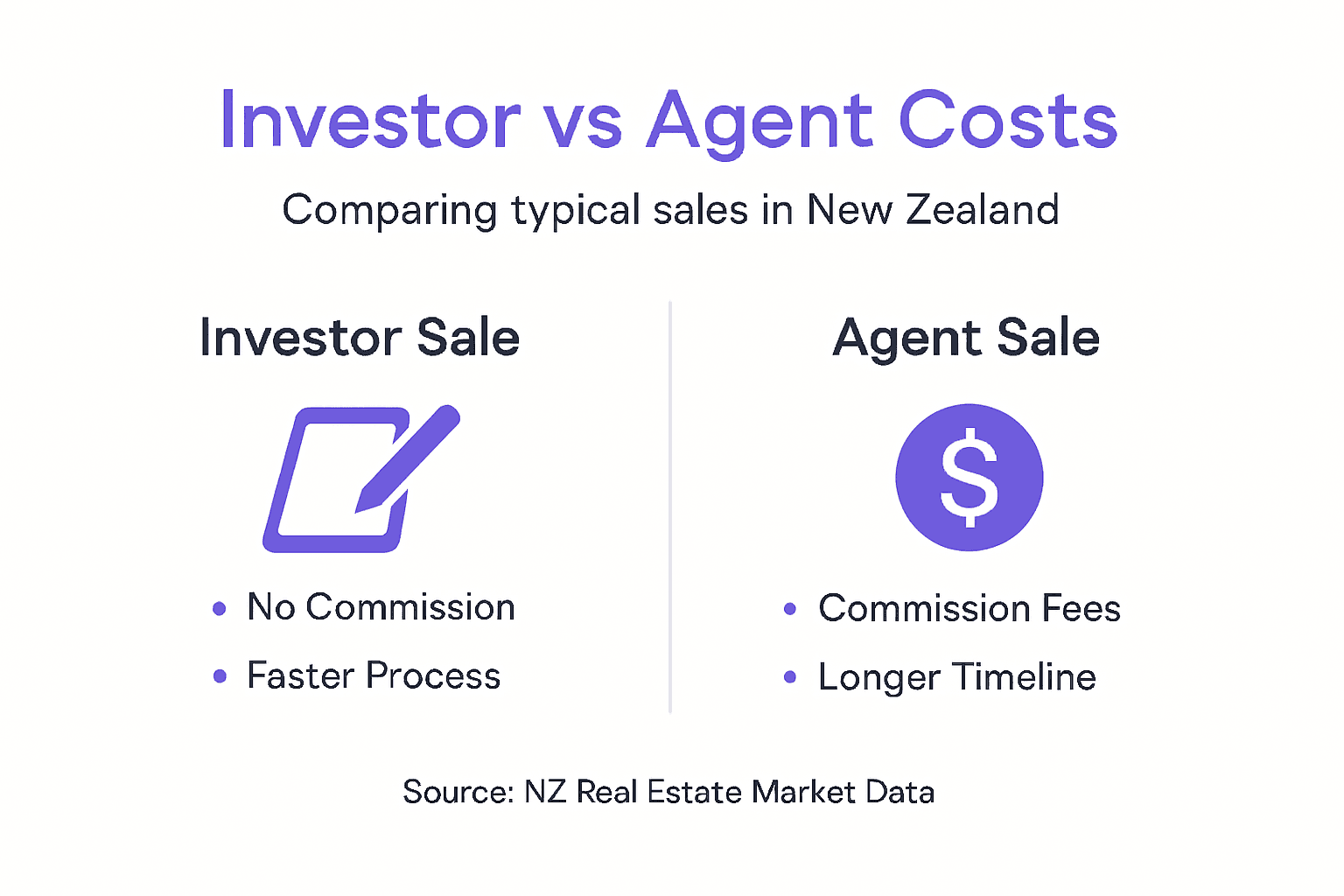
Property investors don’t charge commission. They purchase your property at an agreed price, and you receive that amount. No hidden fees. No percentage cuts.
Some sellers accept lower investor offers specifically because they avoid agent commissions entirely.
Below is a side-by-side comparison of selling to a property investor versus using a real estate agent in New Zealand:
| Aspect | Property Investor Sale | Real Estate Agent Sale |
|---|---|---|
| Timeline | 2–4 weeks | 8–12 weeks |
| Fees & Commission | None charged | 2–3.5% commission |
| Sale Certainty | Very high | Can fall through |
| Main Motivation | Maximise returns | Complete transactions |
| Sale Process | Direct and fast | Public marketing and open homes |
Certainty of Sale
Agent sales carry risk. A buyer may:
- Fail mortgage pre-approval.
- Back out after inspections.
- Renegotiate terms after appraisal.
- Drop the sale weeks before settlement.
Investor sales are certain. They’ve already arranged finance and made their decision. Settlement happens on schedule.
Best Use Cases
Choose agents if you want maximum market exposure and have time. Choose investors if you need speed, certainty, and want to avoid commission fees.
Agents maximise exposure; investors maximise certainty. Your situation determines which approach serves you better.
Pro tip: Consider your timeline and financial pressure. If you must sell within 6 weeks and avoid commission, property investors are your answer. If you have 3+ months and want competitive bidding, agents may yield higher final prices despite commission costs.
Risks, Protections, and Seller Rights Explained
Selling to a property investor involves legal considerations just like any property transaction. Understanding your rights, potential risks, and the protections available under New Zealand law helps you navigate the sale confidently and avoid costly mistakes.
Legal Framework Governing Property Sales
New Zealand property investors must navigate legal protections governed by legislation such as the Land Transfer Act 2017 and Property Law Act 2007. These laws regulate ownership transfer, mortgage requirements, and dispute resolution. They protect both buyers and sellers throughout the transaction.
As a seller, you have specific rights:
- Clear title transfer – The investor must receive unencumbered property ownership.
- Protection against fraudulent claims – You’re protected if the buyer makes false statements.
- Contractual safeguards – Written agreements define terms, timeline, and conditions.
- Disclosure obligations – You must honestly disclose known defects or issues.
Common Risks When Selling to Investors
Investor sales generally carry fewer risks than traditional agent sales, but some situations warrant attention.
Potential risks include:
- Below-market offers – Investors may lowball prices, particularly for properties needing work.
- Tight settlement timelines – Fast closing dates can pressure you if you’re not ready.
- Condition-dependent offers – Some investors make offers contingent on inspections or appraisals.
- Incomplete due diligence – You might miss alternative buyers offering better terms.
These aren’t catastrophic risks, but awareness prevents surprises.
Protections Built Into the Process
Several protections automatically apply to property sales in New Zealand.
Contractual protections:
- Purchase agreements must specify price, settlement date, and property condition.
- Terms are legally binding once both parties sign.
- Written contracts provide evidence if disputes arise.
Title protections:
- The Land Transfer Act ensures clean ownership transfer.
- Title insurance protects against ownership challenges.
- Solicitors verify clear title before settlement.
Your Seller Obligations
You’re legally required to disclose known defects and problems. Hiding issues—structural damage, mould, pest infestations—exposes you to legal action and damages claims after settlement.
Disclose honestly and document everything. If an issue exists, tell the investor upfront. Most investors expect some problems; surprises after purchase create conflicts.
Working With Solicitors
Hire a solicitor to review any investor purchase agreement. They verify that terms protect your interests, title is clear, and settlement proceeds smoothly.
Solicitor costs typically range from $1,500–$3,000, a worthwhile investment protecting your interests.
Legal protections exist throughout property sales. Using them properly—honest disclosure, written contracts, professional legal review—prevents disputes and ensures smooth transactions.
Pro tip: Before accepting any investor offer, have your solicitor review the contract terms. They’ll identify any unusual conditions or unfavourable clauses, ensuring you’re protected and aware of your obligations before signing.
Sell Fast With Property Investors Who Understand Your Needs
If you are looking to avoid the prolonged wait and uncertainty common with traditional real estate sales, working with property investors offers a swift and reliable solution. As highlighted in the article, selling to investors means bypassing complex negotiations, commissions, and delays while accessing cash offers based on clear financial criteria like rental income potential and capital growth. This approach aligns perfectly with the core benefits of easySale.co.nz — a service designed for New Zealand homeowners who need a fast sale without the hassle.
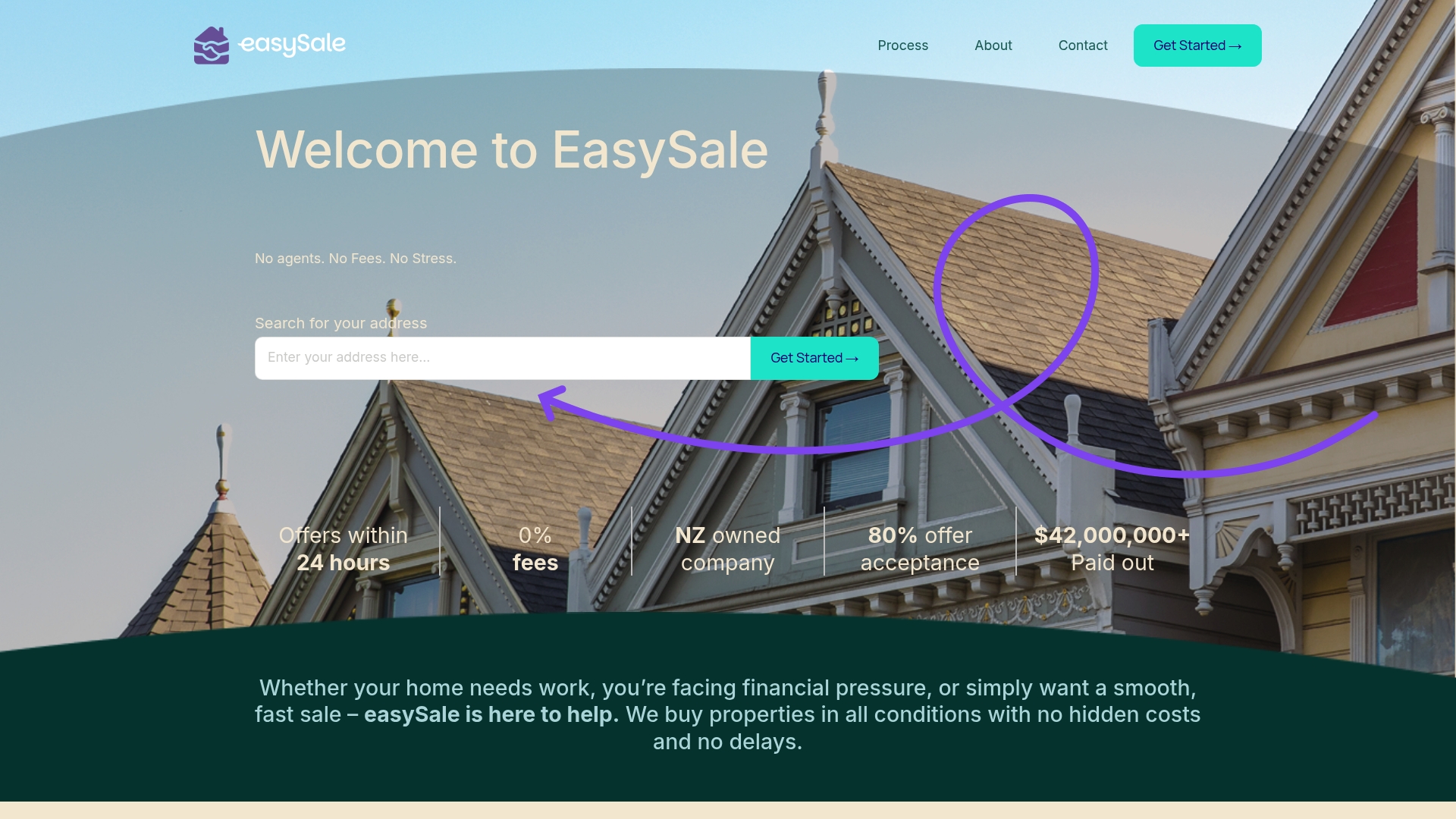
Take control of your property sale today by submitting your details to receive a fair cash offer quickly and settle on your timeline. Whether your property requires repairs or you face life changes demanding speed and certainty, easySale.co.nz provides a transparent process with no agent fees or hidden costs. Explore how you can benefit from working directly with property investors through easySale and experience a stress-free way to sell your home now.
Frequently Asked Questions
What are the main advantages of selling to property investors?
Selling to property investors offers advantages such as faster transaction timelines, no need for agent commissions, and greater certainty of sale compared to traditional real estate processes.
How quickly can I expect the sale to complete when selling to a property investor?
Typically, the entire sale process with property investors can be completed in 2 to 4 weeks, significantly faster than the usual 8 to 12 weeks associated with traditional sales through real estate agents.
What should I disclose to a property investor when selling my property?
You are legally required to disclose known defects or issues with the property, such as structural damage or pest infestations. Honest disclosure prevents legal disputes post-sale.
Are there any risks associated with selling to property investors?
While generally safe, risks include receiving below-market offers, tight settlement timelines, and the potential for investors to make conditional offers based on inspections. Being aware of these risks helps you prepare.


