
Why consider investor offers when selling your home

TL;DR:Investor cash offers provide quick, unconditional property purchases with minimal costs and predictable settlement times. This approach benefits sellers facing urgent timelines, damaged properties, or financial hardship by offering certainty and cost savings. However, accepting such offers typically involves a discount of 10% to 20% compared to market value, reflecting the transfer of risk and fastest settlement.
Investor offers are unconditional cash bids made to purchase a property in its current condition, without requiring repairs, staging, or agent involvement. For Kiwi homeowners who need to sell quickly, this approach removes the uncertainty that comes with traditional listings. Cash buyers close transactions in as little as 7 to 30 days, compared to the 4 to 8 weeks or more that agent-led sales typically take. That speed alone changes the financial equation for many sellers. When you factor in agent commissions, repair bills, and holding costs, the reasons to consider investor offers become very clear.
Why consider investor offers for speed and certainty
The single biggest advantage of an investor offer is a guaranteed outcome. Traditional sales carry real risk. A buyer can make a conditional offer, then pull out after a building inspection or because their finance falls through. That leaves you back at square one, often weeks later.
Investor cash buyers remove financing contingencies and lengthy negotiations entirely. The offer is unconditional from the start. You know the sale will proceed, which lets you plan your next move with confidence.
The timeline difference is significant. Traditional sales take 4–8 weeks; cash investor sales settle in 7–30 days. That gap matters when you are paying mortgage interest, council rates, and insurance on a property you are trying to leave behind.
Key timing and certainty benefits include:
- No conditional clauses that allow buyers to exit after inspections or finance checks
- Faster settlement that cuts weeks off your holding costs
- Predictable closing date so you can book removalists, arrange new accommodation, and manage finances
- No re-listing risk if a deal collapses at the last moment
- Reduced negotiation because the offer terms are clear and straightforward from day one
Pro Tip: Ask any investor buyer to confirm their settlement timeline in writing before you sign anything. A genuine cash buyer will commit to a specific date without hesitation.
What are the real cost benefits of investor offers?

Most homeowners focus on the headline sale price. The smarter calculation looks at what you actually pocket after all costs are paid. This is where investor offers often surprise sellers.
Sellers save 3% to 5% in agent commissions plus marketing and staging costs when selling directly to an investor. On a $700,000 property, that commission saving alone can be $21,000 to $35,000. Add marketing fees, professional photography, open home costs, and any pre-sale repairs, and the gap between an investor offer and an agent-led sale narrows considerably.
Sellers’ net proceeds often match or exceed traditional sales once agent fees, repairs, marketing, and holding costs are accounted for. This is the number that matters, not the gross sale price.
The cost savings stack up in a clear order:
- Agent commission avoided: 3% to 5% of the sale price, saved in full
- Marketing costs avoided: Professional photography, listings, and open home expenses removed
- Staging and cleaning costs avoided: Investors buy the property as it stands
- Repair costs avoided: Investors buy ‘as is’, so pre-sale renovation is not required
- Holding costs reduced: Fewer weeks of mortgage interest, rates, and insurance payments
Hidden costs of holding property for months during a traditional sale frequently catch sellers off guard. A property sitting on the market for 10 weeks can accumulate thousands of dollars in ongoing expenses that quietly erode your final gain.
Pro Tip: Before comparing offers, write down every cost you would pay in a traditional sale: commission, marketing, repairs, and holding costs for your expected listing period. Then compare that net figure against the investor offer.

Which sellers and properties benefit most from investor offers?
Investor offer advantages are not universal. They suit specific situations very well, and recognising whether your circumstances fit is the key to making a good decision.
Investor offers suit sellers with urgent timelines, financial hardship, damaged properties, or where traditional buyers may back out due to property condition. These are the scenarios where the certainty and speed of a cash offer deliver the most value.
Situations where investor offers make strong practical sense:
- Properties needing significant repairs: Leaky roofs, earthquake damage, weathertight issues, or deferred maintenance make traditional sales difficult and expensive
- Financial hardship or mortgage arrears: When time is short and a forced sale looms, certainty beats a higher price that might take months to achieve
- Estate settlements: Executors often need to sell quickly and cleanly, without the delays of a public listing
- Urgent relocation: Job transfers, family illness, or relationship changes that require a fast move benefit from a fixed settlement date
- Tenanted properties: Selling tenanted properties to investors avoids the legal complexity of issuing 90-day notices and managing tenant friction during open homes
Well-maintained properties in sought-after suburbs with flexible timelines will generally achieve better results through an agent. The right sale method matches your property condition and your personal timeline, not a one-size-fits-all rule.
What are the trade-offs when accepting investor deals?
Accepting an investor deal means accepting a price below open market value. Cash offers are typically 10–20% below market value, and this discount is the price of speed and certainty. Understanding why that discount exists removes much of the emotional sting.
Cash buyer offers are priced according to market values minus anticipated repair and resale costs. The investor takes on the risk of holding, renovating, and reselling the property. That risk has a price, and the discount reflects it. This is not exploitation. It is a straightforward commercial transaction where both parties get something they value.
The choice between conditional and unconditional offers depends on the trade-off between price and certainty. In a volatile market, a confirmed sale at a slightly lower price often beats a conditional offer at a higher price that may never settle.
What to check before accepting any investor proposal:
- Verify the buyer’s credentials: Ask for proof of funds or evidence of previous purchases
- Read the offer terms carefully: Confirm the settlement date, deposit amount, and any remaining conditions
- Calculate your true net proceeds: Subtract all costs from both the investor offer and a comparable agent-led sale
- Assess your personal priorities: If time, certainty, or property condition are driving factors, the discount may be entirely worth it
- Seek independent legal advice: A property solicitor can review the sale and purchase agreement before you sign
The psychological freedom from a confirmed sale is consistently undervalued by sellers who focus only on price. Knowing your sale will settle on a fixed date removes weeks of anxiety and uncertainty.
Key takeaways
Investor offers deliver the most value when speed, certainty, and cost savings outweigh the benefit of holding out for a higher market price.
| Point | Details |
|---|---|
| Speed of settlement | Cash investor sales settle in 7–30 days, far faster than traditional agent-led sales. |
| Cost savings are real | Avoiding agent commissions of 3%–5% plus repair and marketing costs can match or exceed the price discount. |
| Best for specific situations | Damaged properties, urgent timelines, estate settlements, and tenanted homes suit investor offers well. |
| Discount reflects risk transfer | The 10%–20% price reduction compensates the investor for taking on repair and resale risk. |
| Certainty has genuine value | An unconditional offer removes the risk of a deal collapsing and lets you plan your next step with confidence. |
The part most sellers overlook
I have spoken with a lot of homeowners who walked away from investor offers because the headline price felt too low. A few months later, after a conditional deal fell through and holding costs had mounted, they wished they had taken the cash. The price gap that felt significant on paper had closed considerably by the time they finally sold.
The thing is, certainty is genuinely worth money. Not in a vague, feel-good way. In a very literal sense: every week a property sits unsold costs you mortgage interest, rates, insurance, and the mental load of keeping it presentable for strangers walking through. That is real money leaving your pocket.
What I find most useful is encouraging sellers to do the maths before they decide. Write down every cost you would pay in a traditional sale, estimate a realistic timeline, and then compare the net figure against what an investor is offering. For a lot of Kiwi homeowners, especially those with properties that need work or situations that require a fast resolution, the investor offer wins on the numbers. Not just on convenience.
The advantages of cash house sales are most visible when you stop comparing gross prices and start comparing real outcomes. That shift in thinking is what separates sellers who feel good about their decision from those who second-guess it for years.
— Aaron
Easysale: fast cash offers for Kiwi homeowners
Easysale provides no-obligation cash offers to New Zealand homeowners within 24 to 48 hours of submitting property details. Settlements are possible in as little as 7 to 30 days, with no agent fees, no repair requirements, and no marketing costs to manage.
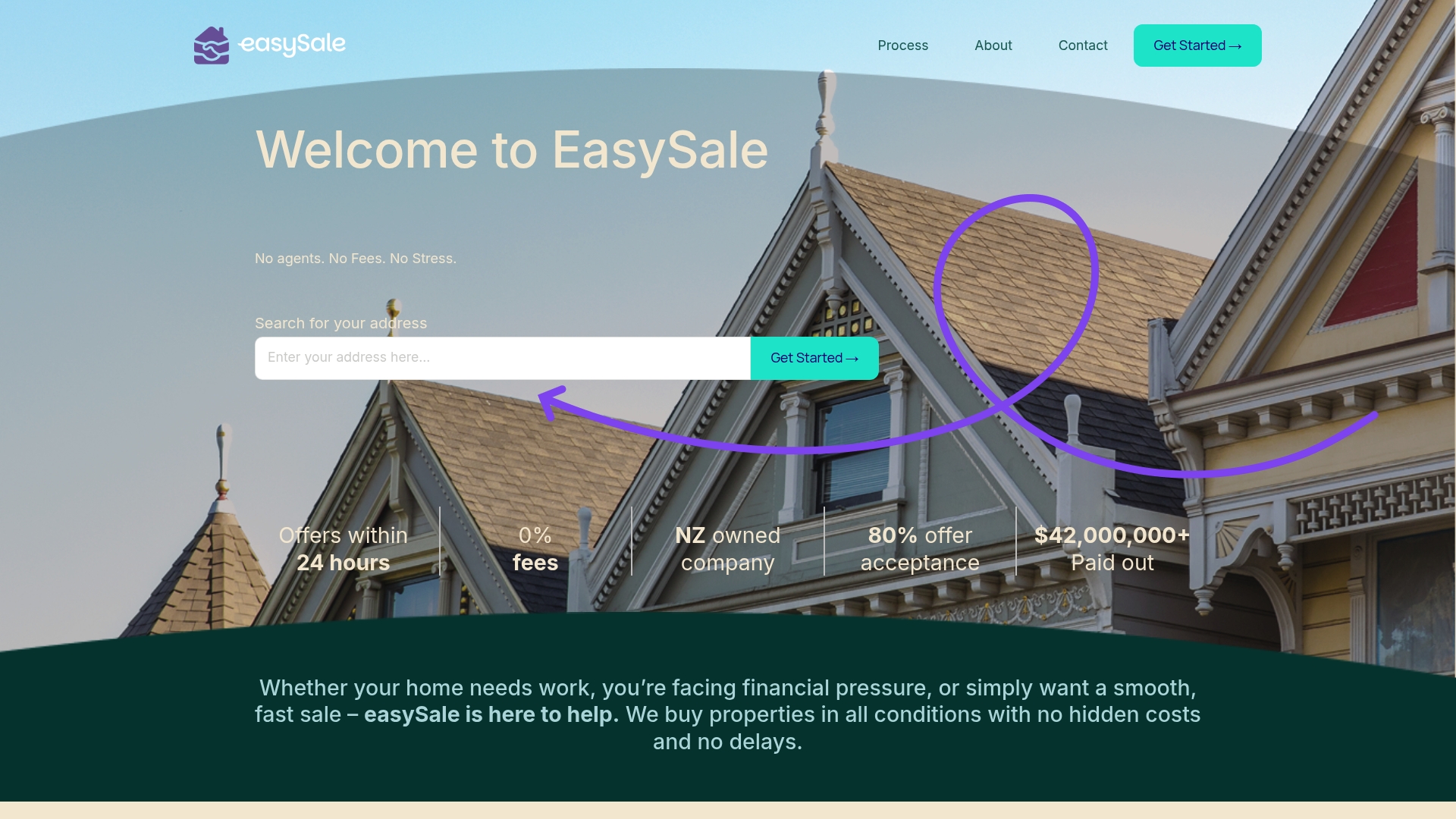
Easysale buys damaged houses as-is across New Zealand, including properties with weathertight issues, structural problems, or significant deferred maintenance. The process is straightforward: submit your property details, receive a fair cash offer, and settle on a timeline that suits you. For homeowners who need speed and certainty, Easysale removes the complexity that traditional sales bring.
FAQ
What is an investor offer on a property?
An investor offer is an unconditional cash bid to purchase a property in its current condition, without requiring repairs, staging, or agent involvement. The buyer is typically a property investor who plans to renovate and resell or hold the property as a rental.
How quickly can an investor purchase my home?
Cash buyers settle in 7–30 days, compared to the 4–8 weeks or more that traditional agent-led sales typically require. The exact timeline depends on the agreed settlement date and the complexity of the transaction.
Will I lose money by accepting an investor offer?
Not necessarily. Net proceeds from no-agent sales often match or exceed traditional sales once agent commissions, repair costs, marketing fees, and holding costs are deducted. The 10%–20% price discount is frequently offset by these savings.
Do I need to repair my property before selling to an investor?
No. Investors buy properties on an ‘as-is’ basis, meaning you are not required to spend money on repairs, cleaning, or presentation before the sale proceeds.
Are investor offers suitable for tenanted properties?
Yes. Selling a tenanted property to an investor avoids the legal requirement to issue 90-day notices and removes the friction of managing tenants during open homes. The sale proceeds with the existing tenancy intact.
Recommended
