
Why Homes Sell In Any Condition: Complete Guide

Did you know that over 15 percent of homes sold in some cities are purchased in as-is condition? For many homeowners facing repairs or quick moves, selling as-is removes the usual stress, expense, and long wait times of the traditional real estate process. This method offers a clear path for those who want speed and simplicity while providing buyers unique opportunities to invest in potential. Discover how selling in any condition changes the typical rules of property transactions.
Key Takeaways
| Point | Details |
|---|---|
| As-Is Sales Simplify Transactions | Selling a property as-is eliminates the need for repairs and preparations, making the process faster and less stressful for homeowners. |
| Buyer Rights and Transparency | Sellers must disclose known defects, ensuring transparency, while buyers retain rights to inspect properties before finalizing sales. |
| Target Audience for As-Is Properties | As-is sales attract various buyers, including investors and first-time homeowners, who seek lower prices and opportunities for customization. |
| Legal and Financial Responsibilities | Sellers must navigate legal obligations concerning disclosures and strategically price their properties to reflect current conditions. |
Table of Contents
- What It Means To Sell In Any Condition
- Common Types Of Homes Sold As-Is
- How The As-Is Sales Process Works
- Buyer Motivations And Market Demand
- Financial And Legal Considerations In As-Is Sales
- Comparing As-Is Sales To Traditional Methods
What It Means To Sell In Any Condition
Selling a property “in any condition” represents a revolutionary approach to real estate transactions that removes traditional barriers for homeowners. According to research from Realtor.com, this means offering your property exactly as it stands - without repairs, upgrades, or pre-sale renovations. The seller essentially transfers the property in its current state, placing the responsibility for future improvements squarely on the buyer’s shoulders.
What makes this approach powerful is its simplicity and flexibility. As-is sales eliminate the stressful and often expensive process of preparing a home for market. Sellers don’t need to invest time or money in fixing structural issues, updating outdated rooms, or addressing cosmetic imperfections. Understanding why selling property for cash matters reveals that this method provides an immediate solution for homeowners facing time constraints or financial pressures.
However, it’s crucial to understand the nuances. While selling “as is” means no repairs, sellers must still legally disclose known defects. As Fortune Builders explains, buyers retain rights to inspections and can still negotiate based on discovered issues. This approach isn’t about hiding problems but about offering transparent, straightforward transactions that benefit both parties.
Key benefits of selling in any condition include:
- Faster sales process
- No out-of-pocket repair expenses
- Reduced stress and preparation time
- Flexibility for properties in any state of repair
- Immediate cash resolution for urgent situations
Common Types Of Homes Sold As-Is
As-is home sales represent diverse scenarios beyond simple property transactions. According to research from Rocket Mortgage, these properties typically emerge from complex life circumstances like financial distress, inherited estates, or urgent personal situations requiring immediate sale.
Inherited Properties form a significant category of as-is sales. When families receive property through estate transfers, they often lack emotional attachment or financial resources to renovate. Sell Inherited & Deceased Estate Houses highlights the unique challenges of managing such properties, making as-is sales an attractive solution for quick resolution.
Other common as-is home types include properties experiencing challenging life transitions. These might involve:
- Homes facing foreclosure
- Properties owned by individuals undergoing divorce
- Residences requiring extensive repairs beyond owner’s financial means
- Bank-owned properties after loan default
- Homes of individuals relocating urgently for work
Casaplorer’s research emphasizes that as-is sales provide critical flexibility for homeowners confronting unexpected life challenges. Whether managing financial constraints or navigating complex personal circumstances, selling a property as-is offers a pragmatic pathway to immediate property resolution.
How The As-Is Sales Process Works
The as-is sales process offers homeowners a streamlined approach to property transactions that removes traditional complexities. Master the Simple Property Sale Process reveals that this method fundamentally differs from conventional real estate sales by placing the property’s current condition at the forefront of the transaction.
Transparent Disclosure remains critical in as-is sales. Sellers must openly communicate known property defects, even though they won’t be making repairs.

According to House Heroes research, buyers still retain significant rights during this process. They can typically conduct inspections, potentially renegotiate terms, or even cancel the transaction based on discovered issues.
The typical as-is sales process generally follows these key steps:
- Property valuation in current condition
- Comprehensive defect disclosure
- Buyer’s independent property inspection
- Negotiation of final sale price
- Closing with minimal contingencies
For those seeking a direct and efficient sale, Sell House Privately highlights that as-is transactions can significantly reduce the time and stress associated with traditional property sales. The approach provides flexibility for both sellers facing urgent circumstances and buyers willing to invest in property rehabilitation.
Buyer Motivations And Market Demand
Real estate investors represent a significant segment of as-is property buyers, viewing these transactions as strategic investment opportunities. According to research from Realtor.com, these buyers are specifically motivated by the potential to acquire properties below market value and generate profit through strategic renovations.
The as-is market attracts diverse buyer profiles beyond traditional investors. Some are first-time homeowners seeking more affordable entry points into property ownership, while others are professionals looking to customize a property to their exact specifications. We Buy Damaged Houses As-Is Where-Is in NZ highlights the growing trend of buyers who appreciate the transparency and potential of these unique property transactions.
Key motivations for as-is property buyers include:
- Lower initial purchase prices
- Opportunity for personal customization
- Reduced competition in the real estate market
- Potential for significant value appreciation
- Faster transaction processes
Cash buyers particularly benefit from as-is sales, enjoying advantages like reduced bidding competition and the ability to close transactions quickly. These buyers understand that the initial lower price compensates for necessary renovation investments, making as-is properties an attractive option for those with vision and renovation skills.
Financial And Legal Considerations In As-Is Sales
According to research from Rocket Mortgage, as-is sales involve critical legal responsibilities that sellers must carefully navigate. Disclosure requirements are paramount, even when selling a property without making repairs. Sellers remain legally obligated to reveal all known defects, regardless of the property’s condition or sale approach.
Financial implications extend beyond simple price negotiations. Sellers must strategically price their property, accounting for potential repair costs and possible financing limitations for buyers. Understanding Why Sell Property for Cash Matters highlights that transparency becomes a crucial financial strategy in these transactions.
Key legal and financial considerations include:
- Complete disclosure of known property defects
- Potential legal liability for concealed issues
- Strategic pricing that reflects current property condition
- Understanding buyer financing constraints
- Possible need for professional legal consultation
Kiplinger’s research emphasizes that an “as-is” label does not provide blanket legal protection. Sellers can still face potential lawsuits if they intentionally conceal significant problems. Professional guidance becomes essential in navigating these complex transactions, ensuring both financial protection and legal compliance for all parties involved.
Comparing As-Is Sales To Traditional Methods
Traditional property sales and as-is transactions represent two fundamentally different approaches to selling real estate. According to Master the Simple Property Sale Process, the key distinction lies in the seller’s preparatory efforts and financial investment before listing the property.
Research from Hometown Dev reveals stark financial differences. In a traditional sale, a property with a market value of $125,000 might require substantial upfront investments in repairs and improvements. Conversely, an as-is sale of the same property could net around $85,000, but with significantly reduced out-of-pocket expenses. Investopedia highlights that traditional sales potentially yield higher prices by improving curb appeal and making essential repairs, while as-is sales prioritize speed and simplicity.
Key comparative aspects include:
- Upfront repair costs
- Time investment in property preparation
- Speed of transaction
- Total financial outlay
- Emotional stress during sale process
The trade-offs are clear: traditional sales offer potentially higher sale prices but demand more time, money, and effort.
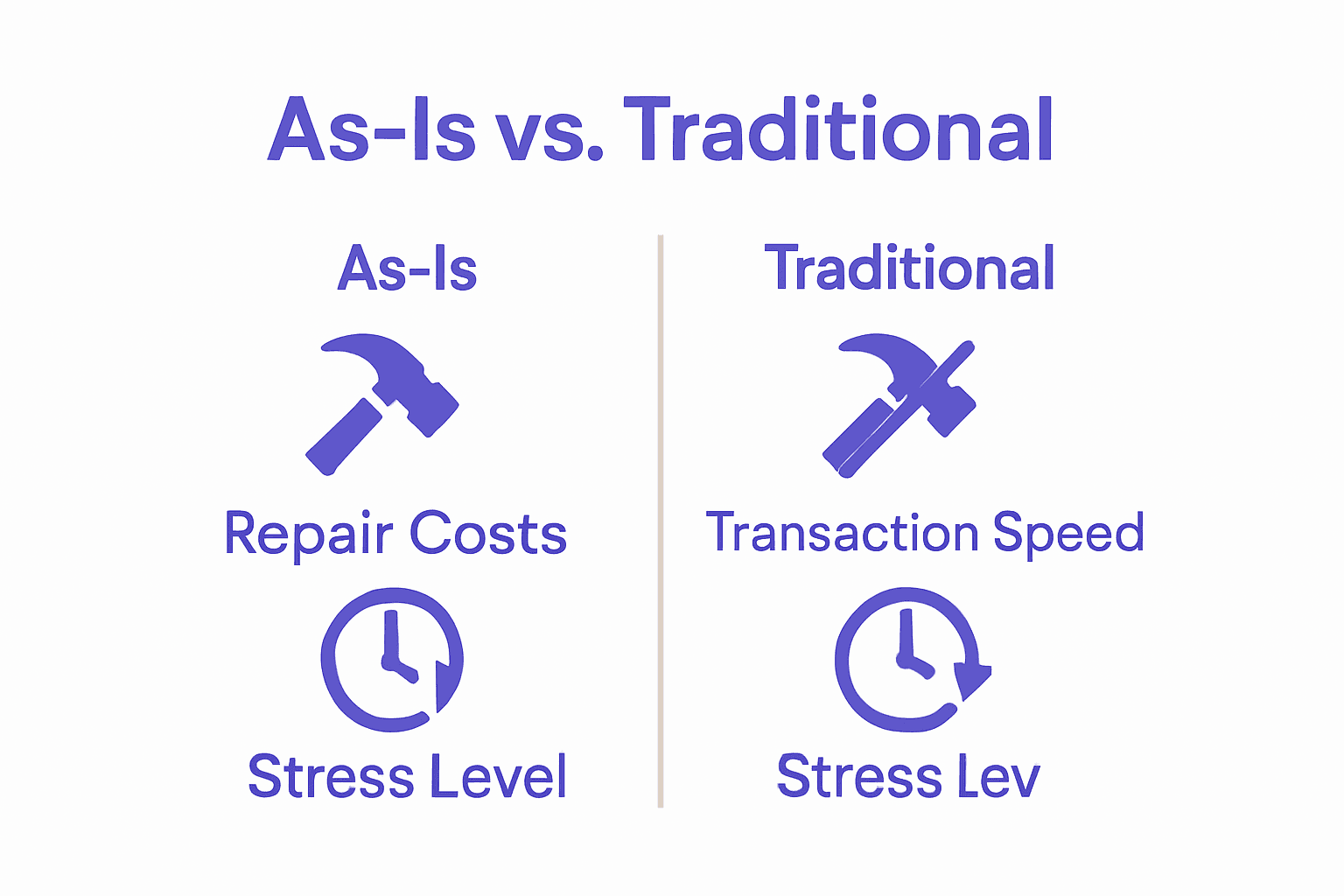
As-is sales provide a streamlined alternative for sellers prioritizing convenience and immediate resolution over maximizing every dollar of property value.
Here’s a comparison of as-is sales versus traditional property sales:
| Aspect | As-Is Sale | Traditional Sale |
|---|---|---|
| Preparation Required | Minimal | Significant cleaning, repairs |
| Upfront Costs | None or very low | High repairs and upgrades |
| Sale Speed | Fast | Slower, often weeks to months |
| Buyer Expectations | Accepts current condition | Expects move-in ready |
| Sale Price | Lower but immediate | Higher but delayed |
| Stress Level | Reduced | Often elevated |
| Disclosure Needed | Full known defects | Full known defects |
Sell Your Property in Any Condition—Skip the Usual Stress
Are you overwhelmed by the thought of repairing or renovating before you sell? If you feel stuck with a home that needs work or you are facing an urgent life change, you are not alone. The article explains that selling a home as-is saves you time, money, and stress. At easySale.co.nz, we specialise in buying properties in any condition throughout New Zealand. Whether your property is damaged, inherited, or you simply need a quick sale, our process is straightforward and transparent. You do not have to invest in repairs or staging. Our focus is on making your sale as effortless as possible, so you can move forward without delays or hefty agent commissions.
Why wait and risk months on the market or worry about unexpected costs? Take control of your sale and secure a fair, fast cash offer with no obligation. For extra reassurance, see how others succeeded with our easy approach by visiting the Sell Inherited & Deceased Estate Houses page. If you are ready for a solution that truly fits your needs, start your easy journey now at easySale.co.nz.
Frequently Asked Questions
What does it mean to sell a home in any condition?
Selling a home in any condition means the property is offered “as is,” without any repairs, upgrades, or renovations made by the seller. The buyer assumes responsibility for all future improvements.
What are the benefits of selling a house as-is?
Selling a house as-is allows for a faster sale, eliminates out-of-pocket repair expenses, reduces preparation time, and provides a quick resolution for urgent financial situations.
Are there any legal considerations when selling a home as-is?
Yes, sellers must legally disclose any known defects and issues with the property, even when selling as-is. Failure to do so can result in liability for concealed problems.
Who typically buys homes sold as-is?
Homes sold as-is are often purchased by real estate investors looking for investment opportunities, first-time homeowners seeking affordable entry points, and buyers interested in customizing properties to their specifications.
Recommended
- Master the Simple Property Sale Process: Quick & Stress-Free
- We Buy Damaged Houses As-Is Where-Is in NZ | Fair Cash Offers
- Sell House for Retirement & Downsizing | Direct NZ Buyers
- Sell Your House Fast within 7 days | Fair Cash Buyers NZ
- Understanding the Role of Home Inspection in Selling | Chicago Home Inspect LLC
