
Why owners sell in urgent situations: a Kiwi guide


TL;DR:Owners sell quickly in urgent situations due to external deadlines like foreclosure, probate, or tax liens, not impulsiveness.They often accept discounts for faster settlements, prioritizing certainty over maximum price during financial or life crises.
Urgent property sales are defined by external deadlines and financial pressures that make waiting more costly than accepting a fast sale. Understanding why owners sell in urgent situations matters whether you are the seller facing a crisis or simply trying to make sense of your options. The motivations behind quick selling are rarely impulsive. They are structural, verifiable, and often tied to events beyond a homeowner’s control. Recognising these triggers is the first step toward making a clear-headed decision when time is not on your side.
Why owners sell in urgent situations: financial pressures and structural deadlines
Financial distress is the most common driver of urgent property sales in New Zealand. When mortgage repayments fall behind, lenders move through a formal process that eventually imposes a non-negotiable selling deadline. Foreclosure typically begins after missed payments, and once that process starts, the timeline is largely out of the homeowner’s hands.
Tax arrears create a similar kind of pressure. When rates or tax obligations go unpaid, local councils and government bodies can initiate proceedings that force a sale on their schedule, not yours. These are not soft deadlines that can be negotiated away with a phone call. They are firm, court-backed timelines that compress your decision-making window significantly.
Carrying costs compound the urgency. Every month a property sits unsold while mortgage repayments, insurance, rates, and maintenance continue to accumulate, the financial gap widens. For a homeowner already in arrears, this is not a theoretical concern. It is a real and growing liability.
Housing costs rising faster than incomes is a documented pressure point that pushes property owners toward urgent sales. This economic reality means that for many Kiwi homeowners, holding on longer is simply not a financially viable option.
The human cost of forced sales is significant and often underestimated:
- Mortgage arrears trigger lender-initiated processes with fixed timelines
- Tax and rates debt can result in government-led forced sales
- Mounting carrying costs erode equity and increase financial exposure
- Credit damage from prolonged arrears can affect future borrowing capacity
- Emotional stress from housing insecurity affects health and family stability
“Urgency is typically structural, with sellers constrained by timelines they cannot negotiate, rather than emotional impulsiveness.” — New America research
This distinction matters. If you are facing an urgent need to sell, you are not making a rash decision. You are responding rationally to real constraints that have a direct cost if ignored.
What life events create urgent selling motivations?
Common life event motivations for fast sales include divorce, inheritance, medical emergencies, and job relocations. Each of these situations imposes its own kind of deadline, and each one shifts the seller’s priorities away from maximising price toward resolving a pressing personal problem.

Probate and inheritance are a frequent trigger. When a property is left to beneficiaries through an estate, probate court schedules set the pace. Beneficiaries often live in different cities or have no interest in managing a property. The practical and legal pressure to sell quickly is real, and delays can create conflict among family members or incur additional legal costs.
Divorce settlements require the division of shared assets, and the family home is usually the largest one. Courts can impose timelines, and both parties often want a clean financial break as quickly as possible. Selling under pressure in this context is not a failure. It is a practical response to a legal and emotional reality.
Job relocations create hard move-out dates. If you have accepted a role in another city or country, you cannot manage a drawn-out traditional sale from a distance. The need to sell before a start date turns a preference for speed into an absolute requirement.
Medical emergencies can drain savings rapidly and force homeowners to liquidate assets to cover costs or to fund a move into supported care. These situations leave little room for the months-long process of a traditional real estate sale.
- Probate deadlines set by the courts
- Divorce asset division requiring a clean break
- Relocation with a fixed start date in a new role
- Medical costs or care transitions requiring immediate funds
- Family emergencies requiring rapid financial decisions
Pro Tip: If you are selling due to a life event, document your timeline clearly before approaching any buyer. Knowing your hard deadline gives you a clearer picture of what trade-offs you can and cannot accept.
You can read more about urgent house sale reasons specific to Kiwi homeowners if your situation falls into one of these categories.
What trade-offs do sellers face when selling under pressure?
The central trade-off in any urgent property sale is price versus certainty. Urgent sellers tend to accept discounts as a trade-off for certainty and faster closing timelines. This is not a sign of weakness. It is a rational calculation when the cost of waiting exceeds the cost of discounting.

Understanding this trade-off clearly helps you avoid being exploited. The question is not simply “how much less will I accept?” The real question is “what is the cost of not selling by my deadline?” When you frame it that way, a modest price reduction often makes complete financial sense.
Selling as-is is a common feature of urgent sales. It means selling the property in its current condition without completing repairs, renovations, or pre-sale inspections. This removes weeks or months from the process but typically results in lower offers, since buyers factor in the risk and cost of any work required.
| Factor | Traditional sale | Urgent or fast sale |
|---|---|---|
| Timeframe | 60 to 120 days or more | 7 to 30 days |
| Price achieved | Closer to market value | Typically below market value |
| Repairs required | Usually expected by buyers | Sold as-is in most cases |
| Financing risk | Buyer finance can fall through | Cash offers reduce this risk |
| Certainty | Lower until settlement | Higher with cash buyers |
The table above shows that the urgent sale path trades price for speed and certainty. For a homeowner facing a court date, a lender’s deadline, or a medical bill, that certainty has genuine financial value that does not show up in the sale price alone.
Pro Tip: Before accepting any offer, calculate your carrying costs per month. If holding the property costs you $3,000 a month in mortgage, rates, and insurance, a $15,000 discount that gets you settled in two weeks may actually save you money.
Effective offers in urgent situations address the seller’s underlying problem and timeline rather than simply offering a higher price. A buyer who can settle in ten days is often worth more to you than one offering a slightly higher price but needing sixty days.
How to navigate urgent property sales effectively in New Zealand
Selling quickly does not mean selling blindly. There are practical steps you can take to protect yourself while still meeting your deadline. The common reasons to sell quickly in NZ vary widely, but the process for protecting yourself follows a consistent logic.
- Get at least two independent valuations. Even in an urgent situation, you need a baseline figure so you can assess whether an offer is reasonable or exploitative. A registered valuer or a free appraisal from a licensed agent gives you that reference point.
- Identify your actual deadline. Is it a court date, a lender’s notice period, a move-out date, or a financial threshold? Knowing your real deadline tells you how much time you have to compare offers and make a considered decision.
- Approach cash buyers and property investors. Cash sales provide speed, convenience, and fewer contingencies, which is exactly what urgent sellers need. Cash buyers can typically settle within days rather than weeks, and they do not depend on bank financing that can fall through at the last moment.
- Verify the buyer’s credibility. Ask for proof of funds, check reviews or testimonials, and confirm they have a track record of completing purchases. Legitimate cash buyers will not pressure you to sign before you have had time to read the terms.
- Act quickly once you have a fair offer. Fast first contact and response significantly increases the likelihood of closing an urgent sale deal. Delays on your side can cause buyers to move on, especially in a competitive market.
Pro Tip: Avoid listing with a traditional real estate agent if your deadline is under 30 days. Standard agency agreements often include notice periods and marketing timelines that simply do not fit an urgent sale. A direct cash buyer or a specialist fast-sale service is a far better fit.
If you are unsure whether your situation qualifies as genuinely urgent, the 7 signs you need to sell fast is worth reading before you commit to any path.
Key takeaways
Owners sell in urgent situations because structural deadlines and financial pressures make a fast sale the most rational financial decision available, not because they are acting impulsively.
| Point | Details |
|---|---|
| Urgency is structural | Foreclosure, probate, and tax deadlines impose timelines sellers cannot negotiate away. |
| Life events drive fast sales | Divorce, relocation, inheritance, and medical emergencies all create hard selling deadlines. |
| Price versus certainty | Urgent sellers accept modest discounts in exchange for speed and settlement certainty. |
| As-is sales speed things up | Selling without repairs removes weeks from the process but typically reduces the offer price. |
| Cash buyers suit urgent timelines | Cash offers close faster and carry fewer risks of financing delays or deal collapse. |
The emotional reality behind selling in a hurry
When I talk with homeowners who have sold quickly under pressure, the thing that strikes me most is how rarely the decision was actually about the property. It was about the situation surrounding it. A mortgage notice. A court date. A hospital bill. A marriage ending. The house was just the asset that needed to move.
What I have found, after working with many sellers in these circumstances, is that the biggest mistake is not accepting a lower price. It is waiting too long out of hope that the situation will resolve itself. Financial pressure rarely resolves on its own. Deadlines do not move because you need more time. And the longer you wait, the fewer options you have.
The sellers who come out of urgent situations in the best shape are the ones who act decisively once they understand their position. They get a valuation, they identify their real deadline, and they find a buyer who can meet it. They do not spend weeks hoping the market will shift in their favour or that a traditional sale will somehow close in time.
There is also something worth saying about the emotional weight of these decisions. Selling a home under pressure is genuinely hard. It can feel like a loss even when it is the right call. Acknowledging that does not make you weak. It makes you human. What matters is that you make the decision with clear information rather than fear or denial.
If you are in this position right now, seek advice from a property professional who understands urgent sales specifically. Not every agent or buyer is equipped for this kind of transaction, and working with the wrong one can cost you both time and money.
— Aaron
How Easysale helps Kiwi homeowners sell quickly
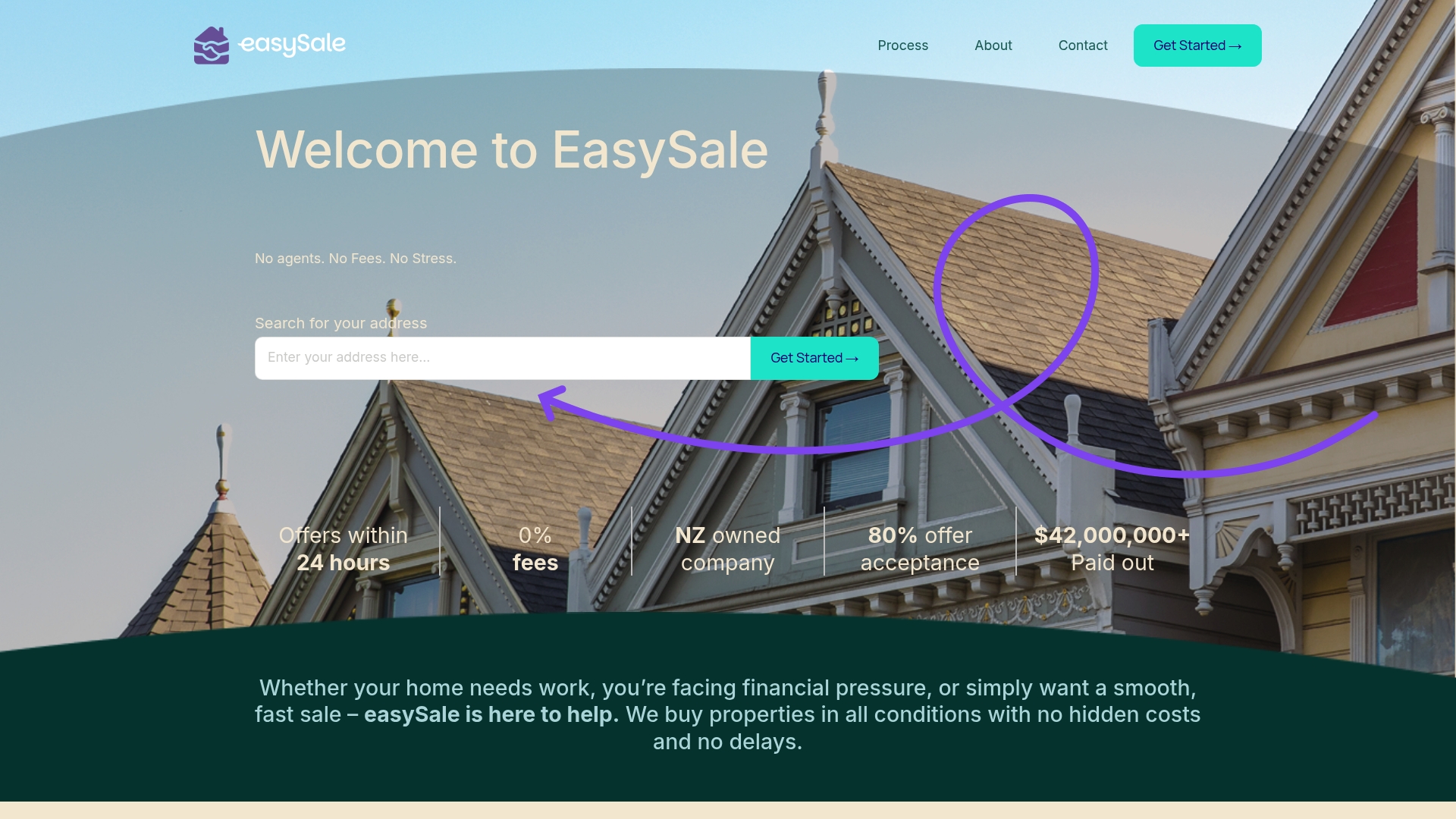
Easysale is built specifically for homeowners who need to sell without the delays, commissions, or uncertainty of a traditional sale. If you are facing a financial deadline, a life change, or simply need to move on quickly, Easysale provides a fast, fair cash offer with no agent fees and no obligation to accept. The process is straightforward: submit your property details, receive an offer, and settle on a timeline that works for you. Easysale buys properties in any condition across New Zealand, so repairs and presentation are not your concern. If you are ready to take the next step, get a fast cash offer from Easysale today.
FAQ
What are the most common reasons owners sell urgently?
Sellers motivated to sell fast typically have verifiable structural reasons including pre-foreclosure, overdue rates or taxes, probate deadlines, divorce settlements, and job relocations. These are external pressures, not personal preferences.
Will I always get less money in an urgent property sale?
Urgent sellers generally accept a price below full market value in exchange for speed and certainty of settlement. However, when you factor in carrying costs, legal fees, and the risk of a traditional sale falling through, the net result is often comparable.
Is selling a property as-is a good idea when I need to sell fast?
Selling as-is removes repair delays and speeds up the transaction significantly. It typically results in a lower offer, but for sellers with tight deadlines, the time saved usually outweighs the price difference.
How do I know if a cash buyer is legitimate?
Ask for written proof of funds, check for verifiable testimonials or reviews, and confirm the buyer has a track record of completing purchases in New Zealand. A trustworthy buyer will not pressure you to sign before you have read and understood the terms.
How quickly can an urgent property sale settle in New Zealand?
With a cash buyer, settlement can occur in as little as seven to fourteen days depending on legal and title requirements. This is significantly faster than the sixty to one hundred and twenty days typical of a traditional real estate sale.


