
Why Sell A Tenanted House in New Zealand?

More than half of New Zealand landlords report unexpected property issues or financial setbacks during tenancy, often requiring urgent solutions. When a tenanted house faces damage or life changes prompt a rapid sale, options can seem limited, especially with strict tenancy laws compared to Australian regulations. Discover how understanding tenancy types, legal obligations, and available alternatives can help landlords achieve a faster, less stressful sale in challenging circumstances.
Table of Contents
- Selling A Tenanted House: The Basics
- Key Reasons Landlords Choose To Sell
- How Tenancy Types Affect The Sale
- Legal Obligations And Tenant Rights
- Risks, Costs And Common Pitfalls
- Alternatives To Selling A Tenanted House
Key Takeaways
| Point | Details |
|---|---|
| Selling with Tenants | Selling a tenanted property requires careful consideration of tenancy agreements, as the new owner inherits existing lease terms. This can impact buyer interest, especially for those looking to occupy the property themselves. |
| Financial and Legal Risks | Landlords must navigate financial complexities, including tax implications and compliance with legal obligations to avoid costly disputes or reduced sale proceeds. |
| Types of Tenancies | The type of tenancy (fixed-term or periodic) significantly influences the sale process and requires different strategies regarding buyer expectations and tenant rights. |
| Alternatives to Selling | Landlords may consider options like restructuring investments or transitioning to short-term rentals to manage properties more effectively without immediate sales. |
Selling A Tenanted House: The Basics
Selling a tenanted house in New Zealand involves unique legal and financial considerations that can significantly impact your property transaction. Unlike vacant properties, tenanted houses require careful navigation of rental agreements, tenant rights, and potential buyer expectations. Rental property tax regulations play a crucial role in understanding the financial implications of selling a property with existing tenants.
When preparing to sell a tenanted property, landlords must consider several key factors. First, the existing tenancy agreement transfers with the property sale, meaning the new owner inherits the current lease terms. This can be attractive to investors seeking immediate rental income, but may pose challenges for buyers planning to occupy the property themselves. Landlords should review their current tenancy agreement to understand notice periods, termination clauses, and potential restrictions on selling.
The legal framework surrounding tenanted property sales in New Zealand is designed to protect both property owners and tenants. Professional conveyancing guidelines emphasise the importance of clear communication and proper documentation during the sale process. Potential strategies include selling with the tenant in place, which can be appealing to property investors, or providing appropriate notice to terminate the tenancy before sale, depending on your specific circumstances and market conditions.
Pro tip: Consult with a local property lawyer specialising in tenancy law to understand the specific implications of selling your tenanted property and ensure you comply with all legal requirements.
Key Reasons Landlords Choose To Sell
Landlords in New Zealand make strategic decisions about selling tenanted properties based on various complex financial and personal factors. Legal guidelines from professional bodies reveal multiple motivations driving property sales, ranging from investment portfolio restructuring to responding to changing market conditions.
Financial considerations play a significant role in landlords’ decisions to sell. Market fluctuations, potential capital gains, and shifts in property values can prompt landlords to liquidate their rental assets. Some landlords choose to sell when the property no longer meets their investment strategy, such as when maintenance costs escalate or rental yields decrease. The potential for substantial capital appreciation or the need to reallocate funds to more promising investments can be compelling reasons to exit a tenanted property.
Personal circumstances and regulatory challenges also significantly influence selling decisions. Community law insights highlight how changes in personal life situations like relocation, retirement, or unexpected financial pressures can drive landlords to sell. Additionally, increasing compliance requirements, complex tenancy regulations, and the administrative burden of property management can make selling an attractive option for landlords seeking to simplify their investment portfolio.
Pro tip: Conduct a comprehensive financial and legal review of your tenanted property before deciding to sell, considering potential tax implications, market conditions, and current tenancy agreements.
How Tenancy Types Affect The Sale
In New Zealand, the type of tenancy significantly impacts the property sale process, introducing unique legal considerations for landlords. Community law provisions outline distinct rules for different tenancy arrangements, with two primary tenancy types fundamentally altering sales strategies: fixed-term and periodic tenancies. Each tenancy type carries specific legal implications that can dramatically affect a property’s marketability and sale conditions.
Fixed-term tenancies, which operate for a predetermined period, typically provide more predictability for potential property buyers. These tenancies automatically terminate on a specified date, offering clearer exit strategies for landlords planning to sell. However, tenancy agreements often automatically convert to periodic arrangements if not explicitly renegotiated, which can complicate sale processes. Investors and owner-occupiers must carefully consider these transition mechanisms when evaluating tenanted properties.

Periodic tenancies present more complex challenges for property sales. These ongoing arrangements provide tenants with continuous occupation rights, requiring landlords to provide specific notice periods before termination. Potential buyers must understand that inherited tenancies come with legal obligations, including respecting existing rental agreements and tenant notice requirements. This can influence sale pricing, marketability, and the pool of potential purchasers interested in acquiring an occupied property.
Here’s a comparison of how fixed-term and periodic tenancies affect property sales in New Zealand:
| Tenancy Type | Impact on Sale Process | Buyer Considerations | Notice/Termination Requirements |
|---|---|---|---|
| Fixed-term | Predictable end date, easier sale planning | Investment certainty, lease terms known | Ends on agreed date, limited early termination |
| Periodic | Ongoing rights, more complex sale | Inherited tenant protections, flexible duration | Specific notice period required, compliance vital |
Pro tip: Consult a property lawyer specialising in tenancy law to understand the precise legal implications of your specific tenancy type before listing your property for sale.
Legal Obligations And Tenant Rights
Navigating the complex landscape of tenant rights and landlord obligations is crucial when selling a tenanted property in New Zealand. Community law provisions establish comprehensive legal protections for tenants, ensuring that property sales do not compromise the fundamental rights of current occupants. Landlords must understand that selling a property does not automatically terminate existing tenancy agreements, and tenants retain significant legal safeguards throughout the sale process.
The Residential Tenancies Act mandates specific requirements for landlords during property sales. Tenants are entitled to quiet enjoyment of the property, which means landlords must provide reasonable notice before property inspections or viewings. This typically involves giving at least 48 hours written notice and scheduling visits at reasonable times. Potential buyers cannot simply enter the property without prior arrangement, and tenants have the right to be present during inspections or to refuse unreasonable access.
Landlord obligations at the conclusion of a tenancy extend beyond the sale process, including proper handling of bonds, property condition assessments, and managing tenant possessions. When selling a tenanted property, landlords must ensure that any new owner inherits the existing tenancy agreement, maintaining the tenant’s current terms and conditions. This means the purchasing party assumes all existing tenant rights and cannot immediately terminate the tenancy without following legal protocols.
Pro tip: Document all communications with tenants during the sale process and seek legal advice to ensure full compliance with New Zealand tenancy regulations.
Risks, Costs And Common Pitfalls
Selling a tenanted house in New Zealand involves navigating a complex landscape of potential financial and legal risks that can significantly impact the property transaction. Property Law Guidelines from the Law Society highlight the multifaceted challenges landlords face, emphasising the critical importance of comprehensive due diligence and strategic planning. The most substantial risks emerge from inadequate preparation and insufficient understanding of tenancy regulations and tax implications.
Financial complexities present significant potential pitfalls for landlords. Inland Revenue’s rental income guidelines reveal intricate tax considerations that can dramatically affect the net proceeds from a property sale. Key financial risks include depreciation recovery, potential capital gains tax obligations, and unexpected costs associated with tenant relocation or property condition assessments. Landlords must meticulously track rental income, maintenance expenses, and potential tax liabilities to avoid financial surprises during the sale process.
Legal risks represent another critical dimension of selling tenanted properties. Common pitfalls include improper tenant notification, breaching quiet enjoyment provisions, or failing to transfer tenancy agreements correctly. These errors can result in costly legal disputes, potential compensation claims, and significant delays in property settlement. Landlords must also navigate complex scenarios such as managing tenant rights during property inspections, handling bond transfers, and ensuring all contractual obligations are transparently and legally fulfilled. Miscalculations in these areas can transform what should be a straightforward property sale into a protracted and expensive legal challenge.
The table below summarises major financial and legal risks when selling a tenanted house:
| Risk Category | Common Issues | Potential Consequences | Recommended Actions |
|---|---|---|---|
| Financial | Depreciation recovery, tax liabilities | Reduced net proceeds, unexpected costs | Seek accountant advice, review income records |
| Legal | Improper tenant notice, contract errors | Legal disputes, delayed settlement | Hire conveyancing lawyer, adhere to protocols |
Pro tip: Engage a property lawyer specialising in tenancy law to conduct a comprehensive review of your tenancy agreement and sale strategy, identifying potential risks before they become costly problems.
Alternatives To Selling A Tenanted House
Landlords in New Zealand have several strategic alternatives to selling their tenanted properties, each requiring careful consideration of legal frameworks and financial implications. Community law provisions outline multiple pathways for managing rental properties beyond immediate sale, providing flexibility for property owners facing diverse circumstances.
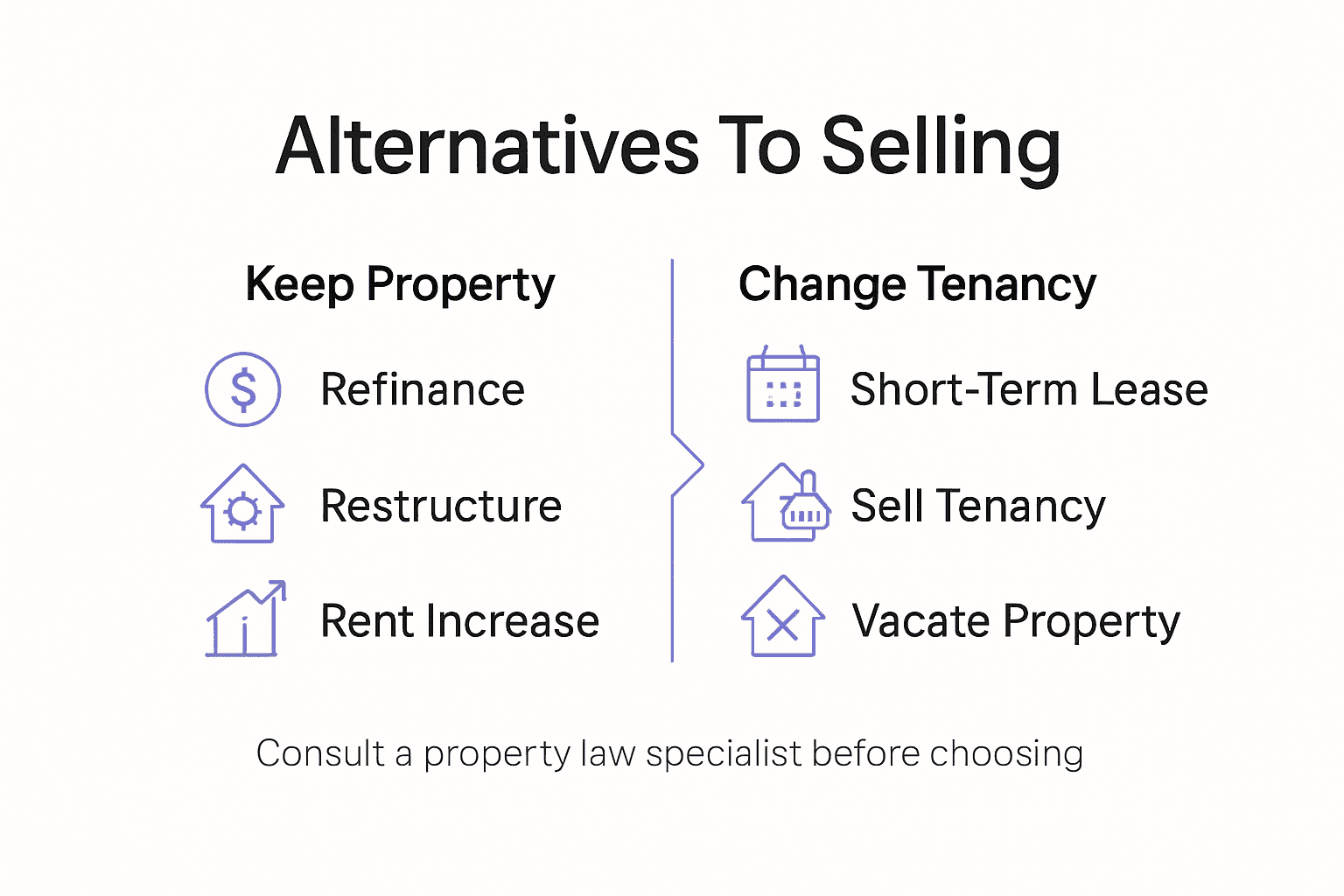
One primary alternative involves restructuring the property investment without selling. This can include refinancing the mortgage, engaging professional property management to reduce personal administrative burden, or strategically negotiating with current tenants about lease modifications. Law Society guidelines suggest exploring comprehensive property management strategies that can potentially improve rental yields and reduce operational challenges without necessitating a complete property sale.
Another viable option is transitioning the property’s tenancy arrangement. Landlords might consider converting the property to a short-term rental, exploring corporate leasing opportunities, or gradually preparing the property for a future sale by managing tenant transitions strategically. Each approach requires understanding tenant rights, adhering to legal notice periods, and maintaining transparent communication to ensure smooth property management transitions.
Pro tip: Consult a property law specialist to develop a tailored strategy that balances your financial goals with legal requirements and tenant rights.
Simplify Selling Your Tenanted House Today
Selling a tenanted property in New Zealand can be overwhelming due to intricate tenancy laws, tenant rights, and unexpected costs. If you are facing challenges like complex legal obligations, tenant arrangements, or simply need a fast and stress-free sale, you are not alone. Many landlords seek to avoid lengthy processes, costly fees, and the uncertainty of traditional sales when managing tenanted houses.

EasySale.co.nz offers a straightforward solution designed specifically for homeowners looking to sell quickly without the usual hassle. With no agents or commission fees and the ability to buy properties in any condition, EasySale.co.nz respects your unique situation and tenancy agreements while providing a fair cash offer. Take control of your sale on your own timeline and avoid common pitfalls highlighted by legal and financial experts. Visit EasySale.co.nz now to start your simple three-step process and discover how you can convert your tenanted property into fast cash today.
Learn more about your options and how to avoid risks calling EasySale.co.nz your trusted partner. Act now to reduce stress and move forward with confidence.
Frequently Asked Questions
Why should I consider selling a tenanted house?
Selling a tenanted house can be an attractive option for landlords looking to restructure their investment portfolios, respond to market fluctuations, or streamline property management. Tenanted properties can appeal to investors seeking immediate rental income, while selling may also provide financial flexibility if the landlord’s personal circumstances change.
What legal obligations do I have when selling a tenanted property?
When selling a tenanted property, landlords must adhere to the Residential Tenancies Act, which mandates providing tenants with quiet enjoyment of the property. This includes giving appropriate notice for inspections and transferring the existing tenancy agreement to the new owner, meaning tenant rights must be respected throughout the sale process.
How do different types of tenancies affect the selling process?
Fixed-term tenancies provide a predictable end date for potential buyers, making the property easier to sell. In contrast, periodic tenancies can complicate the sale process due to ongoing tenant rights and specific notice requirements, potentially limiting the pool of interested buyers.
What risks should I be aware of when selling a tenanted house?
Key risks include financial complexities such as depreciation recovery and tax liabilities, along with legal issues like improper tenant notification or contract errors. These pitfalls can lead to reduced net proceeds, unexpected costs, or legal disputes, so it’s crucial to conduct thorough due diligence before selling.
Recommended
