
14 Day Plan to Sell Your Home Fast in NZ

The fastest realistic routes include a direct cash sale to an investor or buying service within a short period, an aggressive auction or deadline sale run by a sharp agent within a few weeks, or a well-priced private listing, with timelines that vary. Speed nearly always trades off against net proceeds or buyer certainty, so the right route depends on whether you need cash quickly or can wait for the best possible offer.
TL;DR:Selling to a cash buyer or investor offers offers within days and settlement in as little as a week, ideal for sellers under immediate financial pressure.An auction or deadline sale can produce a faster result in three to six weeks but depends on market interest and competitive tension.Properly priced agent listings, set just below comparable sales, can secure an unconditional contract within four to eight weeks, especially with a clear deadline.Preparing all legal documents, disclosures, and permits before listing minimizes delays and helps finalize deals within the typical two-week quick sale timeframe.Selling damage or complex properties fast requires full disclosure of issues and documentation, with direct sale routes often best suited for properties with unresolved repairs or claims.
Table of Contents
- How can I sell my home fast? Comparing your options
- How to set a price that moves the market quickly
- Which presentation fixes actually speed up a sale?
- Why the first two weeks of your listing matter most
- What paperwork can stall a fast sale?
- The 14-day rapid plan: your day-by-day checklist
- Agent, private sale, or direct buyer: which suits you?
- Selling a damaged or complex property fast
- What I’d tell a friend who needs to sell fast
- Need a genuinely fast, no-hassle sale? Here’s how easySale works
- Where to check the details yourself
- Sources
How can I sell my home fast? Comparing your options
Every seller under time pressure asks some version of the same question: what’s the quickest way to get a signed contract without leaving too much money on the table? The honest answer is that no single method wins on every measure. Each route trades speed against price, certainty, or effort, and knowing which one matches your situation is the first real decision you’ll make.
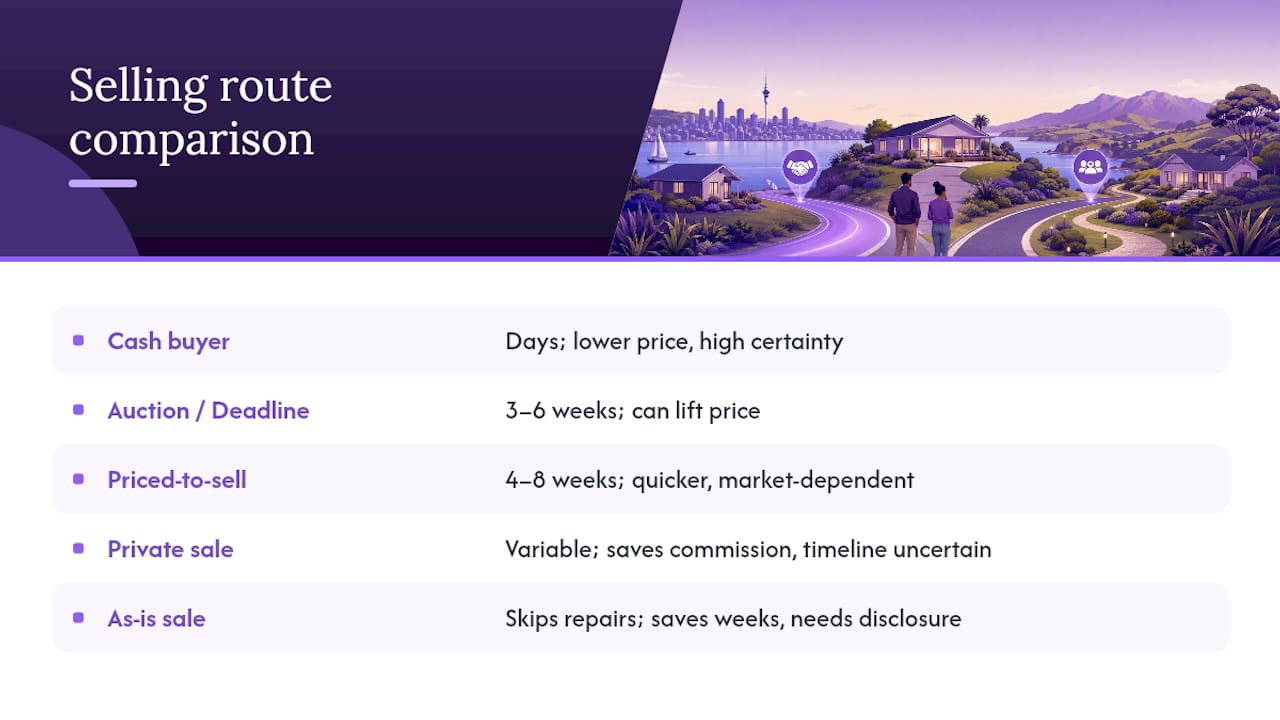
Direct cash buyer or investor. You get an offer within days, often without conditions, and settlement can happen in as little as a week if you need it that fast. The trade-off is a lower headline price than a fully marketed campaign might achieve, because the buyer is pricing in speed, certainty, and the fact that they’re often taking on a property in as-is condition. This suits sellers facing financial pressure, a deceased estate, tenanted property, or a home that needs work they can’t afford to do first.
Auction or deadline sale with an aggressive agent. A well-run campaign with a tight deadline can produce a sale in three to six weeks. You’re betting on competitive tension between buyers to push the price up, which works well in a seller’s market, but can backfire if interest is thin.
Fixed-price agent listing, priced to sell. Setting your asking price at or slightly under recent comparable sales, rather than testing the top of the market, tends to generate faster interest. Expect four to eight weeks to an unconditional contract, with commission costs similar to auction but less marketing spend.
Private sale. Selling without an agent saves commission but you’re doing the marketing, negotiating, and paperwork yourself. Timelines are unpredictable. It can be fast if you already have a buyer in mind (a neighbour, a family member) or slow if you’re relying on cold enquiries with no professional network behind you.
Selling “as is, where is”. This applies across cash sales and even some agent listings. You disclose known issues, skip the repair list, and let the price reflect the property’s real condition. It removes weeks of renovation time from your schedule but requires careful documentation to keep buyers (and their lawyers) comfortable.
If cash flow is the emergency, go direct. If you can afford to wait six weeks for a better number, run a proper campaign. If you’re somewhere in between, a keenly priced agent listing with a short deadline often splits the difference.
How to set a price that moves the market quickly
Pricing is the single biggest lever you control, and most sellers get it wrong in the same direction: too high, “just to see what happens.” That single decision costs more sales momentum than any other mistake in a fast sale.
Start with a genuine market appraisal built on comparable sales, not a guess or an inflated agent pitch designed to win your listing. The Real Estate Authority recommends getting an evidence-based appraisal and encourages interviewing more than one agent before committing, because appraisals can vary significantly between agents chasing your business. Pull recent sales within a few hundred metres and the last three months if you can, since older or wider-radius comparables lose relevance fast in a shifting market.
Here’s a practical sequence for pricing to sell quickly:
- Get two or three independent appraisals and treat the middle figure, not the highest, as your starting benchmark.
- Set your asking price at or just under that benchmark rather than testing above it. Buyers searching NZ portals filter by price bands, and pricing yourself out of the band just above a natural cutoff (say, $850,000 instead of $799,000) can quietly exclude a chunk of your buyer pool.
- Build in negotiation room, not padding. A small, deliberate buffer above your walk-away number gives buyers something to negotiate down to, which often speeds up the “yes” because they feel like they’ve won something.
- Set a review trigger before you list. Decide now: if there’s no genuine interest (not just views, actual enquiries or visits) within seven to ten days, you’ll cut the price rather than wait it out.
- Watch the first 48 to 72 hours closely. A flurry of enquiries and repeat visits signals correct pricing. Silence, or lots of views with no follow-up, usually means the number is wrong, not the property.
Buyers read price signals fast. A property that’s been sitting for weeks with incremental price cuts looks desperate and invites lowball offers. A property priced right from day one, with a firm and visible deadline, reads as confident and well-managed, even under time pressure.
Pro Tip: If you’re not getting enough serious enquiries in the first week, don’t wait a full month to react. Cut once, cut meaningfully, and relaunch the listing rather than trickling down in small increments that buyers can watch and wait out.
Which presentation fixes actually speed up a sale?
Presentation problems are often the cheapest, fastest thing you can fix, and they can quietly cost you a sale far more than an outdated bathroom ever will. Buyers form an opinion within the first ninety seconds of walking through the door, and that opinion is shaped by clutter, smell, and light, not by whether your kitchen bench is stone or laminate.
Quick wins that punch above their cost:
- Declutter and depersonalise every room, especially family photos, religious or cultural displays, and anything that makes it hard for a buyer to picture themselves living there. Practical seller experience shows that personal shrines, strong odours, and visible clutter can kill buyer interest within minutes of a viewing.
- Deep clean everything, including carpets, windows, and anything pet-related. Odour is the fastest deal-killer in a viewing and the easiest to fix.
- Sort kerb appeal: mow the lawn, tidy the entrance, fix a wonky letterbox. First impressions start on the street, before a buyer’s even inside.
- Get professional photos and, ideally, a floorplan. Phone photos read as amateur and cost you clicks on every listing portal.
- Light stage, don’t overhaul. A few well-placed furniture pieces and good lighting outperform an expensive redecoration.
On repairs, be selective. Practical guidance from NZ property commentators points to small, low-cost fixes delivering outsized gains compared with big renovation projects. A full kitchen or bathroom renovation rarely pays for itself in the timeframe you need, and it delays your listing by weeks or months you don’t have. Fix the things buyers notice in the first walk-through (loose handles, cracked tiles, dripping taps) and leave the big structural projects to the next owner, reflected in your price instead.
If your property is tenanted or has visible damage, don’t hide it. Give tenants proper notice and coordinate viewing times that work for everyone, and be upfront about damage in your listing copy rather than letting buyers discover it on the day. A well-explained issue with a clear price adjustment reassures buyers far more than a surprise ever will. Unaddressed condition issues, along with things like flood risk, unconsented work, or difficult neighbours, are consistently linked to slower sales and lower buyer interest.
Why the first two weeks of your listing matter most
Most of the attention your listing will ever get arrives in its opening fortnight. Industry data on fast property sales points to listings receiving the bulk of buyer engagement in that initial window, after which portal algorithms and buyer attention both move on to newer stock. That makes the first fourteen days your single biggest marketing opportunity, and it’s worth treating them that way rather than drip-feeding effort over months.
Concentrate your spend and effort into that opening window instead of spreading it thin:
- Launch with everything ready, not staggered. Professional photos, floorplan, and accurate, specific copy should all go live on day one, not trickle in over the first week.
- Use one strong portal listing plus a targeted social ad, rather than scattering a small budget across five platforms. A focused approach with quality photos tends to generate faster buyer response than the same spend spread thinly.
- Respond to enquiries within hours, not days. A buyer who’s excited on Monday and hears nothing back until Thursday has often moved on to another property.
- Tap your agent’s existing buyer database if you’re using one. Agents with an active list of pre-qualified buyers can generate a viewing within days of listing, before the public even sees it.
- Run open homes early and often in week one, and consider a short, clearly stated deadline (10 to 14 days) to create genuine urgency rather than an open-ended “make an offer whenever” listing.
A deadline sale or short auction campaign works well here because it gives buyers a reason to act now rather than “circle back later.” Vague timelines invite procrastination. Clear ones invite decisions.
What paperwork can stall a fast sale?
Legal delays are entirely avoidable, and they’re one of the most common reasons a fast sale grinds to a halt in week three instead of closing in week one. Sorting your documents before you list, not after an offer lands, is the difference between a smooth settlement and a frustrating renegotiation.
You have a legal obligation to disclose known defects. Settled that failing to disclose known physical issues can lead to legal action after settlement, and agents are required to stop representing a vendor who refuses to disclose known problems. This isn’t a box-ticking exercise. Hiding a leaky roof or a consent issue to speed up a sale can cost you far more than the extra week it would have taken to disclose it properly.
Have these ready before you list, not once an offer comes in:
- LIM report (Land Information Memorandum) from your local council, showing consents, rates, and any notices on the property.
- Building consents and Code Compliance Certificates (CCCs) for any renovations or additions.
- Insurance and, if relevant, EQC or NHC claim details, including any sign-offs on completed repairs.
- Title and encumbrance information, confirming who legally owns the property and any covenants or easements attached.
- Engineer’s reports, if the property has known structural, seismic, or land stability issues.
Government guidance recommends engaging a lawyer or conveyancer at the very start of the process, not after you’ve accepted an offer. A lawyer who’s already reviewed your title and documentation can turn a buyer’s offer into an unconditional contract in days rather than weeks, because there’s nothing left to discover.
Missing paperwork is one of the most common reasons a signed agreement stalls at the conditional stage rather than going unconditional on schedule, turning what should be a two-week settlement into a month-long back-and-forth over missing consents.
The 14-day rapid plan: your day-by-day checklist
If you need to move fast, structure beats hustle. Here’s a sequence that compresses the usual sale timeline into a fortnight without skipping the steps that protect you legally.
- Days 1 to 3: Valuation and paperwork. Get two to three appraisals, pull your LIM report, gather consents and insurance documents, and book a lawyer if you haven’t already. Line up your professional photographer for day 3 or 4.
- Days 4 to 7: Listing launch. Go live with photos, floorplan, and copy all ready together. Push your listing through one strong portal and a targeted social ad, brief your agent’s buyer database if you’re using one, and schedule your first open home for the weekend.
- Days 8 to 14: Negotiate and close, or pivot. Field offers, negotiate firmly but fairly, and push toward unconditional status. If you’ve had zero genuine enquiries by day 10, that’s your signal to cut price or change your marketing angle, not to wait another week and hope.
Build in decision triggers rather than gut calls. No offers by the end of week one means something is wrong with price or exposure, and you act on it immediately rather than “giving it more time.” A conditional offer that arrives should be met by tightening finance and building conditions to the shortest realistic timeframe your buyer’s lawyer will accept, since every extra day of conditionality is a day the deal can fall through.
A short response script helps here too: when an offer lands, acknowledge it within the hour, ask directly whether the buyer has finance approval and a building report already sorted, and give a clear deadline for their best and final position. Ambiguity is what drags negotiations from days into weeks.
Pro Tip: Keep a one-page “ready to answer” sheet by your phone during the campaign: rates figures, recent renovation dates, boundary details, and body corporate or insurance information. Buyers ask these questions in the first phone call, and hesitating on basic facts reads as evasive, even when it isn’t.
Agent, private sale, or direct buyer: which suits you?
The right path depends less on what sounds best and more on what your circumstances actually demand. Here’s how the three main routes stack up when speed is the priority.
- Agent-led sale: strongest for reaching the widest buyer pool and typically getting the best price, but you’ll pay commission, wait several weeks minimum, and remain exposed to a deal falling through at the finance or building-report stage.
- Private sale: saves on commission and gives you full control, but only moves fast if you already have a ready buyer. Cold private sales can drag on for months with no professional marketing behind them.
- Direct buyer or investor: the fastest route to a firm, unconditional offer, often within days, with settlement on your timeline and no repairs required. The trade-off is a lower price than a fully marketed campaign might eventually achieve.
If you’re weighing up an agent, ask pointed questions: What’s their actual commission structure, all-in? How many comparable properties have they sold in this suburb in the last six months? Will they commit to a marketing plan with a firm deadline, or is it open-ended? For a cash offer, ask for evidence of funds, ask exactly what “no obligation” means in writing, and ask how flexible the settlement date really is once you sign.
A direct buyer suits you best when certainty matters more than squeezing out the last few thousand dollars, when the property needs work you can’t fund upfront, or when your timeline is measured in days rather than months. If you want to see how that process typically unfolds, this overview of selling for a quick cash deal walks through what to expect.
Selling a damaged or complex property fast
Damage, unconsented work, or an unresolved insurance claim don’t rule out a fast sale, but they do demand more careful preparation. Skipping disclosure to save time is the single fastest way to turn a quick sale into a legal dispute months later.
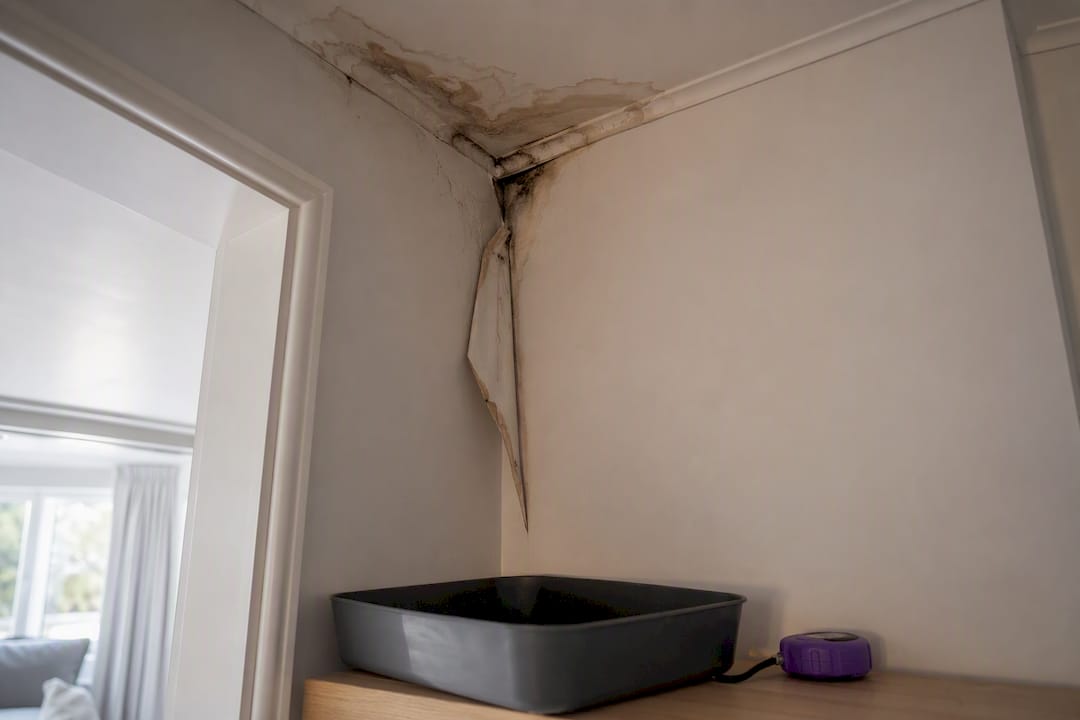
If your property has natural disaster damage, Settled’s guidance is clear that you need to disclose it fully, even when selling “as is,” and gather your NHC or insurance claim documentation before you list. Buyers and their lawyers will want to see the paper trail, not just hear a verbal explanation.
Practical steps that keep this moving:
- Gather all claim documentation (NHC, EQC, or private insurer correspondence) and any completed repair sign-offs before you list, so buyers can verify the history rather than take your word for it.
- Consider assigning an unresolved claim to the buyer as part of the sale, which some buyers and investors will accept in exchange for a price adjustment.
- Get written confirmation of any completed repairs, including building consent sign-offs where work required one.
- Be upfront in your listing copy about the property’s history rather than letting a buyer discover it during a builder’s inspection.
For genuinely complex situations (uninsured damage, unresolved consent issues, an estate sale with time pressure), a direct buyer or investor is often the pragmatic choice. They can assess and price the risk themselves, remove financing and building-report contingencies from the equation, and settle on a timeframe that suits you. That combination of speed and reduced contingency risk is exactly what makes this route worth considering when a standard listing feels too slow or too uncertain. For a deeper look at selling a property in any condition, see this guide to selling a house fast regardless of condition.
What I’d tell a friend who needs to sell fast
Speed and price are always in tension, and the sellers who get burned are the ones who pretend otherwise. If you need certainty, decide that early and stop chasing a “best of both worlds” outcome that rarely exists on a tight deadline. Sort your paperwork before you list, not after an offer lands. Missing consents or claim documents are the single biggest cause of a fast sale slipping into a month-long stall.
One case that stuck with me: a seller facing a job relocation had four weeks to settle. For their situation, that certainty was worth more than the extra thousands a longer campaign might have delivered.
Be decisive on price from day one. Choose the route that matches what you actually need, not what sounds best at a dinner party. For more on weighing these options properly, this no-stress guide to selling quickly is worth a read.
— Aaron
Need a genuinely fast, no-hassle sale? Here’s how easySale works
If the plans above still feel like a lot to manage on a tight deadline, easySale is built specifically for sellers who want speed and certainty without running a marketing campaign, hosting open homes, or paying agent commission.

Easysale buys properties in any condition across New Zealand, including damaged, tenanted, unconsented, or inherited homes, and makes a no-obligation cash offer without requiring repairs first. There’s no commission, no open homes, and no waiting on finance-conditional buyers who might pull out weeks into the process. The trade-off is straightforward and worth being upfront about: a direct cash offer typically sits below what a fully marketed campaign might eventually achieve, in exchange for a firm settlement date, often within 7 to 14 days, and none of the uncertainty that comes with a traditional listing. That trade suits sellers who need cash flow now, who are managing an estate, or who simply want the whole process handled without months of viewings and negotiation.
If that sounds like where you’re at, get an obligation-free cash offer from easySale and see your settlement timeline before you commit to anything.
Where to check the details yourself
For readers who want to verify the legal and procedural points covered here, these New Zealand government and industry sources are worth bookmarking:
- Settled covers exactly what vendors must tell buyers and why.
- The Real Estate Authority’s buyer and seller guidance explains how appraisals should work and what to expect from an agent.
- Govt is the clearest starting point for the legal steps involved.
- REA’s industry guidance on natural disaster damage is useful if your property has a claims history.
- RNZ’s rundown on what drops home value is a sharp, real-world read on the condition issues buyers notice first.
This article is general information, not a substitute for advice from a qualified financial advisor. Consult a qualified financial professional about your own circumstances before acting on anything here.
Sources
- Disclosure for sellers — Settled
- Guidance for buyers and sellers — REA
- What drops the value of your house — RNZ
- Selling your house — NZ Government
Recommended
