
National Property Buyers: Impact on N.Z. Sellers

Legal hurdles and unexpected costs can make selling a home feel overwhelming, especially when life throws curveballs like property damage or divorce. In New Zealand, local buyers drive most home sales, with national buyers purchasing over 90% of residential properties compared to their australian or overseas counterparts. For sellers needing speed and certainty, understanding these buyer groups—and the fast cash methods available—could mean skipping expensive agent fees and reducing stress.
Table of Contents
- What Are National Property Buyers?
- Types of Property Buyers in New Zealand
- How the Quick Cash Offer Process Works
- Legal and Financial Implications for Sellers
- Risks, Costs, and Common Pitfalls
- Alternatives to Using a National Buyer
Key Takeaways
| Point | Details |
|---|---|
| National Property Buyers | Local residents in New Zealand benefit from streamlined property acquisition processes compared to foreign investors, enhancing local market dynamics. |
| Buyer Categories | Various buyer types, including first-home buyers and property investors, influence market behaviour and investment patterns significantly. |
| Cash Offer Process | This process allows sellers to achieve quicker transactions with reduced complications, though cash offers may not always represent full market value. |
| Legal and Financial Considerations | Sellers must navigate complex legal requirements and potential financial implications, making professional guidance essential for optimal outcomes. |
What Are National Property Buyers?
In New Zealand, national property buyers are local residents and citizens who purchase residential properties within the domestic market. These buyers represent a significant segment of the property landscape, operating under different regulations compared to foreign investors. National property buyers represent local investment dynamics who can acquire real estate with fewer legal restrictions.
The definition of national property buyers encompasses several key groups. These typically include first-time homeowners, property investors, real estate professionals, and individuals seeking owner-occupier properties. Unlike overseas purchasers who must navigate complex approval processes, national buyers enjoy streamlined property acquisition pathways. Their transactions contribute substantially to the local housing market’s liquidity and economic movement.
Under current New Zealand regulations, national property buyers must still comply with standard property purchase requirements. This includes conducting proper due diligence, securing appropriate financing, and meeting legal transfer protocols. Property purchase regulations for national buyers ensure transparency and protect both buyers and sellers during real estate transactions.
Pro tip: Always verify your eligibility and understand local property purchase regulations before initiating any real estate transaction in New Zealand.
Types of Property Buyers in New Zealand
New Zealand’s property market features diverse buyer categories, each with unique characteristics and motivations. Property buyer segments represent complex market dynamics that influence real estate transactions and investment patterns. These categories range from local residents to specialised investor groups, creating a nuanced and dynamic property landscape.
The primary types of property buyers in New Zealand include:
- First-home buyers: Young professionals and families seeking initial property ownership
- Property investors: Individuals purchasing residential or commercial properties for rental income
- Upgraders: Existing homeowners looking to move to larger or more premium properties
- Downsizers: Older residents transitioning to smaller, more manageable homes
- Foreign buyers: Limited to specific categories with strict regulatory requirements
Each buyer segment brings distinct motivations and financial capabilities to the market. First-home buyers typically seek affordable properties with potential for capital growth, while investors focus on properties with strong rental yields and long-term appreciation potential. Upgraders often drive lateral movement in the housing market, creating opportunities for other buyer groups.
Pro tip: Research each property buyer category’s specific market dynamics to understand potential opportunities and competition in your local real estate market.
How the Quick Cash Offer Process Works
The quick cash offer process represents a streamlined approach to property sales in New Zealand, designed to provide sellers with faster, more certain transaction outcomes. Cash buyer transactions simplify property sales by eliminating complex financing procedures and reducing potential sale complications.
Typically, the cash offer process follows these key stages:
- Property Assessment: Buyers conduct rapid property evaluation
- Initial Offer: Cash buyers propose a direct purchase price
- Negotiation: Sellers and buyers discuss terms
- Legal Review: Streamlined legal documentation process
- Settlement: Expedited property transfer and payment
Unlike traditional property sales, cash offer transactions provide significant advantages. These include reduced settlement times, minimal conditional requirements, and lower risk of sale collapse. Cash buyer strategies eliminate financing uncertainties that often complicate standard property transactions.

Potential sellers should understand that while cash offers provide speed and certainty, they might sometimes represent slightly lower market values. Professional valuation and legal consultation remain crucial to ensuring a fair and transparent transaction.
Pro tip: Always obtain multiple cash offers and conduct independent property valuations to maximise your sale potential.
Legal and Financial Implications for Sellers
Selling a property in New Zealand involves navigating complex legal and financial landscapes that require careful consideration and strategic planning. Legal obligations for property sellers are governed by specific legislation like the Property Law Act 2007 and Land Transfer Act 2017, which mandate precise disclosure and contractual requirements.
Key legal considerations for sellers include:
- Disclosure Requirements: Full transparency about property condition
- Contract Compliance: Meeting all contractual obligations
- Tax Implications: Understanding capital gains tax rules
- Anti-Money Laundering: Adhering to verification processes
- Dispute Resolution: Preparing for potential legal challenges
Financial implications are equally significant for property sellers. Property sale tax considerations involve understanding the bright-line test, which impacts capital gains taxation for properties sold within specific timeframes. Sellers must account for potential tax liabilities, real estate commissions, marketing expenses, and other transaction-related costs that can substantially affect their net proceeds.
Navigating these complex requirements demands professional guidance. Engaging experienced legal and financial advisors can help sellers mitigate risks, ensure regulatory compliance, and optimise their financial outcomes during property transactions.
Pro tip: Consult a qualified property lawyer and accountant before finalising any property sale to understand your complete legal and financial obligations.
Risks, Costs, and Common Pitfalls
Property sales in New Zealand involve numerous potential risks and financial considerations that can significantly impact a seller’s bottom line. Property selling mistakes in NZ can substantially reduce sale prices and create unnecessary transaction complications.
Common risks and pitfalls include:
- Unrealistic Pricing: Setting property value too high or low
- Poor Property Presentation: Neglecting necessary repairs or staging
- Inadequate Marketing: Ineffective property promotion
- Documentation Errors: Incomplete or incorrect legal paperwork
- Ignoring Buyer Feedback: Failing to address potential concerns
Financial costs associated with property sales can quickly accumulate. Hidden property sale expenses typically encompass agent commissions around 3%, marketing fees, legal expenses, potential repair costs, and compliance requirements. These expenses can significantly erode potential sale proceeds if not carefully managed.
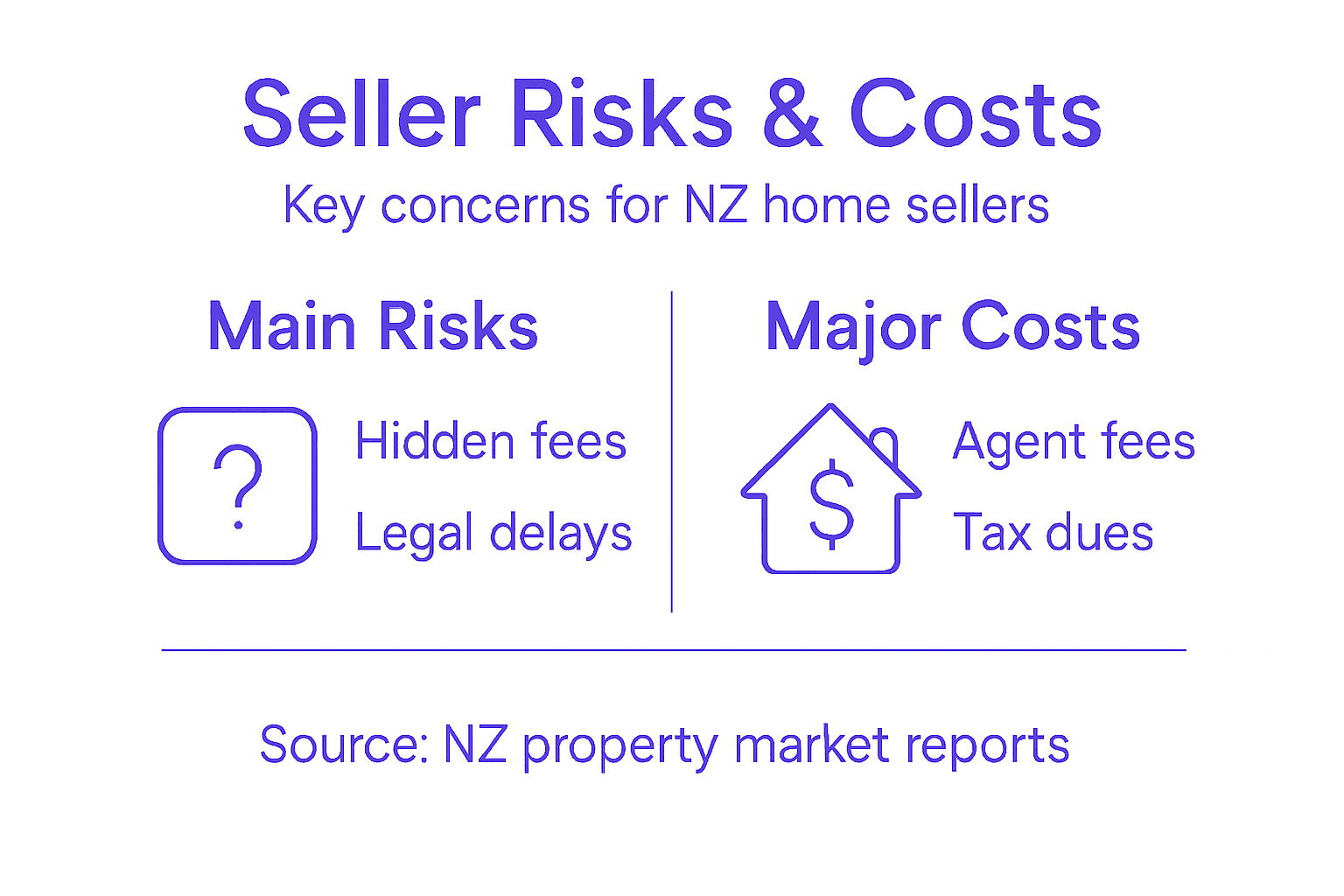
Sellers must approach property transactions with strategic planning and professional guidance. Understanding potential risks, accurately estimating total transaction costs, and preparing comprehensive documentation can help mitigate financial challenges and ensure a smoother sales process.
Summary of typical risks and hidden costs involved in property sales in New Zealand:
| Risk/Cost Type | Potential Impact | Prevention Tip |
|---|---|---|
| Overpricing | Fewer offers, longer sales | Obtain professional valuation |
| Legal Errors | Settlement delays or disputes | Use an experienced property lawyer |
| Marketing Gaps | Lower buyer interest | Invest in strategic promotion |
| Commission & Fees | Reduced net proceeds | Review all sale contracts |
| Compliance Expenses | Unexpected last-minute costs | Budget for inspections and repairs |
Pro tip: Create a comprehensive budget accounting for all potential selling expenses and maintain a financial buffer to address unexpected costs during your property sale.
Alternatives to Using a National Buyer
Property sellers in New Zealand have multiple alternatives to national buyers, each offering unique advantages and challenges. Government procurement strategies provide structured options for those seeking alternative property transaction methods beyond traditional national buyers.
Key alternatives include:
- Real Estate Agents: Traditional property sale method
- Private Sales: Direct seller-to-buyer transactions
- Auction Markets: Competitive bidding platforms
- Online Property Platforms: Digital marketplace listings
- Local Investor Networks: Community-based property connections
Government procurement frameworks offer additional opportunities for sellers, emphasising transparency, fair competition, and potential value-for-money outcomes. These alternatives create flexibility for sellers who might want more control over their property sale process or seek diverse buyer engagement strategies.
Each alternative method requires careful evaluation of potential risks, transaction costs, marketing efforts, and legal compliance. Sellers should assess their specific circumstances, property type, market conditions, and personal financial goals when selecting an alternative to national property buyers.
Here’s a comparison of the main methods for selling residential property in New Zealand:
| Method | Selling Speed | Seller Control Level | Typical Costs |
|---|---|---|---|
| National Buyer | Moderate to fast | Moderate | Standard commissions |
| Auction | Fast, defined date | Low to moderate | Auction fees, commission |
| Private Sale | Varies, can be slow | High | Minimal, marketing only |
| Online Platform | Moderate | High | Listing fees, possible extras |
| Local Investor Network | Fast possible | Moderate | Negotiated buyer fees |
Pro tip: Consult multiple professionals and compare different selling strategies to determine the most suitable approach for your specific property and financial objectives.
Simplify Your Property Sale Amid National Buyer Challenges
Navigating the complexities described in “National Property Buyers: Impact on N.Z. Sellers” can be overwhelming. Sellers often face strict regulations, lengthy legal requirements, and hidden costs that delay or jeopardise their property sale. For homeowners seeking a quick, hassle-free solution, understanding how to overcome barriers like prolonged negotiations or unexpected expenses is crucial.
With easySale.co.nz, you can bypass many common roadblocks faced by national property sellers. Whether your property needs repairs or you’re under financial pressure, our streamlined three-step process offers a straightforward path: submit your property details, receive a no-obligation fast cash offer, and settle at a time that suits you. This approach respects your individual circumstances and eliminates agent commissions and complicated market dynamics discussed in the article. Discover how cash buyer transactions simplify property sales and why many sellers choose to avoid the pitfalls of traditional listings.
Ready to take control and sell confidently without lengthy delays? Visit easySale.co.nz now to get your fair cash offer and experience a transparent sale that works for you. Learn how we address legal and financial complexities highlighted in the article while providing flexibility to suit your needs. Start your quick property sale today and avoid the common risks and pitfalls of relying solely on national property buyers.
Frequently Asked Questions
What are national property buyers in New Zealand?
National property buyers in New Zealand are local residents and citizens who purchase residential properties within the domestic market, typically enjoying fewer legal restrictions compared to foreign investors.
What types of property buyers are there in New Zealand?
The main types of property buyers in New Zealand include first-home buyers, property investors, upgraders, downsizers, and foreign buyers, each having unique characteristics and motivations.
What is the quick cash offer process for selling property?
The quick cash offer process involves a streamlined series of steps: property assessment, initial offer, negotiation, legal review, and settlement, allowing sellers to achieve faster and more certain transaction outcomes.
What are the legal and financial implications for property sellers?
Sellers must understand several legal obligations, including disclosure requirements and compliance with tax laws, as well as potential financial costs such as real estate commissions and unexpected expenses related to property sales.
Recommended
