
Role of National Property Buyers in NZ Sales

Facing urgent financial stress or unexpected life changes in New Zealand can make owning a damaged or uninhabitable property feel overwhelming. Quick solutions matter when you need certainty and relief from ongoing costs or burdens. Understanding how national property buyers operate gives you options to sell efficiently and move forward without the usual headaches of open market listings, repairs, or long negotiations with traditional buyers.
Table of Contents
- What Are National Property Buyers?
- Types of National Property Buyers in New Zealand
- How Direct Cash Sale Processes Work
- Legal Protections and Regulatory Standards
- Risks, Costs, and Common Pitfalls
- Comparing National Buyers With Traditional Sales
Key Takeaways
| Point | Details |
|---|---|
| Diverse Buyer Types | Understanding the different buyer categories in New Zealand helps sellers tailor their marketing strategies to attract the right buyers. |
| Cash Sales Advantages | Direct cash sales streamline the process, allowing for a quicker settlement without the complications of financing. |
| Importance of Legal Protections | Engaging a solicitor or conveyancer ensures compliance with legal frameworks, protecting your interests throughout the sale. |
| Market Timing and Risks | Awareness of market conditions and buyer reliability is crucial to avoid financial pitfalls and ensure a fair sale price. |
What Are National Property Buyers?
When you hear the term “national property buyers,” you’re talking about the wide range of individuals and organisations who purchase real estate in New Zealand. They’re not just one type of person or entity. Think of them as everyone from first-time homebuyers saving up for their first house to large corporate entities investing in commercial or residential portfolios. National property buyers include citizens, residents, corporate entities, and non-resident foreign investors, all of whom play different roles in the New Zealand property market.
What makes national property buyers distinct is their involvement in the formal property transaction process. These aren’t people buying property overseas or through informal arrangements. They’re individuals and organisations engaging in legal, regulated real estate purchases within New Zealand’s borders. Some are owner-occupiers who plan to live in the property they’re buying. Others are investors seeking returns through rental income or capital appreciation. There are also developers, companies with corporate headquarters in New Zealand, and even overseas companies with New Zealand operations. Each brings different motivations and resources to the table. The Real Estate Authority regulates these buyers and ensures professional standards are maintained throughout the transaction process, protecting your rights whether you’re buying or selling.
The diversity among national property buyers matters more than you might think. When you’re selling your property, you could be dealing with any number of buyer types. Some buyers will use licensed agents to help them navigate the purchase. Others will represent themselves directly. Some will have financing already arranged through banks or lending institutions. Others might be cash buyers ready to settle quickly. Understanding who these buyers are helps explain why the property market moves the way it does. When investor demand is high, prices in certain areas tend to climb. When owner-occupiers dominate the market, you might see different patterns in which properties attract attention. National property buyers collectively shape market trends, pricing, and the overall health of New Zealand’s residential and commercial real estate sectors.
Pro tip: When marketing your property, consider which type of national property buyer might be most interested in your home. Owner-occupiers focus on lifestyle and condition, while investors scrutinise rental yields and maintenance costs. Tailoring your approach to attract the right buyer type can lead to faster sales and better outcomes.
Types of National Property Buyers in New Zealand
Not all property buyers are the same. The New Zealand market includes several distinct buyer categories, each with their own goals, resources, and impact on the real estate landscape. Understanding these types helps you grasp how your property might appeal to different purchasers and what offers you might expect. The main categories include New Zealand citizens, resident visa holders, corporate entities, and foreign corporate owners. The majority of property transfers involve either citizens or resident visa holders, but corporate buyers also play a meaningful role in shaping market activity across the country.
Owner-Occupiers
Owner-occupiers are individuals or families who buy a property to live in it themselves. They might be first-time buyers entering the market, families upsizing to accommodate children, or downsizers looking for something more manageable. These buyers typically focus on lifestyle factors: location near schools, commute times, neighbourhood character, and the property’s livability. They care about condition because they’ll be the ones dealing with maintenance and repairs. When you’re selling to an owner-occupier, they’re often emotionally invested in the decision. They’ll scrutinise the home’s features and ask detailed questions about how you’ve looked after it. Financing typically involves a mortgage, and they may need to sell their current home first.
Individual Investors and ‘Mum and Dad’ Investors
Individual investors holding multiple mortgaged properties represent a significant portion of market activity, particularly what’s commonly called ‘mum and dad’ investors. These aren’t large corporations or institutions. They’re regular Kiwis building rental portfolios to supplement retirement income or create long-term wealth. What matters to these buyers is different from owner-occupiers. They’re calculating rental yields, analysing property appreciation potential, and assessing maintenance costs and vacancy risks. A property’s condition is evaluated through an investment lens: how much will repairs cost, how quickly can it generate rental income, and what’s the capital growth trajectory? These buyers often move quickly when they spot a good deal. They understand market cycles and can recognise value. Recent trends show ‘mum and dad’ investors are returning to typical levels of market participation after years of policy uncertainty.
Corporate and Institutional Buyers
Corporate entities represent another distinct buyer category. These can be property development companies, large investment firms, or companies with New Zealand or overseas ownership. Some are looking to develop land for residential or commercial projects. Others are acquiring properties as part of their operational requirements. Institutional buyers bring different considerations: scalability, regulatory compliance, and often lengthy decision-making processes involving multiple stakeholders. They may conduct more formal due diligence and require specific documentation. On the flip side, they often have reliable financing and can close deals relatively quickly.

Pro tip: When listing your property, identify which buyer type would find it most attractive, then tailor your marketing accordingly. If it’s a solid rental investment, highlight the yield potential and maintenance history. If it appeals to families, emphasise schools, parks, and community features. Different buyers respond to different information.
Here’s how New Zealand property buyer types compare:
| Buyer Type | Main Motivation | Typical Financing Method | Decision Speed |
|---|---|---|---|
| Owner-Occupier | Lifestyle and liveability | Mortgage | Moderate |
| Individual Investor (‘Mum & Dad’) | Rental returns, capital growth | Mortgage/cash combination | Fast if value seen |
| Corporate/Institutional Buyer | Scale and operational needs | Structured finance | Slow but decisive |
| Non-Resident Foreign Investor | Investment diversification | Offshore finance/cash | Slow, subject to compliance |
How Direct Cash Sale Processes Work
Direct cash sales are fundamentally different from traditional property transactions. Instead of waiting months for buyers to secure financing, you’re dealing with purchasers who have the funds ready and can settle quickly. The core principle is straightforward: the buyer makes an unconditional offer with cash already available, eliminating the uncertainty and delays that come with mortgage approvals. A direct cash sale typically involves the buyer making an unconditional offer without finance or other conditions, meaning they’re committing to full payment at settlement. This streamlines your entire timeline and removes one of the biggest sources of transaction stress. No finance fall-throughs. No inspections that uncover “issues.” No last-minute renegotiations because the bank won’t lend. Just a clear agreement and a defined settlement date.
The Steps in a Direct Cash Sale
The process starts when you receive an offer from a cash buyer. Unlike traditional sales where offers often come with conditions, a cash offer is typically unconditional from the outset. You either accept it, reject it, or negotiate the terms. Once you’ve agreed, the execution of sale and purchase agreements and conveyancing rules outline the procedural requirements that follow. This is where legal support becomes crucial, even though the process is simpler than traditional sales.
Here’s what typically happens:
- Offer acceptance: You agree to the buyer’s unconditional cash offer
- Legal documentation: A solicitor or conveyancer prepares the sale and purchase agreement
- Due diligence: The buyer completes their checks (title search, building inspections, etc.)
- Settlement preparation: Both parties confirm settlement details and dates
- Fund transfer: The buyer’s funds are transferred to your solicitor
- Settlement: Your solicitor releases funds to you and transfers the property title to the buyer
- Registration: The new ownership is registered with the Land Information New Zealand office
The entire process can happen in weeks rather than months. Some cash sales settle in as little as 2 to 4 weeks, depending on how quickly you and the buyer can coordinate. This speed is one of the biggest advantages of direct cash sales, particularly if you’re facing financial pressure or need to relocate urgently.
Why Speed Matters
Traditional property sales often take 8 to 12 weeks from offer to settlement. During that time, you’re in limbo. You can’t commit to your next move. You can’t plan your finances with certainty. The buyer’s mortgage might be declined at the last moment, or their bank might demand repairs you hadn’t budgeted for. Direct cash sales eliminate these uncertainties. The buyer already has the money. They’re not dependent on a lender’s approval or changing market conditions. This certainty translates into peace of mind and the ability to move forward with your life on your own timeline.
You also avoid the costs associated with traditional sales. There are no real estate agent commissions to pay, which typically run 2 to 3 percent of the sale price. You save on marketing expenses, photography, staging, and open home costs. Some sellers also find they can negotiate better final prices with cash buyers because both parties understand they’re saving money compared to traditional agent-assisted sales.
Pro tip: Before accepting any cash offer, always have a solicitor review the sale and purchase agreement to ensure your interests are protected and all settlement terms are clearly documented. Speed shouldn’t come at the cost of missing important legal protections.
Legal Protections and Regulatory Standards
When you’re selling property in New Zealand, you’re operating within a framework of legal protections and regulatory standards designed to protect both buyers and sellers. These aren’t bureaucratic hurdles. They’re safeguards that give you confidence the transaction will be conducted fairly and that your rights will be respected. Whether you’re selling through traditional channels or to a direct cash buyer, the same fundamental legal protections apply. Understanding these protections helps you navigate the process with greater confidence and ensures you’re not overlooking important steps that could protect your interests.
The Real Estate Authority and Professional Standards
The Real Estate Authority regulates the real estate industry through licensing standards and professional conduct codes, ensuring that anyone involved in your transaction meets defined competency and ethical requirements. If you’re working with a licensed agent, they must comply with these standards. They must act in your best interests, disclose conflicts of interest, and follow specific procedures for handling your money and documenting agreements. If you’re selling directly to a cash buyer without an agent, you’re still protected by the overarching legal framework, though you’ll want to engage a solicitor or conveyancer to ensure proper procedures are followed.
The Real Estate Authority maintains a public register of licensed professionals. You can verify that anyone representing themselves as an agent is actually licensed and registered. This transparency matters. It means you can research who you’re dealing with and check their professional history. The Authority also operates a complaint resolution process if something goes wrong during your transaction.
The Property Law Act 2007 Framework
The cornerstone of property transaction protection in New Zealand is the Property Law Act 2007, which establishes requirements for written contracts and conveyancing procedures. This legislation mandates that sale and purchase agreements must be in writing. You can’t rely on verbal promises or informal arrangements. Everything must be documented clearly so there’s no ambiguity about what you’ve agreed to. The Act specifies exactly what must be included in these agreements, the notice requirements that must be followed, and what remedies are available if someone breaches the contract.
This matters directly for you. It means any offer you receive must be documented in a proper written agreement. It means the buyer can’t suddenly change the terms at settlement. It means if something goes wrong, you have clear legal recourse. The Act protects you from being locked into unfair arrangements because the law is explicit about what constitutes a valid contract.
Conveyancing Protections
Conveyancing is the legal process of transferring property ownership from one person to another. Your solicitor or conveyancer handles this, and their role is governed by strict professional standards. They must conduct title searches to ensure the seller (that’s you) actually owns the property you’re selling and that no unexpected claims or liens exist against it. They must ensure all necessary documents are properly executed and registered. They act as stakeholders, meaning they hold the buyer’s funds until all conditions are satisfied and then release those funds only when everything is correct.
This process protects you in several ways. First, it ensures the buyer actually receives clear title to the property. If something was wrong with the title, it would be discovered now rather than years later when the buyer tries to sell. Second, it ensures settlement proceeds smoothly because a professional third party is managing the funds and documentation. Third, it provides an audit trail documenting every step of the transaction.
What This Means for Direct Cash Sales
Direct cash sales aren’t exempt from these protections. In fact, they benefit from them equally. The same Property Law Act applies. The same conveyancing procedures must be followed. If you’re working with a licensed agent, they must comply with the Real Estate Authority standards. The main difference with direct cash sales is that you’re eliminating the complexity of mortgage approvals and financing conditions, but you’re not eliminating the legal framework that protects you.
This is why engaging a solicitor or conveyancer remains important even in a direct cash sale. They ensure all procedures are followed correctly and that your interests are protected throughout the process.
Pro tip: Don’t skip professional legal advice simply because a direct cash sale is faster. A solicitor’s fee is typically a small fraction of your sale price and provides invaluable protection by ensuring all procedural requirements are met and your contract terms are fair.
Risks, Costs, and Common Pitfalls
While direct cash sales streamline the property transaction process, they don’t eliminate all risks. You still need to be aware of potential pitfalls that could complicate your sale or cost you money. The good news is that most of these risks are manageable if you understand them upfront and take appropriate precautions. National property buyers face several risks including market volatility, financing difficulties, and legal complexities, and as a seller, you need to recognise that these buyer-side issues can affect your transaction too. Understanding what can go wrong helps you protect yourself and make informed decisions throughout the sale process.
Financial and Hidden Costs
One of the biggest misconceptions about cash sales is that they’re “free” compared to agent-assisted sales. It’s true you’ll avoid real estate agent commissions, which typically run 2 to 3 percent of the sale price. However, other costs still apply and can mount quickly if you’re not prepared. Legal fees for solicitor or conveyancer services typically range from $1,500 to $3,500 depending on the complexity of your transaction. Title insurance, rates adjustments, and local council searches add further expenses. If your property requires building inspections or remedial work before settlement, those costs fall on you.
There’s also the cost of your time. Direct cash sales may be faster, but they still require your attention. You’ll need to coordinate with the buyer, respond to queries, and attend to administrative matters. If you’re under financial pressure or facing urgent circumstances, rushing through these steps without properly understanding the costs could leave you worse off than you expected.
Contract and Documentation Pitfalls
Common pitfalls include misunderstandings about contract terms, inadequate due diligence on property condition, and unexpected costs. Many sellers make the mistake of not reading their sale and purchase agreement carefully before signing. They assume standard terms apply and don’t realise they’ve agreed to something unfavourable. For instance, you might agree to a settlement date that’s sooner than you’re actually ready for, or you might agree to leave certain items or fixtures in the property that you planned to take with you.
Another common pitfall is providing incomplete or inaccurate information about your property’s condition. If you’re selling a property with known issues, you must disclose them. Failing to disclose existing damage, previous repairs, or ongoing problems can lead to disputes after settlement, potential legal action, and damage to your credibility. The buyer will likely conduct inspections anyway, so transparency from the start prevents problems later.
Market and Timing Risks
Property markets shift. The value of your property can fluctuate based on broader economic conditions, interest rate changes, and local market dynamics. If you’re in a hurry to sell, you might accept an offer that’s below market value simply to close the deal quickly. Sometimes this trade-off makes sense, particularly if you’re facing financial hardship or life circumstances that demand urgency. But you should be aware of what you’re accepting and why.
There’s also the risk of dealing with an unreliable buyer. A cash buyer should theoretically settle without complications, but some buyers overcommit and discover they don’t actually have the funds available when settlement arrives. This is why it’s important to verify a buyer’s financial capacity before committing to the sale. Ask for proof of funds or bank statements. Don’t take their word for it. Professional property buyers and reputable cash buying services will happily provide this verification.
Post-Settlement Issues
Buyers should be aware of potential issues such as misleading property information, contract disputes, and post-settlement defects. Once settlement occurs, the property is no longer your responsibility. The buyer owns it. However, disputes can still arise if the buyer claims you misrepresented something or failed to disclose an issue that became apparent after they took ownership. This is another reason why complete transparency about your property’s condition matters.
Keep thorough records of everything related to the sale: all correspondence, inspection reports, repair history, and copies of all agreements. If a dispute arises later, these documents protect you by showing you acted in good faith and disclosed what was required.
How to Mitigate These Risks
The simplest way to avoid most of these pitfalls is to engage professional help. A solicitor or conveyancer costs money, but they’re worth every dollar. They’ll review all documentation, explain your obligations, flag potential issues, and ensure proper procedures are followed. A reputable cash buyer will also provide transparency about their process and won’t pressure you into decisions you’re uncomfortable with.
Pro tip: Before accepting any offer, request proof of funds from the buyer and verify they’re a legitimate buyer with a track record you can confirm independently. A genuine cash buyer won’t hesitate to provide this verification, and it protects you from wasting time on buyers who can’t actually settle.
Comparing National Buyers With Traditional Sales
When you’re selling property in New Zealand, you essentially have two broad pathways: traditional sales through real estate agents or direct sales to national buyers. These aren’t just different in terms of who’s buying. They fundamentally differ in speed, cost, negotiation dynamics, and how the entire transaction unfolds. Understanding these differences helps you choose the approach that best fits your situation and priorities. Traditional sales methods include advertised price offers, deadline sales, auctions, and sales by negotiation, facilitating competitive and transparent market activities, while direct sales to national buyers often involve unconditional purchases that streamline the process entirely.
Timeline and Settlement Speed
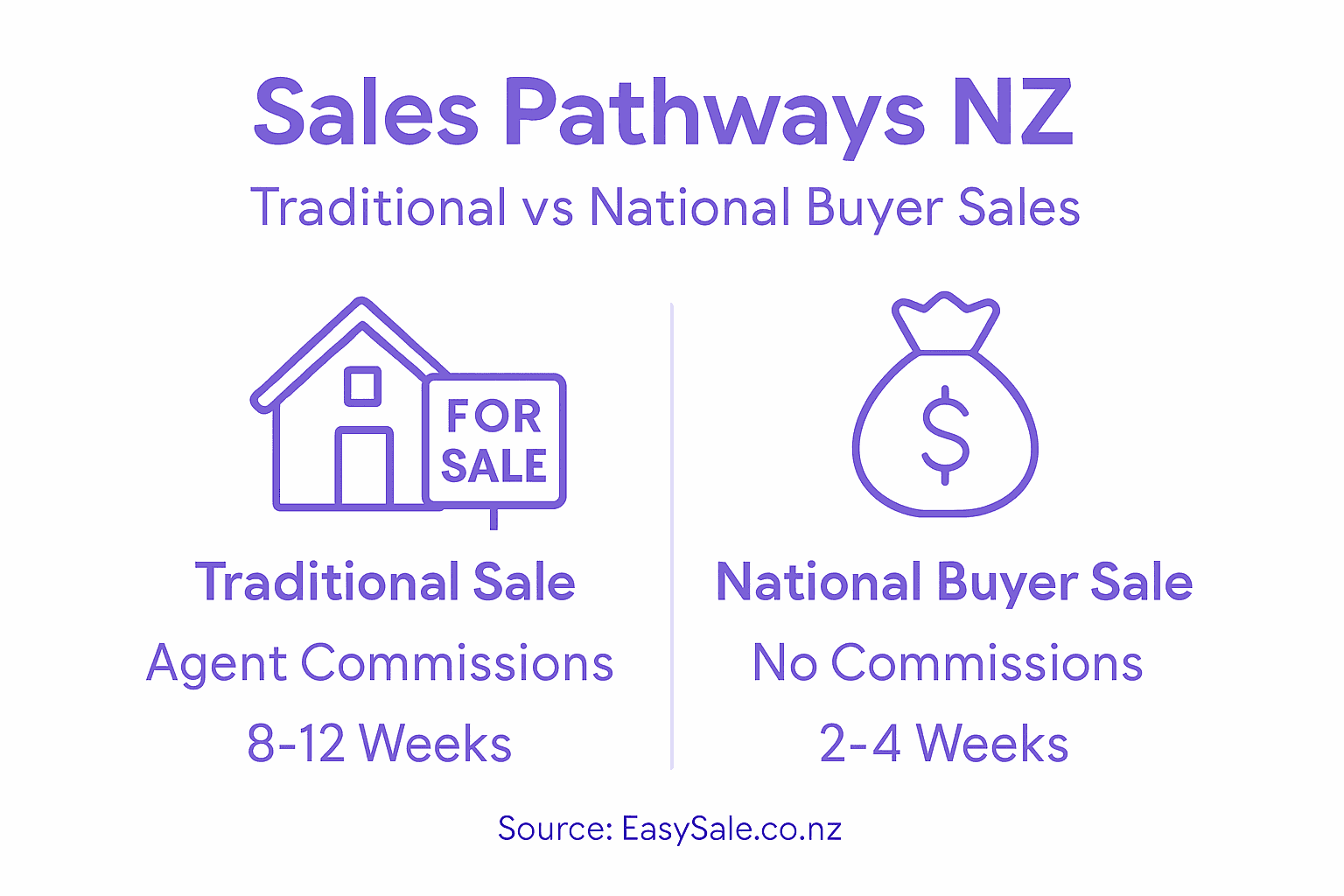
Traditional property sales follow a predictable but lengthy timeline. You list your property with an agent, market it publicly, wait for offers, negotiate with interested buyers, and then manage their financing approval process. This typically takes 8 to 12 weeks from listing to settlement. There are inspection periods, mortgage pre-approvals to arrange, and potential finance conditions that could fall through at the last moment. You’re also competing with other properties in the market, which means your sale depends partly on broader market conditions.
Direct sales to national buyers, particularly cash buyers, compress this timeline dramatically. Some settle in 2 to 4 weeks because there’s no financing to arrange and no lender conditions to satisfy. The buyer either has the money or they don’t. There’s no uncertainty about whether their mortgage will be approved. This speed matters massively if you’re facing financial pressure, need to relocate quickly, or simply want certainty about when your sale will complete. But speed comes with a trade-off. You might receive a lower offer because the buyer is paying for the convenience and certainty they provide.
Costs and Commissions
Traditional agent-assisted sales cost you significantly in commissions and marketing expenses. Real estate agents typically charge 2 to 3 percent of the sale price as commission. On a $600,000 property, that’s $12,000 to $18,000 going directly to the agent. You’ll also pay for professional photography, copywriting, open home hosting, and sometimes advertising in multiple channels. Legal and conveyancing costs still apply. If your property requires inspections or remedial work before it sells, you typically cover those costs too.
Direct sales to national buyers eliminate real estate agent commissions entirely. You save that significant percentage immediately. However, you’ll still need to pay for legal and conveyancing services, typically $1,500 to $3,500. The net savings are substantial. On that same $600,000 property, you could save $10,000 or more by avoiding agent commissions, though your final purchase price might be lower to compensate the buyer for taking on the transaction risk themselves.
The table below summarises direct cash sale versus traditional agent-assisted sale:
| Aspect | Direct Cash Sale | Traditional Sale via Agent |
|---|---|---|
| Settlement Speed | 2–4 weeks typical | 8–12 weeks typical |
| Main Cost | Legal fees only | 2–3% agent commission + fees |
| Market Exposure | One buyer | Competes on open market |
| Negotiation | One-on-one, direct | Multiple offers possible |
| Buyer Certainty | Very high | Dependent on finance approval |
Market Exposure and Negotiation Dynamics
Traditional sales in New Zealand mostly involve private citizens, owner-occupiers, and family investors utilising established sales channels such as real estate agents and auction processes, creating competitive bidding environments where multiple interested parties can drive your sale price upward. When you list traditionally, your property competes in the open market. Multiple buyers can view it, inspect it, and make offers. This competition can drive your price up, particularly in strong markets where demand exceeds supply.
Direct sales to national buyers mean you’re negotiating with a single purchaser. There’s no competitive bidding process. The buyer knows you’re motivated to sell quickly, which can work against you in negotiations. However, national buyers often move decisively. If they like your property and can see its potential, they’ll make a strong offer without the delays and complications of traditional sales. They’re also more likely to purchase properties in any condition, which matters if your property needs significant work.
Conditions and Contingencies
Traditional sales often come with numerous conditions. The buyer’s offer might be conditional on their mortgage approval, a satisfactory building inspection, or pest inspection results. These conditions give buyers an “out” if something doesn’t suit them. You’re left waiting and uncertain about whether the sale will actually proceed. Each failed condition can send you back to the market.
National buyers, especially those offering cash, typically make unconditional offers. What you agree to is what happens. This certainty is valuable when you’re planning your next move. You know exactly when settlement will occur and can arrange your life accordingly.
Pro tip: If you’re facing financial pressure or need certainty, direct sales to national buyers often provide better peace of mind despite potentially lower purchase prices. If you have time and want maximum market exposure, traditional sales might yield higher prices. Assess your priorities before choosing your sales method.
Simplify Your Sale with National Property Buyer Expertise
Selling property in New Zealand comes with unique challenges whether you are dealing with owner-occupiers, individual investors, or corporate buyers. The article highlights how navigating traditional sales can be time-consuming, costly, and stressful especially when dealing with conditions, lengthy settlement periods, and fluctuating market demand. If you need a faster, straightforward solution that cuts through complexity and avoids real estate agent commissions, understanding direct cash sales and national property buyer roles is vital.
EasySale.co.nz offers a trusted way to connect with a national property buyer who will provide a fast, fair cash offer regardless of your property’s condition or your personal circumstances. With our simple three-step process you can avoid common pitfalls such as financing delays and lengthy negotiations. Selling with us means you enjoy:
- No agent fees or commissions saving thousands
- Guaranteed unconditional cash offers for faster settlements
- Expert support that respects your situation and timeline

Ready to turn your property into quick cash with confidence? Visit EasySale.co.nz today to submit your property details. Discover how our national buying service can take the stress out of selling and provide an immediate solution tailored to your needs. Don’t wait on uncertain traditional sales when a transparent effortless process is just a click away. Start now and experience the power of selling direct to a national property buyer.
Frequently Asked Questions
What are the different types of national property buyers in New Zealand?
National property buyers include owner-occupiers, individual investors (often referred to as ‘mum and dad’ investors), corporate and institutional buyers, and non-resident foreign investors. Each group has different motivations and impacts on the real estate market.
How do direct cash sales differ from traditional property sales?
Direct cash sales expedite the process as buyers make unconditional offers without needing financing, leading to settlements in just 2 to 4 weeks. In contrast, traditional sales typically take 8 to 12 weeks due to financing approvals and other contingencies.
What should I consider when selling to national property buyers?
When selling, consider the type of buyer interested in your property. Owner-occupiers focus on lifestyle factors and property condition, while investors may evaluate rental yields and capital growth. Tailoring your marketing to the relevant buyer type can lead to more effective sales outcomes.
What legal protections are involved in property transactions in New Zealand?
The Real Estate Authority oversees property transactions, ensuring proper licensing and professional standards. Additionally, the Property Law Act 2007 mandates that sale agreements be documented in writing, providing legal recourse in case of disputes.
Recommended
