
Property Selling Trends 2025: 10.3% More Sales & Fast Exit Tips

New Zealand homeowners facing financial pressure or urgent life changes often feel trapped by traditional property sale timelines and costs. The 2025 market presents a surprisingly balanced landscape with 10.3% more sales and stable prices, creating opportunities for faster, hassle-free exits without agent involvement. This guide cuts through market confusion to reveal practical strategies that help stressed sellers navigate current trends and achieve quick, commission-free sales on their terms.
Table of Contents
- Overview Of New Zealand’s Property Market In 2025
- Regional Variations And Their Impact On Sellers
- Market Conditions Affecting Sellers Under Financial Stress
- Emerging Seller Preferences: Quick Sales Without Agents
- Practical Strategies For Quick And Hassle-Free Property Sales In 2025
- Common Misconceptions About Selling In Today’s Market
- Summary And Next Steps For Stressed Homeowners
- Discover Fast, Hassle-Free Property Selling Solutions
- Frequently Asked Questions
Key Takeaways
| Point | Details |
|---|---|
| Sales Activity Growing | Sales volumes jumped 10.3% with 80,655 transactions in 2025 despite stable prices, showing active buyer interest. |
| Increased Inventory | Listings rose 9% nationally to 8,769 in August 2025, giving buyers more options and sellers more competition. |
| Regional Price Differences | Southland, Otago, and Canterbury gained 6.3%, 2.9%, 2.2% respectively while Auckland and Wellington dipped slightly. |
| Quick Sales Gain Popularity | Cash offers close in 7-30 days versus 60+ days traditionally, eliminating agent fees and reducing seller stress. |
| Balanced Market Favors Negotiation | Moderate interest rates and improved supply shift success toward flexible settlement timing and realistic pricing. |
Overview of New Zealand’s Property Market in 2025
The 2025 property landscape reveals fundamental shifts reshaping how quickly you can sell. National supply expanded significantly as new listings increased by 9% year-on-year to 8,769 in August 2025, offering buyers abundant choice. More inventory typically creates seller competition, yet sales volumes increased 10.3% year-on-year with 80,655 transactions through 2025.
This paradox tells an important story. Buyers remain active despite elevated mortgage rates, pursuing properties when they find value. Meanwhile, the national average asking price remained stable around $862,652 in August 2025, signaling neither rapid appreciation nor sharp declines.
Several factors drive these conditions:
- Improved seller confidence as market stability returns after years of uncertainty
- Moderate interest rate adjustments making financing slightly more accessible
- Accumulated housing demand from buyers who delayed purchases during higher rate periods
- Increased stock levels preventing bidding wars common in overheated markets
For sellers under financial stress, this balanced environment creates negotiation opportunities absent in frenzied markets. Buyers evaluate properties carefully but move decisively on well-priced homes. Understanding these 2025 property market trends helps you position your sale for speed rather than chasing unrealistic price expectations that extend time on market.
Pro Tip: Balanced markets reward sellers who price realistically from day one. Every week your property sits unsold increases holding costs and buyer suspicion about hidden issues.
Regional Variations and Their Impact on Sellers
National statistics mask dramatic regional differences affecting your sale strategy. Some areas experienced explosive listing growth while others saw modest inventory increases, directly impacting competition levels and buyer behavior.
Bay of Plenty listings grew 46.7%, Gisborne 40.9%, Coromandel 39.1% year-over-year in 2025, flooding those markets with choices. High inventory regions typically require sharper pricing and faster decision making to stand out. Conversely, regions like Southland, Otago, Canterbury saw price growth of 6.3%, 2.9%, 2.2% respectively, indicating sustained demand supporting seller pricing power.

Major metropolitan areas tell different stories. Auckland and Wellington experienced slight price declines amid high listings, creating buyer markets where negotiation flexibility matters more than firm pricing.
| Region | Listing Change | Price Movement | Seller Strategy |
|---|---|---|---|
| Bay of Plenty, Gisborne, Coromandel | +40-47% | Flat/Down | Price competitively, highlight unique features |
| Southland, Otago, Canterbury | Moderate | +2.2-6.3% | Realistic pricing with slight premium potential |
| Auckland, Wellington | High | Slight decline | Emphasize flexibility, quick settlement |
| National Average | +9% | Stable | Balance speed with fair pricing |
These regional market trends mean your location partly dictates whether speed or price optimization should drive your strategy. Financially stressed sellers in high-inventory regions benefit most from quick-sale methods that bypass prolonged market exposure.
Key regional considerations:
- High-growth regions require stronger differentiation or price competitiveness
- Stable-price areas allow modest premiums for well-maintained properties
- Declining-price metros reward speed over holding out for higher offers
- Local employment trends and infrastructure projects influence buyer confidence
Understanding your specific regional dynamics helps set realistic expectations. Sellers who align pricing and timing with local conditions close faster and preserve more net proceeds after holding costs.
Market Conditions Affecting Sellers Under Financial Stress
Economic forces beyond supply and demand directly impact how quickly you can sell and what terms buyers accept. Mortgage rates slightly fell in mid-2025 but remain elevated at approximately 4.89%-5.69%, limiting buyer purchasing power compared to low-rate periods. This environment makes buyer financing approval more uncertain and reduces their capacity to stretch on price.
For sellers facing mortgage stress themselves, these conditions create urgency. Missing payments damages credit ratings and triggers potential mortgagee sales, often resulting in worse outcomes than proactive quick sales. The balanced market shifts seller success toward negotiation skills and flexible settlement timing rather than simply listing and waiting.
Critical factors for stressed sellers:
- Elevated rates mean fewer buyers qualify at your asking price, requiring realistic expectations
- Bank lending criteria remain strict, extending buyer financing approval timelines
- Cash buyers gain negotiation advantage by eliminating financing contingencies
- Seller confidence is recovering with faster sales and stabilized prices, supporting quicker exits
These dynamics favor selling strategies that prioritize certainty over maximum price. Traditional listings expose you to financing fall-throughs, inspection renegotiations, and extended timelines that worsen financial pressure. Quick-sale methods eliminate these uncertainties by accepting slightly lower prices in exchange for guaranteed closes.
Pro Tip: Calculate your true holding costs including mortgage payments, insurance, rates, and utilities. Often a quick sale at 5-10% below market value nets more after three months of avoided costs and preserves your credit rating.
Emerging Seller Preferences: Quick Sales Without Agents
More homeowners discover that speed and simplicity often outweigh pursuing maximum price through lengthy traditional sales. Quick-sale and cash offers are growing in popularity, providing faster transactions and no commission fees, particularly appealing to financially stressed sellers.
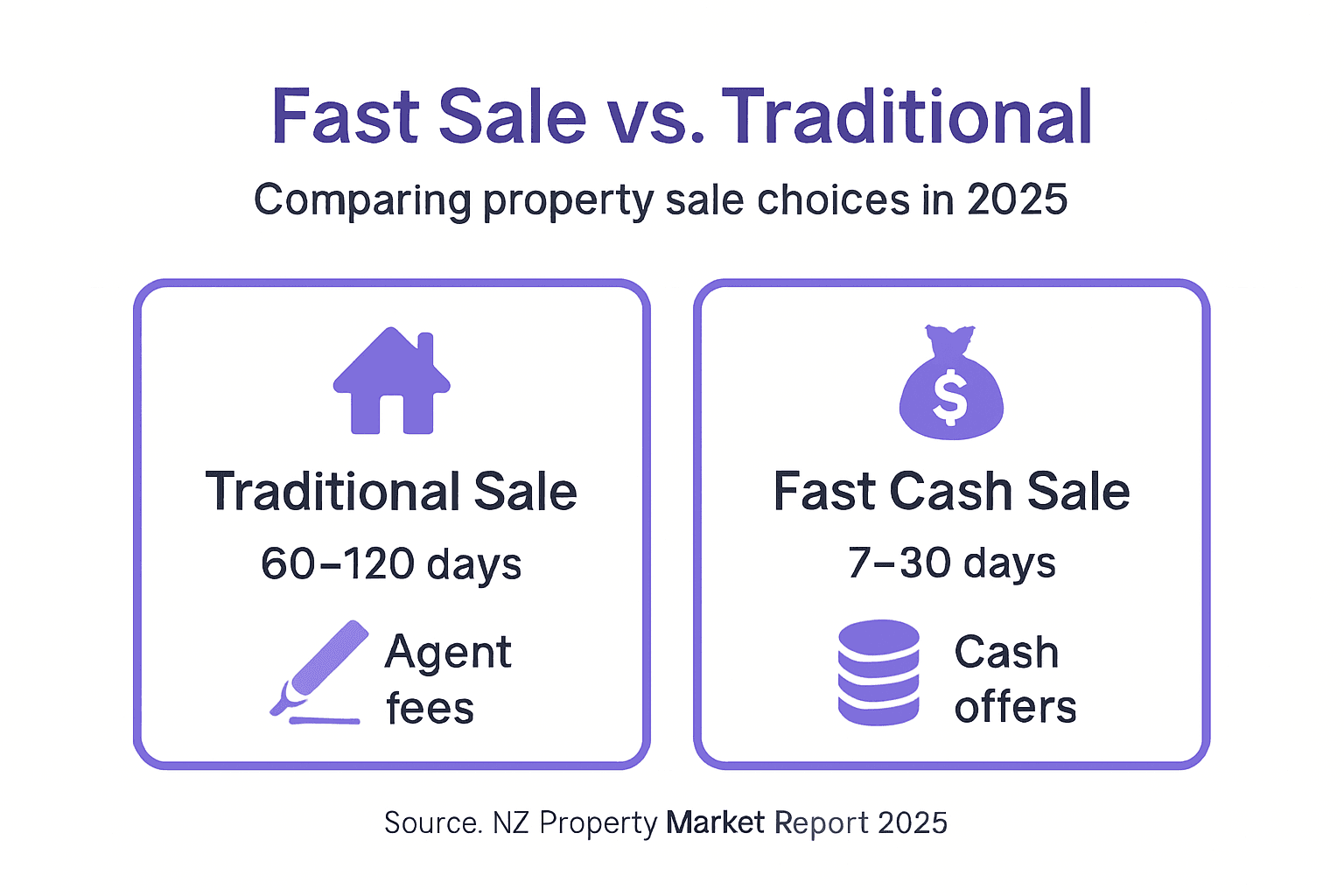
Traditional agent-led sales involve marketing periods, open homes, negotiations, and buyer financing approvals. Traditional listings generally take 60+ days and involve 3-4% agent fees versus quick sales closing in 7-30 days with no fees. For a property selling at $800,000, agent commissions alone consume $24,000-$32,000 that quick sales preserve.
| Factor | Traditional Agent Sale | Quick Cash Sale |
|---|---|---|
| Timeline | 60-120 days average | 7-30 days typical |
| Commission Costs | 3-4% ($24k-$32k on $800k) | $0 |
| Buyer Contingencies | Financing, inspections, appraisals | Minimal or none |
| Marketing Effort | Open homes, staging, photos | Property details submission |
| Sale Certainty | Moderate (deals fall through) | High (cash reduces risk) |
| Best For | Maximizing price, no urgency | Speed, certainty, avoiding fees |
The quick-sale process streamlines everything. You submit property details, receive a no-obligation cash offer within days, and choose your settlement timeline. No repairs, no staging, no weekend open homes disrupting your family.
Motivated sellers often choose simplicity and speed, accepting realistic prices in exchange for reduced stress and certainty. This approach particularly benefits those facing:
- Mortgage arrears threatening credit ratings
- Divorce or relationship separation requiring asset division
- Job relocation on tight timelines
- Inherited properties needing quick estate settlement
- Properties requiring expensive repairs that delay traditional sales
Key advantages of quick sales:
- Eliminate agent commissions, preserving thousands in net proceeds
- Remove financing contingency risk that collapses traditional deals
- Avoid repair costs and ongoing holding expenses
- Control settlement timing to match your financial and personal needs
- Reduce stress through simplified paperwork and guaranteed outcomes
Pro Tip: Calculate your net proceeds for both paths. Traditional sales might achieve 5-10% higher gross prices, but after commissions and 3-4 months of holding costs, quick sales often deliver similar or better net outcomes with far less stress.
Practical Strategies for Quick and Hassle-Free Property Sales in 2025
Translating market knowledge into action requires following proven steps that align with 2025 conditions. These strategies help financially stressed homeowners navigate current realities effectively.
- Assess Your True Urgency and Property Condition. Honestly evaluate whether you face immediate financial pressure or can wait months for optimal pricing. Properties needing significant repairs suit quick sales better since traditional buyers demand concessions or walk away after inspections.
- Research Your Regional Market Thoroughly. Check recent sales in your area, current listing volumes, and average days on market. High-inventory regions require more aggressive pricing or alternative sale methods. Understanding local dynamics prevents unrealistic expectations that extend your timeline.
- Leverage Cash-Offer Platforms for Speed and Certainty. Using cash-offer platforms avoids delays and commission costs, suiting sellers needing speed and certainty. These services evaluate your property quickly and present offers within days, eliminating traditional sale uncertainties.
- Price Realistically Based on Condition and Market. Flexible settlement timing and realistic pricing are key negotiation tools in 2025’s balanced market. Overpricing triggers extended market time and buyer skepticism. Check comparable sales and adjust for your property’s condition honestly.
- Offer Flexible Settlement Terms. Buyers value settlement flexibility almost as much as price. Accommodating their financing timeline or preferred move date strengthens your negotiating position and speeds commitment.
- Prepare Documentation in Advance. Gather title documents, rates statements, LIM reports, and building consents before engaging buyers. Ready paperwork eliminates delays during negotiation and settlement, particularly crucial for quick sales.
Practical steps for fast property sales include contacting multiple cash buyers if pursuing that route, comparing offers transparently, and verifying buyer credibility through references or proof of funds. Never commit without understanding full terms including settlement timeline, any conditions, and payment method.
Pro Tip: If pursuing quick sales, contact 2-3 reputable cash buyers simultaneously. Comparing offers ensures competitive pricing while maintaining speed advantages. Request written offers specifying all terms clearly before committing.
These fast sale strategies work because they acknowledge market realities rather than fighting them. Sellers who embrace current conditions and prioritize speed achieve better outcomes than those clinging to outdated expectations from overheated market periods.
Common Misconceptions About Selling in Today’s Market
Several persistent myths mislead sellers into poor timing or unrealistic expectations. Correcting these beliefs helps you avoid costly mistakes.
Myth: Property Prices Will Rapidly Increase Everywhere. Many sellers expect 2021-style appreciation to return, causing them to overprice and wait indefinitely. Reality shows home prices mostly stable or slightly down nationally, contrary to beliefs in continual rapid rises. Regional variations exist but national trends favor gradual movements, not explosive growth.
Myth: Agents Always Deliver Higher Net Proceeds. Commission costs consume 3-4% of sale prices, and marketing expenses add more. After holding costs during extended listing periods, many sellers net similar or less compared to quick sales at slightly lower gross prices. The certainty and speed of quick sales often deliver superior financial and emotional outcomes.
Myth: Waiting Longer Guarantees Better Prices. Balanced markets lack upward price pressure. Properties sitting unsold signal buyer concerns about pricing or condition, reducing eventual offers. Fresh listings attract more attention and competitive interest than stale ones.
Myth: Only Desperate Sellers Accept Cash Offers. Sophisticated investors, business owners needing liquidity, and strategic sellers regularly choose quick sales for convenience and certainty, not desperation. Understanding these selling misconceptions helps you evaluate options objectively.
Key realities for 2025:
- Most regions experience stable prices requiring realistic seller expectations
- Commission costs significantly impact net proceeds, often matching quick-sale discounts
- Extended listing periods increase holding costs and reduce buyer interest
- Quick sales suit various seller situations beyond financial distress
Recognizing these truths prevents decision paralysis and helps you choose strategies matching your actual circumstances rather than hoped-for market conditions.
Summary and Next Steps for Stressed Homeowners
The 2025 New Zealand property market offers stressed sellers genuine opportunities for faster, less complicated exits. Balanced conditions provide negotiation power while increased buyer activity creates viable demand for well-priced properties.
Key insights to remember:
- Sales volumes grew 10.3% with stable prices, indicating active buyers without price pressure
- Regional variations significantly impact strategy, with high-inventory areas favoring speed
- Elevated mortgage rates reduce buyer capacity, rewarding flexible and realistic sellers
- Quick-sale methods eliminate agent fees and close in 7-30 days versus 60+ traditionally
- Understanding true net proceeds after costs reveals quick sales often match traditional outcomes
Your next steps depend on urgency. Assess your financial timeline honestly, research your regional market conditions, and calculate net proceeds for different sale methods. Many sellers discover that preserving equity through quick action beats holding out for maximum price while accumulating costs and stress.
Property buying services offer practical solutions when traditional timelines don’t match your needs. Taking action now prevents financial deterioration and preserves more options than waiting until circumstances force less favorable outcomes.
Discover Fast, Hassle-Free Property Selling Solutions
Applying these 2025 market insights becomes simple when you access the right resources. If traditional agent sales don’t match your timeline or financial situation, alternative solutions exist that eliminate complexity and cost.
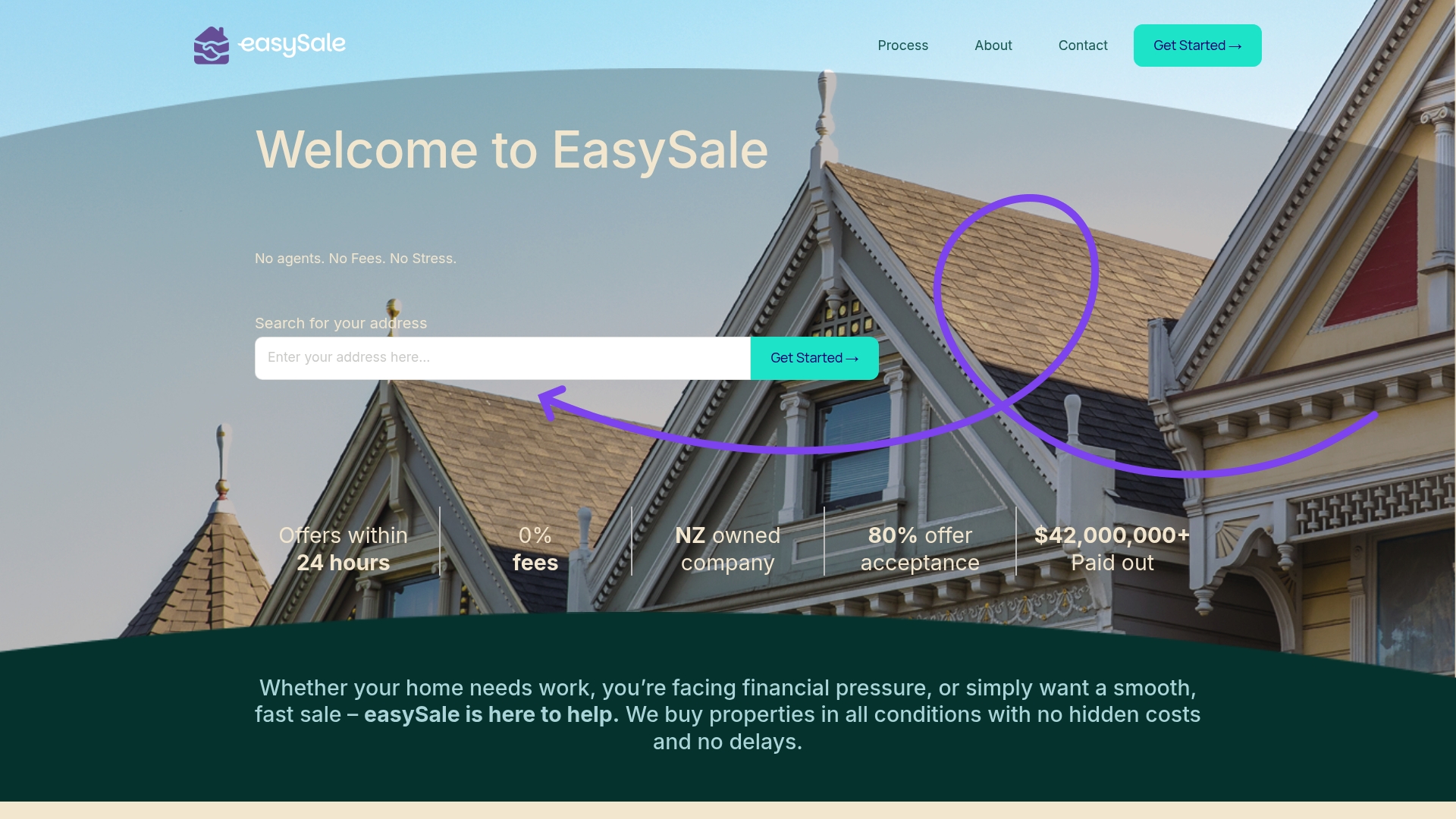
EasySale specializes in helping New Zealand homeowners achieve fast, certain property sales without agent involvement or commission fees. The process removes traditional barriers through straightforward cash offers, flexible settlement timing matching your needs, and acceptance of properties in any condition. Whether facing mortgage stress, relationship changes, or simply wanting hassle-free transactions, exploring property buying services reveals how quickly you can move forward.
Thousands of Kiwi homeowners discover that quick property sales deliver better overall outcomes when speed and certainty matter most. Learn exactly how the simplified selling process works and request your no-obligation property assessment today.
Frequently Asked Questions
How much faster is selling property through quick-sale methods compared to traditional agent sales?
Quick-sale methods typically close transactions in 7-30 days compared to 60-120 days for traditional agent sales. This speed benefits sellers needing immediate liquidity or relief from financial pressure. Cash buyers eliminate financing contingencies and lengthy approval processes that extend traditional timelines.
Are cash offers always lower than traditional sale prices?
Cash offers may be 5-10% lower in gross price but eliminate 3-4% agent commissions and months of holding costs. Many motivated sellers find net outcomes similar or better after accounting for saved expenses. The certainty and speed often deliver superior value when considering total financial and emotional costs.
How do regional differences affect my chances of a fast sale in 2025?
Regions with rising listings face more seller competition, requiring sharper pricing or alternative sale methods for speed. Areas with stronger price growth may see fewer offers but support higher pricing if you can wait. Understanding your specific regional dynamics helps set realistic expectations and choose optimal strategies.
Should I make repairs before selling or accept quick cash offers as-is?
Quick cash buyers purchase properties in any condition, eliminating repair costs and delays. Traditional buyers typically demand concessions after inspections or walk away from properties needing work. For sellers facing financial stress, avoiding repair expenses and delays usually outweighs potential price premiums from repairs.
Recommended
