
Why Sell After Property Neglect in New Zealand

Unexpected property neglect can wipe out up to 35 percent of a home’s value, causing financial headaches for New Zealand families already feeling stressed. Whether you’re managing an inherited house, responding to sudden damage, or racing against looming costs, overlooking small repairs quickly adds up. Staying ahead of problems is especially vital with australian buyers often seeking potential bargains. This guide reveals common signs of neglect and practical ways for homeowners to protect value or sell faster when life’s changes demand urgent action.
Table of Contents
- Recognising Property Neglect Issues Early
- Types and Causes of Neglect in NZ Homes
- Legal Liabilities for Neglected Properties
- Financial Risks and Market Value Decline
- Smoother Sale Options for Damaged Homes
Key Takeaways
| Point | Details |
|---|---|
| Early Detection is Crucial | Homeowners should regularly assess their property for signs of neglect to prevent costly repairs and maintain value. |
| Understand Legal Responsibilities | Familiarise yourself with local property regulations to avoid legal liabilities associated with neglect. |
| Financial Implications of Neglect | Neglected properties can lose value significantly, impacting equity and potential borrowing capacity. |
| Strategic Selling of Damaged Homes | Explore various selling strategies for properties with damage to minimise losses and attract buyers. |
Recognising Property Neglect Issues Early
Property neglect can silently erode your home’s value and structural integrity before you even realise something is wrong. In New Zealand, where weather conditions and environmental factors can accelerate property deterioration, early recognition of neglect signs is crucial for homeowners seeking to protect their most significant asset.
Identifying property neglect requires a keen eye and understanding of systematic preservation challenges unique to residential spaces. Typical warning signs include persistent moisture damage, structural cracks, outdated electrical systems, and evidence of unaddressed pest infestations. These indicators suggest more than cosmetic issues - they represent potential long-term risks that could dramatically reduce your property’s market value and livability.
Key visual indicators of property neglect encompass multiple domains:
- Exterior structural damage
- Interior moisture and mould problems
- Deteriorating roofing and guttering systems
- Poorly maintained landscaping
- Signs of unrepaired water damage
- Electrical systems showing age or malfunction
Professional building inspectors recommend comprehensive annual assessments to catch these issues early. Regular maintenance isn’t just about aesthetics - it’s a strategic financial decision that can save thousands in potential repair costs. Understanding these signals allows homeowners to take proactive steps before minor problems escalate into major, expensive renovations.
Pro Tip: Consider scheduling a professional property inspection every 12 months, focusing on areas prone to hidden damage like foundations, roof spaces, and internal wall cavities.
Types and Causes of Neglect in NZ Homes
Property neglect in New Zealand represents a complex interplay of environmental, economic, and social factors that can gradually compromise a home’s structural integrity and market value. Understanding these nuanced challenges helps homeowners recognise potential risks before they escalate into significant problems.
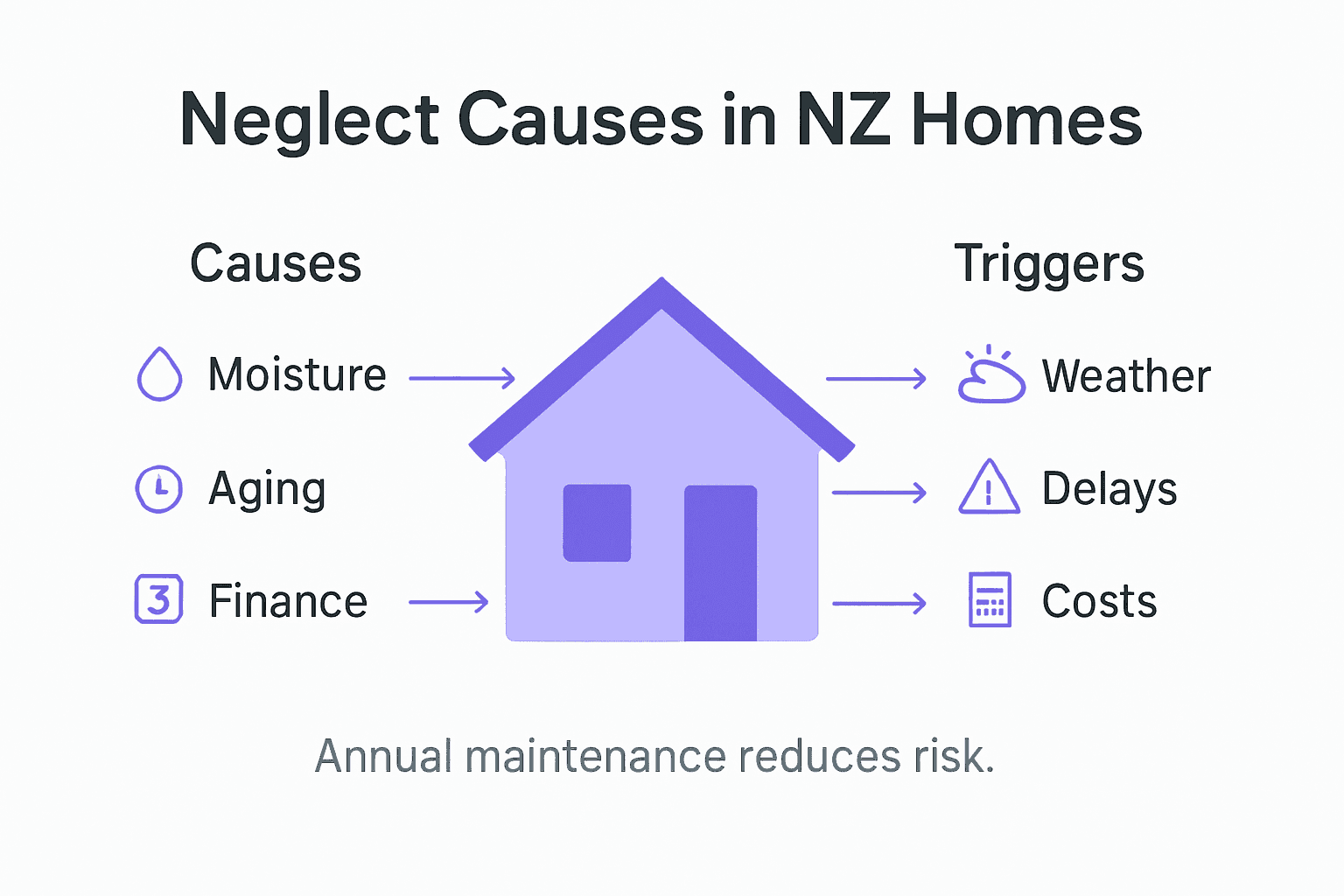
In exploring the systematic patterns of residential deterioration, several primary types of property neglect emerge. Structural neglect often stems from deferred maintenance, where homeowners delay essential repairs due to financial constraints or limited technical knowledge. Environmental neglect relates to how properties interact with New Zealand’s unique climatic conditions, including persistent moisture exposure, rapid temperature fluctuations, and coastal salt air degradation.
The key categories of property neglect include:
- Structural deterioration (foundation issues, wall cracks)
- Moisture and water damage
- Electrical system obsolescence
- Pest infestation zones
- Roof and external cladding breakdown
- Landscaping and exterior surface degradation
Economic factors play a significant role in property neglect. Many homeowners struggle with maintenance costs, especially in regions experiencing economic uncertainty. Comprehensive research from social development agencies suggests that limited household income, unexpected repair expenses, and inadequate financial planning contribute substantially to progressive property deterioration.
Pro Tip: Create a dedicated home maintenance fund by setting aside 1-2% of your property’s value annually to address potential repair needs before they become critical problems.
Here’s a summary of how common causes of property neglect in New Zealand interact and their main consequences:
| Neglect Cause | Typical Trigger | Short-Term Outcome | Long-Term Risk |
|---|---|---|---|
| Deferred Maintenance | Financial constraints | Small repairs overlooked | Structural failure, costly repairs |
| Environmental Exposure | Harsh NZ climate | Early material wear | Widespread moisture damage |
| Insufficient Upkeep | Lack of knowledge | Minor defects ignored | Major pest or rot infestations |
| System Obsolescence | Ageing infrastructure | Outdated systems in use | Insurance claim disputes |
Legal Liabilities for Neglected Properties
Property neglect in New Zealand carries significant legal implications that can expose homeowners to substantial financial and regulatory risks. Understanding these potential consequences is crucial for protecting both property value and personal legal standing.

Under comprehensive tenancy and property regulations, property owners face multiple legal responsibilities regarding property maintenance. Local councils and regulatory bodies can impose substantial penalties for properties that fail to meet minimum habitability and safety standards. These legal frameworks encompass building codes, health regulations, and specific requirements related to structural integrity, electrical systems, and environmental safety.
Key legal liabilities for property owners include:
- Potential fines from local councils
- Mandatory remediation orders
- Potential civil liability for tenant or neighbour damages
- Risk of property devaluation
- Potential insurance claim rejections
- Mandatory compliance notices
The legal landscape of property neglect is complex, with multiple statutory frameworks determining owner responsibilities. Homeowners can face significant financial penalties if their property deterioration creates risks to public safety or neighbouring properties. Local authorities have increasingly stringent powers to enforce maintenance standards, including the ability to issue compliance notices, levy substantial fines, and in extreme cases, force property sales or demolitions.
Pro Tip: Maintain comprehensive property documentation, including maintenance records and inspection reports, to protect yourself legally and demonstrate proactive property management.
Financial Risks and Market Value Decline
Property neglect in New Zealand represents a significant financial threat that can rapidly erode home equity and create long-term economic challenges for homeowners. The cascading impact of deteriorating property conditions extends far beyond cosmetic concerns, potentially triggering substantial market value depreciation.
Analysing macroprudential financial risks, research indicates that properties showing signs of prolonged neglect can experience value reductions ranging from 10% to 35% compared to well-maintained homes. These value declines stem from multiple interconnected factors including structural damage, outdated systems, and reduced overall property attractiveness to potential buyers.
Key financial risks associated with property neglect include:
- Substantial reduction in market valuation
- Increased maintenance and repair costs
- Higher insurance premiums
- Reduced borrowing capacity
- Potential mortgage refinancing challenges
- Limited buyer interest during resale
The broader economic implications are significant, with comprehensive financial stability analyses revealing that neglected properties contribute to systemic market inefficiencies. Local market dynamics in New Zealand demonstrate that properties requiring extensive repairs often sell at significantly discounted rates, with potential buyers factoring anticipated renovation costs into their purchasing calculations.
Pro Tip: Invest in annual professional property inspections and address maintenance issues promptly to prevent cumulative value degradation and maintain your home’s market competitiveness.
Smoother Sale Options for Damaged Homes
Navigating property sales with significant damage requires strategic planning and a nuanced understanding of New Zealand’s real estate market. Homeowners facing substantial property deterioration can still achieve successful sales by exploring alternative approaches that minimise financial losses and streamline the transaction process.
Selling strategies for properties with existing damage involve several critical considerations. Transparency becomes paramount, with sellers needing to disclose known issues while simultaneously presenting viable solutions that make the property attractive to potential buyers. This approach involves understanding market expectations, legal obligations, and creative selling techniques that transform property challenges into potential opportunities.
Key sale options for damaged homes include:
- ‘As is, where is’ property sales
- Cash buyer transactions
- Partial repair and sale strategies
- Insurance claim transfers
- Discounted pricing with full damage disclosure
- Targeted marketing to investors and renovation specialists
Understanding comprehensive consumer protection guidelines helps sellers navigate complex sales scenarios. Professional property buyers specialising in damaged properties can offer streamlined solutions, providing immediate cash settlements that bypass traditional real estate marketing challenges. These strategies can significantly reduce stress and financial uncertainty for homeowners facing substantial property maintenance issues.
This table compares the effectiveness of different strategies for selling damaged properties in New Zealand:
| Sale Strategy | Pros (Benefits) | Cons (Risks) | Ideal For |
|---|---|---|---|
| ‘As is, where is’ sale | Fast process, less upfront cost | Lower sale price, limited buyers | Severe damage, urgent sale |
| Cash buyer transaction | Immediate settlement, certainty | Heavily discounted offers | Time-poor vendors |
| Partial repair & sale | Better market price, flexible | Investment required, longer process | Owners with some resources |
| Insurance claim transfer | Cost offset, reduced liability | Complex to organise, may deter buyers | Insured homes after disasters |
Pro Tip: Obtain a professional property assessment before listing to understand exact damage extent and develop a strategic selling approach that maximises your potential return.
Sell Your Neglected Property Quickly and Stress-Free with easySale.co.nz
If you are facing the challenges of property neglect in New Zealand such as structural damage, costly repairs or legal liabilities, it can feel overwhelming to put your home on the market. The financial risks and decline in market value discussed in the article highlight why many homeowners want a smooth sale option without more delay and uncertainty. easySale.co.nz offers a straightforward solution designed to ease your burden and help you sell your property fast, regardless of its condition or repair needs.

Take control of your situation today by submitting your property details for a no-obligation, fast cash offer. With easySale.co.nz, you avoid agent fees, lengthy listings and stressful negotiations. Our simple process honours your timeline and respects your circumstances, giving you the freedom to move forward. Don’t let property neglect drag you down any longer. Discover how our trusted service can deliver a fair cash offer quickly and get you the relief you deserve. Visit easySale.co.nz now and explore your options or learn more about selling damaged properties.
Frequently Asked Questions
What are the signs of property neglect that may prompt a sale?
Signs of property neglect that may prompt a sale include persistent moisture damage, structural cracks, outdated electrical systems, and pest infestations. If these issues are evident, it’s essential to consider selling to minimise further financial loss.
How can I sell a neglected property without incurring high costs?
Homeowners can sell a neglected property effectively by considering an ‘as is, where is’ sale, targeting cash buyers, or marketing it to investors looking for renovation opportunities. Transparency about the property’s condition can also attract buyers willing to take on repairs.
What are the potential financial implications of selling a neglected home?
Selling a neglected home can lead to substantial market value reductions, higher maintenance costs, and potential insurance claim rejections. It’s crucial to assess these financial risks and possibly invest in minor repairs to enhance marketability.
Is it legally required to disclose property neglect when selling?
Yes, homeowners have a legal obligation to disclose known issues or defects with the property. Failure to disclose can result in legal liabilities, so transparency is crucial when selling a neglected property.
Recommended
