
Selling Your NZ Home to Buy Again? Check the Mortgage First


Yes, you can sell quickly to free up funds for your next purchase, and several practical routes make it possible: a direct cash buyer, a sell-as-is arrangement, or bridging finance arranged through your bank. The main thing to check first is how your mortgage is structured, because some lenders control where your sale proceeds go before you see a cent of them.
TL;DR:A direct cash offer can provide a chosen settlement date without buyer financing delays, but it usually comes in below open market value.Ask your lender in writing whether an all obligations mortgage can direct sale proceeds to other debts, and confirm whether you can port the loan.Model net proceeds with your lawyer, including mortgage, legal fees, agent commission, and bridging interest; a $650,000 sale example netted about $230,000.Check the bright line period and main home exclusion against your ownership history, because a quick sale can make part of your gain taxable.For conditional offers, have a lawyer review the agreement, require proof of financing or another home sale, and set a realistic sunset date.
EasysaleExplore a Direct Home SaleEasysale buys New Zealand homes in any condition, with a straightforward process for homeowners looking to sell quickly.Visit Easysale
Table of Contents
- Ways to sell quickly and trade-offs between speed, price and certainty
- Step-by-step checklist to sell fast so you can buy
- Financial and tax issues that determine how much cash you actually free up
- Legal essentials: your sale and purchase agreement and your lawyer’s role
- When a direct cash sale makes practical sense
- EasySale: a direct route to free up funds quickly
- FAQ
- Sources
Ways to sell quickly and trade-offs between speed, price and certainty
Every fast-sale route trades something for speed. Knowing what you’re giving up (or gaining) helps you pick the right one for your situation.
A direct cash buyer offers the most certainty. You get an offer without listing, open homes, or waiting on buyer finance to clear, and settlement happens on a date you choose. The trade-off is usually price: a cash offer tends to sit below what a marketed sale might achieve, because the buyer is taking on the speed and risk themselves.
Sell as-is or damaged-house offers suit homeowners whose property needs work they can’t afford or don’t have time for before selling. These buyers assess the property in its current state and remove the need for repairs, staging, or even a thorough clean-up.
Auctions, deadline sales, and unconditional offers can move fast too, but they come with less certainty upfront. An auction sets a firm date but doesn’t guarantee a result, and a deadline sale can stretch out if offers come in low or conditional.
Conditional offers, particularly where the buyer needs to sell their own home first, are the slowest and riskiest option when you’re racing to fund a purchase. If you accept one, you’re relying on someone else’s sale going through on time.
- Cash buyer or direct purchase: fastest settlement, less negotiation, typically a lower price than open-market value.
- Sell as-is: avoids repair costs and delays, suited to damaged or hard-to-finance homes.
- Auction or deadline sale: firm timelines but outcome depends on market interest on the day.
- Conditional offer (sale of another home): slower and riskier, needs careful sunset clause management.
Step-by-step checklist to sell fast so you can buy
Selling and buying at the same time works best when you follow a clear sequence rather than juggling everything at once.
- Call your lender first. Ask exactly how your sale proceeds will be applied, whether you need to port your existing loan, and whether bridging finance is an option. Banks can have specific rules about all-obligations mortgages that affect what you actually walk away with.
- Get pre-approval for your next purchase and ask your lawyer or conveyancer for a realistic estimate of net proceeds once your mortgage, legal fees, and any tax are accounted for.
- Choose your selling route. Decide between a cash buyer, auction, deadline sale, or listing with an agent, then prepare the minimum documents and any essential presentation work the route requires.
- Evaluate offers carefully. If a buyer says their finance is approved or their own home is under contract, ask for evidence in writing, and build a sunset clause into any conditional agreement so you’re not left waiting indefinitely.
- Plan your move. Settlement-day logistics often trip people up, so line up your moving date and, if needed, temporary accommodation before settlement rather than after.
Pro Tip: Ask your bank in writing how sale proceeds will be allocated before you accept any offer, so there are no surprises on settlement day.
For a fuller walkthrough of juggling both transactions, our guide on buying and selling houses at the same time covers the sequencing in more detail, and our piece on avoiding deposit timing failures walks through common settlement mistakes.
Financial and tax issues that determine how much cash you actually free up
The sale price on paper rarely matches what lands in your account. Several factors shrink that figure before you can use it.
If your mortgage is structured as an all-obligations loan, your bank can direct sale proceeds toward other debts you hold with them rather than letting you keep the full amount. This is worth confirming with your lender before you count on a specific sum for your next deposit, according to Banking Ombudsman guidance on how banks handle sale proceeds.
Bridging finance can cover the gap if your purchase settles before your sale does, but interest accrues the whole time you’re carrying both loans. Settled for legal fees, reports, advertising, and possible bridging interest, because delays on either side of the transaction add up quickly.

The bright-line test can also make part of your sale taxable. According to IRD’s bright-line guidance, selling within the bright-line period can trigger tax on any gain, and the main-home exclusion has strict rules around how long you’ve lived there and how often you’ve used the exclusion before.
A simple worked example: say a home sells for $650,000 with a $400,000 mortgage remaining. After legal fees, agent commission, and bridging interest of roughly $15,000 combined, the seller might net closer to $230,000, not the $250,000 difference between sale price and mortgage balance.
- Confirm with your bank whether your mortgage is all-obligations before relying on a proceeds estimate.
- Ask your lawyer to model your net proceeds, not just the sale price minus mortgage.
- Check the bright-line period and main-home exclusion against your own ownership history.
Banks sometimes apply sale proceeds to reduce other loans because many mortgages carry all-obligations clauses, as noted in Banking Ombudsman case guidance. That single clause can change your entire funding plan for the next purchase.
For more on how tax applies to your specific sale, see our breakdown of property sale tax basics and the tax implications of selling property in more detail.
Legal essentials: your sale and purchase agreement and your lawyer’s role
A fast sale still needs a properly reviewed contract. Rushing this step is where sellers most often lose money or time.
Have your lawyer or conveyancer review every sale and purchase agreement before you sign, even when a cash offer looks simple. According to REA’s sale and purchase agreement guidance, agreements commonly include conditions such as a sale-of-another-home clause, sunset dates, and specific deposit handling terms, and all of these need checking before you commit.
- Ask your lawyer to flag any sale-of-another-home condition and set a realistic sunset date.
- Confirm how and when the deposit is held and released.
- Request written evidence if a buyer claims finance approval or a sale under contract.
- Resolve any disputed terms before settlement, not after, since post-settlement disputes are harder and costlier to fix.
When a direct cash sale makes practical sense
Some situations make certainty worth more than chasing the highest possible price: a relocation on a fixed date, a separation that needs a clean break, or an inherited property nobody has time to manage. In those moments, a straightforward buyer process beats weeks of open homes and conditional offers. We have a simple three-step approach: submit your details, receive an offer, and settle on your timeline, designed to meet that need. The most common mistake we see is sellers waiting too long to get clarity from their bank, only to find proceeds are tied up when they need them most.
— Aaron
EasySale: a direct route to free up funds quickly
When speed and certainty matter more than maximizing the sale price, a direct route involves submitting your property details, receiving a no-obligation cash offer, and settling on a date that suits your move.
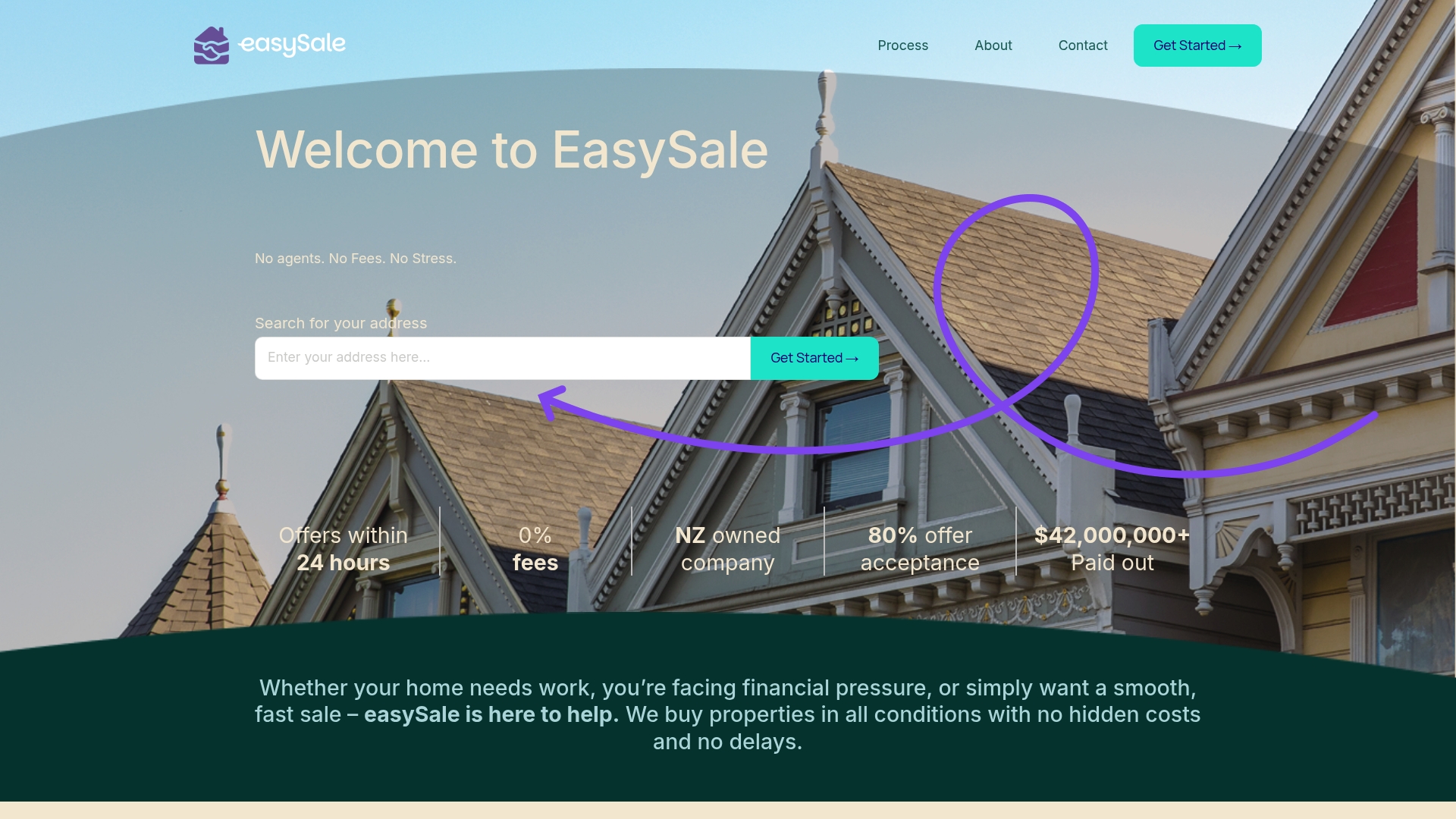
This suits sellers facing an urgent timeline, a damaged or unconsented home, or anyone who wants to avoid agent commissions altogether. Explore our sell fast option, our approach to damaged or as-is homes, or get started at EasySale today.
This article is general information, not a substitute for advice from a qualified financial advisor. Consult a qualified financial professional about your own circumstances before acting on anything here.

FAQ
Can I sell my house fast enough to fund a new purchase?
Yes, a direct cash buyer or a sell-as-is arrangement can settle in days rather than months, giving you funds before your next purchase needs to close. Your bank’s rules on how proceeds are applied, especially with all-obligations mortgages, will determine how much of that money you can actually use, per Banking Ombudsman guidance.
Will I owe tax if I sell quickly to buy another home?
You may, depending on how long you’ve owned the property and whether the main-home exclusion applies. IRD’s bright-line rules set the conditions, so it’s worth checking your specific timeline before assuming any gain is tax-free.
What does EasySale charge to buy my house?
We don’t charge agent commissions or fees to the seller, and our offer prices are provided on a no-obligation basis once we’ve reviewed your property details. Specific figures aren’t published, since each offer reflects the property’s condition and circumstances.
Do I need a lawyer if I’m selling to a direct cash buyer?
Yes, a lawyer or conveyancer should still review your sale and purchase agreement even in a direct sale, checking settlement dates, deposit handling, and any conditions. REA’s contract guidance outlines the clauses worth paying closest attention to.
What happens if my bank won’t release my sale proceeds?
If your mortgage is structured as all-obligations, your bank can apply proceeds to other debts before releasing funds to you. Contact your lender early to confirm this and discuss options like porting your loan, as outlined in Banking Ombudsman case notes.
Sources
- Settled
- The bright-line test | IRD
- Freeing up capital | Banking Ombudsman
- Sale and purchase agreement guide | REA


