
Smooth property sales in NZ: A hassle-free guide

TL;DR:A smooth property sale in New Zealand proceeds without delays, disputes, or surprises.Proper preparation, realistic pricing, and professional support are essential for a quick, hassle-free sale.Direct cash buyers provide a fast, condition-free solution, ideal for urgent or damaged property sales.
Many homeowners assume selling property in New Zealand is always a drawn-out, stressful ordeal. The truth is, a smooth property sale is entirely achievable when you approach it with the right preparation, realistic expectations, and a clear understanding of your options. Whether you’re facing financial pressure, dealing with a damaged home, or simply need to move on quickly, this guide breaks down exactly what a smooth sale looks like and how you can make it happen without unnecessary drama.
Table of Contents
- What does a smooth property sale mean in New Zealand?
- Key steps for a stress-free sale: From preparation to settlement
- Comparing sale methods: Private, agent, and direct cash buyer
- Common obstacles and how to overcome them
- What most homeowners overlook about smooth property sales
- Need a fast and smooth property sale? Discover your options
- Frequently asked questions
Key Takeaways
| Point | Details |
|---|---|
| Smooth sale essentials | Clear preparation, legal transparency, and proactive communication are crucial for a hassle-free property sale. |
| Fast sale routes | Choosing direct cash buyers or properly prepared private sales can dramatically reduce timelines, especially for urgent cases. |
| Preventing delays | Early preparation of paperwork and property condition helps minimise disputes and settlement complications. |
| Choose method wisely | Your sale method—private, agent, or direct—should fit your specific timeline and property needs. |
What does a smooth property sale mean in New Zealand?
Not every sale is created equal. Some take months, involve disputes, and leave sellers exhausted. Others close quickly and cleanly. So what separates the two?
A smooth property sale in New Zealand is one that proceeds without significant delays, disputes, or unexpected issues, typically involving proper preparation, accurate pricing, professional support, and clear legal processes leading to timely settlement.
In practical terms, a smooth sale means you receive a fair price, paperwork is handled correctly, and the settlement date arrives without surprises. It means buyers don’t pull out at the last minute, legal conditions are met on time, and you walk away with funds in your account when expected.
For homeowners facing urgent circumstances, the traditional real estate process can feel overwhelming. Listings can sit on the market for weeks. Negotiations drag. Conditional offers fall through. These delays are especially painful when you’re managing financial stress, a relationship breakdown, or a property that needs significant repairs.
A smooth sale is built on four core attributes:
- Professional support: Whether from an agent, solicitor, or direct buyer, having the right people involved prevents costly mistakes.
- Sound preparation: Repairs, documentation, and accurate pricing reduce friction before it starts.
- Legal clarity: Understanding the sale and purchase agreement, conditions, and settlement obligations keeps things on track.
- Realistic pricing: Overpriced properties sit. Accurately priced homes attract serious buyers quickly.
If your situation is time-sensitive, reviewing hassle-free sale tips before you list can save you weeks of unnecessary back-and-forth.
Key steps for a stress-free sale: From preparation to settlement
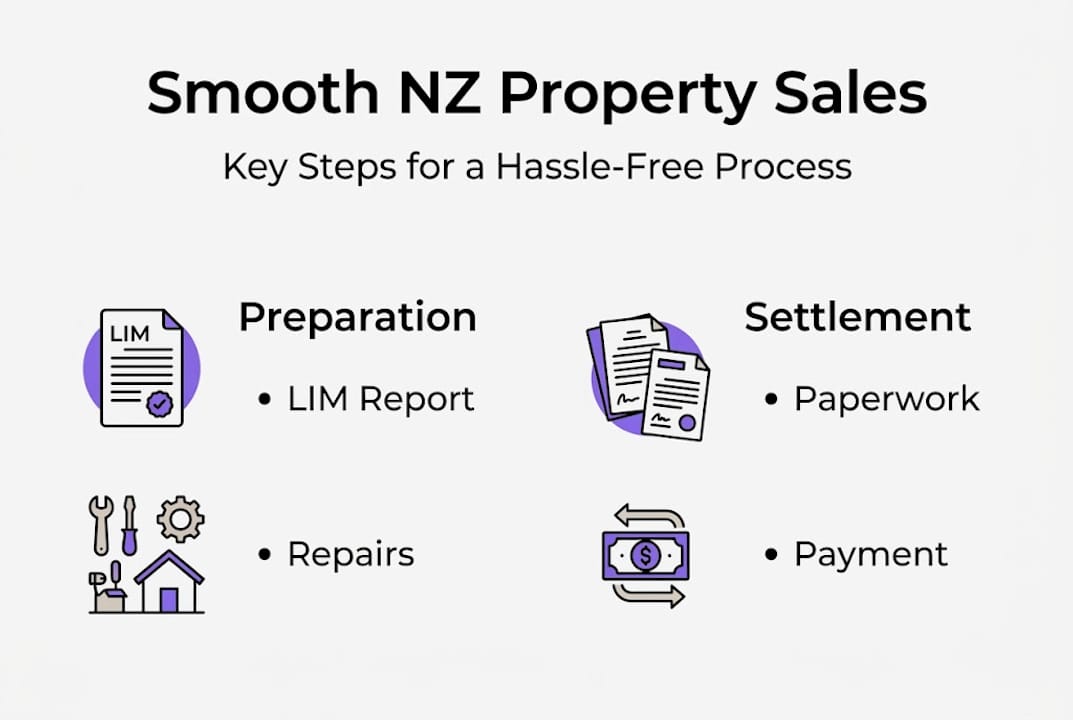
Understanding the stages of a property sale removes a lot of the anxiety. The key mechanics include property preparation, choosing a sale method, marketing, signing the sale and purchase agreement, satisfying conditions, and reaching settlement. Here’s how each stage works in practice.
- Property preparation: Start with repairs that affect liveability or valuation. Get a current market appraisal so your price is grounded in reality, not hope. Gather your title documents and rates information early.
- Choose your sale method: Private negotiation, auction, and deadline sale each suit different situations. Auctions create urgency. Deadline sales attract multiple offers. Private negotiation gives you more control.
- Marketing your property: Good photography, accurate descriptions, and the right platforms attract serious buyers faster. Rushed or poor-quality listings waste time.
- Sale and purchase agreement: This is the binding legal document. Conditions such as finance approval, LIM (Land Information Memorandum) report, and builder’s inspection are typically included here.
- Satisfying conditions: This is where many sales stall. Buyers need time to arrange finance or review reports. Having your LIM and builder’s report ready in advance speeds this up considerably.
- Settlement: The final stage where title transfers and funds are exchanged. Your solicitor manages this process.
Pro Tip: Order your LIM report and arrange a builder’s inspection before you list. When buyers receive these upfront, conditional periods shorten significantly and the risk of a sale falling over drops.
| Stage | Typical timeframe | Key risk |
|---|---|---|
| Preparation | 1-3 weeks | Underpricing or skipping repairs |
| Marketing | 2-4 weeks | Low buyer interest |
| Conditional period | 1-2 weeks | Finance or inspection issues |
| Settlement | 1-4 weeks | Title or legal delays |
For a clearer picture of the full process, the quick sale steps guide is worth reading alongside these stages. You’ll also find fast sale tips useful if your timeline is tight.
Comparing sale methods: Private, agent, and direct cash buyer
Choosing the right method matters enormously, especially when speed or property condition is a factor. Selecting the right sale method is a core part of achieving a smooth outcome. Each option has genuine trade-offs.
| Sale method | Speed | Cost | Control | Best suited for |
|---|---|---|---|---|
| Private sale | Moderate | Low | High | Organised sellers with time |
| Agent sale | Moderate to slow | High (commission) | Medium | Maximising market exposure |
| Direct cash buyer | Fast | No commission | Low to medium | Urgent, damaged, or distressed sales |
Private sale gives you full control and avoids agent commissions, which typically range from 2% to 4% of the sale price. The downside is that you handle all negotiations, marketing, and legal coordination yourself. Without experience, this can slow things down.

Agent sale provides professional marketing, a wider buyer pool, and negotiation expertise. It costs more and takes longer, but it often achieves a higher sale price in a stable market. For most standard sales, this is a reliable route.
Direct cash buyer is the fastest option available. You submit your property details, receive an offer, and settle on your preferred timeline. There’s no open home, no conditional period waiting on finance, and no commission. The trade-off is that the offer may be below full market value, reflecting the speed and certainty you’re receiving in return.
For homeowners dealing with urgent financial pressure, storm or flood damage, or a property that simply won’t attract traditional buyers, a direct cash buyer is often the most practical path. Reviewing the three-step sales method can help you understand exactly how this process works before committing.
- Direct cash buyers purchase in any condition
- No repairs required before settlement
- Settlement can occur in days, not months
- No agent fees or marketing costs
Common obstacles and how to overcome them
Even well-prepared sellers hit roadblocks. Knowing what to expect, and how to respond, keeps your sale on track. Proper preparation and satisfying conditions such as finance, LIM, and builder’s report are the most effective ways to prevent delays and disputes.
Here are the most common obstacles and practical ways to address each:
- Finance delays from buyers: Ask your agent or solicitor to confirm buyers are pre-approved before accepting an offer. A buyer without pre-approval is a significant risk to your timeline.
- Repair issues discovered late: If your property has known issues, address urgent fixes before listing or disclose them honestly upfront. Surprises during a builder’s inspection often kill deals entirely.
- Legal holdups: Use standard New Zealand sale and purchase agreements wherever possible. Unusual or heavily amended contracts slow down solicitor review and create negotiation friction.
- Title complications: Check your title for encumbrances, easements, or caveats early. These can take weeks to resolve if left until settlement approaches.
- Slow communication: Many delays come down to slow responses between parties. Stay responsive and set clear expectations with your solicitor and any agents involved.
Pro Tip: Prepare every document you’ll need before you list your property. This includes your title, rates certificate, LIM report, and any consent documentation for renovations. Sellers who arrive at the table ready to go move through the process noticeably faster.
For more guidance on keeping the process manageable, the stress-free selling tips resource covers practical strategies tailored to New Zealand conditions.
What most homeowners overlook about smooth property sales
Most people focus on the sale method and assume that choosing the right agent, or going direct to a cash buyer, is the main decision. In our experience, that’s only part of the picture.
The homeowners who achieve the smoothest sales are the ones who approach the process proactively rather than reactively. They don’t wait for a buyer to raise a concern about the roof. They address it first. They don’t scramble for documents at settlement. They have everything organised before the first offer arrives.
Mindset matters more than most sellers realise. Treating the sale as a project with clear stages and responsibilities, rather than a stressful event you’re enduring, changes how you respond to setbacks. When a condition isn’t met on time, a prepared seller knows what to do next. An unprepared seller panics.
Expectation management is equally important. Most delays don’t come from bad luck. They come from overlooked paperwork, miscommunication between solicitors, or buyers who weren’t properly vetted. Understanding the essential sale steps before you start means you can anticipate these moments and handle them without losing momentum.
Speed is a result of preparation, not urgency.
Need a fast and smooth property sale? Discover your options
If your situation is urgent, waiting months for the right buyer through a traditional listing isn’t always realistic. A direct cash buyer or streamlined private sale can be a far more practical solution.
At easySale.co.nz, we work with New Zealand homeowners who need to sell quickly, without the stress of open homes, agent commissions, or drawn-out negotiations. Whether your property needs repairs, you’re facing financial pressure, or life circumstances have changed, we provide a fair cash offer within 24 hours. Explore your private sale options or reach out directly to find out what your property is worth. No obligation, no pressure.
Frequently asked questions
How long does a smooth property sale usually take in New Zealand?
A seamless sale often settles in 2 to 4 weeks when preparation is thorough and conditions are met promptly. Direct cash buyer sales can settle even faster, sometimes within days.
Can I sell a damaged property quickly without hassle?
Yes. Direct cash buyers specialise in purchasing damaged or distressed properties quickly, with no requirement for repairs or renovations before settlement.
What paperwork helps ensure a smooth sale?
Having your LIM report, builder’s inspection, title documents, and sale conditions prepared in advance significantly reduces delays during the conditional period.
Are private sales riskier than agent sales?
Private sales involve less professional support but can be efficient if you’re well organised and transparent with buyers. The key difference is that you take on the coordination responsibilities yourself.
What is the biggest cause of sale delays?
Incomplete paperwork and buyers without confirmed finance are the most common causes. Thorough preparation before listing addresses both of these risks directly.
Recommended
