
Why buyers seek fast transactions in property sales

TL;DR:Speed in property transactions reduces buyer uncertainty, builds trust, and increases sales likelihood. Quick responses and settlements signal credibility, giving sellers a competitive edge in fast-paced markets. Emphasizing transaction speed benefits both buyers and sellers financially and emotionally, making it a vital strategy.
Speed defines outcomes in property sales. Why buyers seek fast transactions comes down to one core truth: the longer a deal takes, the more risk both sides carry. Research shows 78% of buyers purchase from the first vendor to respond to an enquiry, and contacting a lead within five minutes increases conversion rates by up to 391%. In New Zealand’s property market, where competing offers and shifting financial circumstances are common, understanding the mechanics of buyer urgency gives sellers a genuine advantage. This article breaks down the psychological, operational, and market forces that make transaction speed so decisive.
Why buyers seek fast transactions: the psychology behind urgency

Buyer urgency is not impatience. It is a rational response to uncertainty, and the science behind it is well established.
The human brain registers a pending transaction as an unresolved threat. Waiting triggers cortisol spikes and measurable stress responses, which means every day a deal sits unresolved adds emotional weight to the buyer’s experience. Uncertainty during a pending status doubles the emotional impact of potential loss, making buyers more likely to walk away or accept a competing offer simply to end the discomfort.
Buyers conditioned by digital services also carry different expectations into property transactions. Platforms like Netflix, Amazon, and Afterpay have trained consumers to expect instant gratification in sales interactions. When a seller responds slowly, buyers do not interpret it as thoroughness. They interpret it as disorganisation or disinterest.
Several psychological drivers consistently push buyers toward quick deals:
- Fear of missing out. Competing offers create genuine scarcity, and buyers know it. A slow process signals that another buyer may secure the property first.
- Cognitive load reduction. Faster transactions provide immediate clarity, reducing the mental effort buyers spend tracking an unresolved deal.
- Stress avoidance. Shorter pending periods mean less time in a state of financial and emotional limbo, which buyers actively seek to avoid.
- Trust signalling. A seller who moves quickly communicates that they are organised, motivated, and reliable.
Pro Tip: If you are selling your property and want to attract serious buyers, respond to every enquiry within the hour. Buyers who receive a fast, clear response are far more likely to proceed than those left waiting overnight.
How does transaction speed affect buyer confidence and trust?
Speed is not just a convenience. It is a signal of credibility.
“Fast momentum signals reduced counterparty risk, attracting better terms for buyers.” — Arkap & Co Advisory
When a seller moves quickly through the transaction process, buyers read that as evidence of operational readiness. Slow payments and transaction delays are increasingly perceived as red flags indicating manual processes, unclear ownership, or regulatory uncertainty. In property sales, this translates directly to buyer hesitation and deal fallout.
The contrast between slow and fast transactions is stark when you look at buyer behaviour:
| Transaction type | Buyer response | Likely outcome |
|---|---|---|
| Slow (weeks of back-and-forth) | Increased doubt, more renegotiation | Higher fallout rate, price reductions |
| Fast (clear offer, quick settlement) | Confidence, reduced second-guessing | Higher completion rate, fewer conditions |
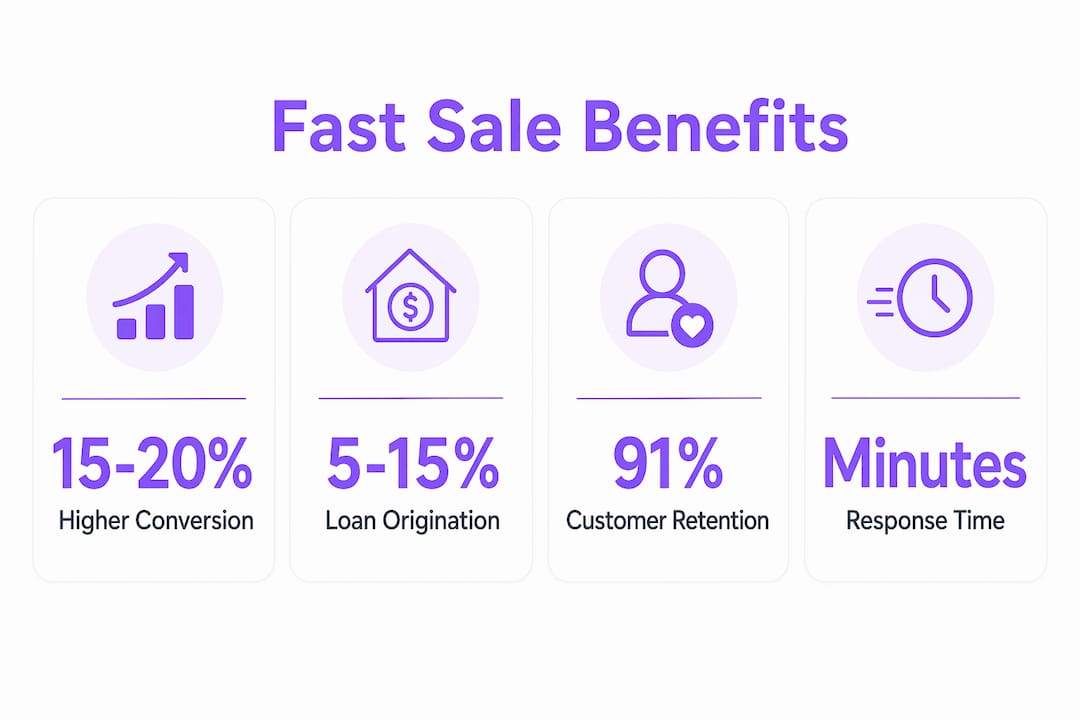
Instant settlement capabilities increase loan origination completion by 5 to 15% and raise conversion rates by 15 to 20% due to reduced transaction abandonment. This data comes from financial services, but the principle applies directly to property. A buyer who receives a clear, fast offer is less likely to keep shopping and more likely to commit.
For Kiwi homeowners, this means that the speed at which you respond to an offer, provide documentation, and confirm settlement terms directly shapes how much confidence a buyer places in you as a seller. Slow responses do not protect you. They cost you.
What practical benefits do fast transactions offer buyers and sellers?
The benefits of quick transactions extend well beyond saving time. Both buyers and sellers gain measurable financial and emotional advantages when a deal moves efficiently.
For buyers, the most direct benefit is certainty. Securing a property quickly removes the risk of a competing offer displacing them. In a market where cash buyers close faster and sellers often favour certainty over price, a buyer who can demonstrate speed gains a genuine competitive edge. Faster access to the property also means buyers can begin planning renovations, tenancy arrangements, or resale strategies sooner.
For sellers, the practical advantages are equally significant:
- Reduced holding costs. Every week a property sits unsold costs money in rates, insurance, mortgage repayments, and maintenance. A fast sale cuts these costs directly.
- Lower risk of deal fallout. Longer transactions give buyers more time to change their minds, encounter financing problems, or find alternative properties. Speed reduces this window of risk considerably.
- Fewer renegotiations. Extended timelines invite buyers to revisit their offer, particularly if a building inspection or valuation surfaces during a prolonged process. A swift settlement limits these opportunities.
- Emotional relief. For sellers facing financial pressure, relationship breakdown, or health challenges, a fast sale removes a major source of ongoing stress. The importance of quick transactions for sellers in difficult circumstances cannot be overstated.
- Stronger negotiating position. A seller who can offer a fast, unconditional settlement often attracts buyers willing to pay a fair price without demanding excessive conditions.
Pro Tip: If you need to sell quickly, consider accepting a slightly lower offer from a cash buyer over a higher conditional offer from a financed buyer. The certainty and speed of a cash settlement frequently outweighs the difference in price, particularly when holding costs and fallout risk are factored in.
Retailers with faster payouts observe up to 91% higher customer retention year over year. While this data comes from retail, it reflects a universal truth: people return to, and recommend, experiences that respect their time.
How do market dynamics and technology drive demand for speed?
The expectation of speed in property transactions does not exist in isolation. It is shaped by broader market conditions and the technology buyers use every day.
In competitive property markets, multiple buyers often enquire about the same listing within hours of it going live. This creates a race dynamic where responding fastest to offers becomes as important as the offer itself. Buyers who have lost properties to faster-moving competitors learn quickly that hesitation is costly.
Digital platforms have also compressed response expectations significantly. Consider how these forces interact:
- Property listing platforms such as Trade Me Property surface listings to thousands of buyers simultaneously, meaning enquiries arrive in volume and buyers expect rapid replies.
- CRM and automation tools used by real estate agencies enable fast lead triage and follow-up, raising the baseline expectation for response times across the industry.
- E-commerce conditioning from platforms like The Warehouse online or Mighty Ape means buyers are accustomed to same-day or next-day resolution of transactions. Property feels slow by comparison, and buyers notice.
- Digital payment systems have made financial settlement faster than ever, which shifts buyer frustration toward the administrative and legal delays in property transactions rather than the payment itself.
The probability of qualifying a lead drops 21-fold between a five-minute and a thirty-minute response time. This single data point explains why automation and fast-offer models are gaining ground in New Zealand property sales. Human response cycles simply cannot compete with buyer expectations shaped by digital commerce.
| Response time | Lead qualification probability | Buyer perception |
|---|---|---|
| Under 5 minutes | Highest | Professional, motivated seller |
| 5 to 30 minutes | Drops significantly | Acceptable but losing ground |
| Over 30 minutes | 21x lower than 5-minute response | Disorganised or disinterested |
Understanding key factors affecting property sale speed in New Zealand helps sellers position themselves ahead of these expectations rather than scrambling to catch up.
Key takeaways
Buyers seek fast transactions because speed reduces uncertainty, builds trust, and delivers measurable financial benefits for both parties in a property sale.
| Point | Details |
|---|---|
| Speed signals credibility | Fast responses and settlements communicate seller reliability, reducing buyer hesitation. |
| Psychology drives urgency | Cortisol spikes and fear of loss make buyers actively avoid slow transactions. |
| Financial gains are real | Sellers reduce holding costs and fallout risk; buyers gain competitive advantage. |
| Technology raises expectations | Digital platforms and automation have made slow responses a competitive liability. |
| Cash offers accelerate outcomes | Unconditional cash settlements remove financing delays and reduce renegotiation risk. |
Why speed is the most underrated tool sellers have
From what I have seen working with homeowners across New Zealand, most sellers underestimate how much their response time shapes buyer behaviour. They focus on the listing price, the photos, the open home presentation. All of that matters. But a buyer who sends an enquiry at 7pm and hears nothing until the following afternoon has already started looking at the next listing.
The sellers who attract serious buyers consistently are not always the ones with the best-presented properties. They are the ones who respond quickly, provide clear information without being asked twice, and signal through every interaction that they are ready to transact. That readiness is what buyers are actually paying for, especially in a market where uncertainty is expensive.
I also think sellers in difficult circumstances, whether that is financial pressure, a relationship change, or an inherited property they do not want to manage, underestimate how much a fast, unconditional offer is worth to them emotionally. The mental cost of a prolonged sale is real. Choosing speed is not settling for less. It is often the most rational decision available.
If you are weighing up your options, read through the reasons to accept a fast offer in the New Zealand context. The numbers make a compelling case.
— Aaron
How Easysale helps you sell faster without the hassle

Easysale is a New Zealand property buying service that purchases homes in any condition, without agents, open homes, or commission fees. If you are facing financial pressure, a life change, or simply want to move on without a drawn-out process, Easysale provides a fair cash offer and settles on your preferred timeline. The process is straightforward: submit your property details, receive a no-obligation offer, and choose your settlement date. There are no conditions, no financing delays, and no renegotiations. For Kiwi homeowners who need certainty and speed, Easysale’s fair cash offer service removes the friction that makes traditional sales so stressful.
FAQ
Why do buyers prefer fast property transactions?
Buyers prefer fast transactions because speed reduces uncertainty, lowers the risk of competing offers succeeding, and signals that the seller is organised and motivated. Research shows 78% of buyers purchase from the first vendor to respond to their enquiry.
Does a faster sale mean a lower price for the seller?
Not necessarily. A fast, unconditional cash settlement often saves sellers money on holding costs, avoids renegotiation, and eliminates the risk of deal fallout, which can offset any difference in the initial offer price.
How does transaction speed affect buyer trust?
Fast settlements signal operational readiness and reduce buyer perception of risk. Slow or delayed transactions are increasingly read as red flags, leading buyers to question the seller’s reliability or the property’s status.
What is the fastest way to sell a property in New Zealand?
Accepting a cash offer from a direct property buyer like Easysale is the fastest route. It removes financing conditions, agent timelines, and open home requirements, allowing settlement within days rather than weeks or months.
How quickly should a seller respond to a buyer enquiry?
Within five minutes where possible. The probability of converting a lead drops 21-fold between a five-minute and a thirty-minute response time, making speed of reply one of the most impactful actions a seller can take.
Recommended
