
Key factors affecting property sale speed in NZ 2026
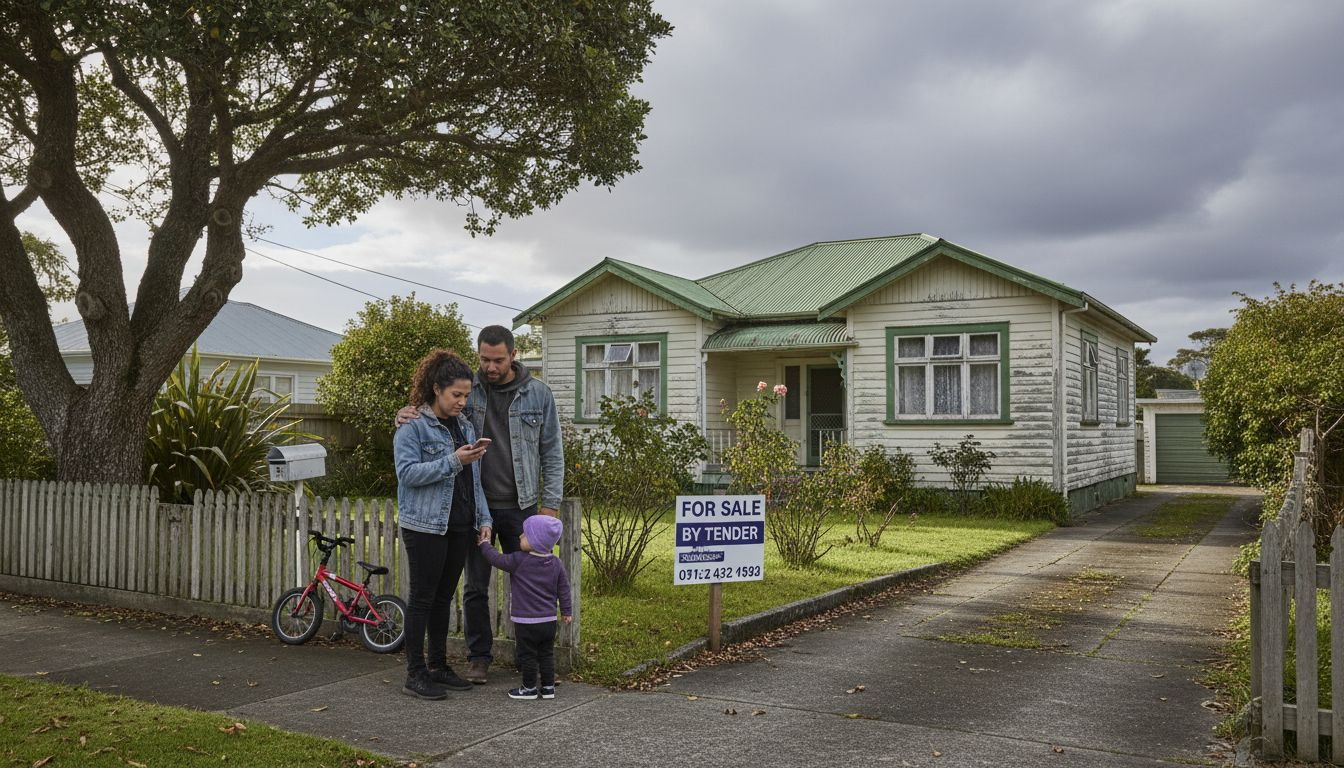
Selling your home quickly in New Zealand isn’t just about luck. The median sale duration is 39 to 41 days, but this varies dramatically based on controllable factors like pricing strategy, property condition, and local demand. Understanding what influences sale speed empowers homeowners facing financial pressure or life changes to make informed decisions and sell faster without agents.
Table of Contents
- Understanding Typical Property Sale Timelines In New Zealand
- How Pricing Strategies Influence Sale Speed
- Role Of Property Condition And Repairs In Sale Timing
- Local Market Demand And Geographic Factors
- Impact Of Economic Conditions On Property Sale Speed
- Comparing Traditional Agent Sales And Direct Cash Buyer Sales
- Common Misconceptions About What Speeds Up Property Sales
- Practical Steps For Homeowners To Expedite A Quick Sale Without Agents
- How EasySale.co.nz Helps You Sell Your Property Fast And Hassle-Free
Key takeaways
| Point | Details |
|---|---|
| Average sale duration | Most New Zealand properties sell within approximately 40 days of listing. |
| Pricing drives speed | Realistic pricing attracts serious buyers quickly, while overpricing extends sale time significantly. |
| Condition matters | Well-maintained homes sell faster; properties with issues take 50% to 90% longer. |
| Direct cash sales | Cash buyers can close deals in days or weeks versus typical 5 to 6 weeks for agent sales. |
| Economic influences | Interest rates, GDP growth, and employment levels impact buyer activity and sale timelines. |
Understanding typical property sale timelines in New Zealand
The median time for residential properties to sell is approximately 39 to 41 days in early 2026. This national average masks significant variation across regions, property types, and market conditions.
Faster sales occur in well-priced, desirable suburbs where properties often move within three to four weeks. Buyers respond quickly when homes tick all the right boxes: competitive pricing, good condition, and strong local demand. Conversely, properties with condition issues or unrealistic pricing can linger for 60 to 90 days or longer, accumulating holding costs and causing seller stress.
Understanding these timelines helps you plan realistically. Key factors influencing duration include:
- Pricing accuracy relative to recent comparable sales
- Property condition and presentation quality
- Local market strength and buyer competition
- Economic conditions affecting buyer confidence
- Sale method chosen (agent versus direct cash buyer)
Knowing what drives these variations lets you control the controllable factors. The NZ real estate market analysis 2026 shows that sellers who understand market dynamics achieve faster, smoother transactions.
How pricing strategies influence sale speed
Realistic pricing is critical to attract serious buyers quickly. Homes priced correctly generate immediate interest, multiple enquiries, and competitive offers. Buyers actively searching recognise value and move fast when they see it.
Research shows properties typically sell about 3% below initial asking price on average. This natural market adjustment reflects negotiation dynamics and property inspection findings. Setting a price that accounts for this reality positions your home competitively from day one.
Overpricing is the most common mistake slowing sales. Overpricing increases days on market by 20% to 50% as buyers skip unrealistic listings entirely. Properties that start too high often require price reductions later, signalling desperation and attracting lowball offers.
Setting the correct initial price reduces negotiation delays and encourages prompt offers. Buyers perceive well-priced homes as opportunities, creating urgency. Key pricing principles include:
- Research recent sales of comparable properties in your suburb
- Account for property condition and unique features honestly
- Consider current market trends and buyer sentiment
- Price slightly below market value to generate competitive interest
Pro Tip: If you need to sell quickly, pricing 5% to 10% below comparable properties can trigger a faster sale and multiple offers, potentially recovering the discount through competition.
The house price predictions NZ data confirms that strategic pricing is the single most powerful tool for controlling sale speed.
Role of property condition and repairs in sale timing
Property condition significantly affects buyer interest, negotiation speed, and overall days on market. Well-maintained homes attract buyers faster and reduce negotiation hassles because they present fewer concerns during inspections.
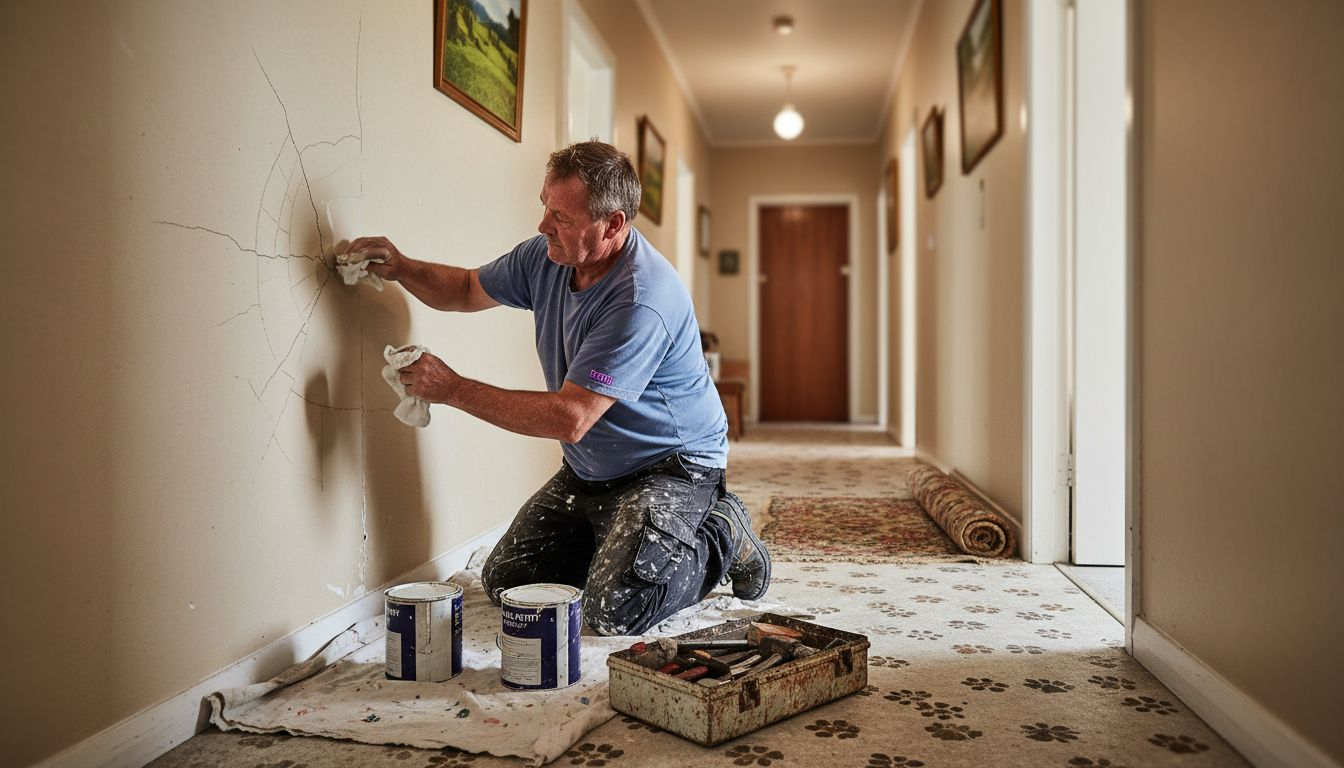
Properties with condition issues take 50% to 90% longer to sell and often require price reductions. Buyers discount heavily for visible maintenance needs, deferred repairs, or structural concerns. Even minor cosmetic issues can trigger extended negotiations as buyers request repairs or price concessions.
Disclosing condition transparently builds buyer confidence and speeds closing. Honest disclosure prevents deal-killing surprises during building inspections and legal reviews. Buyers appreciate transparency and are more willing to proceed quickly when they know exactly what they’re purchasing.
Selling as-is to cash buyers can bypass repair delays entirely. This approach suits homeowners who lack time, funds, or inclination to fix issues before selling. Cash buyers purchase properties in any condition, eliminating renovation requirements. Key considerations include:
- Minor cosmetic improvements (paint, landscaping) offer high return on investment
- Major repairs rarely recover full costs unless critical to habitability
- Transparent condition disclosure prevents negotiation delays and legal issues
- As-is sales trade slightly lower prices for speed and convenience
Pro Tip: If repairs seem overwhelming, selling as-is to a direct cash buyer eliminates renovation stress while still achieving a fair, quick sale.
The NZ real estate market analysis 2026 emphasises that condition transparency and realistic expectations about repairs are essential for fast sales.
Local market demand and geographic factors
Location-specific demand, population growth, and regional economies create variable sale speeds across New Zealand. Understanding your local market helps set realistic timing expectations and pricing strategies.
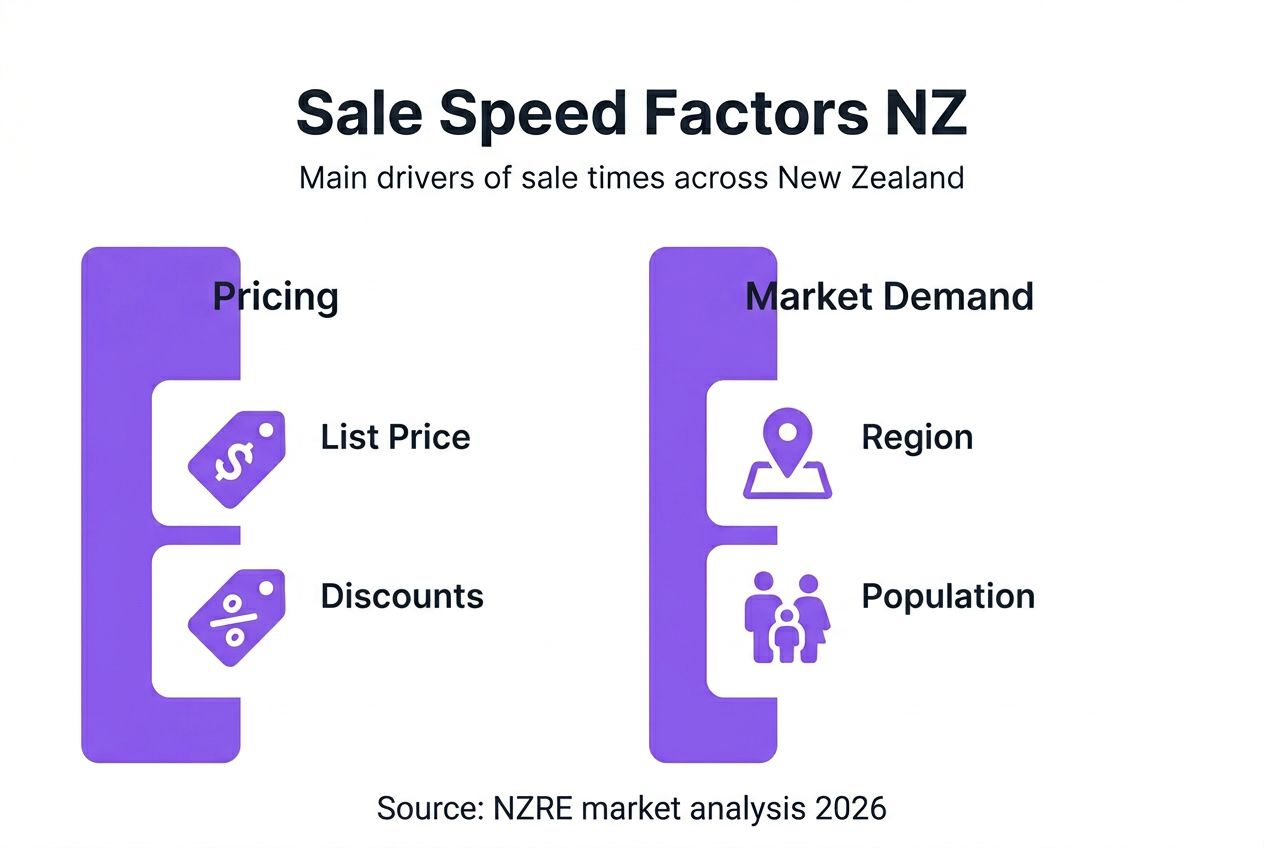
Regions like Canterbury, Southland, and Waikato show stronger demand and sell faster than softer markets like Auckland. Economic activity, job growth, and lifestyle appeal drive these regional differences. Areas with strong employment and infrastructure investment attract buyers actively searching for properties.
Some regions sell homes 10% to 20% faster than others due to population and economic activity. The table below illustrates typical sale speed variations across major regions:
| Region | Relative Sale Speed | Key Demand Drivers |
|---|---|---|
| Canterbury | Faster (15-20% quicker) | Post-earthquake rebuild, strong economy, population growth |
| Waikato | Faster (10-15% quicker) | Hamilton growth, Auckland commuters, agricultural economy |
| Auckland | Average to slower | High prices, affordability challenges, market saturation |
| Wellington | Average | Government employment, lifestyle appeal, limited supply |
| Southland | Faster (10-15% quicker) | Affordable prices, regional development, lifestyle seekers |
Knowing regional trends aids timing and pricing strategies. If you’re in a slower market, pricing competitively becomes even more critical. In faster markets, you have slightly more flexibility but shouldn’t overprice.
The NZ housing market predictions 2026 highlight that local factors often outweigh national trends when determining how quickly your specific property will sell.
Impact of economic conditions on property sale speed
Macroeconomic factors such as interest rates, GDP growth, and employment levels influence buyer affordability and market activity, shaping sale speed expectations in 2026.
Interest rate cuts improve buyer affordability and market activity. Lower mortgage rates reduce monthly payments, expanding the pool of qualified buyers. This increased buyer activity typically shortens sale timelines as more people actively search for properties.
Economic recovery with projected 3% GDP growth and falling unemployment in 2026 supports improved property sales and moderate price increases. A strengthening economy boosts buyer confidence, encouraging people to make major purchase decisions like buying homes.
Lower unemployment also boosts buyer confidence and transactions. Job security is fundamental to mortgage approval and buyer willingness to commit. When employment is stable and growing, buyers feel confident making long-term financial commitments. Economic factors can shorten or lengthen typical sale timelines through several mechanisms:
- Lower interest rates increase buyer purchasing power and enquiry volume
- GDP growth signals economic stability, encouraging property purchases
- Falling unemployment improves mortgage approval rates and buyer confidence
- Economic uncertainty causes buyers to delay decisions, extending sale times
The relationship between economic conditions and sale speed is clear:
“When economic indicators are positive, buyer activity increases, properties receive more enquiries, and sales close faster. Conversely, economic uncertainty causes buyers to wait, extending typical sale timelines regardless of property quality.”
The NZ property market outlook 2026 forecasts favourable economic conditions supporting faster sales throughout the year, particularly in the second half as interest rate cuts flow through to buyers.
Comparing traditional agent sales and direct cash buyer sales
Understanding the benefits and drawbacks of agent-assisted versus direct cash buyer sales helps homeowners choose the best approach for their speed and hassle priorities.
Traditional agent sales usually take five to six weeks with marketing and negotiation delays. This timeline includes listing preparation, photography, marketing campaigns, open homes, offer negotiations, building inspections, and legal processes. Each step adds time, and any complications can extend the process further.
Direct cash sales can occur in days or weeks versus typical five to six weeks for agent sales. Cash buyers make quick decisions, skip lengthy financing approvals, and purchase as-is, eliminating inspection negotiations. This streamlined process suits homeowners needing fast settlement.
Cash sales may fetch slightly lower prices but save time and holding costs. The price difference often balances out when you account for agent commissions, holding costs during extended marketing, and repair expenses. For time-sensitive situations, the speed and certainty outweigh modest price differences.
| Factor | Traditional Agent Sale | Direct Cash Buyer Sale |
|---|---|---|
| Typical timeline | 5-6 weeks (can extend to 90+ days) | Days to 3 weeks |
| Agent fees | 2-4% commission plus marketing costs | No commissions or fees |
| Property condition | Usually requires repairs and presentation | Sold as-is, any condition |
| Certainty | Subject to financing, inspections, market conditions | Cash offer, high certainty |
| Price achieved | Potentially higher market price | Fair price, typically 10-15% below market |
| Best suited for | Sellers prioritising maximum price, no time pressure | Sellers prioritising speed, convenience, certainty |
This approach is ideal for homeowners prioritising speed and simplicity over highest sale price. Situations favouring direct cash sales include:
- Financial difficulties requiring immediate settlement
- Inherited properties needing quick disposal
- Properties with significant condition issues
- Relocations or life changes demanding fast timelines
Pro Tip: Calculate your net proceeds after agent fees, repairs, and holding costs to compare fairly with a cash buyer offer. The difference is often smaller than expected.
For homeowners wanting to avoid agent involvement, the selling without agent guide NZ provides detailed strategies and considerations.
Common misconceptions about what speeds up property sales
Addressing widespread misunderstandings helps homeowners avoid pitfalls that delay sales or reduce returns.
Myth: Pricing higher leads to faster sales. Reality: overpricing typically extends days on market significantly as buyers avoid unrealistic listings. Buyers and their advisers quickly identify overpriced properties and skip them entirely. Starting high with plans to reduce later signals desperation and attracts lowball offers.
Myth: Selling without agents always results in lower net price. Reality: selling without an agent does not always reduce net price benefit; cash sales can save time and costs to balance price differences. When you factor in commission savings, avoided repair costs, and eliminated holding expenses, direct sales often net comparable or better returns.
Quick sales often require trade-offs; sellers must prioritise speed versus price. No single approach maximises both simultaneously. Understanding this reality helps you make conscious choices aligned with your priorities rather than chasing unrealistic outcomes. Common misconceptions include:
- Believing extensive renovations always increase sale price enough to justify costs and delays
- Assuming marketing reach alone drives sale speed without competitive pricing
- Thinking all cash buyers are trying to exploit desperate sellers
- Expecting to achieve top market price while also demanding immediate settlement
Understanding myths helps homeowners choose effective, realistic sale strategies. The house price predictions NZ and NZ real estate market analysis 2026 data confirm that realistic expectations and strategic decisions drive the best outcomes.
Practical steps for homeowners to expedite a quick sale without agents
Translating knowledge into action, here are clear steps homeowners can apply immediately to sell quicker:
- Accurately submit detailed property information for quick cash offer assessments. Provide honest details about condition, features, and circumstances to receive realistic offers without delays or surprises.
- Consider cash buyers who purchase as-is to avoid repair delays and costs. This eliminates renovation stress, contractor coordination, and the uncertainty of whether repairs will recover their costs.
- Offer flexible settlement terms to attract diverse buyers and speed closing. Accommodating buyer timing preferences removes barriers and demonstrates your motivation to complete the transaction smoothly.
- Use reputable direct sale platforms like easySale.co.nz for a streamlined process. Established platforms have proven systems, legal safeguards, and track records that protect your interests while expediting the sale.
- Transparently communicate condition and timeline needs to buyers. Clear, honest communication prevents misunderstandings, builds trust, and keeps transactions moving forward without renegotiation delays.
The selling without agent guide NZ and smart ways to sell property NZ resources provide additional detailed guidance on executing these steps successfully.
How easySale.co.nz helps you sell your property fast and hassle-free
If you’re looking for a quick, straightforward sale without agents, easySale.co.nz offers a proven solution designed for homeowners in your situation.
easySale buys properties as-is with fair cash offers, ideal for quick sales. Whether your home needs repairs, you’re facing financial pressure, or life changes demand fast settlement, easySale provides a reliable option. No agent fees or commissions, saving you time and money while you focus on your next chapter.
Flexible settlement terms tailored to your situation mean you control timing that works for your circumstances. The cash offers for damaged houses NZ page explains how easySale handles properties in any condition. Helpful guides like the selling without agent guide NZ simplify your journey with practical advice.
Visit easySale.co.nz for a free cash offer and fast sale support tailored to New Zealand homeowners needing certainty and speed.
FAQ
What is the average time it takes to sell a property in New Zealand?
The median time is approximately 39 to 41 days from listing to unconditional sale. The timeframe can be shorter or longer depending on property factors like pricing, condition, and local market conditions.
Does selling to a cash buyer mean I will get less money for my house?
Cash buyers often offer slightly less than market value but save costs on agent fees, repairs, and holding expenses. The overall net proceeds and faster settlement timeline benefit many sellers facing time pressure or properties needing work.
What can I do to sell my house faster without using a real estate agent?
To sell faster without an agent, provide accurate property details to direct buyers, consider selling as-is to cash buyers, and offer flexible settlement terms. The selling without agent guide NZ outlines specific strategies for quick, hassle-free sales.
How does property condition affect how long it takes to sell?
Properties with condition issues take 50% to 90% longer to sell and often require price reductions. Well-maintained homes attract buyers faster and reduce negotiation delays, while selling as-is to cash buyers bypasses repair requirements entirely.
Recommended
