
Why Sell Without Commissions in New Zealand

Selling a home in New Zealand during financial stress or major life change can feel overwhelming, especially when expensive agent fees threaten your already tight budget. Taking the commission-free path means you handle your sale directly and keep the money that would have paid an agent, putting you in full control of the process. This guide explains how to achieve a fast, stress-free property sale without traditional commissions, highlighting what you gain and the steps that protect you along the way.
Table of Contents
- Understanding Selling Without Commissions
- How Commission-Free Property Sales Work
- Comparing Agents Vs. Commission-Free Selling
- Financial Benefits and Potential Savings
- Risks, Legalities and Avoiding Pitfalls
Understanding Selling Without Commissions
| Point | Details |
|---|---|
| Retain Full Control | Selling without commissions allows sellers to manage pricing, marketing, and negotiations directly, enhancing autonomy throughout the process. |
| Significant Financial Savings | Avoiding agent commissions can lead to substantial savings, especially for high-value properties, by keeping all proceeds from the sale. |
| Legal Responsibilities | Sellers are legally accountable for compliance with property laws and ensuring accurate representations of their property. |
| Consider Support Options | While handling sales independently can be rewarding, consider engaging professionals for complex tasks like legal documentation to mitigate risks. |
Understanding Selling Without Commissions
Selling without commissions fundamentally changes how you approach a property sale. Rather than engaging a licensed real estate agent who takes a percentage of your sale price, you bypass that middleman entirely and handle the sale process yourself or through alternative methods. This approach means you retain full control over every decision, from pricing to negotiations to marketing, while keeping money that would otherwise go toward agent fees.
When you choose this route, you’re typically avoiding what would be a standard agency agreement. According to the Real Estate Authority, agency agreements specify the terms under which an agent markets and sells your property, and commission-free selling means you’re not signing one of these contracts. Instead, the responsibility for preparing your home, marketing it effectively, negotiating with buyers, and managing paperwork shifts squarely onto your shoulders. You’ll still need to follow all legal requirements, such as preparing proper sale and purchase agreements, but you’re doing this without paying agent commission, which typically ranges from 1.5% to 3% of the sale price.
For many New Zealand homeowners facing time constraints or financial pressure, this model offers significant savings. Consider someone selling a $500,000 property: avoiding a 2% commission means keeping an extra $10,000. You maintain autonomy over your timeline, can be selective about serious buyers, and avoid pressure to accept lower offers just to close a deal quickly. The trade off is that you must handle administrative tasks, market your property effectively, and negotiate confidently without professional support. Some sellers tackle this independently, while others use property buying services that offer cash offers without traditional agent involvement.
Pro tip: If you’re considering a commission-free sale, calculate exactly what commission you’d pay with a traditional agent first, then compare that figure against the time investment and effort required to sell privately—this clarity helps you decide whether the savings justify the work involved.
How Commission-Free Property Sales Work
When you sell without a commission agent, the entire process operates differently from a traditional sale. You become responsible for marketing your property, fielding enquiries, negotiating with potential buyers, and managing the administrative side of things. Importantly, you’ll still need to follow all legal responsibilities when selling privately, which means preparing your home properly, arranging inspections, and handling paperwork correctly. Many Kiwi homeowners tackle this independently, whilst others engage professional support in specific areas like legal advice or photography to strengthen their position without paying traditional agent commissions.

The mechanics of a commission-free sale involve several key stages. First, you market your property yourself through online platforms, word-of-mouth, or private advertising. When buyers express interest, you manage negotiations directly, discussing price, conditions, and timelines without an agent filtering conversations or pressuring you toward quick deals. Next comes the legal side, which is where most sellers bring in a lawyer or conveyancer. These professionals help prepare contracts properly and ensure property law compliance, protecting your interests whilst meeting all regulatory requirements. You’ll also coordinate property inspections, handle buyer queries, and manage settlement arrangements. This approach gives you flexibility to work at your own pace and retain control over who you’re dealing with and what offers you accept.
The financial advantage is substantial because you’re avoiding agent commissions entirely, but this comes with genuine time investment and learning curve. You need to understand market conditions well enough to price competitively, present your home attractively, and recognise genuine offers from time wasters. Some sellers find this empowering, especially if they have time and confidence. Others discover that certain tasks feel overwhelming without professional guidance. The beauty of commission-free selling in today’s market is that you have multiple options: go entirely solo, use low-cost online platforms, hire specialists for specific tasks, or work with property buying services that offer structured, straightforward processes without traditional agent involvement.
Pro tip: Before you start marketing, research comparable properties in your area and document your home’s features, improvements, and condition in detail—this groundwork lets you confidently discuss your property’s value without needing an agent to validate the asking price.
Comparing Agents Vs. Commission-Free Selling
Choosing between a real estate agent and selling commission-free comes down to weighing convenience against cost, and time investment against control. When you hire an agent, you’re paying for their expertise in marketing, pricing strategy, and negotiation skills. They handle the heavy lifting: photography, open homes, buyer screening, and managing paperwork. In exchange, you typically pay 1.5% to 3% of the sale price, which on a $500,000 property could easily exceed $10,000. Agents bring professional networks, established buyer pools, and regulatory oversight under the Real Estate Agents Act 2008, meaning they’re bound by consumer protection standards. The professional expertise agents provide includes market analysis that helps price your property competitively and marketing strategies designed to attract serious buyers quickly.
Commission-free selling flips the equation entirely. You keep all the money that would go to agent fees, but you’re responsible for everything: marketing your property, answering enquiries, negotiating directly with buyers, and ensuring legal documentation is correct. This approach demands genuine time and effort. You’ll need to research your local market thoroughly, understand what makes your property attractive, manage multiple conversations with potential buyers, and handle the administrative complexity of a property sale. The upside is complete control over timelines and decision-making, plus the satisfaction of not losing tens of thousands in commissions. Many sellers find this rewarding if they have the bandwidth, though others discover the workload is substantial and the learning curve steeper than anticipated. Your success depends heavily on your confidence, market knowledge, and ability to present your home professionally.
The right choice depends on your personal situation. If you’re time-poor, anxious about negotiations, or unfamiliar with property markets, an agent reduces stress considerably despite the cost. If you have spare time, patience, and confidence in handling complexity, commission-free selling can produce significant financial savings. Some sellers split the difference by handling marketing themselves but engaging a lawyer for legal matters, or using property buying services that offer straightforward cash offers without traditional agent involvement. Whatever you choose, make sure your decision aligns with your capacity to handle the work involved.
Here’s how the key responsibilities differ between using an agent and selling commission-free:
| Responsibility | Real Estate Agent Handles | Commission-Free Seller Handles |
|---|---|---|
| Property marketing | Fully managed | Seller arranges |
| Negotiating with buyers | Agent negotiates | Seller negotiates |
| Legal documentation | Agent oversees | Seller engages lawyer |
| Managing offers & queries | Agent filters | Seller manages |
| Pricing strategy | Market analysis by agent | Seller researches market |
| Handling settlements | Agent co-ordinates | Seller coordinates |
Pro tip: Before committing to either path, calculate the exact dollar amount you’d pay in agent commissions, then honestly assess whether you have the time and temperament for the DIY approach—sometimes the peace of mind an agent provides is worth the cost.
Financial Benefits and Potential Savings
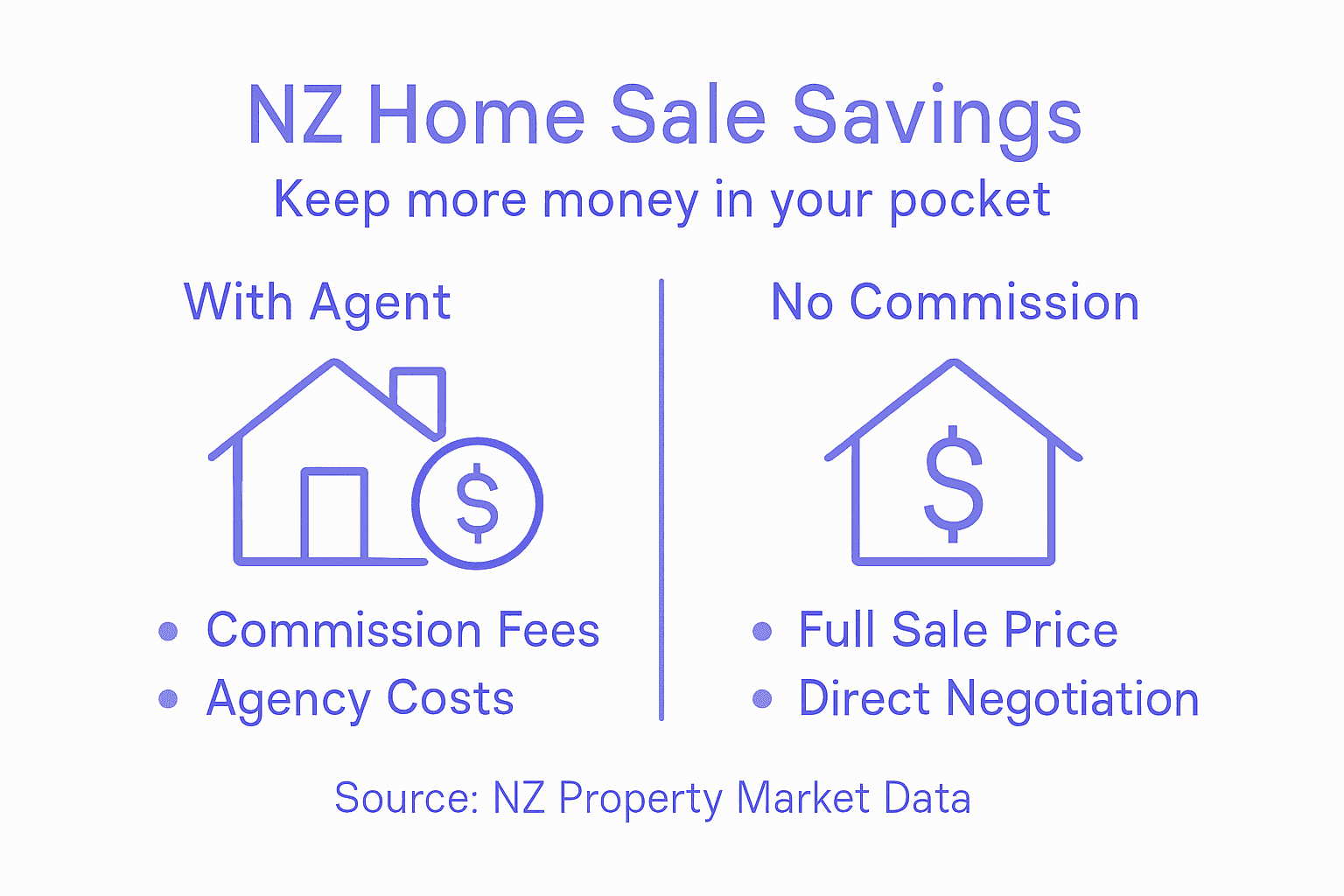
The most obvious financial benefit of selling without commissions is straightforward: you keep money that would otherwise go to an agent. In New Zealand, agent fees typically range between 2% and 4% of your sale price. On a $500,000 property, that’s between $10,000 and $20,000 gone before you even touch your proceeds. On a $750,000 property, you could be looking at $15,000 to $30,000 in commissions. These aren’t small numbers for most Kiwi homeowners, especially those facing financial pressure or needing quick access to capital. By handling the sale yourself, every dollar from your sale price stays in your pocket, which can make a genuine difference when you’re managing a life transition, paying off debt, or funding your next property purchase.
Beyond the obvious commission savings, you gain control over spending in other areas. When you sell through an agent, their marketing costs are often built into the overall fee structure, and you have limited say over how much is spent or where. Selling commission-free lets you decide your marketing budget strategically. You might spend modestly on professional photography and online listings, or choose to invest more heavily in targeted advertising if your property needs visibility. You negotiate directly with service providers, potentially achieving better rates than agents who use standard vendors. You’re also not locked into paying for services you don’t need. That said, don’t underestimate the genuine costs involved. A conveyancer or lawyer typically charges $1,500 to $3,000 for legal work, professional photography might run $300 to $800, and marketing materials add up. The key is that you control these expenses rather than paying a blanket commission regardless of what services you actually use.
The real financial picture depends on your specific situation. If you’re selling a high-value property, commission savings are substantial enough to justify significant personal effort. A $1 million property with a 3% commission means $30,000 at stake, making it worth your time to handle things carefully. Conversely, selling a $300,000 property where commission would be roughly $6,000 to $12,000 requires you to honestly assess whether the savings justify the work involved. Consider also the risk of pricing incorrectly or taking longer to sell, which could cost you more than you’d save in commissions. When weighing costs against savings, factor in the legal, marketing, and time costs, then calculate your net benefit realistically. Many Kiwi homeowners find that the combination of commission savings plus direct control over their sale timeline makes commission-free selling financially superior, particularly when they engage professional legal support whilst handling marketing and negotiations themselves.
Below is a reference table summarising common direct costs faced when selling commission-free in New Zealand:
| Expense Type | Typical Cost Range | Control Level |
|---|---|---|
| Legal/conveyancing | $1,500 - $3,000 | Seller chooses provider |
| Photography | $300 - $800 | Seller chooses service |
| Online advertising | $300 - $1,500 | Seller sets budget |
| Signage | $100 - $250 | Seller decides spend |
Pro tip: Create a detailed cost breakdown before you start, listing likely expenses for legal services, photography, and marketing, then subtract that total from the commissions you’d pay an agent to see your genuine net saving and decide whether the effort is worthwhile.
Risks, Legalities and Avoiding Pitfalls
Selling without commissions puts you squarely in control, but that control comes with legal responsibility. When you’re not working through a licensed agent, you become personally accountable for ensuring everything complies with property law and consumer protection standards. The Fair Trading Act applies to private sales, meaning you cannot make misleading or deceptive claims about your property. This sounds straightforward until you realise how easily innocent misstatements can become problems. If you describe the roof as “newly replaced” when it was actually patched five years ago, or claim “no flooding issues” when the property has experienced water damage, you’re potentially breaching consumer protection law. Ensuring all property representations are accurate and not misleading protects both you and the buyer legally. Buyers have rights to remedies if they discover you’ve misrepresented the property, which could include claims for damages or even forced rescission of the sale.
Beyond truthfulness, the contractual and procedural side of selling demands precision. Property law requires proper contractual procedures, including comprehensive sale and purchase agreements, correct settlement processes, and compliance with statutory obligations. Without an agent managing these steps, you’re responsible for understanding what must be included in contracts, what conditions must be met before settlement, and how to handle deposits and final payment correctly. Common pitfalls include inadequate due diligence on the buyer’s financial position, failing to obtain proper title searches, not disclosing known defects, or settling on property without ensuring all legal requirements are satisfied. One misstep can result in disputes, delays, financial loss, or even legal action from the buyer. This is precisely why most successful commission-free sellers engage a qualified conveyancer or lawyer to handle the legal documentation and settlement process. Yes, you’ll pay for their services, but their expertise prevents costly mistakes that could far exceed their fees.
Pricing is another risk area where sellers often stumble. Without agent guidance, you might price too high and attract no genuine offers, or too low and leave money on the table. Extensive market research is essential. Look at comparable properties in your area that sold recently, consider your property’s condition honestly, and factor in current market conditions. Don’t let emotional attachment inflate your asking price. Be prepared for pushback during negotiations and know your absolute minimum acceptable price before conversations begin. Also recognise that you’re vulnerable to fraud or difficult buyers when dealing directly. Establish clear communication channels, require formal offers in writing, and be cautious about cash buyers who pressure you to bypass normal procedures or settle quickly.
Pro tip: Invest in a conveyancer or lawyer from the start, view it as insurance against legal problems rather than an optional expense, and ask them to review all agreements before you sign anything with a buyer.
Take Control of Your Property Sale with easySale.co.nz
If you are looking for a way to sell your property in New Zealand without paying hefty agent commissions or navigating complex legal hurdles alone, easySale.co.nz offers a simple and trustworthy solution. The challenge of avoiding costly fees while managing marketing, negotiations, and legal responsibilities can be overwhelming. That is why our platform is designed specifically for homeowners who want a hassle free, commission free sale process that respects your time and circumstances.
With easySale.co.nz you receive a fast, fair cash offer on your property no matter its condition without the stress of traditional selling. You stay in control and avoid agent fees, while benefiting from a transparent three step process tailored to your needs. Visit easySale.co.nz today to submit your property details and get started. Learn more about selling without agent commissions and how to avoid common pitfalls with our detailed guides at easySale.co.nz. Don’t wait to secure your financial peace of mind—take the first step towards a quick, commission free sale now.
Frequently Asked Questions
What are the main benefits of selling my property without commissions?
By selling without commissions, you retain all the sale proceeds that would typically go to an agent, which can result in significant savings. It also gives you complete control over the sale process, from setting the price to negotiating directly with buyers.
What responsibilities do I have when selling without a real estate agent?
When selling without an agent, you are responsible for marketing your property, negotiating with buyers, managing administrative tasks, and ensuring all legal requirements are met. It is crucial to accurately represent your property and follow proper contractual procedures.
How can I effectively market my property if I sell it myself?
You can market your property through online platforms, social media, word-of-mouth, or private advertisements. Providing professional photography and clear documentation of your property’s features can also attract potential buyers and showcase its value.
What are some common pitfalls to avoid when selling without a commission?
Common pitfalls include misrepresenting your property, inadequate due diligence on buyers, and not properly handling legal documentation. Engaging a lawyer or conveyancer can help you navigate these complexities and protect your interests.
Recommended
- Property Sale Without Commission – How It Works in NZ
- Why Sell Without Commission in New Zealand
- Commission Fees in Home Sales – Impact on Kiwi Sellers
- Property No Agent Sale Explained: Complete Guide NZ
- Yacht Sales Commission Explained: Complete Guide
- The Impact of the NAR Lawsuit: What Buyers, Sellers and Agents Need to Know – Bold Street AI
