
What is a bridging offer? A practical guide for Kiwi homeowners


TL;DR:A bridging offer is a short-term loan that helps homeowners buy before selling their current property. It carries risks like increased debt and interest costs if the sale takes longer than expected. Proper planning and quick sales services can reduce costs and improve success with bridging finance.
A bridging offer is a short-term loan that lets you buy a new home before your current property has sold. In New Zealand property circles, this type of finance is formally known as bridging finance or a bridging loan, and it fills the timing gap between two settlement dates. For homeowners facing a life change, a job relocation, or a fast-moving market, understanding bridging offers can mean the difference between securing your next home and missing out entirely. Easysale works with Kiwi sellers who need to move quickly, and this guide explains exactly how bridging finance works, what it costs, and how to use it wisely.
How does a bridging offer work in New Zealand?
A bridging loan is a short-term mortgage with terms typically ranging from 3–12 months, designed to fund your new purchase while your existing home is still on the market. The loan covers the deposit and purchase price of the new property, with repayment expected once your old home sells.
New Zealand lenders assess two key figures during the application process.
- Peak debt: The total amount you owe when you temporarily own two properties. This is the highest financial exposure point.
- End debt: The mortgage balance remaining on your new home after the old property sells and the proceeds are applied.
Banks approve bridging finance based on your ability to service peak debt from your current income. That is a stricter test than most borrowers expect, because you are effectively carrying two mortgages at once.
Closed vs open bridging loans

There are two main types of bridging finance available to Kiwi homeowners.
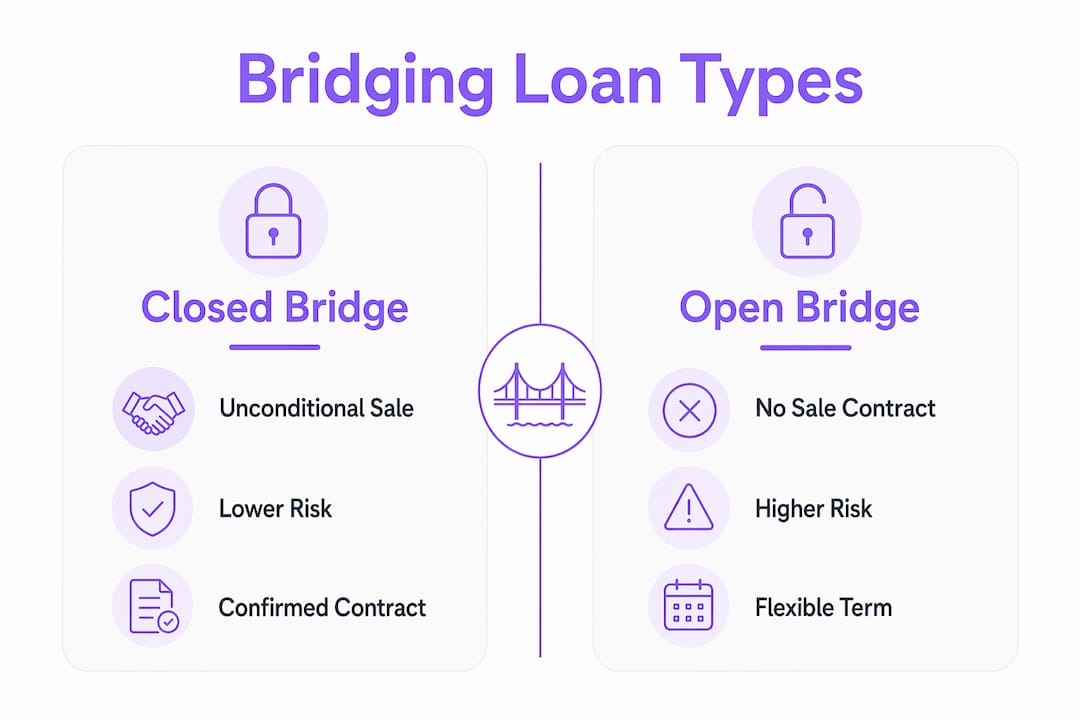
| Loan type | What it means | Risk level |
|---|---|---|
| Closed bridge | You have an unconditional sale contract on your existing home | Lower risk, lower cost |
| Open bridge | Your existing property has not yet sold | Higher risk, stricter criteria, higher cost |
Closed bridging loans require an unconditional sale contract on your current property. Because the sale is confirmed, lenders face less uncertainty. Open bridging loans, where your home is still on the market, carry higher risk for lenders and usually attract stricter criteria and higher costs.
Typical costs and interest rates
Bridging loan costs include an establishment fee of around 1.5% of the loan amount, plus interest. Combined, interest and fees can total around 4%–5% of the property value over a six-month period. That is a meaningful sum, so you need to factor it into your budget before committing.
Interest rates for bridging finance are typically floating rather than fixed. Floating rates move with market conditions, which means your repayments can change during the loan term. Most bridging loans also use interest-only repayments during the bridging period, with the full loan balance repaid from the proceeds of your property sale.
What are the benefits and risks of using a bridging offer?
Bridging finance solves a real problem. Settlement dates rarely align perfectly, and bridging finance reduces the stress of mismatched timelines by giving you short-term funds to proceed with your purchase.
Key benefits include:
- You can buy your next home without waiting for your current one to sell.
- You avoid the cost and disruption of renting between properties.
- You move once instead of twice, which saves time and removal costs.
- You can act quickly in a competitive market without a sale condition on your offer.
The risks are equally real:
- Peak debt servicing places significant pressure on your household income.
- Floating interest rates can increase your costs if rates rise during the loan term.
- If your existing property takes longer to sell than expected, you face mounting interest charges.
- Failure to sell on time may force you into costly refinancing or a quick sale below market value.
Pro Tip: Always get a realistic appraisal of your current property’s sale timeline before committing to bridging finance. Overestimating how fast your home will sell is the most common and costly mistake Kiwi borrowers make.
Experts consistently warn that bridging loans are high-cost, short-term tools, not long-term solutions. If your sale drags on, the financial pressure compounds quickly. The peak debt phase is the most financially stressful period, and many borrowers underestimate how much strain it places on their monthly cash flow.
Who is eligible for bridging offers and what do lenders look for?
Eligibility for bridging finance in New Zealand depends on several factors that go beyond a standard home loan assessment. Lenders apply tighter scrutiny because the risk profile is higher.
- Income and peak debt serviceability. Your lender will calculate your peak debt, which is the combined mortgage on both properties, and assess whether your current income can cover repayments on that total. This is the primary approval hurdle.
- Equity requirements. NZ lenders require a combined loan-to-value ratio (LVR) of 65%–80%, with at least 30%–35% equity remaining after the bridging loan is in place. If your equity is thin, approval becomes difficult.
- Loan-to-value ratio caps. Most lenders cap the LVR at 70%–80% across both properties. You need sufficient equity in your existing home to support the new purchase.
- Closed vs open bridge preference. Lenders strongly prefer closed bridging loans. If you have an unconditional sale contract on your current home, your application is far more likely to succeed.
- Mortgage structure. Bridging loans may be structured as first or second mortgages. Second mortgage arrangements require coordination between lenders and can complicate and delay approval.
Pro Tip: Engage a specialist mortgage adviser before you apply. Lender criteria for bridging finance vary significantly, and an adviser who understands the New Zealand market can match you with the right lender and structure from the start.
Professional mortgage advice is crucial when dealing with bridging finance. The combination of complex lender criteria, equity calculations, and peak debt assessments makes this one of the more technically demanding loan types in the New Zealand market. Getting it wrong can cost you thousands. For a broader overview of how this type of finance fits into the New Zealand property market, the bridging finance guide for NZ homeowners from Easysale is a useful starting point.
How to plan and use a bridging offer effectively
Good planning separates a smooth property transition from a stressful one. These steps give you the best chance of using bridging finance without unnecessary cost or risk.
- Align your settlement dates as closely as possible. The shorter your bridging period, the less interest you pay. Even a two-week overlap costs far less than a three-month one.
- Get your existing property on the market early. List your current home before or at the same time as you make an offer on the new one. The sooner you have a buyer, the sooner you can convert an open bridge to a closed one.
- Know your fallback plan. If your property does not sell within the expected timeframe, what will you do? Options include extending the loan term (at additional cost), reducing your asking price, or using a fast-sale service to secure a quick result.
- Keep peak debt as low as possible. Use any available savings to reduce the bridging loan amount. Every dollar you reduce from peak debt lowers your monthly repayment burden during the most financially exposed period.
- Consider a fast-sale option for your existing property. Services like Easysale offer cash purchases with flexible settlement dates, which can convert an open bridging situation into a closed one quickly. If your property has been sitting on the market or needs repairs, a quick sale option may be the most practical way to reduce your bridging risk.
- Review your budget for floating rate movements. Because bridging loans use floating interest rates, build a buffer into your budget for potential rate increases during the loan term.
For a broader look at why fast-sale services work well alongside bridging finance, the home buying service guide from Easysale explains the practical advantages in detail. You can also find a useful breakdown of bridging loan costs and fees that helps you compare the true cost of different bridging structures before you commit.
Key takeaways
A bridging offer is a short-term loan that lets Kiwi homeowners buy before they sell, but it requires careful planning, sufficient equity, and a realistic sale timeline to avoid costly financial pressure.
| Point | Details |
|---|---|
| Loan term and purpose | Bridging loans run for 3–12 months and cover the gap between buying and selling settlement dates. |
| Peak debt is the key test | Lenders assess your ability to service both mortgages simultaneously, not just the end debt. |
| Closed bridges cost less | Having an unconditional sale contract reduces lender risk and lowers your interest rate and fees. |
| Equity requirements are strict | Most NZ lenders require 30%–35% equity remaining after the bridging loan is in place. |
| Fast sales reduce risk | Selling your existing property quickly, through a service like Easysale, shortens the bridging period and cuts total interest costs. |
What I have learned about bridging offers in the New Zealand market
The biggest mistake I see Kiwi homeowners make with bridging finance is treating it like a safety net rather than a precise financial tool. People assume the market will move quickly, their property will sell in a few weeks, and the bridging period will be short. Sometimes that is true. Often it is not.
The peak debt phase is where things get uncomfortable. Carrying two mortgages on a single income, even for a few months, puts real pressure on household finances. I have seen borrowers who were confident at the start become genuinely stressed by month three when their property had not sold and the interest was mounting.
My honest advice is this: do not enter a bridging arrangement without a clear plan for the sale of your existing home. That means a realistic appraisal, a competitive listing price, and a fallback option if the market does not respond. If your property needs work or has been sitting unsold, a fast-sale service is worth serious consideration. The cost of a slightly lower sale price is often far less than three extra months of peak debt interest.
Bridging finance works well when it is used for what it is designed for: a short, controlled gap between two confirmed transactions. The closer your settlements are, the better the outcome.
— Aaron
Easysale and fast property sales during bridging situations
When you are carrying a bridging loan, every week your existing property sits unsold adds to your costs. Easysale helps Kiwi homeowners sell quickly and fairly, without agents, commissions, or drawn-out negotiations.
Easysale buys properties in any condition across New Zealand, which makes it a practical option when your home needs repairs or when a traditional listing is taking too long. If you are in an open bridging situation and need to convert it to a closed one fast, Easysale’s fair cash offer service gives you a confirmed sale on your timeline. The process is straightforward: submit your property details, receive a no-obligation offer, and settle when it suits you.
FAQ
What is a bridging offer in simple terms?
A bridging offer is a short-term loan that lets you buy a new property before your existing home has sold. It covers the financial gap between the two settlement dates, typically for a period of 3–12 months.
How does a bridging loan differ from a standard home loan?
A bridging loan is shorter in term, carries higher interest rates, and uses floating rather than fixed rates. Lenders also assess your ability to service peak debt, which is the combined mortgage on both properties at once.
What equity do I need for bridging finance in New Zealand?
Most New Zealand lenders require at least 30%–35% equity remaining across both properties after the bridging loan is in place, with a combined LVR typically capped at 65%–80%.
What happens if my property does not sell during the bridging period?
If your existing property does not sell within the loan term, you may need to renegotiate or extend the loan at additional cost, reduce your asking price, or use a fast-sale service to secure a quick result and repay the bridging loan.
Is a bridging offer a good idea for every homeowner?
Bridging finance suits homeowners with strong equity, reliable income, and a realistic sale timeline. It is not a long-term solution. Homeowners with thin equity or uncertain sale prospects should seek specialist mortgage advice before proceeding.


