
What if my house needs repairs: quick sale options in NZ

What if my house needs repairs: quick sale options in New Zealand
You’ve discovered your house needs urgent repairs, and the stress is mounting. Many Kiwi homeowners believe they must complete costly renovations before listing their property, facing weeks of work and thousands in expenses. This assumption creates unnecessary pressure, especially when financial constraints or time limitations make repairs impractical. The truth is you have multiple pathways to sell quickly without touching a single repair. This guide reveals practical options available in New Zealand, from selling as-is to cash buyers to accessing government grants, helping you make an informed decision that suits your circumstances and timeline.
Table of Contents
- Key takeaways
- Understanding your options when your house needs repairs
- How selling as-is to cash buyers works in New Zealand
- Financial help for home repairs through grants and loans
- Making the right choice: when to sell quick and when to repair first
- How we can help you sell your house fast in New Zealand
- FAQ
Key Takeaways
| Point | Details |
|---|---|
| As is sale speed | Selling as is to cash buyers yields quick offers and settlements but generally returns less than traditional sales. |
| Lower sale value | As is sales typically fetch about 50 to 70 percent of market value to cover repair costs and investor margins. |
| Grant support available | Warmer Kiwi Homes grants can fund insulation and heating repairs for eligible homeowners before selling. |
| Traditional sales higher value | Traditional market sales can deliver a higher price but require repairs, agent fees and longer timelines. |
Understanding your options when your house needs repairs
Facing property damage or necessary upgrades creates immediate pressure for New Zealand homeowners. Financial constraints often make repairs seem impossible, whilst deteriorating conditions threaten property value daily. You might feel trapped between expensive renovation costs and the fear of selling at a loss.
Three main pathways exist for selling properties requiring repairs:
- Traditional market sales: List with real estate agents after completing necessary repairs. This approach typically achieves the highest sale price but requires upfront repair investment, agent commissions, and 3-6 months marketing time. Best suited for homeowners with renovation budgets and patience for the conventional process.
- As-is cash sales: Homeowners facing urgent repairs can sell as-is to cash buyers for quick settlements without repairs or agents. This option eliminates renovation costs and agent fees whilst providing certainty and speed. Particularly valuable when selling damaged houses in NZ where repair costs would exceed your budget or timeline.
- Grant-assisted repairs: Access government funding programmes like Warmer Kiwi Homes for specific improvements before selling. Limited to eligible homeowners and particular repair types, mainly insulation and heating upgrades.
Your choice depends on urgency, available capital, property condition, and local market dynamics. Understanding selling as-is properties helps you evaluate whether immediate sale or repair-then-sell better serves your situation. Cash buyers specialise in purchasing homes regardless of condition, removing the burden of costly renovations whilst providing certainty in uncertain circumstances.

Pro Tip: Document all property issues with photos and notes before approaching buyers or applying for grants. This preparation speeds up assessments and demonstrates transparency, building trust with potential purchasers.
How selling as-is to cash buyers works in New Zealand
The as-is sale process offers remarkable simplicity compared to traditional property transactions. You submit basic property details through an online form or phone call, including location, size, condition, and known issues. Cash buyers conduct a quick assessment, often within 24 hours, evaluating repair costs and market value.
Cash offers arrive within 24-48 hours after initial assessment, providing certainty when you need it most. Settlement timelines range from 7 to 28 days based on your preference, with no agent commissions or marketing fees deducted from proceeds. This speed proves invaluable for homeowners facing financial pressure, relationship breakdowns, or urgent relocations.
The financial trade-off requires careful consideration. As-is sales typically yield 50-70% of market value reflecting buyer repair costs, renovation risks, and profit margins. A property worth $600,000 in perfect condition might fetch $300,000 to $420,000 as-is. This discount covers the buyer’s repair expenses, holding costs, and business profit.
Key advantages include:
- Zero repair obligations: Sell properties with damaged roofs, outdated plumbing, electrical issues, or structural problems without spending a dollar on improvements.
- Eliminated uncertainty: No buyer financing fall-throughs, inspection surprises, or conditional offers that collapse weeks into the process.
- Preserved privacy: Avoid open homes, multiple property viewings, and strangers walking through your personal space.
- Simplified legal process: Cash buyers handle standard property transactions with straightforward contracts and minimal complexity.
| Timeline Stage | Traditional Sale | As-Is Cash Sale |
|---|---|---|
| Property preparation | 2-8 weeks repairs | None required |
| Marketing period | 6-12 weeks average | 1-2 days assessment |
| Offer to acceptance | 1-4 weeks negotiation | 24-48 hours |
| Settlement period | 4-6 weeks typical | 7-28 days flexible |
| Total timeline | 3-6 months | 1-5 weeks |
Legal obligations remain regardless of sale method. New Zealand property law requires disclosure of known defects, structural issues, weathertightness problems, and material facts affecting value. Failing to disclose creates liability for misrepresentation claims years after settlement. When selling as-is property NZ buyers expect full transparency about property condition, making honesty your best protection.
Pro Tip: Request written offers from at least three cash buyers before accepting. Offers can vary by $50,000 or more for the same property, and comparison shopping ensures you receive fair market value for as-is condition.
Financial help for home repairs through grants and loans
Government assistance programmes provide pathways for some homeowners to fund repairs before selling. The Warmer Kiwi Homes scheme provides 80-90% funding for ceiling and underfloor insulation plus heating system upgrades. This substantial support helps eligible homeowners improve property value and comfort before listing.
Eligibility requirements limit access to specific homeowner groups:
- Properties built before 2008 requiring insulation improvements
- Owner-occupied homes where the owner holds a Community Services Card
- Properties in designated lower-income areas or owned by certain demographic groups
- Homes meeting basic structural standards allowing safe insulation installation
The programme covers insulation materials and professional installation for qualifying ceiling and underfloor spaces. Heating grants extend to heat pumps, wood burners, and other approved efficient heating systems. Homeowners contribute 10-20% of total costs, making a $8,000 insulation project cost you $800 to $1,600 out of pocket.
Beyond Warmer Kiwi Homes, financial assistance options remain limited for general property repairs. Iwi-specific grants exist for members of certain Māori communities, typically requiring tribal affiliation and property location within traditional boundaries. Regional councils occasionally offer targeted programmes for specific issues like earthquake strengthening or flood resilience, but these change frequently and serve narrow purposes.
Banking institutions provide green home loans up to $80,000 at preferential interest rates for energy-efficiency improvements, solar installations, and sustainable upgrades. These loans require standard creditworthiness assessments and add monthly repayment obligations. They suit homeowners planning long-term ownership rather than immediate sales.
| Funding Source | Coverage | Eligibility | Best For |
|---|---|---|---|
| Warmer Kiwi Homes | 80-90% insulation/heating | Low-income, pre-2008 homes | Energy efficiency upgrades |
| Green home loans | Up to $80,000 | Standard credit approval | Sustainable improvements |
| Iwi grants | Varies by programme | Tribal membership | Community members |
| Council programmes | Specific hazards | Location-dependent | Earthquake/flood issues |
Structural repairs, plumbing replacements, roof renewals, and cosmetic renovations rarely qualify for government assistance. These common repair needs fall outside existing programme scopes, leaving homeowners to fund them privately or consider as-is sales.
Pro Tip: Apply for Warmer Kiwi Homes grants even if selling soon. Completed insulation and heating upgrades increase property appeal and value, potentially recovering grant costs plus additional profit in final sale price.
Making the right choice: when to sell quick and when to repair first
Your decision hinges on four critical factors: urgency, financial capacity, repair extent, and local market conditions. Understanding how these elements interact guides you toward the option serving your best interests.
Selling as-is makes sense when:
- Financial pressure demands immediate cash injection for debt relief, medical expenses, or other urgent needs
- Repair costs exceed 20-25% of property value, making renovation investment uneconomical
- Property damage is severe, requiring extensive structural work, weathertightness remediation, or complete system replacements
- Personal circumstances like relationship breakdown, health issues, or overseas relocation require quick resolution
- Local market conditions show declining values, making delayed sales increasingly risky
Repairing before selling proves advantageous when:
- Minor cosmetic improvements costing under $15,000 could increase sale price by $40,000 or more
- Strong local market demand suggests quick sales after modest renovations
- Available capital or approved financing covers repair costs without financial stress
- Time permits 4-6 month traditional sale processes including repairs and marketing
- Property location and features justify premium pricing after improvements
Always disclose property issues legally regardless of sale method. Transparency protects you from future liability whilst building buyer trust. Obtain multiple cash offers when selling quickly, as competition drives better pricing. Traditional sales suit homeowners with time and capital for minor repairs yielding substantial value increases.
Comparing actual offers provides clarity. Request written quotations from contractors for necessary repairs, then obtain cash offers from multiple buyers. Calculate net proceeds after repair costs and agent fees for traditional sales versus immediate as-is proceeds. This concrete comparison removes guesswork from your decision.

Consider opportunity costs beyond direct expenses. Months spent renovating represent lost time, ongoing mortgage payments, insurance premiums, and rates. Stress and uncertainty during lengthy traditional sales affect wellbeing and decision-making capacity. Quick sales eliminate these hidden costs whilst providing certainty.
Market timing influences outcomes significantly. Rising markets favour waiting for repairs and traditional sales, as property values increase during renovation periods. Declining or uncertain markets make immediate sales attractive, locking in current values before further deterioration. Damaged house sale advice NZ emphasises evaluating local trends before committing to either pathway.
Expert guidance helps navigate complex decisions. Property valuers provide objective assessments of as-is value versus post-repair potential. Solicitors ensure legal compliance with disclosure obligations. Financial advisers evaluate tax implications and debt management strategies. These professionals offer perspective beyond emotional attachments and immediate pressures.
How we can help you sell your house fast in New Zealand
Navigating property sales during stressful circumstances requires support from experienced professionals who understand your urgency. We’ve helped hundreds of Kiwi homeowners sell properties quickly without repairs or traditional real estate involvement.
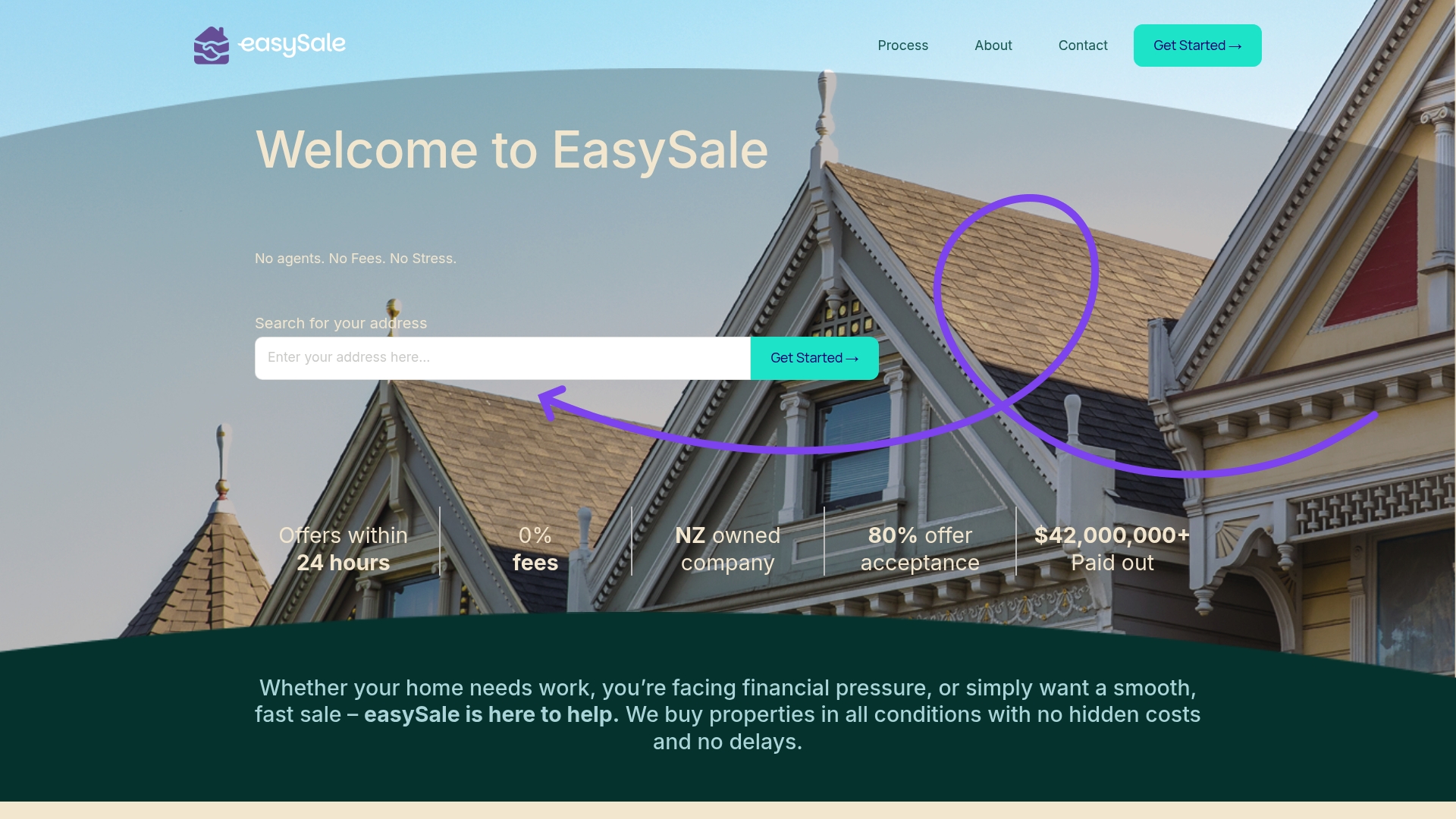
Our Easy Sale home page explains our straightforward three-step process connecting you with vetted cash buyers across New Zealand. Submit your property details through our simple online form, receive competitive offers within 24-48 hours, and settle on your preferred timeline. Our fast house sale service NZ eliminates agent commissions, lengthy marketing periods, and repair obligations.
We specialise in selling damaged house as-is NZ situations where traditional sales prove impractical. Whether facing earthquake damage, weathertightness issues, deferred maintenance, or complete renovation needs, our network of buyers purchases properties in any condition. You receive fair market offers reflecting current as-is value without pressure or obligation.
FAQ
What does selling a house as-is mean?
Selling as-is means transferring property ownership in current condition without completing repairs or improvements. Buyers accept all existing defects, damage, and maintenance issues as part of the purchase. You still must legally disclose known problems, but you’re not obligated to fix them before settlement.
How quickly can I get a cash offer for my damaged house?
Most cash buyers provide written offers within 24-48 hours after initial property assessment. Some respond within hours for straightforward situations. Settlement typically occurs 7-28 days after offer acceptance, depending on your preferred timeline and legal requirements.
Am I eligible for Warmer Kiwi Homes grants?
Eligibility requires owning and occupying a pre-2008 home needing insulation improvements. You must hold a Community Services Card or live in designated lower-income areas. The programme covers ceiling and underfloor insulation plus approved heating systems, funding 80-90% of costs for qualifying homeowners.
Will selling without repairs reduce my house price?
Yes, as-is sales typically achieve 50-70% of full market value. This discount reflects buyer repair costs, renovation risks, holding expenses, and profit margins. A $500,000 renovated property might sell for $250,000 to $350,000 as-is, but you avoid repair expenses, agent fees, and lengthy marketing periods.
Can I sell a house with earthquake damage in NZ?
Absolutely. Cash buyers regularly purchase earthquake-damaged properties throughout New Zealand. Structural issues, foundation damage, and weathertightness problems don’t prevent as-is sales. Full disclosure of damage extent and engineering reports helps buyers assess repair costs and make fair offers quickly.
Recommended
