
What is a no-obligation offer? A guide for Kiwi sellers


TL;DR:A no-obligation offer allows homeowners to consider a purchase proposal without legal or financial commitments until they sign a formal agreement.It provides a quick, cost-free way to gauge a buyer’s offer, offering flexibility to compare options or decline freely.
A no-obligation offer is a formal proposal to purchase your property that you can accept, decline, or ignore without any legal or financial consequences. No contract binds you. No penalty applies if you walk away. For New Zealand homeowners weighing their options, this type of offer is one of the most misunderstood tools in the property selling process.

The term “no-obligation offer” is often used interchangeably with “non-binding offer” or “no-commitment offer.” Both describe the same thing: a buyer signals serious intent to purchase, but neither party is legally committed until a formal purchase agreement is signed. Easysale uses this approach to give Kiwi homeowners a genuine, pressure-free way to explore their options before making any decisions.
What is a no-obligation offer in property sales?
A no-obligation offer means no legal obligation exists until both parties sign a binding purchase agreement. Before that point, you are free to consider the offer, compare it with others, or simply decline without explanation.

In New Zealand property law, a contract for the sale of land must be in writing and signed by both parties to be enforceable. An informal offer, verbal discussion, or written quote does not create a binding agreement on its own. This is the legal foundation that makes no-obligation offers genuinely safe for sellers to explore.
Non-binding offers communicate intent without creating enforceable legal obligations. That distinction matters enormously. A buyer who sends you a no-obligation cash offer is saying, “We want to buy your home at this price.” You are not saying yes to anything by simply receiving or reading that offer.
What the offer does and does not do
A no-obligation offer does give you a concrete number to work with. It tells you what a buyer is willing to pay, under what conditions, and on what timeline. That information is genuinely useful, even if you never accept.
What it does not do is lock you into a sale, prevent you from talking to other buyers, or require you to disclose sensitive financial information. Initial quote requests do not require sensitive documents and are not formal legal steps. You provide basic property details, and the buyer does the assessment work.
Pro Tip: Before engaging with any offer, confirm in writing that the offer is non-binding. Ask the buyer directly whether any clauses in the document restrict your ability to sell to someone else.
What are the main benefits of a no-obligation cash offer?
The clearest benefit is speed. No-obligation cash offers typically close in 7–14 days, compared to the months a traditional sale can take. For homeowners facing financial pressure, a relationship breakdown, or a property in poor condition, that timeline is a genuine relief.
Cost savings are the second major advantage. Requesting a no-obligation cash offer costs nothing and can save sellers around 6% in traditional agent commission fees. On a $700,000 property, that is $42,000 staying in your pocket rather than going to an agent.
A no-obligation cash offer also means selling without making repairs or renovations. No open homes. No staging. No waiting for a buyer who needs finance approval. The buyer purchases the property in its current condition, which is called an “as-is” sale.
Freedom to compare and decide
No-obligation offers reduce stress by letting you compare options without pressure or immediate commitment. You can request offers from multiple cash buyers, review them side by side, and take your time deciding. That freedom is rare in a traditional sale, where agents often push for quick decisions.
| Feature | No-obligation cash offer | Traditional agent sale |
|---|---|---|
| Time to close | 7–14 days | 60–120 days or more |
| Agent commission | None | Typically around 6% |
| Repairs required | No | Often yes |
| Open homes | No | Usually yes |
| Commitment to proceed | Only after signing | Conditional from listing |
| Cost to request | $0 | Varies |
Pro Tip: Use a no-obligation offer as a benchmark. Even if you decide to list with an agent, knowing what a cash buyer will pay gives you a realistic floor price to negotiate from.
For a broader look at your selling options, the home selling options guide on the Easysale blog covers seven approaches Kiwi homeowners can consider.
What should homeowners watch out for?
A no-obligation offer is not automatically risk-free. The risks come from misreading the terms or acting prematurely. Knowing what to look for protects you.
- Check for hidden binding clauses. Some offers contain exclusivity clauses or rights of first refusal that restrict your ability to sell to other buyers. These clauses can appear in the fine print of what looks like a simple quote document. Read every page before signing anything.
- Do not share sensitive financial information early. You do not need to provide bank statements, mortgage details, or income records at the quote stage. If a buyer asks for this information before making an offer, treat that as a warning sign.
- Never treat an offer as a contract. Treating offers as contracts prematurely can lead to unintended consequences. Do not cancel your home insurance, stop maintenance, or make financial commitments based on an offer alone.
- Watch for high-pressure tactics. Legitimate cash buyers give you time to think. If a buyer sets an artificial deadline of hours rather than days, or pressures you to sign quickly, that behaviour is a red flag.
- Seek independent advice. A property lawyer can review offer documents in New Zealand for a modest fee. That cost is worth it if you are unsure about any clause in the document.
Pro Tip: A genuine no-obligation offer will never require you to sign anything before you are ready. If you feel rushed, slow down and ask for more time. A trustworthy buyer will give it to you.
How do no-obligation offers work in practice?
The process for Kiwi homeowners is straightforward. Understanding each step helps you move through it confidently.
- Submit your property details. You provide the address, a brief description of the property’s condition, and your contact information. No inspections or valuations are required at this stage.
- The buyer assesses your property. The cash buyer reviews comparable sales in your area, considers the property’s condition, and calculates an offer. This typically takes 24–48 hours.
- You receive a written offer. The offer states the purchase price, proposed settlement date, and any conditions. Because it is non-binding, you are under no obligation to respond by any particular time.
- Review and compare. Read the offer carefully. Check for any clauses that limit your options. Compare the offer against your own understanding of the property’s value and your financial needs.
- Accept, negotiate, or decline. You can accept the offer as written, go back to the buyer with a counter-proposal, or simply say no. All three responses are valid and carry no penalty.
- Sign the purchase agreement. If you accept, both parties sign a formal sale and purchase agreement. This is the point at which legal obligations begin. Settlement then follows on the agreed date.
For a detailed walkthrough of this process, the Easysale guide on navigating a property offer covers each stage with practical advice for New Zealand sellers.
Key takeaways
A no-obligation offer gives you a real purchase price with zero commitment until you choose to sign a formal contract.
| Point | Details |
|---|---|
| No legal commitment until signing | Neither party is bound until a formal sale and purchase agreement is signed by both. |
| Significant cost savings | Accepting a cash offer avoids agent commissions of around 6% and eliminates repair costs. |
| Fast settlement timeline | Cash offers typically close in 7–14 days, far faster than a traditional agent sale. |
| Hidden clauses are a real risk | Always check for exclusivity or first-refusal clauses before engaging with any offer document. |
| Freedom to walk away | You can decline any offer at any stage before signing without penalty or explanation. |
Why I think Kiwi sellers underestimate this tool
Aaron here. After years of watching homeowners navigate property sales, the pattern I see most often is this: sellers either distrust no-obligation offers entirely, or they trust them too much. Both extremes cause problems.
The distrust usually comes from a bad experience with a pushy buyer or a confusing document. That is a legitimate concern, but it should not put you off the concept entirely. A well-structured no-obligation offer from a reputable buyer is genuinely one of the most useful tools a seller has. It gives you information, and information is power.
The over-trust problem is more subtle. Some sellers receive an offer, feel relieved, and start mentally moving out before anything is signed. They stop maintaining the property. They cancel insurance. They tell their family the sale is done. Then something falls through, and they are left exposed.
My advice is simple. Treat a no-obligation offer as exactly what it is: a starting point for a conversation. Use it to understand your options. Read every word before you sign anything. And if you are unsure, spend a few hundred dollars on a property lawyer to review the document. That is money well spent compared to the alternative.
The sellers who get the best outcomes are the ones who stay calm, compare their options, and only commit when they are genuinely ready. A no-obligation offer makes that possible. Use it that way.
— Aaron
Easysale offers fair cash offers for Kiwi homeowners
If you are ready to see what your property is worth without any pressure or commitment, Easysale makes the process straightforward. You submit your property details, receive a fair cash offer within 24–48 hours, and choose your own settlement date.
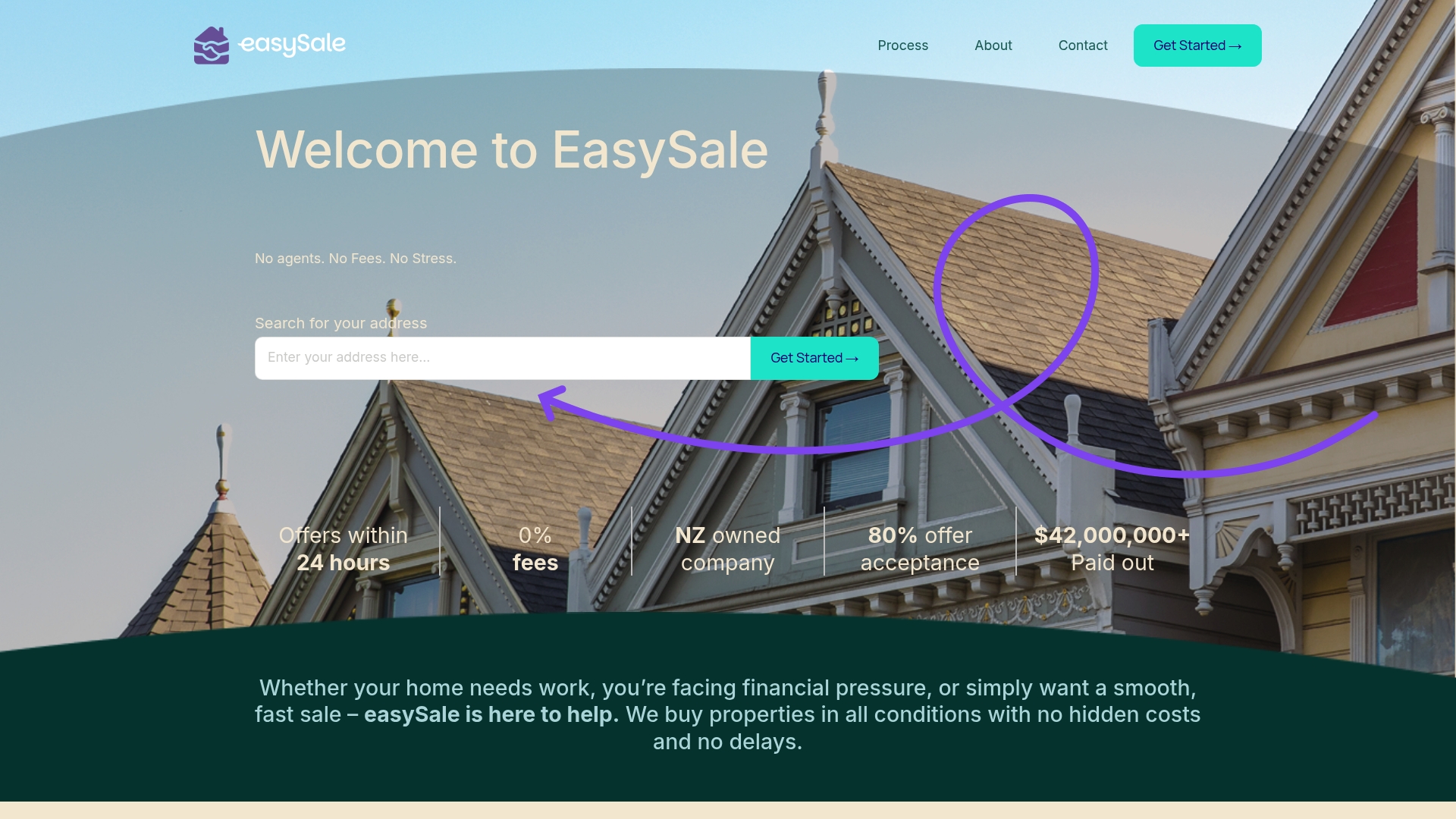
Easysale buys properties across New Zealand in any condition, with no agent commissions, no repair requirements, and no hidden fees. For homeowners with a damaged or difficult property, the fair cash offer for damaged homes page explains exactly how the process works and what to expect. Getting an offer costs nothing and commits you to nothing.
FAQ
What is the meaning of a no-obligation offer?
A no-obligation offer is a proposal to purchase your property that carries no legal or financial commitment until a formal sale and purchase agreement is signed by both parties.
Does receiving a no-obligation offer mean I have to sell?
No. You can accept, negotiate, or decline the offer at any point before signing a contract, with no penalty or obligation to explain your decision.
How quickly can a no-obligation cash offer close?
Cash offers typically close in 7–14 days once a purchase agreement is signed, which is significantly faster than a traditional agent-led sale.
Do I need to pay anything to get a no-obligation quote?
No. Requesting a no-obligation quote from a cash buyer costs nothing. There are no fees, no valuations required, and no financial information needed at the initial stage.
What should I check before engaging with a no-obligation offer?
Check the offer document for exclusivity clauses or rights of first refusal that could limit your ability to sell to other buyers, and never sign anything until you have read every term carefully.


