
NZ Private Sale: 3 Moves to Start, Lawyer Steps, Printable Plan
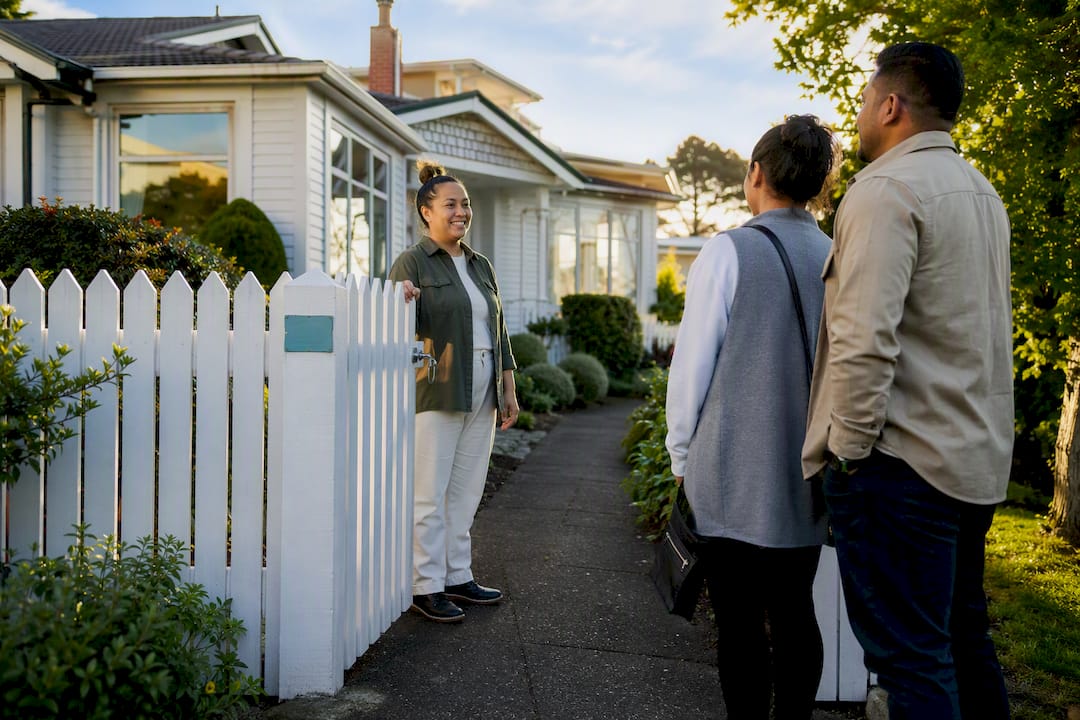
Yes, you can sell privately in New Zealand, and it’s completely legal. Start with three moves this week: set your goals and timeline, engage a lawyer or conveyancer straight away, and pull your title, LIM report and council records together. Everything else on the checklist for selling a house by owner builds from those three steps.
TL;DR:Setting clear goals and engaging a lawyer early are essential to avoid legal risks and ensure proper document management during the sale.Proper disclosure of known defects and having all relevant reports and warranties ready before listing protect sellers from future legal claims.Accurate property valuation and cautious pricing, with real data sources, help prevent overpricing and can signal market interest or stagnation.Managing viewings with safety measures, qualification questions, and controlled access reduces owner risk and helps identify serious buyers.Comparing offers based on price, deposit, conditions, and settlement date allows better negotiation than just focusing on the highest bid.
EasysalePrefer a simpler property sale?Easysale helps New Zealand homeowners sell quickly, including properties in any condition, without agents or commission fees.Explore Easysale
Table of Contents
- Steps to selling a house by owner: the full checklist
- What does your lawyer handle in the legal checklist?
- What must you disclose, and which documents do buyers expect?
- How do you value your property and set the right price?
- How do you prepare and market a home without an agent?
- How do you run viewings and qualify buyers?
- How do you compare offers beyond the asking price?
- Signing the agreement: who signs and where does the deposit go?
- What happens between signing and settlement day?
- What’s a realistic timeline and budget for a private sale?
- Your one-page printable checklist to sell house by owner
- How do you keep viewings safe and secure?
- What negotiation tactics work best for FSBO sellers?
- When does a private sale make sense, and when doesn’t it?
- Easysale: a faster route when a private sale isn’t the priority
- Where to check the official rules yourself
- Sources
Steps to selling a house by owner: the full checklist
Selling without a realtor still follows a legal and logistical sequence, and skipping steps out of order is where private sellers lose money or time. Here’s the order that actually works, from the first phone call to handing over the keys.
- Decide your goals and timeline. Are you selling with vacant possession or keeping a tenant in place through settlement? This decision shapes your marketing and your buyer pool.
- Engage a lawyer or conveyancer immediately. There’s no legal requirement to hire a real estate agent, but a lawyer or conveyancer must manage the contract, ID checks and deposit. Do this before you list, not after an offer arrives.
- Gather your documents. Title, LIM report, building consents, code compliance certificates, insurance history and any warranties on renovations.
- Set your price using real data. Comparable sales, portal insights and, if needed, a registered valuer’s appraisal.
- Prepare and list the home. Photos, honest copy, and your chosen listing platforms.
- Run open homes and private viewings, logging every visitor and following up promptly.
- Collect and compare offers, weighing price against deposit, conditions and settlement date.
- Sign the sale and purchase agreement once your lawyer has reviewed it and all conditions are agreed.
- Work through conditions to unconditional status, then prepare for settlement day.
Each of these steps has its own traps, which is why the sections below go deeper into the legal, financial and practical detail behind each one.
What does your lawyer handle in the legal checklist?
You don’t need an agent to sell your home, but you cannot legally skip a lawyer or conveyancer. Their job covers the parts of the sale that carry real financial and legal risk, and it’s worth understanding exactly what falls on their desk versus yours.
- Preparing or reviewing the sale and purchase agreement before either party signs
- Holding the buyer’s deposit in a trust account until the agreement turns unconditional
- Running ID verification and anti-money-laundering checks on both parties
- Managing the title transfer and liaising with the buyer’s lawyer through to settlement
- Advising you on any special conditions, easements or encumbrances on the title
A lawyer must hold the buyer’s deposit in a trust account until the sale becomes unconditional — that single rule is the backbone of every private sale in New Zealand, according to Consumer Protection. It protects both sides: the buyer’s money isn’t released to you until the deal is locked in, and you’re not left exposed if a condition falls through.
Your lawyer will also want to see your photo ID early, so have your passport or driver’s licence ready when you make first contact. Leaving this until settlement week is one of the most common causes of delay.
What must you disclose, and which documents do buyers expect?
Private sellers carry a legal duty to disclose known defects, and Settled is blunt about the consequences of skipping this: buyers can take legal action later if you conceal a known problem.
Have these ready before you list:
- Certificate of title and LIM report from your local council
- Building consents and code compliance certificates for any renovations
- Warranties for recent work (roofing, plumbing, electrical)
- A written note of any weathertightness issues, boundary disputes or unconsented alterations
- For apartments or townhouses, body corporate records and the Section 36 certificate, which must reach the buyer’s lawyer at least five working days before settlement
How do you value your property and set the right price?
Overpricing is the single biggest reason a private listing stalls. Start with sold comparables in your street or suburb, then cross-check with QV data and Trade Me’s property insights tools, which show what buyers are actually searching and offering in your area, according to Trade Me Property.
- Pull at least five comparable sales from the last three to six months
- Get a registered valuer’s appraisal if your home has unusual features or you’re unsure of the range
- Choose your pricing method: a price range, a fixed asking price, or a deadline sale style approach
- Watch the first two weeks of enquiries closely — low interest is a pricing signal, not a marketing failure
If viewings are steady but offers aren’t coming, adjust the price before you adjust the marketing. Buyers vote with their wallets faster than they vote with feedback forms.
How do you prepare and market a home without an agent?
Pro Tip: Shoot your listing photos in the morning light on a clear day. Agents pay professional photographers for a reason, and it’s usually the single cheapest upgrade you can make to a private listing.
Good marketing for a private sale rests on three things: photos that don’t need explaining, copy that states facts rather than adjectives, and listing in the right places.
- Book a professional photographer rather than relying on a phone camera
- Write listing copy around facts: land size, bedroom count, school zone, recent renovations
- List on Trade Me Property and any local Facebook marketplace groups relevant to your area
- Do a light declutter and a deep clean before your first photo session, not after
- Fix small, visible issues (leaky taps, chipped paint, cracked tiles) before viewings start
Staging doesn’t need to mean hiring a stylist. Clear benchtops, open curtains, and a tidy garden do most of the heavy lifting.
How do you run viewings and qualify buyers?
Open homes and private viewings are where most of your time goes, so structure them tightly.
- Set fixed viewing windows rather than one-off appointments where possible, and if the property is tenanted, give proper notice under the tenancy rules before anyone enters.
- Keep a visitor log at the door with name and contact details for every person who walks through.
- Follow up within 24 hours of each viewing, asking directly whether they’re pre-approved for finance and what timeframe they’re working to.
- Note serious interest versus casual lookers so you’re not chasing dead leads a week later.
A short conversation at the door, asking whether a visitor has finance sorted and how soon they’d want to settle, filters out window-shoppers before you waste a Saturday on them.
How do you compare offers beyond the asking price?
The highest number on the page isn’t automatically the best offer. Every offer has four parts worth weighing together:
- Price — the headline figure, but only one piece of the puzzle
- Deposit — how much and how quickly it lands in your lawyer’s trust account
- Conditions — finance, LIM review, building inspection, sale of the buyer’s own home
- Settlement date — does it match the timeline you set in step one?
A lower, unconditional offer often beats a higher offer loaded with finance and inspection conditions, simply because it carries less risk of falling through. Once you’ve got two or three offers in hand, send them to your lawyer to finalise or counter. Building a simple comparison sheet, price against deposit against conditions, side by side, makes this decision far clearer than eyeballing numbers in your inbox.
Signing the agreement: who signs and where does the deposit go?
Once you accept an offer, your lawyer draws up or finalises the sale and purchase agreement. Check three things before anyone signs:
- Every owner on the title signs the agreement, not just one partner or family member
- Chattels (curtains, whiteware, fixed furniture) and the settlement date are spelled out in writing, not assumed
- The agreement includes default clauses covering what happens if either party pulls out
The deposit goes straight into your lawyer’s trust account and stays there until the agreement is unconditional. It doesn’t touch your bank account before that point, and it shouldn’t.
What happens between signing and settlement day?
Most agreements include conditions that need to be satisfied before the sale locks in.
- Track each condition’s deadline (finance approval, LIM review, building inspection, valuation) and chase your lawyer if a date is close.
- Once every condition is satisfied, the agreement turns unconditional, and the deposit becomes non-refundable to the buyer in most standard clauses.
- In the days before settlement, prepare your pre-settlement checklist: confirm chattels are still in place, take final meter readings, arrange keys, and give the house a final clean.
- On settlement day itself, your lawyer handles the funds transfer and title change with the buyer’s lawyer. You hand over keys once your lawyer confirms funds have cleared.
What’s a realistic timeline and budget for a private sale?
Most private sales run anywhere from six to twelve weeks from listing to settlement, longer if finance conditions or a building report throw up surprises.
- Lawyer or conveyancer fees for a straightforward sale
- Marketing costs: photography, listing fees, any signage
- Minor repairs identified before or during the sale process
- Rates adjustment and mortgage discharge fees at settlement
If you’ve owned the property for a short period, get specialist tax advice on the bright-line rules before you sign anything, since timing can affect whether the sale is taxable. A pre-sale building inspection can shorten the conditional period and give buyers more confidence upfront, based on guidance from CFLaw’s conveyancing booklet.
Your one-page printable checklist to sell house by owner
Print this table and tick each row off as you move through the sale.
| Stage | Action | Notes |
|---|---|---|
| Legal | Engage lawyer, provide photo ID | Do this before listing |
| Documents | Order title and LIM report | From your local council |
| Pricing | Pull comparable sales, consider appraisal | Cross-check Trade Me insights |
| Marketing | Book photographer, write listing, choose portals | List on Trade Me |
| Viewings | Log visitors, follow up within 24 hours | Note finance status |
| Offers | Compare price, deposit, conditions, settlement date | Send shortlist to lawyer |
| Contract | All owners sign, chattels and dates confirmed | Deposit into trust account |
| Settlement | Final meter readings, keys ready, clean home | Lawyer manages funds transfer |
Keep a note of your lawyer’s direct contact and your key dates (listing date, offer deadline, settlement date) at the top of the page so you’re not hunting for them mid-sale. A related property selling checklist guide has a longer version of this table if you want extra detail on any single row.
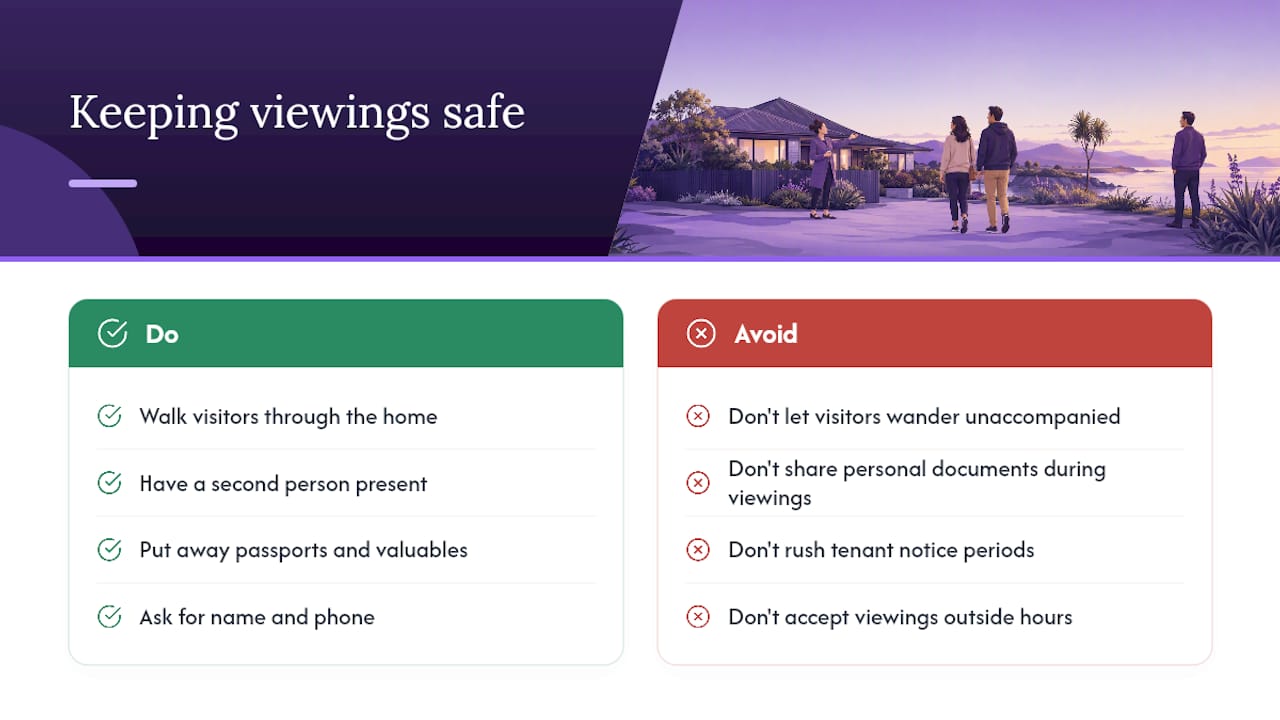
How do you keep viewings safe and secure?
Opening your home to strangers is the part of selling privately that makes most owners uneasy, and that unease is fair. A few habits protect you without slowing the sale down.
Never let a visitor wander unaccompanied through the whole property, especially bedrooms and any home office where documents or valuables might sit in view. Walk the group through yourself, or have a second person present if you’re hosting solo. Put away passports, chequebooks, prescription medication and small valuables before anyone arrives, not just for open homes but for one-on-one viewings too.
Ask for a name and phone number at the door before letting anyone in, and cross-check it against their enquiry if they contacted you online first. If something feels off, a request to view outside advertised hours, reluctance to give contact details, trust that instinct and reschedule.
For evening viewings, keep the property well lit and let a neighbour or friend know roughly when strangers will be coming and going. If you’re selling a tenanted property, remember tenants are entitled to reasonable notice before any viewing, and rushing this can create tension that shows up in how the home presents. A helpful guide on privacy and safety when selling covers more on managing personal information during a private sale, from what to leave off your listing to how much detail to give enquirers before you’ve met them.
What negotiation tactics work best for FSBO sellers?
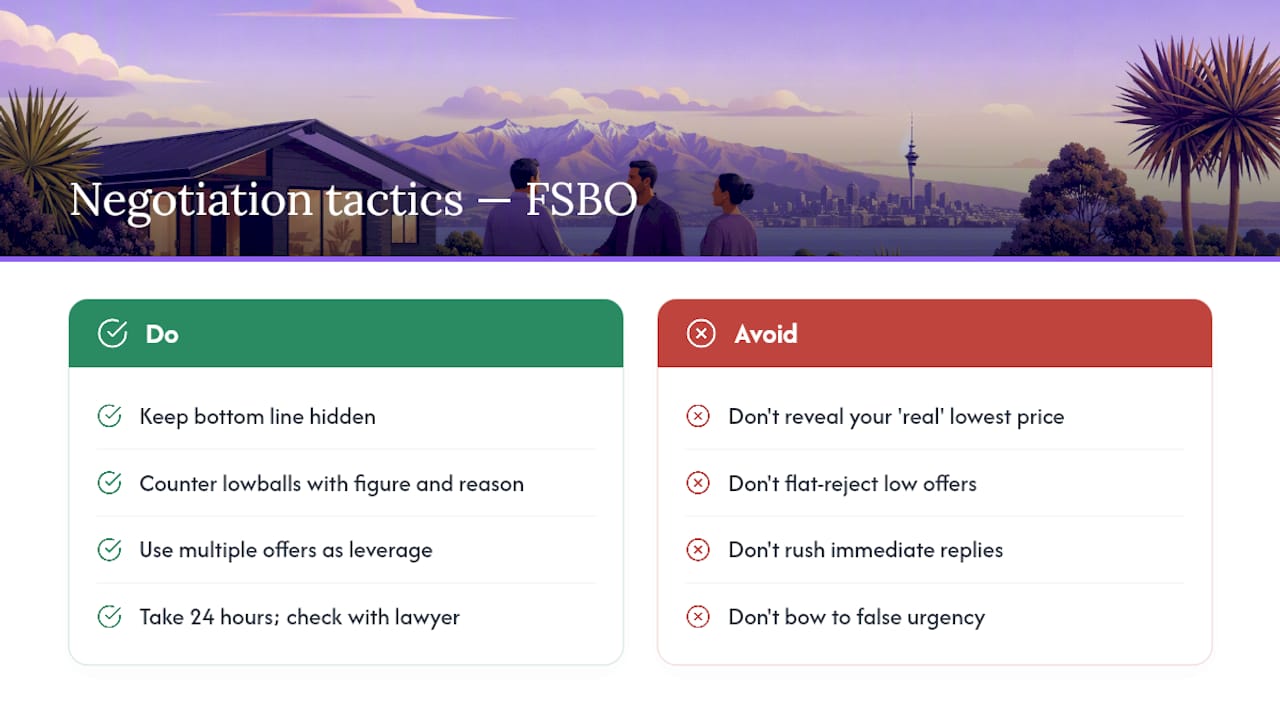
FSBO sellers face one disadvantage agents don’t: buyers know there’s no commission built into your asking price, and some will push harder assuming you have room to move. Knowing that going in changes how you negotiate.
Never reveal your bottom line early, even when a buyer asks directly what you’ll “really” take. Let the market tell you through actual offers, not through a conversation at an open home. If you get a lowball offer, don’t dismiss it outright. Counter with a specific figure and a reason (recent comparable sales, condition of the home) rather than a flat rejection, which keeps the conversation alive.
Multiple offers give you real leverage. If you’ve got two or more genuine buyers, let each know politely that you’re considering other offers. Most will improve their terms rather than walk away. Silence is also a tool: you don’t owe an instant response to every offer. Taking 24 hours to reply, after checking in with your lawyer, often results in a better counter than reacting immediately.
Watch for buyers who lead with urgency (“we need an answer today”) paired with a low offer. That combination is a pressure tactic more often than a genuine constraint. A buyer with finance sorted and no chain to sell first is usually worth more to you than a slightly higher offer loaded with conditions, even if the number on paper looks smaller.
When does a private sale make sense, and when doesn’t it?
Private selling makes sense when you’ve got time, a property in reasonable condition, and the patience to manage viewings and paperwork yourself. It doesn’t suit everyone. The sellers who come unstuck usually price emotionally, disclose selectively, or skip proper legal review to save a few dollars, and each of those mistakes costs far more than it saves.
If your situation calls for speed over control, a cash buyer such as Easysale is worth weighing as the faster alternative.
— Aaron
Easysale: a faster route when a private sale isn’t the priority
Everything in this checklist assumes you’ve got weeks to spare, buyers to qualify, and the patience to manage a lawyer, a LIM report and an open home schedule. Easysale exists for the homeowners who don’t. It’s a direct cash buying service, so there’s no agent commission, no marketing costs, and no waiting on a buyer’s finance condition to fall through.
Easysale buys homes as they are, including properties with damage, unconsented work, tenants in place, or an inherited estate that needs sorting quickly. You skip the repairs, the staging, and the weeks of viewings entirely. If your priority is a firm number and a settlement date that suits you, rather than running the full private-sale process above, get a fair cash offer on your home and see what a no-obligation offer looks like within a day.
Where to check the official rules yourself
- Settled: government guidance on selling privately and disclosure duties
- Real Estate Authority: the official sale and purchase agreement guide
- New Zealand Law Society: buying and selling property guidance
This article is general information, not a substitute for advice from a qualified lawyer. Consult a qualified legal professional about your own circumstances before acting on anything here.
Sources
- Settled
- Sales and purchase agreement guide | Real Estate Authority (REA)
- Working with a lawyer or conveyancer | Consumer Protection
- Selling your home privately: the need to knows | Trade Me Property
Recommended
