
Property selling checklist 2025: your complete NZ guide

TL;DR:A property selling checklist for 2025 offers New Zealand homeowners a structured plan to ensure a smooth sale from preparation to settlement. Early document gathering, consistent home presentation, and active management of legal deadlines are essential for a successful transaction. Proper planning and organization help sellers negotiate better deals and avoid costly delays.
A property selling checklist 2025 is a structured, step-by-step plan that organises every task from initial home preparation through to final settlement, giving New Zealand homeowners a clear path to a successful sale. Without one, critical steps get missed, timelines slip, and what should be a rewarding process becomes unnecessarily stressful. This guide covers the full selling journey, from choosing a valuation service and working with a conveyancer, to managing open homes, gathering title documents, and coordinating your closing timeline. Whether you are selling a family home in Auckland or a rental property in Christchurch, this checklist gives you the structure to sell with confidence in 2025.
1. Choose the right agent or selling method first
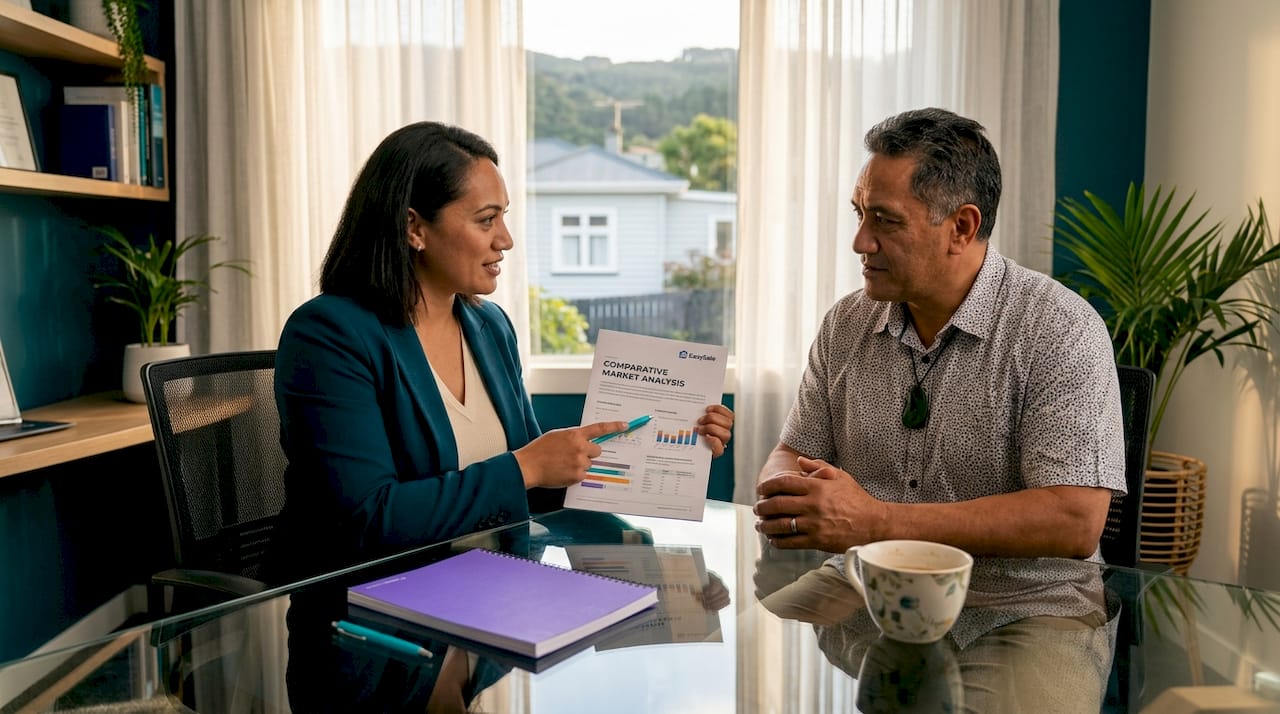
Your first decision shapes every step that follows. You need to decide whether to sell through a licensed real estate agent, sell privately, or use a direct cash buyer like Easysale. Each path has different cost, timeline, and effort implications. Agents typically charge commission of 2 to 4 percent of the sale price, while private sales and cash buyer platforms eliminate that cost entirely.
If you go the agent route, interview at least three candidates. Ask each one for a comparative market analysis, their average days on market, and their specific marketing plan for your property. A good agent brings buyer networks, negotiation experience, and local market knowledge that can justify their fee. A poor one costs you time and money.
Pro Tip: Request a written marketing plan from any agent before signing a listing agreement. Vague promises about “social media exposure” are not a plan. You want specific platforms, open home schedules, and a photography timeline.
2. Get a professional valuation early
A professional valuation sets a realistic price expectation and prevents the two most common pricing mistakes: overpricing, which stalls your listing, and underpricing, which leaves money on the table. Book a registered valuer or request a comparative market appraisal from a local agent before you list.
Pricing strategy in 2025 requires more care than in previous years. New Zealand’s property market has seen significant corrections since 2021 peaks, and buyer expectations are more conservative. A valuation grounded in recent comparable sales in your suburb gives you a defensible asking price and a stronger negotiating position.
3. Prepare your home for sale: the pre-listing checklist
Home preparation is where most sellers either win or lose buyer interest. Pre-listing tasks consistently recommended by real estate professionals include:
- Curb appeal: Mow lawns, trim hedges, repaint the front door, and clear pathways
- Declutter every room: Remove personal photos, excess furniture, and anything that makes spaces feel smaller
- Depersonalise interiors: Neutral spaces allow buyers to picture themselves living there
- Repaint in neutral tones: Whites, soft greys, and warm beiges appeal to the widest buyer pool
- Repair visible defects: Fix leaking taps, cracked tiles, broken light fittings, and sticking doors
- Deep clean throughout: Pay particular attention to kitchens, bathrooms, and windows
- Consider professional staging: Staged homes photograph better and sell faster
Focus your budget on high-impact areas. Prioritise kitchens, bathrooms, and roof condition rather than expensive full renovations, which rarely return their cost at resale. A pre-listing inspection costing around $2,000 upfront can save you far more by identifying issues before buyers use them as negotiation leverage.
Pro Tip: Hire a professional photographer even if your agent offers to use their phone. Listings with professional photography receive significantly more online enquiries, and the cost is usually a few hundred dollars well spent.
4. Gather your documents before you list
Document preparation is the step most sellers leave too late, and it is one of the leading causes of closing delays. Title and documentation issues cause about 25% of closing delays, and 32% of real estate transactions experienced some form of delay in 2024. Getting your paperwork in order before you list removes a major risk from your timeline.
The key documents you need to locate and organise include:
- Certificate of title: Confirms ownership and any registered encumbrances
- LIM report (Land Information Memorandum): Ordered from your local council, covering zoning, consents, and hazards
- Building consents and code compliance certificates: For any additions or alterations made to the property
- Warranties and guarantees: For appliances, roofing, or building work
- Body corporate records: If you are selling a unit or apartment
- Insurance documentation: Current policy details for the property
Work with a conveyancer or property solicitor from the start. They can identify title issues early, prepare the sale and purchase agreement, and manage the legal transfer process. In New Zealand, conveyancing is typically handled by a solicitor rather than a separate conveyancer, and fees generally range from $1,500 to $2,500.
Seller disclosure obligations in New Zealand require you to be transparent about known defects and issues with the property. Disclosure requirements can change, so check the current standard form with your solicitor before signing anything. Failing to disclose a known defect creates legal liability that can follow you well after settlement.
5. Set your marketing and listing timeline
Timing your listing matters. A month-by-month selling plan typically allocates the first phase to preparation and document gathering, the second to listing and open homes, the third to offer negotiation, and the final phase to legal processes and settlement. Rushing any phase compresses your options and weakens your position.
For most New Zealand sellers, spring (September to November) is the strongest listing window. Buyer activity increases, gardens look their best, and natural light flatters interiors in photographs. If you are reading this in autumn or winter, use that time to complete your preparation checklist so you are ready to list at the optimal moment.
Your marketing plan should include professional listing photos, a compelling property description, listing on Trade Me Property and realestate.co.nz, social media promotion, and a schedule of open homes. If your first listing attempt does not attract offers, refreshing your photos, staging, and pricing is the most effective way to regain buyer interest when relisting.
6. Manage open homes and showings consistently
Showing readiness is a daily discipline during your listing period, not a one-off effort. Buyers can request private viewings with little notice, and a home that looks tired or cluttered on a Tuesday afternoon loses the same ground as one that is unprepared for a Saturday open home.
A pre-showing routine completed 30 to 60 minutes before each viewing keeps your home consistently impressive without exhausting you. That routine should include:
- Open windows to air out the home for at least 20 minutes
- Wipe down kitchen benches and bathroom surfaces
- Make all beds and straighten cushions
- Remove pet bowls, litter trays, and personal items from visible areas
- Check that all lights are working and turn on lamps in darker rooms
- Do a final walkthrough from the front door inward, as buyers will
Maintaining baseline habits throughout the listing period, such as keeping dishes done, floors vacuumed, and surfaces clear, means your pre-showing routine takes 30 minutes rather than two hours. Consistent showing readiness measurably improves buyer perceptions at every viewing.
7. Evaluate offers carefully before accepting
Accepting the highest offer is not always the right decision. Offer evaluation requires you to look beyond the price and assess the full contract terms. A cash offer with no conditions and a flexible settlement date is often worth more in practical terms than a higher offer loaded with financing and inspection contingencies.
Evaluating offers means reviewing buyer financing type, deposit amount, proposed settlement date, and any conditions attached. Cash buyers, including platforms like Easysale, typically settle faster and with fewer complications because there is no bank approval process involved. For sellers who need certainty of timeline, that reliability has real value. You can read more about why cash offers close faster and what that means for your position as a seller.
8. Manage the post-offer phase through to settlement
Once you accept an offer, the closing process typically takes 30 to 45 days and involves inspections, appraisals, legal paperwork, and a final walkthrough. This phase requires active management, not passive waiting.
Your post-offer checklist should cover:
- Cooperate fully with buyer inspections: Provide access promptly and have your documentation ready
- Respond to repair requests within agreed timeframes: Delays here can trigger contract cancellations
- Track all contingency deadlines: Financing approval, inspection sign-off, and LIM review all have deadlines that protect both parties
- Coordinate with your solicitor on settlement funds and title transfer
- Arrange utility transfers: Electricity, gas, water, and internet accounts need to be transferred or cancelled on settlement day
- Complete a final walkthrough with the buyer: The property must be in the same condition as when the offer was accepted, with all agreed chattels present
Use two separate calendars throughout this phase: one for marketing and showing tasks, and one for legal and closing deadlines. Parallel calendar management reduces the risk of missing a critical deadline that could delay or void your settlement.
Key takeaways
A successful 2025 property sale depends on early document preparation, consistent showing readiness, and active management of legal deadlines from listing through to settlement.
| Point | Details |
|---|---|
| Start with documents | Gather your title, LIM report, and consents before listing to avoid closing delays. |
| Prepare, don’t renovate | Focus on cleaning, repairs, and neutral presentation rather than costly upgrades. |
| Manage showings daily | A 30 to 60 minute pre-showing routine keeps your home buyer-ready without burnout. |
| Evaluate offers fully | Assess contract terms, contingencies, and settlement timelines, not just the price. |
| Use two calendars | Separate marketing tasks from legal deadlines to stay on top of both simultaneously. |
What I have learned from watching sellers get this wrong
Sellers who struggle most are not the ones with difficult properties. They are the ones who treat the checklist as optional. I have seen well-presented homes sit on the market for months because the seller skipped document preparation and a title issue surfaced mid-negotiation. I have also seen modest homes sell quickly and cleanly because the seller had everything ready before the first open home.
The single most underrated step in any property sale preparation is getting your legal documents in order early. Most sellers assume their solicitor will handle everything at the end. But when a buyer’s solicitor requests the LIM report, building consents, or body corporate minutes and you do not have them, the transaction stalls. That stall can cost you the buyer entirely.
The other thing I would caution against is overinvesting in presentation. Spending $30,000 on a kitchen renovation before selling rarely returns that cost in the sale price. Spending $3,000 on cleaning, painting, and professional photography almost always does. Know where your money creates value and where it disappears.
My honest advice: treat this checklist as a project plan, not a suggestion list. Assign dates to every task, work backwards from your target settlement date, and review your progress weekly. Sellers who do this sell faster, negotiate from a stronger position, and arrive at settlement without last-minute surprises.
— Aaron
Sell your home without the stress
If working through a full traditional sale feels like more than you want to take on right now, Easysale offers a straightforward alternative for New Zealand homeowners. You submit your property details, receive a fair cash offer within 24 hours, and settle on a timeline that suits you. No agent commissions, no open homes, and no waiting on bank approvals.
Easysale buys properties in any condition across New Zealand, making it a practical option whether you are facing a time-sensitive move, a difficult property, or simply want certainty over a drawn-out process. Visit Easysale to get your no-obligation offer, or explore the private sale option if you want a fast, fair result without the traditional selling process.
FAQ
What documents do I need to sell my property in NZ?
The core documents required include your certificate of title, a LIM report from your local council, building consents and code compliance certificates for any alterations, and current insurance details. Your solicitor will confirm the full list based on your specific property type.
How long does it take to sell a house in NZ in 2025?
A typical sale from listing to settlement takes between 60 and 120 days through a traditional agent, depending on market conditions and buyer financing. Cash sales through platforms like Easysale can settle in as little as one to two weeks.
What causes delays at settlement?
Title and documentation gaps cause around 25% of closing delays, making early document preparation the most effective way to protect your settlement date. Financing contingencies and unresolved repair negotiations are also common causes.
Do I need a solicitor to sell my house in NZ?
Yes. In New Zealand, a solicitor is required to manage the legal transfer of property ownership, prepare or review the sale and purchase agreement, and handle settlement funds. Conveyancing fees typically range from $1,500 to $2,500.
When is the best time to list a property in NZ?
Spring, from September through November, is generally the strongest listing window in New Zealand. Buyer activity is higher, properties present well in natural light, and competition from other listings is typically lower than in summer.
Recommended
