
Damaged Houses and Home Sales – What’s at Stake

Stress from mounting repairs or a sudden natural disaster can leave many New Zealand homeowners feeling trapped financially and emotionally. Full disclosure of natural disaster damage—earthquakes, landslips, floods, and volcanic eruptions—is not just important but legally required before selling. For sellers needing a quick solution, understanding exactly what counts as property damage and your responsibilities can help you avoid costly delays, legal risks, and make your sale as smooth as possible.
Table of Contents
- What Counts as Property Damage In NZ Sales
- Common Types And Causes Of House Damage
- Disclosure Laws And Insurance Obligations
- Financial Impact And Sale Price Changes
- Selling ‘As Is Where Is’ – Fast Cash Solutions
Key Takeaways
| Point | Details |
|---|---|
| Disclosure is Mandatory | Sellers in New Zealand must disclose all known property damage, including structural and natural disaster-related issues, to potential buyers. |
| Impact on Sale Value | Damage severity affects property value significantly, with serious issues potentially leading to discounts of 30% or more. |
| Selling ‘As Is’ Requires Transparency | Selling a property without repairs (‘as is where is’) does not exempt sellers from disclosing known issues, ensuring buyer awareness. |
| Insurance and Financial Implications | Properties with a history of damage may face insurance challenges impacting marketability and sale price, necessitating comprehensive disclosure. |
What Counts as Property Damage in NZ Sales
Property damage in New Zealand sales isn’t always straightforward. It covers far more than a cracked window or peeling paint. Understanding what qualifies as damage is crucial because disclosure laws require you to be transparent about any issues before selling.
Natural disaster damage forms the largest category. This includes structural harm to your dwelling and related land damage caused by earthquakes, landslips, floods, and volcanic eruptions. If your home has been affected by these events, you must disclose this information regardless of whether repairs have been completed.
The key principle is straightforward: anything that compromises your property’s structural integrity, safety, or function counts as damage that requires disclosure.
Types of Damage You Must Disclose
- Structural damage: Foundation cracks, roof collapses, wall failures, or beam deterioration
- Water damage: Flooding, roof leaks, burst pipes, or moisture infiltration
- Foundation issues: Subsidence, heaving, or uneven settling
- Environmental damage: Landslips, erosion, or geological hazards
- Weather-related harm: Storm damage, hail damage, or wind damage
When it comes to natural disaster damage, transparency is non-negotiable. You must disclose any claims made to the Natural Hazards Commission (NHC), the government insurer for disaster-related damage, even if repairs are finished.
Real estate professionals must verify and disclose any lodged NHC claims along with repair documentation like council consents and the status of insurance settlements.
What About Minor Issues?
Not every imperfection requires disclosure, but the line can be blurry. Cosmetic wear—faded paint, worn carpet, or minor scuffs—typically doesn’t count. However, if that wear indicates underlying structural problems, disclosure becomes mandatory.
Think about it this way: if damage affects the property’s safety, value, or functionality, it needs to be disclosed. Buyers are entitled to complete information about your home’s condition to make informed decisions.
Transparency about repair status, claims, and warranties protects both you and potential buyers while ensuring compliance with New Zealand law.
The responsibility falls on you as the seller. Real estate professionals and your conveyancer will help guide you through what requires disclosure, but ultimately, honesty is your best protection.
Pro tip: Document all damage with photographs and gather repair quotes or completion certificates before listing—this transparency builds buyer confidence and speeds up negotiations.
Common Types and Causes of House Damage
House damage comes from various sources, and understanding what causes problems helps you assess your property’s condition accurately. Some damage happens suddenly through catastrophic events, whilst other issues develop slowly over time and go unnoticed until they become serious.
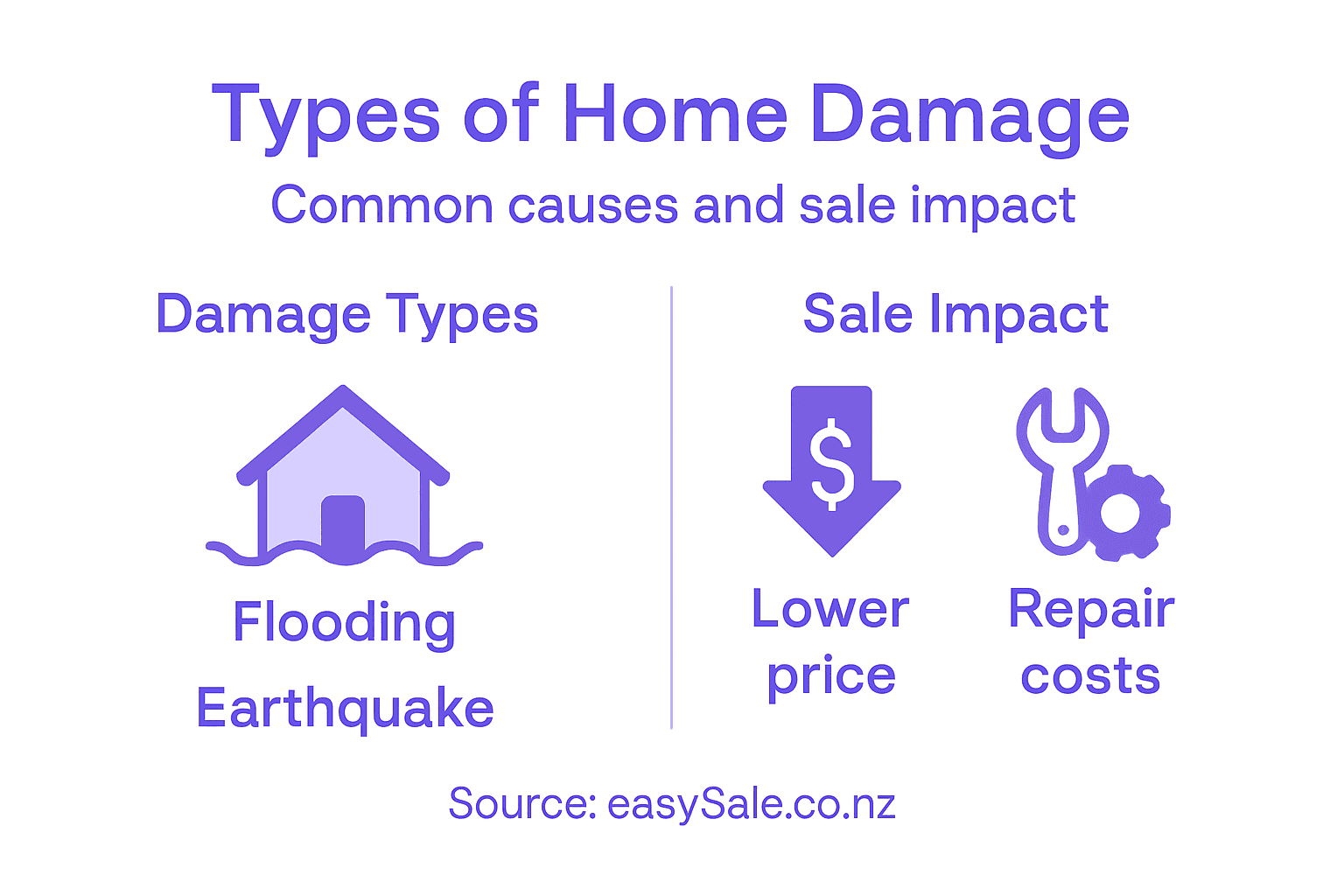
Natural disasters represent the most dramatic damage sources. Flooding, earthquakes, and severe storms can devastate homes in different ways. Natural disaster damage often includes waterlogged structures, compromised foundations, and everything in between—from cosmetic cracks to major structural failures.
Water infiltration causes some of the most expensive repairs. It can creep in through roofs, walls, and foundations, silently damaging timber frames and insulation.
Water and Weather Damage
- Flooding: Submerged foundations, waterlogged timber, mould growth, and structural deterioration
- Roof leaks: Interior water stains, ceiling damage, rotting timber, and insulation breakdown
- Burst pipes: Water damage to walls, ceilings, and floor structures
- Storm damage: Torn roofing, broken windows, fallen trees, and gutter damage
- Rising damp: Ground moisture affecting lower walls and foundation integrity
Damp environments create perfect conditions for mould and timber rot, which spread quickly and compromise structural safety.
Earthquake and Geological Damage
Earthquakes cause both visible and hidden damage. You might see cracks in walls and ceilings, but the real danger often lies beneath—in foundation movement and structural shifting that weakens the entire dwelling.

Other geological issues include land subsidence, hydrothermal activity affecting stability, and gas emissions from the ground. These problems can worsen over time if left unaddressed.
Age-Related and Maintenance Damage
Negligence creates its own category of damage. Deferred maintenance leads to deteriorating roofs, failing weatherboards, corroded gutters, and rotting timber structures. What starts as minor wear becomes major structural failure when ignored.
Paint peeling from exterior walls often signals underlying moisture problems rather than cosmetic issues alone.
Understanding damage causes empowers you to recognise risks, seek appropriate inspections, and make informed decisions about your property’s future.
The critical point: damage severity ranges from minor cosmetic issues to life-threatening structural failures. Your responsibility as a seller includes disclosing all known damage, regardless of whether you’ve begun repairs.
Pro tip: Get a professional building inspection before listing—identifying damage early allows you to disclose accurately and potentially negotiate better with serious buyers who understand the repair scope.
Disclosure Laws and Insurance Obligations
New Zealand law is clear: you must disclose all known damage to potential buyers. This isn’t optional, and it’s not something you can skip over or hope nobody notices. The legal framework protecting buyers is robust, and breaching it can cost you dearly.
Full transparency is your legal obligation. Under statutes like the Fair Trading Act and Consumer Guarantees Act, sellers must provide full transparency regarding defects or damage affecting your property’s value. This means telling buyers about structural problems, insurance claims, and any known issues that could impact their decision.
Failure to disclose can result in legal action, claims disputes, and financial liability well after settlement.
What You Must Disclose
- All known damage: Structural issues, water damage, foundation problems, or any deterioration
- Insurance claims: Any claims lodged with the Natural Hazards Commission or private insurers
- Repair status: Whether repairs have been completed, are ongoing, or haven’t started
- Council consents: Documentation proving repairs were done to code
- Outstanding claims: Any unresolved insurance matters that might transfer to the buyer
Real estate agents must ensure buyers receive all relevant documents, including claims outcomes and repair evidence. You can’t delegate this responsibility—it remains yours as the seller.
Insurance Claim Obligations
If you’ve lodged an NHC claim for natural disaster damage, you’re legally required to disclose this. Even if the claim is settled or repairs are complete, buyers have the right to know the history.
When claims remain unresolved, you may need to transfer them to the buyer—this becomes part of the sale agreement and affects the purchase price.
The Consequences of Non-Disclosure
Hiding or minimising damage isn’t worth the risk. Buyers can take legal action to recover losses, force you to pay for repairs, or demand compensation for purchasing a property under false pretences.
Your conveyancer and real estate agent will guide you through disclosure requirements, but the ultimate responsibility sits with you.
Honesty about your property’s condition protects both you and the buyer whilst ensuring compliance with New Zealand’s strict consumer protection laws.
The bottom line: transparency builds trust and reduces post-sale disputes. Buyers who understand what they’re purchasing are far less likely to pursue legal action later.
Pro tip: Prepare a comprehensive disclosure document listing all known damage, repairs completed, and insurance claims before your property goes to market—this demonstrates good faith and often helps negotiations move smoothly.
Financial Impact and Sale Price Changes
Damaged properties don’t sell for full market value. That’s reality. Buyers factor in repair costs, ongoing risks, and insurance expenses when making offers. Understanding how damage affects your property’s financial worth helps you plan realistically.
Price reductions vary depending on damage severity and location. A property with minor cosmetic damage might lose 5-10% of value, whilst structural issues or repeated natural disaster exposure can slash prices by 30% or more.
Here’s how different types of property damage affect your NZ property sale:
| Damage Type | Impact on Value | Typical Repair Cost Range | Insurance Implications |
|---|---|---|---|
| Structural (foundation, roof) | Severe value reduction | $15,000–$100,000+ | May trigger insurance refusal or high premiums |
| Water (flooding, roof leak) | Moderate to high impact | $5,000–$50,000 | Insurers scrutinise past water claims |
| Cosmetic (wear and tear) | Minimal price effect | $1,000–$10,000 | Rarely affects insurance eligibility |
| Earthquake/Geological | Dramatic price drop | $30,000–$200,000+ | Often leads to NHC claims, can limit cover |
| Deferred maintenance | Steady value erosion | Varies widely | Seen as higher risk by insurers |
Insurance costs have become a major factor in pricing. Risk-based insurance pricing models are affecting market dynamics significantly. Properties in high-risk natural hazard areas face expensive premiums or outright uninsurability, making buyers reluctant to purchase at higher prices.
How Damage Reduces Sale Price
- Structural repairs: Foundation work, roof replacement, or wall repairs reduce value by 15-40%
- Water damage history: Properties with flooding risk or past water intrusion lose 10-25% of value
- Insurance unavailability: Uninsurable properties in high-hazard zones drop 20-35% in price
- Elevated insurance costs: Annual premiums of £3,000-£8,000+ deter buyers significantly
- Disclosure impact: Known damage without transparent disclosure creates buyer distrust and lower offers
Buyers conduct their own risk assessments and obtain insurance quotes before committing. When they discover expensive or unavailable insurance, they’ll either walk away or demand substantial price reductions.
The Insurance Uninsurability Problem
Some properties become impossible to insure in high-risk natural hazard areas. No insurance means no mortgage—most lenders won’t finance uninsurable properties. This effectively takes your home off the market for traditional buyers.
You’ll only attract cash buyers or investors willing to accept the risk, and they’ll price accordingly.
Timeline and Negotiation Impact
Damaged properties take longer to sell. Buyers hesitate, inspections reveal more issues, and valuations come in lower than expected. This extends your selling timeline, increasing carrying costs and stress.
Properties facing expensive or unavailable insurance coverage experience significantly reduced sale prices as buyers factor in long-term financial risks.
The financial impact compounds when you factor in holding costs, potential further deterioration, and emotional exhaustion. Waiting for the “perfect offer” whilst carrying a damaged property often costs more than accepting a realistic price now.
Pro tip: Get a professional valuation and insurance assessment before listing to understand realistic pricing—knowing your property’s true market value prevents costly negotiation surprises and helps you decide whether traditional sale or quick cash sale works better for your situation.
Selling ‘As Is Where Is’ – Fast Cash Solutions
Selling your damaged property “as is where is” means you’re not making repairs before sale. No renovations, no fixes, no warranties. You’re selling the property in its current condition and letting the buyer take on the repair responsibility and costs.
This approach offers speed and certainty. Rather than waiting months for traditional buyers, you can close within weeks or even days. Cash buyers don’t need financing approval or lengthy inspections—they understand the property’s condition and price accordingly.
What “As Is Where Is” Actually Means
Selling without completing repairs or warranties is the core principle. You’re not obligated to fix foundation cracks, replace roofs, or remediate water damage. The buyer accepts full responsibility for whatever repairs the property needs.
However—and this is critical—you must still disclose all known damage honestly. “As is” doesn’t mean you hide problems. It means you’re transparent about what exists and let the buyer decide if they’ll purchase anyway.
Key Benefits of This Approach
- Speed: Close in weeks instead of months
- Certainty: No inspection surprises or last-minute renegotiations
- No repair costs: Avoid expensive repairs you can’t afford
- No carrying costs: Stop paying rates, insurance, and maintenance whilst waiting
- Attracts cash buyers: Investors and developers actively seek as-is properties
- Honest pricing: Everyone knows the condition upfront—no post-sale disputes
Managing Legal Risks
Disclosure remains non-negotiable. You must inform buyers about structural damage, water issues, insurance claims, and repair status clearly. Outstanding NHC claims typically transfer to the buyer and become part of the sale agreement.
Get legal advice before proceeding. Your conveyancer will ensure all documentation protects you whilst keeping the transaction transparent and compliant with New Zealand law.
Who Buys As-Is Properties?
Cash buyers, property investors, and developers actively purchase damaged properties. They have capital, understand repair costs, and can act quickly. They won’t be surprised by damage because they’ve already factored it into their offer.
These buyers value speed and certainty over negotiation. You get a firm offer, no conditions, and a defined settlement date.
Selling “as is where is” with full transparency protects you legally whilst attracting serious cash buyers ready to close quickly.
This approach works best when you need to sell fast, can’t afford repairs, or face financial pressure. Waiting for perfect conditions often costs more than accepting a realistic as-is offer now.
Compare these NZ property sale strategies when dealing with damage:
| Sale Approach | Typical Buyer Profile | Time to Sale | Risk of Post-Sale Disputes |
|---|---|---|---|
| Traditional repaired | Owner-occupiers, families | 2–6 months | Low if disclosure is thorough |
| “As Is Where Is” | Investors, cash buyers | 1–4 weeks | Moderate if disclosure is lacking |
| Auction (damaged) | Developers, flippers | 1–6 weeks | Varies, depends on transparency |
Pro tip: Document your property’s condition thoroughly with photos and written descriptions before marketing—this prevents buyer disputes and demonstrates you’re being transparent about exactly what they’re purchasing.
Sell Your Damaged Property Quickly and Fairly with easySale.co.nz
If you are facing the challenge of selling a damaged house in New Zealand, you know how overwhelming disclosure requirements, repair costs and insurance complications can be. The article highlights how structural issues, natural disaster damage and water infiltration all demand transparency and can severely impact your sale price and timeline. Instead of shouldering costly repairs or prolonged stress, consider a fast and fair cash offer from easySale.co.nz.

With a simple three-step process you can submit your property details, receive a no-obligation offer and settle on your preferred timeline. We buy properties in any condition so you can avoid expensive repairs, lengthy negotiations and commission fees. Selling “as is where is” does not mean hiding damage but rather embracing transparency with a quick solution tailored to your needs. Act now and turn your damaged property into cash with confidence by visiting easySale.co.nz. Learn more about our process and customer success stories at easySale.co.nz.
Frequently Asked Questions
What counts as property damage when selling a house?
Property damage includes structural issues, water damage, foundation problems, environmental hazards, and significant wear that affects safety or functionality. Any damage compromising your property’s integrity must be disclosed.
Do I need to disclose minor cosmetic issues before selling?
Minor cosmetic issues like faded paint or worn carpet typically don’t require disclosure unless they indicate underlying structural problems that could affect safety or value.
What are the consequences of failing to disclose property damage?
Failing to disclose known damage can lead to legal action from buyers, financial liability for undisclosed defects, and potential claims disputes well after the sale is completed.
How does damaged property affect its sale price?
Damaged properties often sell for less than market value as buyers consider repair costs, ongoing risks, and insurance implications. Price reductions can vary significantly based on the severity and type of damage.
Recommended
