
Sell Your House Fast in New Zealand: 14 Day, 2–4 Week and 4–6 Week Plans
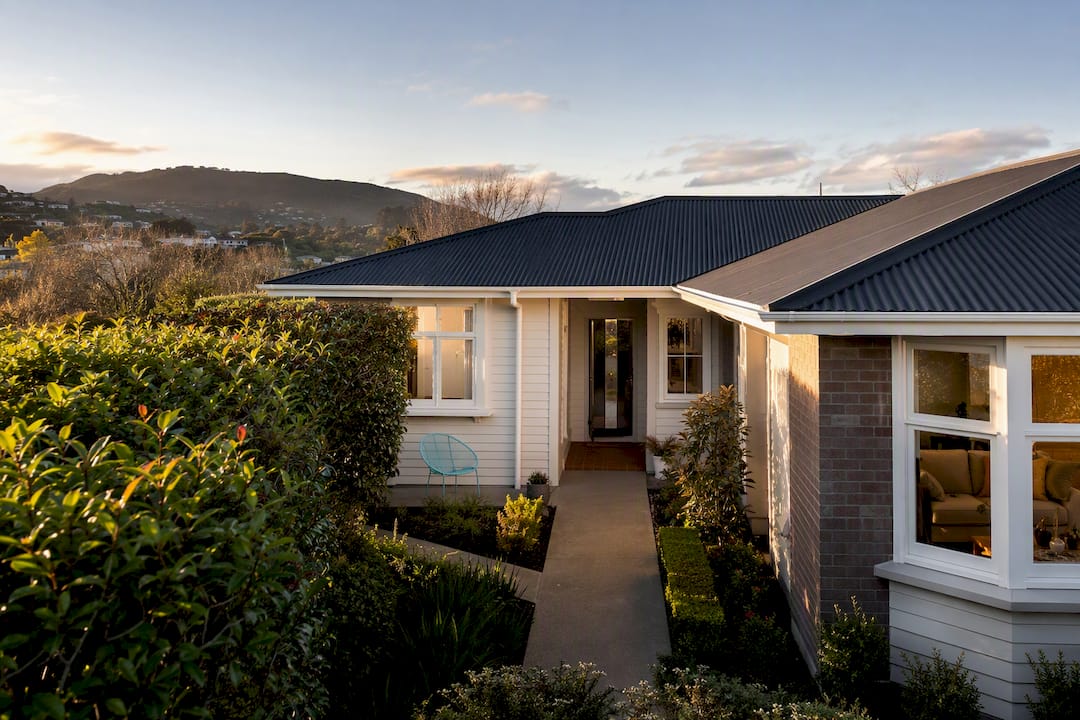
You can complete a truly fast sale in days to a few weeks, but that speed comes from one of two routes: a direct cash offer or a tightly targeted off-market deal. Most listed properties in New Zealand take longer, with median timelines running roughly 39 to 50 days from listing to sale. The trade-off is straightforward: the faster the sale, the smaller the buyer pool competing for your property, and that usually means a lower price.
TL;DR:Most houses in New Zealand take about 10 to 14 weeks to sell through a conventional campaign, with regional variations ranging from days to four months.Overpricing and poor presentation can extend the time on market, while pricing a property competitively and staging it well speeds up the sale process.Selling directly to cash buyers or through off-market transactions can close in days or a few weeks but usually results in a lower sale price.Rapid sales strategies, such as auctions or focused agent campaigns, typically involve shorter timelines but may offer less negotiation leverage.The cost of waiting includes ongoing carrying expenses, which can outweigh the price difference when compared to a quick cash sale, depending on the situation.
Easysaleeasysale.co.nzSell On Your Preferred TimelineEasysale helps New Zealand homeowners receive a fast, fair cash offer without agents or commission fees, whatever the property’s condition.Submit your property details
Table of Contents
- How quickly can you sell a house in New Zealand?
- What actually speeds up or slows down a sale?
- What’s the fastest way to sell a house?
- What does a fast sale actually cost you?
- Your quick-sale action plan by timeframe
- How settlement timing works once you’ve got a buyer
- When speed genuinely beats price
- Sell your house on your own timeline, not the market’s
- Sources
- FAQ
How quickly can you sell a house in New Zealand?
The honest answer depends on which clock you’re measuring. “Days on market” only counts from listing to accepted offer. Your real timeline includes everything before that (getting the place presentable and choosing an agent) and everything after (the settlement wait once a buyer says yes).
Here’s how a typical sale breaks down:
- Pre-listing preparation: one to three weeks for repairs, photography, and choosing an agency
- Listing to offer: most properties take 39 to 50 days nationally, though this swings hard by region
- Offer to unconditional: one to three weeks while finance and building reports are sorted
- Unconditional to settlement: typically four to six weeks
Add it up and Tremain Real Estate puts the full listing-to-settlement journey at 10 to 14 weeks for a conventionally marketed home. That’s the baseline. Regional variance is enormous. OneRoof reporting shows some markets clear homes in a matter of days while others sit closer to four months, and market temperature, driven by interest rates and buyer demand, can shift the national median by weeks in either direction. If you’re planning around a settlement date, work backward from these ranges rather than assuming the fastest scenario is the likely one.
What actually speeds up or slows down a sale?
Two factors sit above everything else, and both are entirely within your control: price and presentation. Everything after that is either a smaller lever or something you can’t touch at all, like the season or what the local market is doing.
What you control:
- Pricing strategy: overpricing is the single most common mistake sellers make, and it can add weeks or months to your time on market as the listing goes stale and buyers start wondering what’s wrong with it
- Condition and presentation: a well-staged, well-photographed home moves faster than a cluttered or neglected one, though as-is properties still sell, just to a narrower buyer type
- Marketing reach and agent skill: a targeted campaign to the right buyer pool beats a generic listing every time
- Carrying costs: the longer your sale drags on, the more urgency usually builds, which can push you toward faster (and lower) offers later than earlier
What you don’t control: seasonality, interest rate movements, and how many other similar properties are competing for buyer attention in your suburb.
Statistic Callout: Pricing and presentation are consistently identified as the two largest controllable levers in Property Brokers’ market guidance, ahead of marketing spend or agent choice.
If your property has damage, unconsented work, or a tricky tenancy situation, a standard campaign often runs longer than these figures suggest, because fewer buyers can get finance approved on it.
What’s the fastest way to sell a house?
Four routes exist, and they sit on a clear spectrum from slowest-but-highest-price to fastest-but-lowest-price. Where you land depends on how much certainty you need versus how much you’re willing to leave on the table.
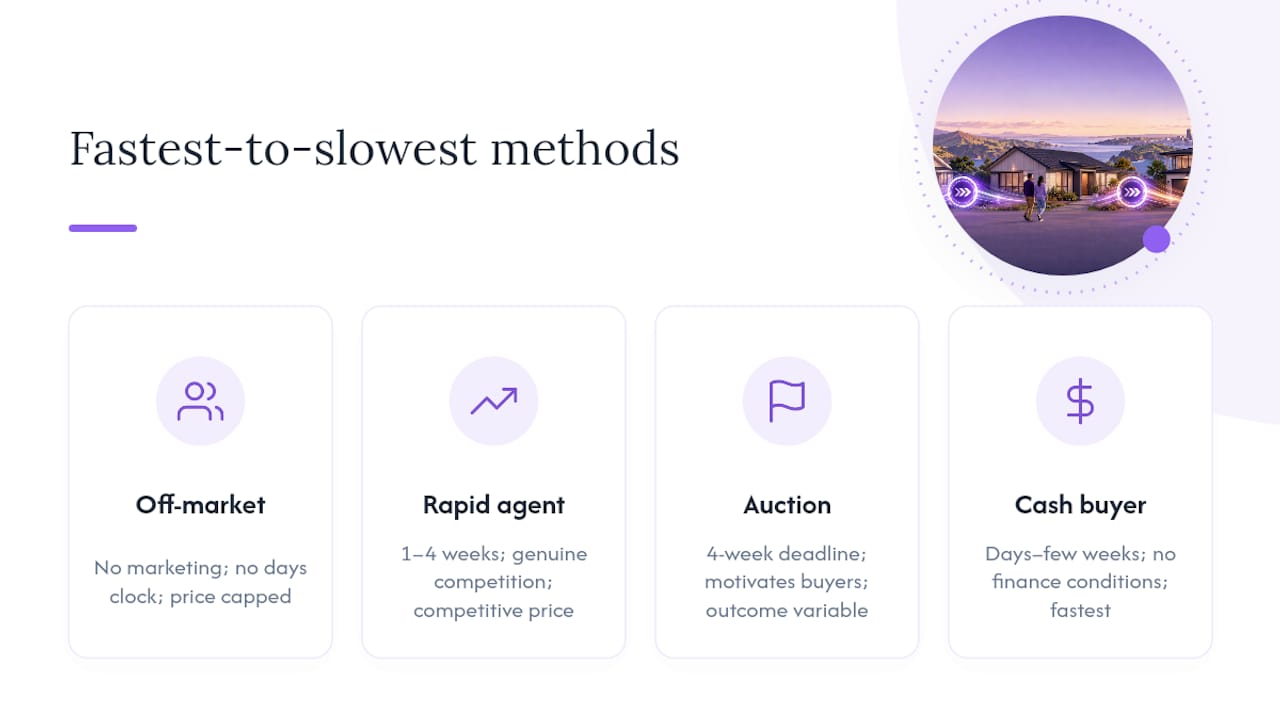
Off-market sales work well when you already know your buyer, often a neighbour, an investor, or someone in your network. No marketing period means no days-on-market clock at all, but you’re negotiating with one party instead of several, which usually caps your price.
Rapid agent campaigns can produce a sale in one to four weeks if the ingredients line up: a firm launch date, a competitive (not aspirational) asking price, one or two concentrated open homes in the first ten days, and digital ads aimed at buyers already active in your area. This is the fastest route that still exposes your home to genuine competition.
Auctions compress the decision window by design. A four-week auction campaign creates a hard deadline that motivates serious buyers to act, though a soft market on auction day can mean it passes in and goes to negotiation anyway.
Direct cash buyers are the fastest option on the table. Sales to cash buyers can close in days to a few weeks because there’s no marketing period, no open homes, and no finance conditions to wait on.
Pro Tip: If your property has condition issues that would scare off a standard buyer, a targeted approach to investor and cash buyer networks often beats a broad marketing campaign, because you’re pitching to people who expect to do the work themselves.
For a broader look at how these options stack up side by side, 6 Examples of Quick Sale Options for NZ Homeowners walks through real scenarios for each.
What does a fast sale actually cost you?
Speed has a price, but so does waiting, and most sellers only do the maths on one side of that equation.
A conventional agent sale carries commission (commonly a percentage of the sale price plus a fixed fee) alongside marketing costs that typically run into several thousand dollars for photography, signage, and online listings. Those costs come off your final proceeds regardless of how fast the sale goes through.
While you wait, carrying costs keep accumulating:
- Mortgage interest on the property
- Council rates and insurance premiums
- Any ongoing maintenance or utility costs on a vacant home
Statistic Callout: Run a simple break-even check. If your weekly carrying costs total $400 and a marketed campaign is likely to take eight weeks longer than a direct cash sale, that’s $3,200 in holding costs before you even factor in commission. If the price gap between the two offers is smaller than that combined figure, the “lower” cash offer may actually net you more.
The right answer depends entirely on your numbers, not a rule of thumb. Do this calculation before you decide which route makes sense for your situation.
Your quick-sale action plan by timeframe
The right moves depend entirely on how much runway you’ve got. Here’s what each timeframe actually demands.
- Under 14 days (emergency timeline): Get your title and paperwork in order first (LIM report, title documents, any consent records). Set a realistic bottom-line price based on recent comparable sales, not what you hope it’s worth. Skip cosmetic fixes that won’t pay for themselves in the time available. Prepare a concise buyer pack and approach direct cash buyer networks directly.
- 2 to 4 weeks (accelerated campaign): Prioritise staging in the rooms buyers judge fastest, kitchen and living areas. Build a targeted list of likely buyers (local investors, past inquirers) rather than relying on broad exposure. Run one or two concentrated open homes in the first ten days rather than spacing them out.
- 4 to 6 weeks (faster but market-priced): Price competitively from day one rather than testing a higher figure and dropping later. Run a normal open home schedule but compress it into fewer, higher-turnout sessions. Be ready to negotiate hard on the first serious offer rather than waiting for a better one that may not come.
Pro Tip: The single biggest pitfall when rushing is accepting a conditional offer with a long finance clause, thinking you’ve sold, only to have it fall through three weeks later with no backup buyer queued. A structured no-stress approach to each stage avoids that trap.
How settlement timing works once you’ve got a buyer
An accepted offer isn’t a sold house. Most offers are conditional, meaning the buyer still needs finance approval, a satisfactory building report, or sometimes the sale of their own property before the deal is locked in.
Here’s what typically adds time after you’ve got an offer:
- Conditional period: usually one to three weeks for finance and due diligence to clear
- Lender processing: banks can take several business days to formally approve a buyer’s mortgage
- Conveyancing steps: title searches, LIM reviews, and settlement statements all need to be finalised
- Settlement date: commonly four to six weeks after the sale goes unconditional
If you need funds sooner, you can negotiate a shorter settlement period upfront, though this narrows your buyer pool to those who can move quickly on finance. Practical steps to settle faster exist, but they generally work best when agreed before the offer is signed, not after.
When speed genuinely beats price
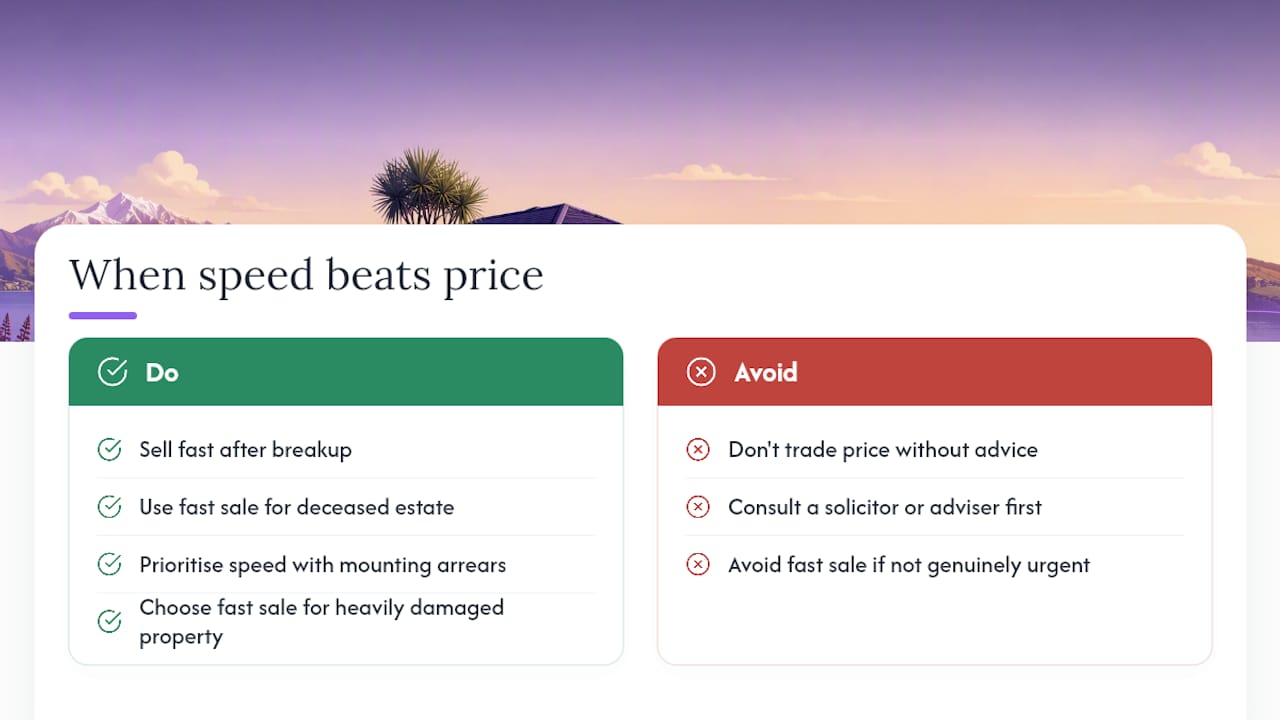
Selling fast makes sense in a narrower set of situations than most sellers assume. If you’re dealing with a relationship breakup, a deceased estate that needs resolving, mounting arrears, or a property with damage that would scare off financed buyers anyway, the maths often favours certainty over a higher hypothetical price. In those cases, the carrying costs and stress of an extended campaign can outweigh what a slower sale might add to your bottom line.
Outside those situations, it’s worth getting independent advice before trading price for speed. A conversation with a solicitor or financial adviser costs little next to a six-figure decision. For sellers who’ve decided speed is the priority, easySale’s fast house sale resources walk through the process in more detail.
— Aaron
Sell your house on your own timeline, not the market’s
If speed is what you need most, a traditional agent campaign asks you to wait through weeks of open homes and finance conditions before you see a cent. An alternative for Kiwi homeowners who can’t afford that wait is to consider a direct cash offer with no agent commission, marketing costs, or repairs required before selling.
Some services buy properties in any condition, including damaged, unconsented, or tenanted homes, and settle on a timeline the seller chooses rather than one dictated by buyer finance approvals. If your property has damage or condition issues that would slow down a standard campaign, Easysale’s as-is purchase option is built specifically for that situation. The process starts with submitting your property details and receiving a no-obligation offer, no open homes, no staging, no waiting on someone else’s mortgage to clear. If a fast, certain sale sounds like what you need, get a fair cash offer for your property and see what a direct sale looks like for your situation.
Sources
- How long does it take to sell a house? - Tremain Real Estate
- 24 hours v four months: How long does it take to sell a house in New Zealand? - OneRoof
- How long should your property be on the market for? - Property Brokers
FAQ
What is the quickest a house sale can go through?
A direct cash sale can settle in a matter of days to a few weeks once you accept an offer, since there’s no marketing period or finance condition to wait on. A marketed sale rarely moves faster than one to four weeks even in an accelerated campaign.
Can I sell my house after 12 months?
Yes, there’s no minimum ownership period required before you can list or sell a property in New Zealand. Some lenders or insurance arrangements may have their own conditions worth checking, but the sale itself isn’t restricted by how long you’ve owned it.
How soon can I sell my house after purchase in New Zealand?
You can list and sell immediately after settling on a purchase if you choose to. It’s worth checking your loan terms for any early repayment considerations, and be aware that a very short ownership period can occasionally raise questions from buyers or their bank about the resale.
What’s the hardest time of year to sell a house?
Winter months, particularly June and July, typically see fewer active buyers and longer days on market compared with spring and early summer listings. If you’re not under time pressure, timing a campaign for spring generally works in your favour.
How does easySale’s cash offer compare to waiting for a market sale?
An easySale cash offer typically settles faster than a marketed campaign because it skips agent commission, marketing costs, and finance conditions entirely. The trade-off is a lower price than you might achieve with a fully marketed sale, which suits sellers prioritising certainty and speed over maximising sale price.
Recommended
