
How to sell a damaged house fast in New Zealand 2026
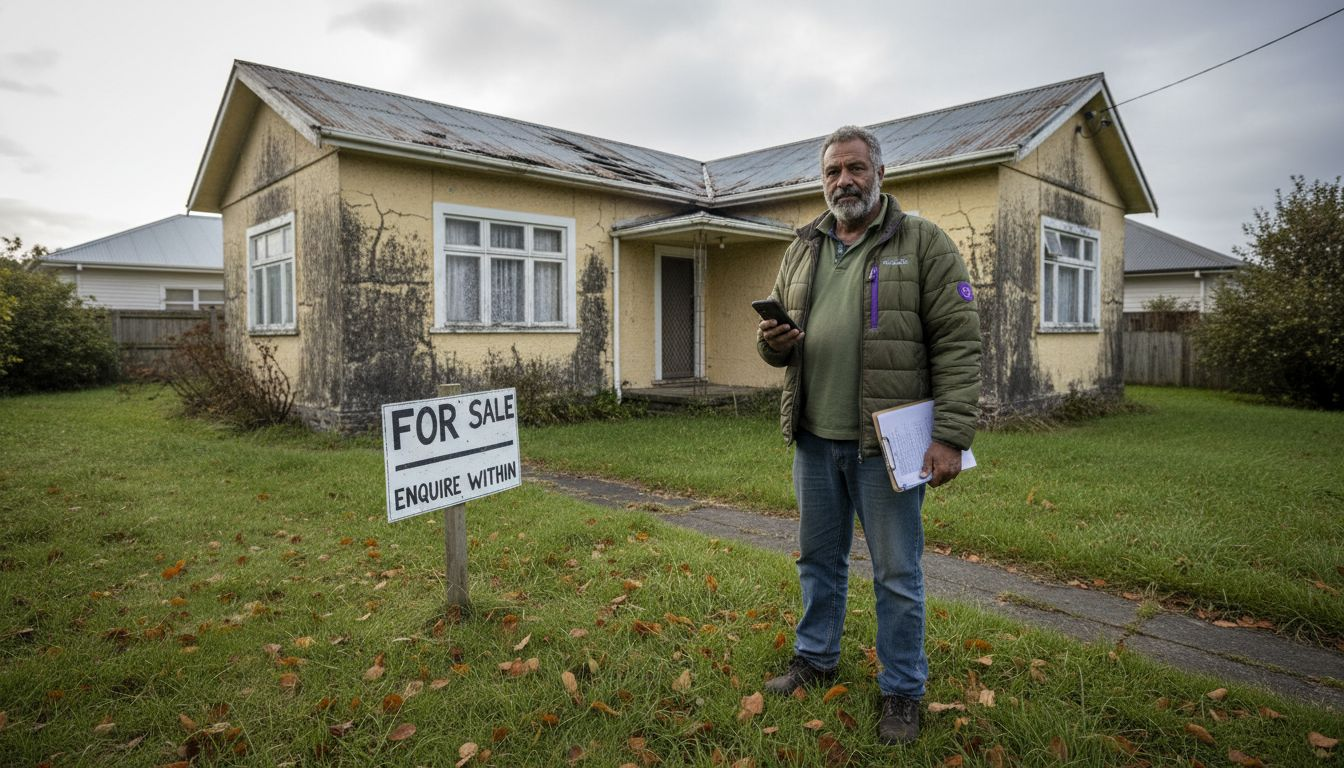
Selling a damaged property in New Zealand can feel overwhelming, especially when you’re facing financial pressure or urgent life changes. Whether your home has structural issues, weather damage, or simply needs extensive repairs, you need to understand your legal obligations and selling options to achieve a fast, fair sale. This guide walks you through the practical steps, legal requirements, and buyer considerations to help you sell your damaged house quickly and confidently in 2026, even in a challenging market.
Table of Contents
- Understanding Your Options When Selling A Damaged House
- Legal And Disclosure Requirements When Selling Damaged Homes In New Zealand
- Practical Steps To Sell Your Damaged House Fast In New Zealand
- What Buyers Consider When Purchasing Damaged Properties
- Sell Your Damaged House Quickly And Easily With Easysale
- How To Sell Damaged House FAQ
Key takeaways
| Point | Details |
|---|---|
| Full disclosure required | New Zealand law requires sellers to reveal all known defects under the Fair Trading Act 1986 and common law. |
| Selling as is speeds sale | Selling without renovation attracts investors and speeds up the process, though typically at a lower price. |
| Renovation can add value | Renovating before selling can boost sale prices by $100,000 but delays the transaction. |
| Buyers perform due diligence | Purchasers conduct thorough inspections, finance checks, and LIM reviews before committing. |
| Cash buyers offer speed | Direct cash buyers can close within 7 days, ideal for urgent damaged property sales. |
Understanding your options when selling a damaged house
When you need to sell a damaged property in New Zealand, you face two main paths: renovate before selling or sell as is, where is. Each approach has distinct advantages and trade-offs that depend on your timeline, budget, and financial goals.
The renovate first approach involves repairing structural issues, updating fixtures, and presenting a move in ready home to buyers. This strategy typically delivers higher sale prices because buyers pay premium prices for turnkey properties. Renovating before selling can increase the sale price by about $100,000 at a $1.2 million sale price point, making it financially attractive if you have time and capital. However, renovation projects often take months to complete, delay your sale, and require upfront investment you might not have available.
Selling as is, where is means listing your property in its current damaged state without making repairs. This approach suits homeowners who need cash quickly or cannot afford renovation costs. You’ll typically receive lower offers because buyers factor in repair costs and risk, but the transaction moves much faster. Surprisingly, damaged properties can still attract competitive bidding due to scarcity in certain markets. One Christchurch vendor received eight bids and sold for $507,000 despite significant damage, proving that selling without renovation remains viable in 2026.
Here’s a practical comparison to help you decide:
| Approach | Timeline | Typical Price | Best For |
|---|---|---|---|
| Renovate First | 3-6 months | Higher (potentially $100k more) | Sellers with time and capital |
| Sell As Is | 2-8 weeks | Lower (discount for repairs) | Urgent sales, limited funds |
| Cash Buyer | 1-2 weeks | Fair market (adjusted) | Maximum speed needed |
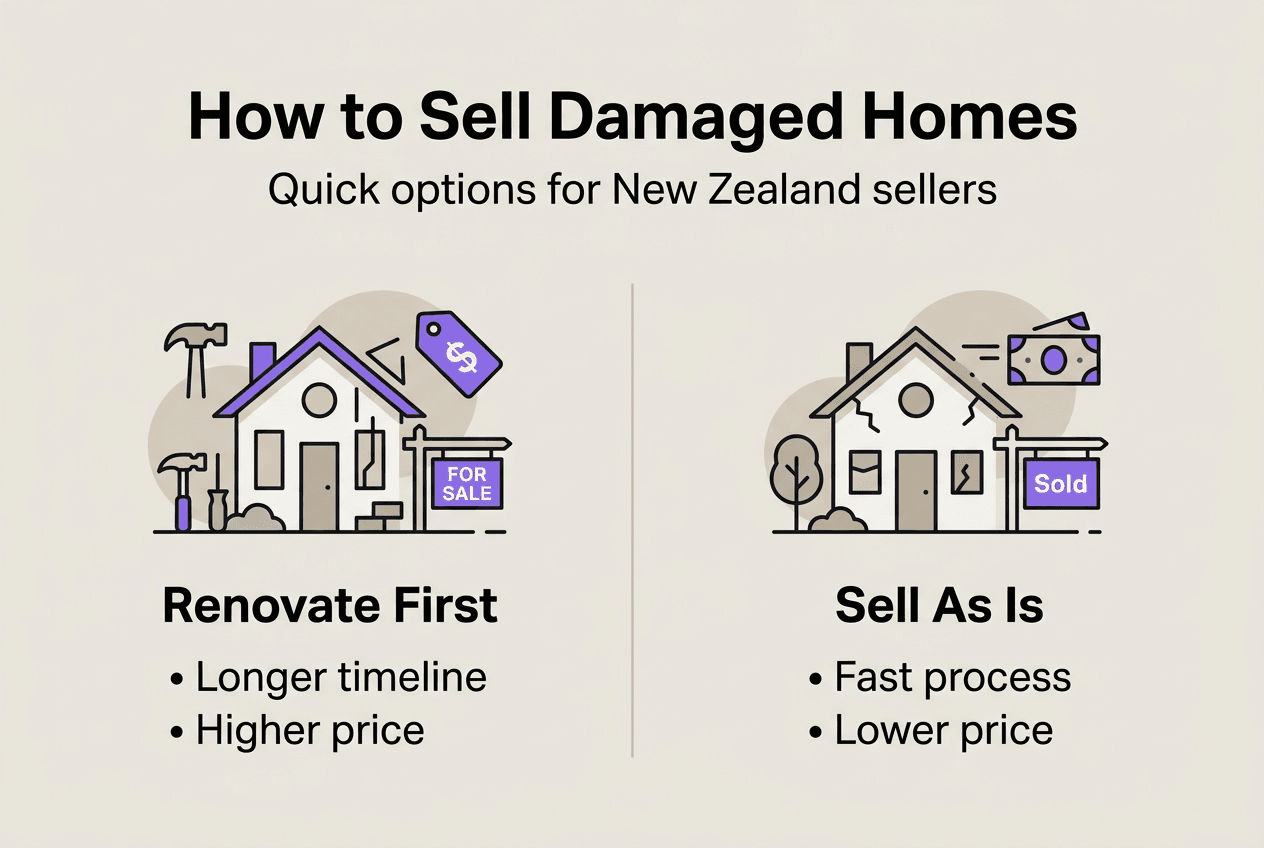
Remember that buyers purchase with emotion but justify with numbers. Even damaged properties can trigger emotional responses if they offer location value, land potential, or renovation opportunities. Your selling strategy should align with your urgency level, available capital, and realistic market expectations for your specific property condition and location.
Legal and disclosure requirements when selling damaged homes in New Zealand
New Zealand law imposes strict disclosure obligations on property sellers, especially when damage or defects are present. Understanding these requirements protects you from legal disputes and financial penalties after settlement.

Sellers must disclose known property defects under the Fair Trading Act 1986 and common law to avoid legal disputes. This legal framework means you cannot simply remain silent about problems you know exist. If you’re aware of structural damage, water leaks, weathertightness issues, or building code violations, you must inform potential buyers before they commit to purchase.
Many sellers mistakenly believe that selling as is, where is eliminates disclosure obligations. This is false. ‘As is, where is’ clauses do not relieve sellers from legal disclosure requirements or prevent legal consequences for misrepresentation. The clause simply means buyers accept the property’s current condition and cannot demand repairs before settlement. You still must reveal everything you know about defects, damage, and risks.
Failing to disclose known defects carries serious consequences. Buyers can sue for misrepresentation, seek contract cancellation, or claim damages for repair costs you should have revealed. The Fair Trading Act allows courts to impose penalties and order compensation, potentially costing you far more than honest disclosure would have. Even innocent omissions can trigger disputes if buyers later discover undisclosed problems.
You must disclose several categories of damage and defects:
- Structural issues including foundation cracks, subsidence, or earthquake damage
- Water damage, leaks, flooding history, or drainage problems
- Weathertightness defects, particularly in homes built during the leaky building era
- Building code violations, unconsented work, or outstanding notices from council
- Insurance claims history or difficulty obtaining coverage
- Methamphetamine contamination or other environmental hazards
Pro Tip: Engage an independent property lawyer before listing your damaged house to review your disclosure obligations and prepare accurate documentation. This small investment prevents costly legal disputes and gives buyers confidence in your transparency, potentially leading to faster sales at better prices. Understanding how to sell as is property within legal boundaries protects both parties.
Practical steps to sell your damaged house fast in New Zealand
Selling a damaged property quickly requires strategic preparation, transparent marketing, and realistic expectations. Follow these actionable steps to achieve a fast, fair sale in 2026.
- Assess damage thoroughly and gather documentation. Obtain building inspection reports, engineer assessments for structural issues, and your property’s Land Information Memorandum from council. The LIM reveals consents, notices, zoning, and hazards that buyers will scrutinise. Compile records of any insurance claims, repair quotes, and correspondence about the damage. This documentation demonstrates transparency and helps buyers make informed decisions quickly.
- Decide between renovation and as is sale based on your circumstances. Calculate renovation costs versus potential price uplift, then compare against your timeline urgency. If you need to sell within weeks due to financial pressure or relocation, renovation isn’t practical regardless of potential returns. If you have three to six months and access to capital, strategic repairs might deliver worthwhile returns. Consider your local market conditions, as some areas favour renovated properties whilst others have strong investor demand for as is purchases.
- Disclose all defects transparently to potential buyers. Prepare a comprehensive disclosure statement listing every known issue, from minor cosmetic damage to major structural concerns. Include copies of inspection reports, engineer assessments, and repair quotes in your listing information. This upfront honesty builds trust, reduces negotiation friction, and protects you legally. Buyers appreciate transparency and often pay more for properties with clear, documented issues than those with suspected hidden problems.
- Market to appropriate buyer segments who specialise in damaged properties. Target property investors, developers, and cash buyers who actively seek renovation projects or land value opportunities. List on platforms that attract these buyers, and clearly state the property is sold as is with full disclosure of damage. Highlight positive aspects like location, land size, or development potential that offset the damage concerns. Professional photos showing both damage and potential help buyers visualise opportunities.
- Negotiate offers with realistic price expectations. Selling a damaged property quickly often means accepting a lower sale price, depending on damage extent and market conditions. Research comparable sales of both damaged and renovated properties in your area to establish a fair price range. Be prepared to negotiate on price, settlement terms, and conditions. Cash buyers typically offer below market value but provide certainty and speed, whilst traditional buyers might pay more but require longer settlement periods and finance conditions.
Pro Tip: Consider approaching cash buyers who specialise in purchasing damaged properties. These buyers can complete sales within one to two weeks, handle all repairs themselves, and eliminate the uncertainty of finance conditions or buyer inspections. Whilst you might receive a lower price than through traditional sale methods, the speed, certainty, and convenience often outweigh the price difference for sellers facing urgent circumstances. Learn more about selling your damaged house fast through specialised buyers.
What buyers consider when purchasing damaged properties
Understanding buyer perspectives helps you price appropriately, market effectively, and negotiate successfully when selling your damaged house. Buyers approach damaged properties with caution but also opportunity in mind.
Buyers purchasing as is properties know they’re accepting higher risk and expect to invest in repairs. They calculate renovation costs, factor in holding expenses, and determine whether the total investment delivers acceptable returns. Investors typically seek properties where purchase price plus repair costs equal 70 to 80 percent of the renovated value, leaving room for profit and unexpected issues. Owner occupiers buying damaged properties want bargain prices that offset the inconvenience and cost of living through renovations.
Buyers in as is sales must perform full due diligence including inspections, finance checks, and insurance confirmation. They hire building inspectors to assess damage extent and repair costs, review LIM reports for council notices and zoning restrictions, and confirm their bank will lend against a damaged property. Insurance availability poses a significant concern, as some damaged properties cannot obtain coverage until repairs are completed. Buyers also verify that their intended use complies with zoning and that they can obtain building consents for planned repairs.
Different buyer types pursue damaged properties for distinct reasons:
- Property investors seeking fix and flip opportunities to renovate and resell for profit
- Developers wanting land value where the existing damaged structure will be demolished
- Owner occupiers willing to live through renovations in exchange for lower purchase prices
- Cash buyers and property buying services that specialise in quick purchases of damaged homes
Buyers understand they have limited recourse after settlement, especially in as is sales. Once the transaction completes, they own the property with all its problems and cannot easily claim against sellers except for undisclosed defects or misrepresentation. This reality drives thorough pre purchase investigations and conservative pricing to protect against unexpected issues. Understanding how damaged houses impact sales helps you anticipate buyer concerns and address them proactively in your marketing and negotiations.
Sell your damaged house quickly and easily with easySale
If you need to sell your damaged property fast without the hassle of traditional listings, easySale offers a straightforward solution. We’re a trusted New Zealand cash buyer providing fair offers within 24 hours on properties in any condition.

Our process eliminates the uncertainty and delays of conventional sales. We purchase damaged houses directly, handling all repairs ourselves after settlement. You avoid renovation costs, real estate agent fees, and months of waiting for the right buyer. We can close within 7 days if you need urgent cash, or work to your preferred timeline if you need more flexibility. Our local New Zealand knowledge ensures smooth transactions that respect your circumstances whilst delivering fair market value adjusted for your property’s condition.
Visit our sell your house fast page to receive a no obligation quote today, or explore selling your house privately for more information about our transparent, hassle free process. We make selling damaged properties simple, quick, and fair.
How to sell damaged house FAQ
What does as is, where is mean when selling a damaged house?
As is, where is means the buyer accepts the property in its current condition without requiring repairs before settlement. However, this clause does not eliminate your legal obligation to disclose known defects. You must still reveal all damage and issues you’re aware of, but buyers cannot demand you fix problems before completing the sale.
Do I have to tell buyers about repairs needed?
Yes, New Zealand law requires you to disclose all known defects, damage, and required repairs under the Fair Trading Act 1986 and common law. Failing to disclose known issues can result in legal action, contract cancellation, or damages claims from buyers. Transparency protects you legally and builds buyer trust, often leading to faster sales.
Can I sell my damaged house fast without renovating?
Absolutely. Selling without renovation is common and often necessary for homeowners facing financial pressure or urgent timelines. Cash buyers and property investors actively seek damaged properties, and you can typically complete sales within two to eight weeks. Whilst you’ll receive lower offers than a renovated property would achieve, the speed and certainty often outweigh the price difference.
Will I get less money selling as is?
Yes, selling damaged properties as is typically results in lower sale prices because buyers factor in repair costs and risk. The price reduction varies based on damage extent, location, and market conditions, but you avoid renovation expenses and delays. Some sellers find the net outcome similar after accounting for renovation costs, holding expenses, and time value of money.
What are the risks if I don’t disclose damage correctly?
Failing to disclose known defects can trigger serious legal and financial consequences. Buyers can sue for misrepresentation under the Fair Trading Act, seek contract cancellation, or claim damages for undisclosed repair costs. Courts can impose penalties and order compensation that far exceeds what honest disclosure would have cost. Proper disclosure protects you from these risks whilst building buyer confidence.
Recommended
