
Fast Cash Sale for NZ Homeowners: Sell Property With Legal Safeguards

Yes, you can sell a property fast to a direct cash buyer instead of listing with an agent. Most direct buyers give you an initial offer quickly, and settlement can happen within a short timeframe typically ranging from about one to several weeks. The trade-off is price: expect a cash offer roughly 10 to 20% below open market value. If speed matters more than maximizing sale price, gather your title documents and photos, and request a no-obligation offer.
TL;DR:A cash sale typically offers 10 to 20% below market value but can settle within one to three weeks, making it ideal for urgent situations.Preparing key documents like the certificate of title, recent bills, and disclosures before contacting buyers can reduce delays and streamline the process.Insisting on a written agreement, proof of funds, and legal protections ensures a fast transaction without sacrificing safeguards.The lower price may be offset by savings on agent commissions, repairs, and holding costs, especially if time is a critical factor.Transparency about property issues and early legal arrangements help avoid delays or legal issues later in the quick sale process.
EasysaleSell Your Property With Less HassleEasysale helps New Zealand homeowners sell properties in any condition through a straightforward process and flexible settlement timing.See how Easysale works
Table of Contents
- How a cash sale actually works, step by step
- What paperwork and prep actually speeds things up
- What legal protections should you insist on?
- Is the price trade-off actually worth it?
- Perspective from Easysale: who benefits most and how we work
- What most guides get wrong about selling fast
- Ready to get your no-obligation cash offer?
- Sources
- FAQ
How a cash sale actually works, step by step
A direct buyer sale strips out most of what makes a traditional listing slow. There’s no photographer booking, no open homes, no waiting on a buyer’s mortgage approval to come through. Here’s how it plays out in practice.
- You submit basic details. Most buyers ask for the address, a description of the property’s condition, some photos, and your ideal timeline. You don’t need a builder’s report or a fresh coat of paint before this step.
- You receive a no-obligation offer. This means exactly what it says: reviewing the number costs you nothing, and you’re free to decline it without penalty or explanation. A serious buyer will base the figure on the property’s current condition and recent comparable sales, not a guess.
- You move to a binding agreement. Once you accept, both parties sign a Sale and Purchase Agreement. This is the same legal document used in agent-led sales, and it’s what makes the deal enforceable.
- Settlement day arrives. Funds move through your lawyer’s trust account, the title transfers at Land Information New Zealand, and you hand over keys. The exact date is something you and the buyer agree on upfront.
The certainty is the real advantage here. A cash buyer isn’t waiting on a bank’s approval or relying on their own house selling first, which removes the chain-of-sale risk that derails so many conventional transactions. Because these buyers typically purchase properties as they stand, you also skip the repair and staging demands that usually eat into a seller’s timeline and budget.
What paperwork and prep actually speeds things up
Buyers move fast when you hand them everything they need upfront. Chasing down documents mid-negotiation is the single biggest cause of delay in a deal that should otherwise close in days, not weeks.
Have these ready before you make first contact:
- Certificate of title
- Recent rates notices
- Utility bills from the past few months
- Building consent records for any renovations or additions
- A Land Information Memorandum (LIM), if you already hold one
- Current tenancy agreements, if the property is tenanted
Photograph the property honestly, including the parts you’re not proud of. A cracked foundation, a leaking roof, or an old unconsented deck won’t necessarily kill the deal, but hiding it will cause problems later. Buyers who feel misled after signing can walk away or pursue legal remedies, and that kind of collapse costs you far more time than an honest conversation would have.
Think through access as well. Do you need a rent-back arrangement while you find your next place? Would a staged settlement, where you get part of the funds early, suit your situation? Raise these questions before you accept an offer, not after.
Pro Tip: Line up a solicitor or conveyancer before you sign anything, not after. Having someone ready to review the Sale and Purchase Agreement the same day you receive it can shave a week off the entire process.
What legal protections should you insist on?
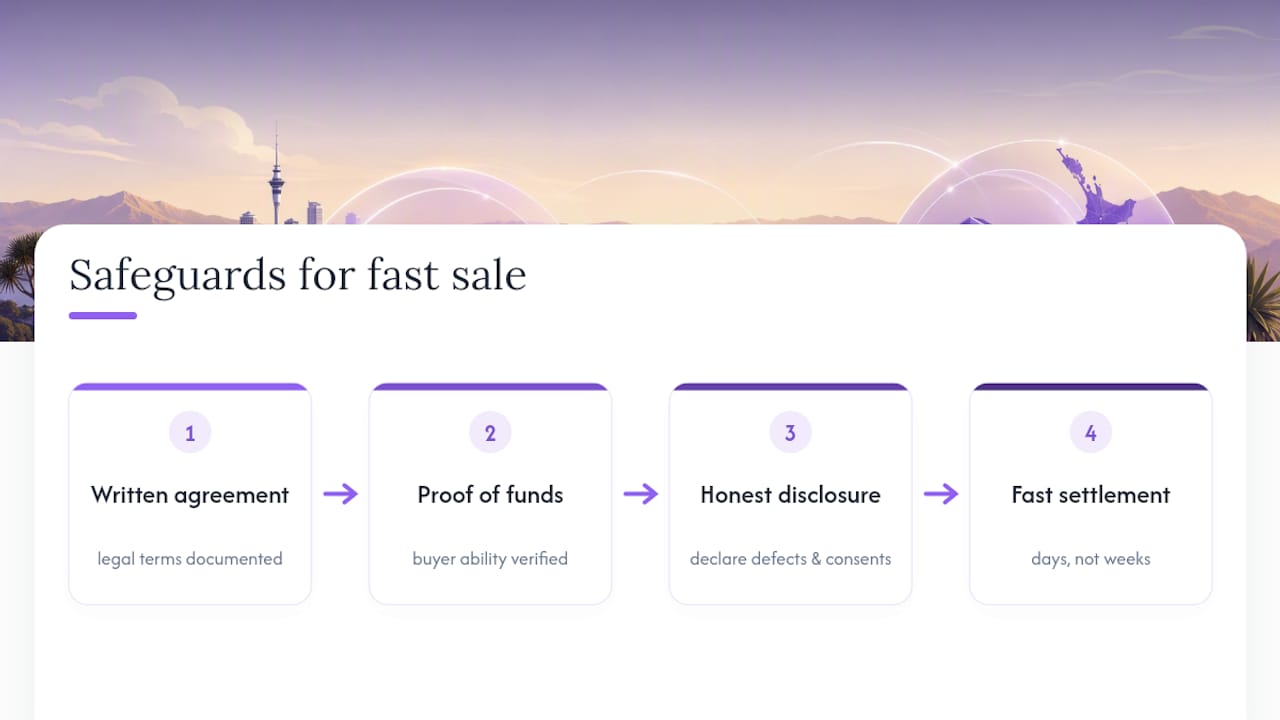
Speed doesn’t mean skipping the safeguards that protect you as the seller. A fast sale and a reckless one are not the same thing, and the difference usually comes down to four things.
- Insist on a written Sale and Purchase Agreement. Never proceed on a verbal understanding or a handshake, however friendly the buyer seems. Have a lawyer or conveyancer review the document before you sign, since this step remains mandatory even in a direct cash transaction.
- Ask for written proof of funds. A genuine cash buyer can produce bank confirmation or solicitor’s undertaking showing the money is actually available. Anyone who dodges this request or gets vague about it is a warning sign worth taking seriously.
- Disclose known issues in writing. New Zealand law requires you to flag things like weathertightness problems, boundary disputes, or missing consents. Skipping this obligation puts you at risk of legal action down the track, even after settlement.
- Confirm deposits go through a lawyer’s trust account. This protects both sides and creates a paper trail. Identity verification is also a standard part of this process, so expect your lawyer to ask for ID from both parties before funds move.
Is the price trade-off actually worth it?
Run the numbers before you commit to either path. A cash sale typically settles within a few weeks, while a private or agent-led sale usually takes several weeks to a few months, sometimes longer if the market is slow or the property needs work first.
The price difference is real. Cash offers typically land 10 to 20% below what you might get on the open market, with the exact gap depending on the property’s condition and how the local market is tracking. But that headline number isn’t the whole story. A traditional sale carries agent commission, usually 3 to 5%, plus marketing costs, repair bills, and however many weeks of mortgage or rates payments you’re covering while the property sits on the market.
A rough way to compare the two:
- Take your likely cash offer and subtract any immediate costs.
- Take a realistic market estimate, subtract agent commission, repair costs, and estimated holding costs for the expected time on market.
- Compare the two net figures, not the headline sale prices.
Cash sales tend to make the most sense if you’re behind on mortgage payments, dealing with a damaged home, relocating urgently for work, or handling an inherited property you can’t maintain.
Perspective from Easysale: who benefits most and how we work
Easysale buys properties in any condition, from fire-damaged homes to unconsented additions to properties still carrying tenants. The process runs in three steps: submit your details online, receive a no-obligation offer, and settle on a timeline that suits you rather than a buyer’s finance approval.
The homeowners who tend to get the most value from this route share a few things in common. They’re often dealing with a property that needs work they can’t afford or don’t have time for, facing financial pressure that makes a quick sale genuinely urgent, relocating on short notice, or managing an inherited home from a distance.
What separates a smooth cash sale from a stressful one usually comes down to honesty and preparation. Disclose defects upfront, ask for proof of funds before you commit to anything, and agree on a firm settlement date early. These aren’t extra steps. They’re the difference between a deal that closes cleanly and one that drags on.

What most guides get wrong about selling fast
Most advice on selling property fast treats speed and safety as if they’re in tension, as though moving quickly means cutting corners. That’s backwards. The research is clear that the legal safeguards, a written agreement, proof of funds, honest disclosure, aren’t obstacles to a fast sale. They’re what makes a fast sale hold up.
Where conventional wisdom really falls short is in framing the price discount as a bad deal. For a seller facing mortgage arrears or a property with real structural problems, a 10 to 20% reduction against a market sale that might take three months, cost thousands in repairs, and still fall through at finance approval isn’t a loss. It’s the cost of certainty.
If you’re weighing this option, prioritise the paperwork first. Get your title, consents, and disclosures sorted before you even request an offer. Sellers who do this move through settlement in days, not weeks, because there’s nothing left to chase once the agreement is signed.
— Aaron
Ready to get your no-obligation cash offer?
Easysale gets you a real number without the weeks of open homes, agent negotiations, or 3 to 5% commission a traditional sale would cost you. There’s no requirement to fix anything first, whether that’s a leaking roof, an unconsented garage conversion, or a kitchen you’ve been meaning to renovate for a decade.
Getting started takes a few minutes. Head to the Easysale site and fill in the online form with your property’s basic details and a handful of photos. Once you have an offer in hand, ask for written proof of funds, review the Sale and Purchase Agreement with your lawyer, and set a settlement date that actually works for your circumstances, whether that’s ten days away or two months out. If your property has damage or complications that make a traditional sale feel impossible, the guide on selling a damaged house fast walks through exactly what to expect.
Sources
For official guidance on your obligations as a seller, Settled’s overview covers disclosure and legal process in plain terms, and the government’s housing and property portal sets out the broader legal framework. Easysale’s guide on selling property fast breaks the process down step by step, and readers weighing up the mechanics of cash purchases more broadly may find this comparison of buying a house with cash useful background.
This article is general information, not a substitute for advice from a qualified financial advisor. Consult a qualified financial professional about your own circumstances before acting on anything here.
FAQ
How fast can I actually sell my property for cash?
Most direct buyers provide an initial offer within 24 to 48 hours of receiving your details, with settlement possible in as little as 7 to 30 days depending on legal checks and your preferred timeline.
How much less will I get compared to a market sale?
Cash offers typically run 10 to 20% below open market value, though the exact gap depends on your property’s condition and current market conditions in your area.
Do I still need a lawyer for a cash sale?
Yes. A written Sale and Purchase Agreement and lawyer or conveyancer involvement remain mandatory even when selling directly to a cash buyer, since deposits move through a trust account and the title transfer needs to be handled correctly.
What happens if I don’t disclose a known defect?
You risk the buyer cancelling the sale or pursuing legal action after settlement, since New Zealand law requires sellers to disclose known issues like weathertightness problems or missing consents.
Can a cash buying service purchase a property that’s damaged or unconsented?
Yes, cash buyers often purchase properties in any condition, including damaged, unconsented, tenanted, or inherited homes, through a straightforward process from submission to settlement.
Recommended
