
How to submit property details NZ: a clear guide

TL;DR:Submitting property details in New Zealand involves obtaining a Record of Title, council property files, and engaging a registered conveyancer to lodge ownership changes through Landonline. Properly assembling these documents and working with licensed professionals ensures a smooth sale process and reduces settlement delays. Promptly ordering records and disclosing all relevant information safeguard legal interests and facilitate faster property transactions.
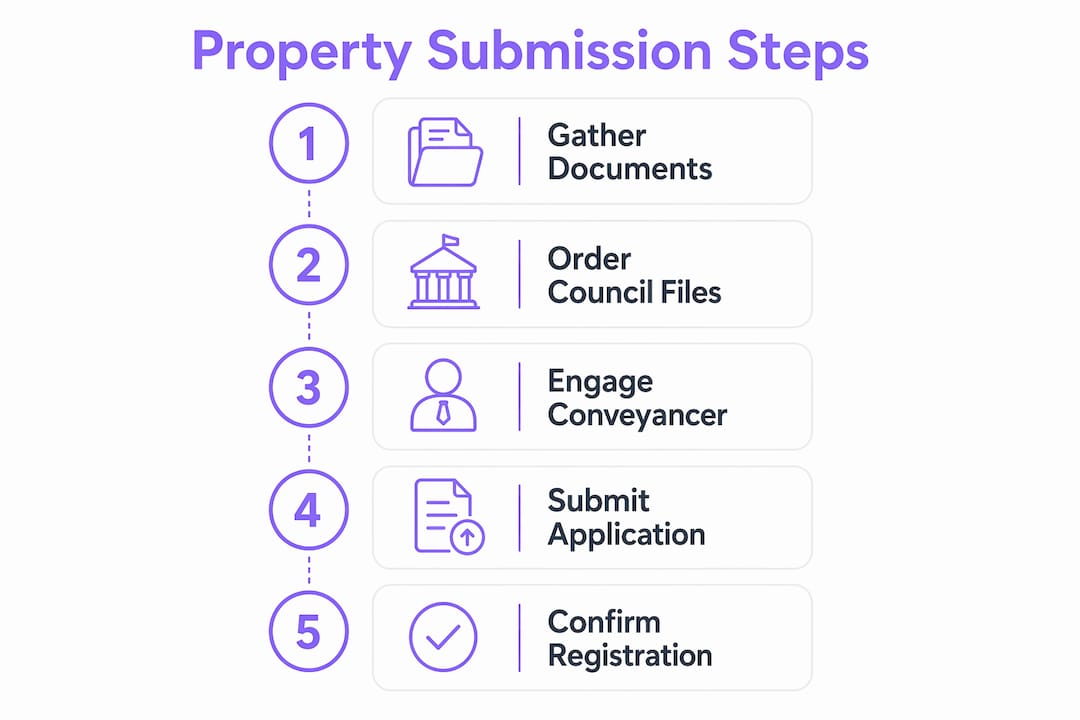
Submitting property details in New Zealand is defined as the process of assembling your Record of Title, gathering council property files, and engaging a registered conveyancer or solicitor to lodge any ownership changes through the Landonline system. Knowing how to submit property details NZ correctly is the difference between a sale that settles in days and one that drags on for months. This guide walks you through every step, from ordering your first title search to handing a complete property information pack to a buyer. Whether you are facing a life change, financial pressure, or simply want a fast, clean sale, getting your documents right from the start is what makes it possible.
What documents do you need to submit property details in New Zealand?
A current Record of Title is the foundation of any property submission in New Zealand. It confirms legal ownership, lists any mortgages or restrictions on the property, and costs around $42.90 through private title search providers. Experts recommend ordering this document first, before you take any other steps, to confirm the title is clean and accurate.

Beyond the title, you will need a council property file. This file contains building consents, floor plans, and compliance certificates issued by your local council. Toitū Te Whenua LINZ does not hold building consents or due diligence records. Local councils manage these separately, which is a distinction many homeowners miss entirely.
Other documents worth gathering include:
- Land Information Memorandum (LIM): A report from your local council covering zoning, rates, drainage, and any known issues with the land.
- Compliance certificates: Proof that building work was completed to code.
- Healthy Homes compliance records: Required if the property is or has been a rental.
- Caveats or encumbrances: Noted on your Record of Title, these flag any third-party interests in the property.
| Document | Source | Approximate cost | Delivery time |
|---|---|---|---|
| Record of Title | Private title search provider | ~$42.90 | Minutes to hours |
| Council property file | Local council | ~$59 | Up to 10 working days |
| Guaranteed Search | Private title search provider | ~$45.90 | Minutes to hours |
| LIM report | Local council | Varies by council | 10 working days |
Pro Tip: Order your council property file and LIM report at the same time. Both come from your local council and both can take up to 10 working days. Requesting them together saves you a week.
How do you search and order property documents online in NZ?
Ordering your property documents online is straightforward once you know which service handles which record. Private providers like Certificate of Title NZ handle title searches quickly, while your local council manages building and compliance records separately.
Here is a step-by-step process for ordering your documents:
- Identify your title reference. You can find this on a previous rates notice, a mortgage document, or an older sale agreement. If you do not have it, search by property address through a private title search provider.
- Order your Record of Title. Use a private provider for speed. The search costs around $42.90 and delivers results within minutes to hours. This document confirms ownership and lists any mortgages, easements, or restrictions.
- Order a Guaranteed Search if needed. A Guaranteed Search costs ~$45.90 and protects your interests by preventing unauthorised third-party registrations during the sale period. This is particularly useful if your sale will take several weeks to settle.
- Request your council property file. Contact your local council directly, either online or in person. The council property file costs ~$59 and can take up to 10 working days due to high demand. Request it as early as possible.
- Request a LIM report. Submit this request to your local council at the same time as your property file request. LIM reports cover zoning, drainage, and any known land issues.
- Verify all details before submission. Cross-check the legal description, title reference, and ownership details across every document. A single discrepancy can delay your sale.
A few practical points to keep in mind:
- Search by property address, legal description, or title reference number depending on what information you have available.
- Private providers deliver title results far faster than LINZ’s own portal for most homeowners.
- Always double-check the spelling of your legal name on the title. Errors here require a formal correction process.
What legal steps are required to register property ownership changes?
Registering a change of ownership in New Zealand is not something you can do yourself. Only registered conveyancers and solicitors can lodge ownership changes through the Landonline system. Landonline is the government’s land registration platform, and access is restricted to qualified legal professionals to maintain regulatory integrity. This means that even if you have all your documents in order, you still need a professional to complete the formal submission.
The typical process for registering an ownership change works like this:
- Engage a conveyancer or solicitor early. Ask for a quote upfront and confirm they are registered to use Landonline. Most property lawyers in New Zealand offer conveyancing services.
- Provide all required documents. Your solicitor will need your current Record of Title, identification, and any mortgage consent if your property has a home loan attached to it.
- Obtain mortgage consent if applicable. If your property is mortgaged, your lender must formally consent to the ownership change before it can be lodged.
- Lodge the dealing through Landonline. Your conveyancer submits the ownership change electronically. Processing typically takes 1–3 business days once lodged, provided all documents are correct.
- Receive confirmation. Once registered, your solicitor will provide you with an updated Record of Title reflecting the change.
Conveyancing fees in New Zealand vary depending on the complexity of the transaction, but most straightforward ownership changes fall in the range of $800 to $1,500 including disbursements. Engaging your solicitor before you list or accept an offer gives them time to identify any title issues that could slow settlement.
Pro Tip: Ask your solicitor to run a title check before you accept any offer. Discovering a caveat or an unresolved mortgage consent issue after signing a sale and purchase agreement creates real pressure and can cost you the deal.
How do you keep your property details accurate for a fast sale?
Accuracy and transparency in your property information pack directly affect how quickly your sale settles. Misrepresenting or failing to disclose issues creates future legal liability and can unwind a completed sale. Buyers and their solicitors will check your documents carefully, so gaps or inconsistencies will surface regardless.
A well-prepared property information pack should include:
- All building consents and code compliance certificates for any work done on the property.
- Healthy Homes compliance records if the property has been tenanted.
- A current LIM report from your local council.
- Records of any easements, covenants, or rights of way noted on the title.
- Rates certificates confirming no outstanding amounts owed to the council.
Transparency about Healthy Homes compliance and land interests significantly reduces liability risks and improves buyer confidence. Buyers who receive a complete, organised information pack move faster through due diligence. That speed translates directly into a faster settlement date for you.
Keeping organised records of consents and compliance certificates is not just good practice. It is a legal safeguard that protects you from buyer disputes long after the sale is complete.
You can also review the property selling checklist from Easysale for a practical breakdown of every document you should have ready before you go to market. Having everything prepared before a buyer asks for it signals professionalism and builds trust quickly.
Key takeaways
Submitting property details in New Zealand requires a Record of Title, council property files, and a registered conveyancer to lodge any ownership changes through Landonline.
| Point | Details |
|---|---|
| Start with your Record of Title | Order this first at ~$42.90 to confirm ownership and identify any restrictions before proceeding. |
| Request council files early | Council property files cost ~$59 and take up to 10 working days, so order them as soon as possible. |
| Use a registered conveyancer | Only licensed solicitors can lodge ownership changes through Landonline; you cannot do this yourself. |
| Disclose everything in writing | Incomplete or inaccurate disclosure creates legal liability and delays settlement. |
| Prepare a full information pack | Organise consents, compliance certificates, and LIM reports before accepting any offer. |
My honest view on where homeowners go wrong
The most common mistake I see is homeowners assuming LINZ holds everything they need. They contact LINZ expecting building consents and due diligence records, then lose a week when they realise those documents sit with their local council. Coordinating both sources from day one is what separates a smooth submission from a stressful one.
The second mistake is leaving the conveyancer until the last minute. I have seen sales fall over because a mortgage consent was not obtained in time, or because a caveat on the title was not discovered until after an offer was signed. Engaging your solicitor before you accept any offer gives them time to clear these issues quietly, without pressure.
There is also a tendency to underestimate council delays. A 10 working day wait for a property file is standard, but during busy periods it can stretch further. If you are aiming for a fast sale, you cannot afford to treat that request as an afterthought.
The good news is that private title search providers have made the title search side of this process genuinely fast. You can have a current Record of Title in your hands within hours. Use that speed to your advantage and get the title sorted on day one, then work backwards from there on the council documents and legal steps.
For homeowners who want to skip the complexity entirely, the quick sale process offered by cash buyers removes most of these steps from your plate. That is worth knowing if time is your biggest constraint.
— Aaron
How Easysale simplifies selling your property in New Zealand
If gathering title documents, chasing council files, and coordinating with solicitors sounds like more than you want to manage right now, Easysale offers a direct alternative.
Easysale buys residential properties across New Zealand in any condition, without requiring you to navigate the full documentation process on your own. You submit your property details through a simple online form, receive a no-obligation cash offer, and settle on a timeline that suits you. There are no agent commissions, no open homes, and no drawn-out negotiations. For homeowners facing financial pressure, property damage, or a life change that calls for a fast resolution, Easysale handles the complexity so you do not have to. If your property needs work and you are concerned about compliance documents, Easysale also buys damaged properties as-is, removing that barrier entirely.
FAQ
What is a Record of Title in New Zealand?
A Record of Title is the official document confirming legal ownership of a property and listing any mortgages, easements, or restrictions. It costs around $42.90 through private title search providers and is the starting point for any property submission.
Can I lodge a property ownership change myself in NZ?
No. Only registered conveyancers and solicitors can lodge ownership changes through the Landonline system. Processing takes 1–3 business days once all documents are correctly submitted.
How long does it take to get a council property file in NZ?
Council property files typically take up to 10 working days due to high demand and cost around $59. Requesting your file as early as possible is the best way to avoid delays in your sale timeline.
What is the difference between LINZ and a local council for property records?
LINZ holds title and ownership records, while local councils hold building consents, compliance certificates, and LIM reports. You need both sources for a complete property information pack.
What happens if I leave out information when submitting property details?
Failing to disclose known issues or missing documents creates legal liability and can result in buyer disputes or a sale being challenged after settlement. Keeping organised records of all consents and certificates protects you throughout the process.
Recommended
