
Legal Considerations When Selling Property in NZ

Most australian expats selling property in New Zealand learn the hard way that legal mistakes can cost thousands. For homeowners facing urgent financial pressure, the process can feel overwhelming, with strict regulations around contracts, seller disclosures, and tax. Knowing the basics of New Zealand property law will keep you protected and help you move on quickly with minimal hassle. This guide breaks down essential rules so you can avoid common pitfalls and ensure a stress-free sale.
Table of Contents
- Property Sale Law Basics In New Zealand
- Types Of Sales And Legal Differences
- Essential Seller Disclosures And Duties
- Critical Sale And Purchase Agreement Rules
- Risks, Taxes And Common Seller Pitfalls
Key Takeaways
| Point | Details |
|---|---|
| Understand Legal Obligations | Sellers must navigate complex property laws in New Zealand, ensuring compliance with regulations, disclosures, and documentation. |
| Engage Professionals Early | It is crucial to consult qualified property lawyers and tax professionals at the outset to avoid potential pitfalls and ensure compliance. |
| Be Aware of Sale Methods | Different sale methods (private, tender, auction, mortgagee) come with unique legal frameworks that require careful consideration. |
| Disclosures are Mandatory | Comprehensive disclosures regarding the property’s condition and legal obligations are essential to avoid legal disputes and penalties. |
Property Sale Law Basics in New Zealand
Selling property in New Zealand involves navigating a complex legal landscape with specific regulations and requirements. Understanding the foundational legal principles is crucial for homeowners looking to transfer property ownership smoothly and legally. Comprehensive legal guidelines established by the New Zealand Law Society provide a structured framework for property transactions.
The legal process begins with understanding contract law specific to property sales. In New Zealand, property transactions require a written agreement that clearly outlines the terms of sale, including price, settlement date, and any conditions precedent. This contract must comply with the New Zealand property sales regulations, which mandate specific disclosures and protections for both buyers and sellers. Key legal considerations include ensuring clear title, addressing any potential encumbrances, and meeting all statutory requirements for property transfer.
Specific legal requirements vary depending on the property type and circumstances of the sale. Residential sales, for instance, have different legal obligations compared to commercial property transfers. Sellers must provide a clear statement of the property’s condition, disclose any known defects, and ensure all necessary documentation is prepared accurately. This includes preparing a comprehensive property file that includes land information memorandum (LIM) reports, building compliance certificates, and any relevant resource management documentation.
Hot tip: Engage a qualified property lawyer early in the sales process to review all documentation and ensure complete legal compliance with New Zealand property law requirements.
Types of Sales and Legal Differences
Property sales in New Zealand encompass multiple transaction types, each with unique legal frameworks and procedural requirements. Understanding these variations is crucial for sellers to navigate the property market effectively. Legal guidelines for property sales outline four primary sale methods: private sales, tender sales, auction sales, and mortgagee sales, each demanding specific legal considerations.
Private sales represent the most common transaction type, where sellers directly negotiate with potential buyers without involving real estate agents. These sales require comprehensive written agreements detailing sale conditions, price, and settlement dates. Tender sales differ by inviting potential buyers to submit sealed bids, creating a competitive purchasing environment with strict legal protocols. Auction sales introduce additional complexity, with immediate legal obligations triggered once the hammer falls and the highest bid is accepted.

Mortagee sales represent a unique and often challenging scenario, typically occurring when property owners default on mortgage payments. Specific legal protections govern these transactions, ensuring fair treatment of both the lender and the property owner. These sales involve complex legal procedures, including mandatory notification periods and valuation requirements. Distressed sales further complicate the legal landscape, requiring sellers to navigate financial challenges while maintaining legal compliance.
Hot tip: Consult a property law specialist to understand the specific legal implications of your chosen sale method and ensure complete compliance with New Zealand property regulations.
Here’s a concise comparison of the main property sale methods in New Zealand:
| Sale Method | Key Legal Features | Typical Participants | Common Use Case |
|---|---|---|---|
| Private Sale | Written agreements, direct negotiation | Individual sellers and buyers | Standard residential transactions |
| Tender Sale | Sealed bids, formal protocols | Developers, investors | High-value or unique properties |
| Auction Sale | Immediate contract binding | Agents, multiple bidders | Fast-moving markets |
| Mortgagee Sale | Notification periods, lender oversight | Lenders, distressed owners | Loan default situations |
Essential Seller Disclosures and Duties
Property sellers in New Zealand are legally obligated to provide comprehensive and transparent information about their property during the sales process. Property Law Section Guidelines outline specific disclosure requirements that protect both sellers and potential buyers. These guidelines mandate full disclosure of the property’s physical condition, any known structural issues, ongoing disputes, easements, and potential encumbrances that might impact the property’s value or usability.
Crucial disclosure duties extend beyond physical property details and encompass legal and administrative aspects of property ownership. Sellers must provide accurate documentation including land information memorandum (LIM) reports, building compliance certificates, and any relevant resource management documentation. Failure to disclose known defects or material information can result in legal consequences, including potential contract rescission or financial penalties. Key areas of mandatory disclosure include boundary disputes, resource consent issues, building consent history, and any significant repairs or renovations undertaken.
Privacy considerations also play a critical role in the disclosure process. Privacy principles require sellers to handle personal information responsibly, ensuring that any shared information complies with New Zealand’s Privacy Act 2020. This means carefully managing personal data during negotiations, protecting sensitive information, and using property-related details only for their intended purpose. Sellers must balance the legal requirement for transparency with the need to protect personal and confidential information throughout the sales process.
Hot tip: Maintain a comprehensive file of all property documents and consult a legal professional to ensure you’ve met all disclosure requirements before listing your property for sale.
Review this summary of New Zealand seller disclosure duties and risks:
| Disclosure Duty | Legal Purpose | Consequence of Non-Compliance |
|---|---|---|
| Known defects | Protects buyer interest | Contract might be cancelled |
| Legal documentation | Ensures title clarity | Financial penalties can result |
| Privacy compliance | Protects personal data | Breach of Privacy Act 2020 |
| Complete condition statements | Transparency in sale | Risk of legal disputes |
| Accurate repairs history | Prevents future claims | Potential for compensation claims |
Critical Sale and Purchase Agreement Rules
In New Zealand, sale and purchase agreements form the legal backbone of property transactions, establishing critical obligations and protections for both buyers and sellers. Standard REINZ/ADLS Agreement guidelines provide a comprehensive framework that governs these complex legal interactions. These agreements outline specific conditions, including offer and acceptance processes, conditions precedent, due diligence timelines, and mechanisms for addressing potential title or property disputes.
Key components of these agreements include precise definitions of conditional clauses that protect both parties’ interests. Buyers typically negotiate conditions related to financing, building inspections, and title investigations, while sellers must provide clear documentation and respond to requisitions. Deposit handling represents another critical aspect of these agreements, with specific protocols governing fund management, release conditions, and potential consequences of contract breaches. Real estate agents must adhere to strict ethical and legal standards when managing these financial transactions.
The legal complexity of these agreements demands meticulous attention to detail. Deposit handling protocols outlined by professional bodies establish clear guidelines for managing transaction funds. Sellers and buyers must understand their respective rights and obligations, including settlement timing, potential penalty clauses, and circumstances under which a contract might be terminated. Specific attention must be paid to deadlines, documentation requirements, and the precise language used in conditional clauses.
Hot tip: Always have a qualified legal professional review your sale and purchase agreement before signing to ensure all terms are clearly understood and protect your interests.
Risks, Taxes and Common Seller Pitfalls
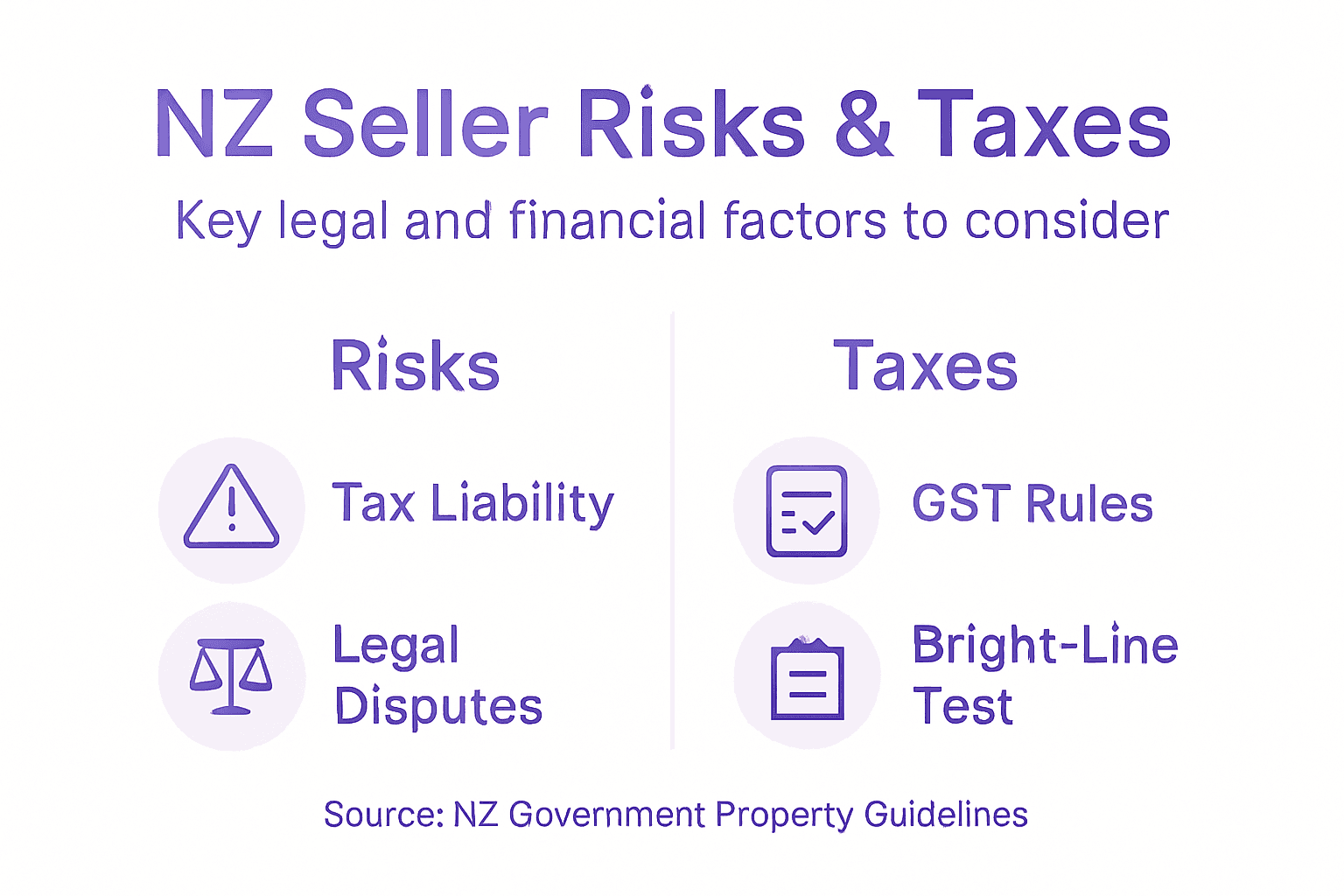
Property sales in New Zealand come with significant financial and legal risks that can catch unprepared sellers off guard. Property Law Guidelines highlight critical tax implications and potential financial exposures sellers must understand. These risks include complex income tax obligations, potential GST complications, and unexpected capital gains tax scenarios that can substantially impact the net proceeds from a property sale.
Mortgagee sales represent one of the most challenging and financially devastating risks for property owners. Mortgage sale guidelines outline scenarios where lenders can forcibly sell a property due to loan defaults, potentially resulting in significant financial losses. Common seller pitfalls include inadequate financial planning, neglecting disclosure requirements, misunderstanding contractual conditions, and failing to maintain accurate financial records. Sellers must be proactive in understanding their legal obligations, maintaining open communication with financial institutions, and seeking professional advice to mitigate these risks.
Tax considerations are particularly complex in New Zealand property transactions. Sellers must navigate intricate rules surrounding income tax, potential capital gains implications, and GST requirements. Different tax treatments apply depending on the property’s classification, the seller’s intention at the time of purchase, and the duration of ownership. Professional tax advice becomes crucial in understanding these nuanced regulations, helping sellers avoid unexpected tax liabilities and potential legal complications that could arise from incorrect reporting or documentation.
Hot tip: Engage a qualified tax professional and legal advisor before finalising your property sale to comprehensively understand and mitigate potential financial and legal risks.
Simplify Your Property Sale Amid Complex Legal Requirements
Selling property in New Zealand comes with many legal challenges from disclosure duties to complex sale and purchase agreements. These hurdles can feel overwhelming when you need to move quickly or avoid costly delays. If you are facing financial pressure, property condition concerns, or simply want to sidestep the detailed legal process like contract compliance and risk management, easySale.co.nz offers a stress-free solution tailored to your needs.

Choose a straightforward way to sell your property without the complications of traditional sales and legal red tape. At easySale.co.nz, you can receive a fair cash offer fast even if your property has defects or if you need to sell quickly on your own terms. Visit our site now to submit your details and take the first step toward a simplified sale that respects your time and situation. Take control today by exploring our property buying service and let us help you navigate through New Zealand’s property sale legal landscape with ease.
Frequently Asked Questions
What are the legal requirements for selling property in New Zealand?
Selling property in New Zealand requires a written agreement outlining the terms of sale, compliance with regulations, and necessary disclosures regarding the property’s condition and legal status.
What should I disclose when selling my property?
Sellers must disclose known defects, boundary disputes, resource consent issues, and provide legal documentation such as LIM reports and building compliance certificates to ensure transparency and avoid legal repercussions.
What is a sale and purchase agreement in property transactions?
A sale and purchase agreement is a legal document that defines the conditions of the sale, including offer and acceptance processes, deposit management, and due diligence timelines, protecting the interests of both buyers and sellers.
What are the tax implications when selling property?
Sellers may face various tax implications, including income tax obligations, potential capital gains tax scenarios, and GST complications, depending on the property’s classification, the seller’s intent, and duration of ownership.
Recommended
