
Cash offers in 1–2 days: New Zealand selling sites, lawyer checked


Here, “New Zealand selling sites” means cash property buyers who purchase homes as is and can complete fast settlements. You can get a genuine cash offer within days, but you still must involve a lawyer or conveyancer to handle the legal side. The safest first move is to request a no obligation offer while lining up a conveyancer to manage settlement.
TL;DR:Cash property buyers in New Zealand can often give a genuine offer within one to two days, but the legal process still requires a lawyer or conveyancer.Legal steps including identity verification, discharge of any mortgage, and disclosure of property defects are essential and should be handled before signing any agreement.Beware of red flags such as pressure to sign quickly, vague ownership details, or promises of instant settlement, which can indicate risky or unreliable buyers.A fast cash sale typically offers a lower price than a traditional market, but provides certainty and a quick settlement, ideal for urgent situations.Using a platform like easySale.co.nz suits sellers facing damage, inheritance, or relocation deadlines, offering a no-obligation instant quote with minimal upfront effort.
EasysaleExplore a Simpler Cash SaleeasySale helps New Zealand homeowners request a fast, fair, no obligation cash offer without agents or commission fees.Request an offer
Table of Contents
- How cash buying sites for NZ homes operate and what to expect after you submit details
- Mandatory legal and tax essentials every seller must check before accepting a cash offer
- Ready to sell checklist: documents, disclosures and tasks to speed a private cash sale
- Common risks and red flags: what to avoid when choosing a cash buyer
- How to choose: a short decision framework and questions to ask a cash buyer or site
- Why easySale.co.nz is a practical option for Kiwis needing fast, private cash offers
- Overview of popular online platforms and marketplaces specifically for selling property in New Zealand
- Comparison of features, fees, and reach of major New Zealand selling sites
- Tips for creating effective property listings on these platforms
- Strategies for marketing and advertising properties on selling sites
- How to handle inquiries and negotiate offers received through these sites
- Safety and fraud prevention measures when using online selling platforms
- Author perspective and humane closing advice
- A straightforward next step with easySale
- Sources
- FAQ
How cash buying sites for NZ homes operate and what to expect after you submit details
Most cash buyer platforms follow a similar rhythm: you submit basic details about the property, the buyer reviews them and returns an offer, and you choose a settlement date that suits your circumstances. It sounds simple because the early steps genuinely are. What takes longer is everything that happens behind the scenes once you say yes.
Buyers can usually confirm title, tenancy status and obvious defects within a day or two of receiving your details. What slows things down is identity certification for the electronic title transfer and, if you have a mortgage, arranging its discharge with your bank.
- Submit your property details online or over the phone.
- Receive a no obligation cash offer, often within one to two business days.
- Choose a settlement date that fits your timeline, then hand the legal work to your lawyer.
Pro Tip: Ask upfront how the buyer plans to handle identity verification and deposit funds. A buyer who cannot answer clearly is a buyer worth avoiding.
Mandatory legal and tax essentials every seller must check before accepting a cash offer
Speed never removes the legal steps. A private or cash sale in New Zealand still needs a lawyer or conveyancer to prepare the sale and purchase agreement and hold the deposit in trust, as Settled. Skipping this step is not a shortcut, it is a risk.
Four things to sort before you sign anything:
- Engage a lawyer or conveyancer early, since Settled confirms they must review the agreement and hold the buyer’s deposit in trust.
- Check identity and e-dealing requirements, because LINZ guidance sets the standard practitioners must follow before certifying electronic title transfers.
- If the property is tenanted, understand your notice obligations under Tenancy Services rules.
- Check your bright-line tax position using the IRD’s decision tool before you commit to a sale date.
As of 2026, the bright-line period is 2 years for property sold on or after 1 July 2024, according to Inland Revenue’s bright-line guidance. This matters because a sale within that window can trigger tax on any gain, so it is worth checking your own position with the IRD tool before you accept an offer, not after.
Ready to sell checklist: documents, disclosures and tasks to speed a private cash sale
A fast sale still needs paperwork. Getting it together early is the single biggest thing you can do to avoid a stalled settlement.
- Gather your title, mortgage details, and any LIM or building report you already hold.
- Have photo identification ready for the e-dealing process your lawyer will run.
- Write down anything you know about defects, chattels included in the sale, and any consent issues, since Settled warns that non-disclosure can lead to legal action after settlement.
- If the property is tenanted, pull out the tenancy agreement and map a notice plan with your tenant.
- Book a lawyer or conveyancer now, and ask them directly how they handle identity checks and e-dealing, since this step commonly holds up settlement.
Pro Tip: Write a plain, dated disclosure note covering anything you know is wrong with the property. It takes ten minutes and can prevent a dispute months later.
Common risks and red flags: what to avoid when choosing a cash buyer
Most cash buyers operate fairly, but a few behaviours should make you pause before you sign anything.
- Pressure to sign quickly without letting your lawyer review the agreement first.
- Requests to pay or receive funds outside a solicitor’s trust account.
- Vagueness about who actually owns or represents the buying entity.
- Promises of instant settlement that ignore the realities of identity checks, e-dealing standards and mortgage discharge timing.
- Silence about pre-settlement inspections, which can pause or cancel a deal if undisclosed damage turns up late.
None of these are automatically fraud, but each one is worth a direct question before you go further.
How to choose: a short decision framework and questions to ask a cash buyer or site
Weighing a cash offer against a traditional sale comes down to three things: certainty, price and how quickly you need the money in hand. A slightly lower cash price is often worth it when certainty matters more than squeezing out every dollar, such as during a tight relocation or a stressful family situation.
Before accepting any offer, ask how conveyancing will be handled and by whom.
- Who holds the deposit, and is it held in a solicitor’s trust account?
- How will conveyancing be handled, and by whom?
- Are there any conditions attached to the offer, such as finance or due diligence?
- How will your identity be confirmed for the e-dealing process, and how long will that take?
Pro Tip: If a buyer cannot name their lawyer or conveyancer when you ask, treat that as a warning sign rather than a formality to sort out later.
Why easySale.co.nz is a practical option for Kiwis needing fast, private cash offers
For homeowners who need certainty over a long marketing campaign, Easysale offers fast, fair cash offers on homes in any condition, without agent commissions or repair demands. The process runs in three steps: submit your property details, receive a no obligation offer, then settle on a timeline that suits you.
It tends to suit sellers dealing with urgent financial pressure, storm or structural damage, an inherited property, or a relocation on a fixed deadline. Because easySale buys as is, you are not left patching up a house before anyone will look at it.
If your situation fits any of those, requesting an offer costs nothing and does not commit you to selling, which makes it a reasonable first step while you sort out legal advice in parallel.
Overview of popular online platforms and marketplaces specifically for selling property in New Zealand
When people search for ways to sell a house fast in New Zealand, they generally land on one of two paths: list the property through a traditional or online real estate channel and wait for a buyer, or approach a direct cash buying service like easySale.co.nz that makes an offer without a public listing at all.
Traditional online property portals work well when time is not the pressing issue. They rely on buyer interest building over weeks, open homes, and a negotiation process that can stretch on if the market is quiet. That path suits someone with a flexible timeline and a property in reasonably tidy condition.
Direct cash buying platforms take a different route entirely. There is no public listing, no open home, and no waiting on finance approval from a buyer who might pull out. You deal with one party who has already decided they want the property, which removes a lot of the uncertainty that comes with a public sale.
For sellers facing a deadline, whether it is a bright-line tax date, a relocation, or simply the need to settle an estate, this direct route tends to be the more realistic option because it skips the marketing period almost entirely.

Comparison of features, fees, and reach of major New Zealand selling sites
The practical differences between a traditional listing approach and a direct cash buyer come down to three things: cost, speed and certainty.

A traditional sale through an online listing typically involves agent commission, marketing costs, and a settlement date that depends on finding a buyer whose finance and timeline line up with yours. Reach can be wide, since listings are visible to anyone browsing, but that reach does not guarantee a quick result.
A direct cash buyer removes agent fees entirely and skips the marketing period. Some direct cash buyers do not charge commission and may buy properties in any condition, avoiding costs for repairs or staging before a sale. The trade-off is that you are dealing with a single offer rather than testing the open market, so the final price reflects certainty and speed rather than competitive bidding.
Neither approach is universally better. A property in strong condition with no time pressure may fetch a higher price through a longer public campaign. A property that needs work, or a seller who cannot wait months, is usually better served by the certainty a direct cash offer provides.
Tips for creating effective property listings on these platforms
If you do choose a public listing route alongside considering a cash offer, a few basics make a real difference to how quickly interest builds.
- Use clear, well-lit photos taken in daylight, since listings with poor images get scrolled past.
- Write a description that states the facts plainly: bedrooms, land size, condition, and any recent work done.
- Disclose known issues in the listing itself rather than waiting for a buyer to find them, which matches the disclosure standard Settled.govt.nz sets for private sellers.
- Keep contact details current and respond quickly, since slow replies cost genuine buyer interest.
None of this applies if you go the direct cash buyer route, since there is no public listing to manage at all, which is part of the appeal for sellers short on time or energy.
Strategies for marketing and advertising properties on selling sites
Marketing a property privately takes more effort than most sellers expect. Beyond the listing itself, sellers typically need to think about where else to promote the property, how to manage enquiries, and how to keep momentum going if interest is slow to build.
Sharing the listing through local community groups and word of mouth can help, particularly in smaller towns where a direct network often moves faster than a broad online audience. Open homes remain useful for giving genuine buyers a chance to walk through, but they also take time to organise and run.
The bigger strategic question is whether that marketing effort is worth it has given your timeline. A seller with months to spare can afford to test different approaches and see what generates interest. A seller facing a tight deadline, whether from financial pressure, a bright-line date, or a relocation, often finds that the marketing period itself is the obstacle, not the eventual sale price. In that case, skipping the marketing step altogether by approaching a direct buyer removes the variable entirely.
How to handle inquiries and negotiate offers received through these sites
Once enquiries start coming in, whether through a public listing or a direct offer, the same basic principles apply. Respond promptly, keep a written record of anything discussed, and never agree to terms verbally without your lawyer reviewing them first.
When negotiating a direct cash offer, focus on the things that matter beyond the headline price: the proposed settlement date, whether the offer is conditional on anything, and how the buyer plans to handle the legal side. A buyer who is flexible on settlement timing but firm and transparent on process is usually a safer bet than one offering a slightly higher price with vague terms.
If you receive multiple offers, whether from public listing interest or from more than one cash buyer, compare them on certainty as much as price. An offer with no finance condition and a clear legal pathway is often worth more in practice than a marginally higher offer that depends on a buyer securing a mortgage.
Whatever you receive, pass it to your lawyer before responding formally. That single habit, more than any negotiation tactic, is what protects you if something in the offer turns out to be unclear or unfair.
Safety and fraud prevention measures when using online selling platforms
Selling online, whether through a listing site or a direct buyer enquiry, comes with a few predictable risks worth guarding against.
- Never share your bank account details with anyone claiming to be a buyer before your lawyer has confirmed the transaction is legitimate.
- Be wary of anyone pushing you to bypass legal review or sign documents outside a solicitor’s trust process, a step Consumer Protection specifically warns against.
- Confirm the identity of anyone representing a buying entity, since LINZ’s e-dealing standard requires practitioners to verify identity before certifying a title transfer, and a legitimate buyer will expect this.
- Keep all communication in writing where possible, since a paper trail protects you if a dispute arises later.
If something feels rushed or unclear, slowing down costs you little. Skipping a legal check to save a few days can cost far more if the deal turns out to be flawed.
Author perspective and humane closing advice
Selling fast for cash is a genuine trade-off, not a shortcut with no cost. You are usually accepting a slightly lower price in exchange for certainty and speed, and for many sellers facing financial pressure, damage, or a family situation, that trade is the right one.
Where I would push back is on sellers who skip the lawyer step because everything feels urgent already. That single decision causes more of the problems I hear about than the sale itself ever does. Verify identity, use a trust account, and give your conveyancer time to do their job properly. Small, boring precautions are what keep a fast sale from becoming a slow, expensive mess.
— Aaron
A straightforward next step with easySale
If your situation calls for speed and certainty rather than a long public campaign, easySale offers fair cash offers on homes in any condition, with no agent commission and no repairs required before you sell. It suits sellers dealing with damage, an inherited property, a relocation deadline, or simply the need to move on without months of open homes.
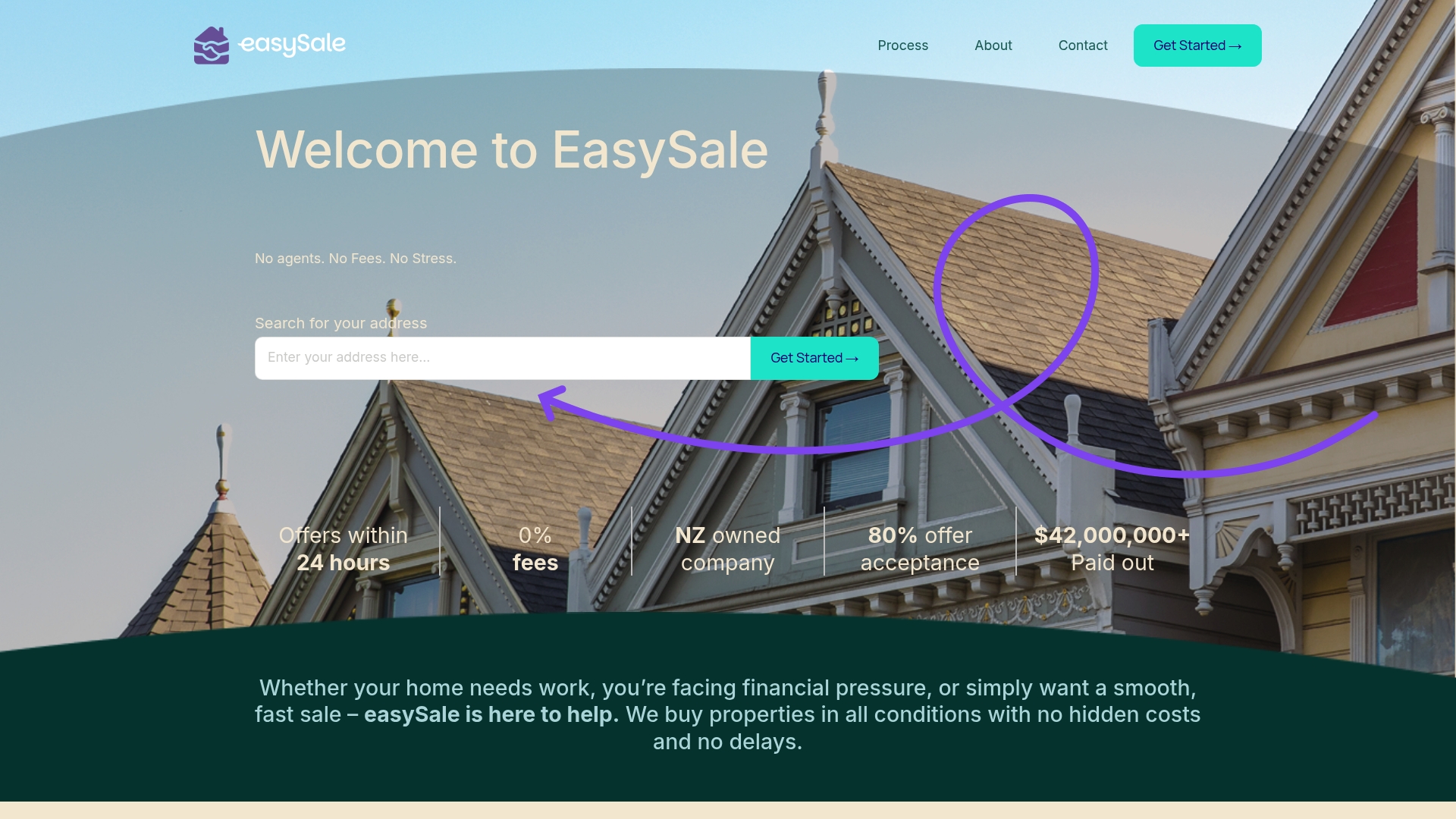
The process is the same three steps covered earlier: submit your property details, receive a no obligation offer, and choose the settlement date that works for you. Whether you are managing a divorce or separation, an estate sale, or simply want to sell fast within 7 days, the starting point is the same conversation.
If any of this sounds like your situation, request a no obligation cash offer and talk to a lawyer in parallel. There is no cost to finding out what easySale would offer, and no obligation to accept it.
This article is general information, not a substitute for advice from a qualified lawyer. Consult a qualified legal professional about your own circumstances before acting on anything here.
Sources
- Settled
- Selling a rental property | Tenancy Services
- Bright‑line test | Inland Revenue (IRD)
- Confirmation of identity for e‑dealing | LINZ
FAQ
What does “new Zealand selling sites” mean for someone selling a house fast?
In this context, it refers to cash property buying services that purchase homes directly and as is, rather than online marketplaces for listing goods. These services let you skip the public listing process entirely and settle on a timeline you choose.
Do I still need a lawyer if I accept a cash offer?
Yes. Settled.govt.nz confirms a lawyer or conveyancer must prepare the sale and purchase agreement and hold the buyer’s deposit in trust, regardless of how quickly the deal moves.
How does the bright-line test affect a fast cash sale?
As of 2026, the bright-line period is 2 years for property sold on or after 1 July 2024, according to Inland Revenue. Selling within that window can mean tax on any gain, so check the IRD’s property tax decision tool before accepting an offer.
Can I sell a tenanted property to a cash buyer?
Yes, but Tenancy Services generally requires at least 42 days’ written notice for a periodic tenancy once there is an unconditional sale agreement requiring vacant possession. Fixed-term tenancies usually cannot be ended early without the tenant’s agreement.
What does easySale charge to buy my house?
easySale does not charge agent commission or fees to the seller, and its published services, including its fast sale option, do not list a price because each cash offer is based on the individual property. You can request a no obligation offer to see what applies to your situation.


